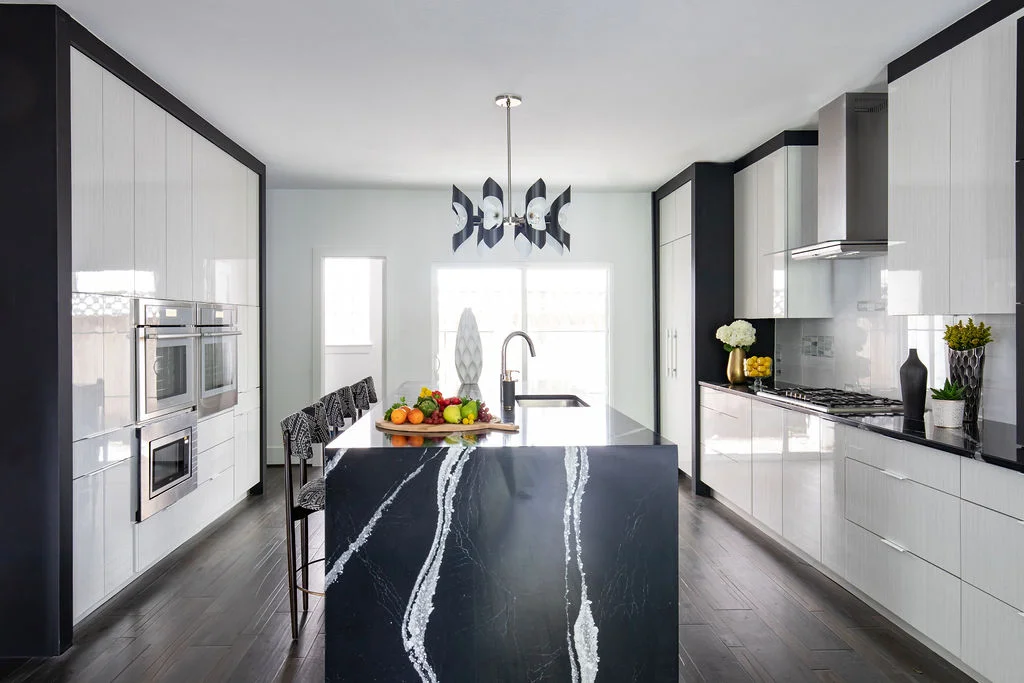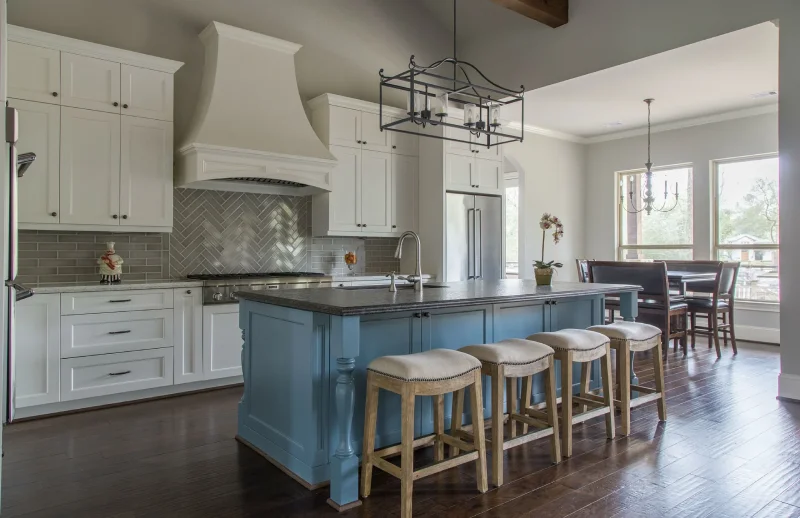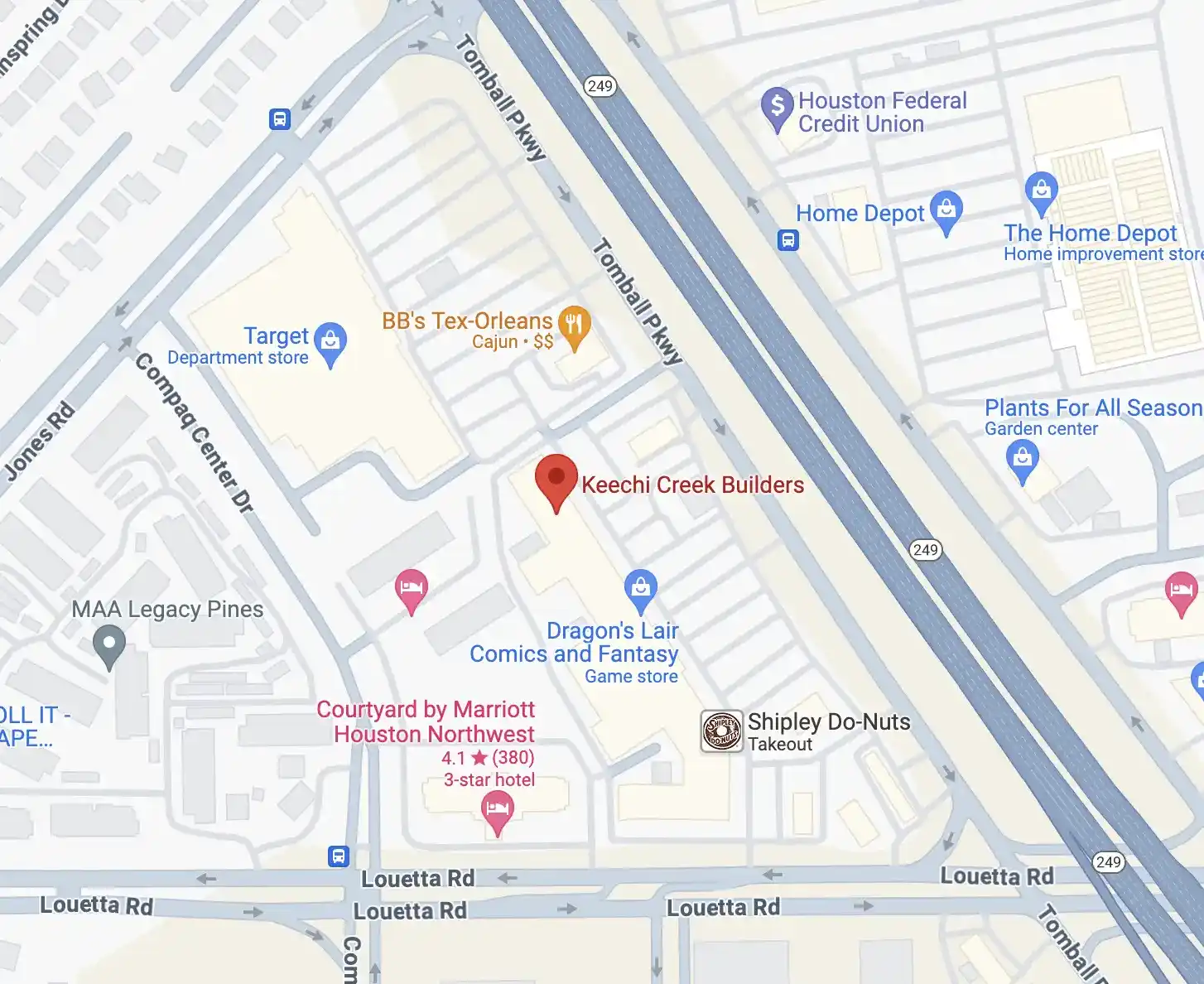
Choosing a custom home builder in Magnolia, TX requires evaluating credentials, construction experience, and Montgomery County building knowledge before signing any contract. The best custom home builders in this market carry NAHB certifications like Graduate Master Builder (fewer than 2% of builders nationally hold this designation), maintain active GHBA and TAB memberships, and demonstrate verifiable expertise with Houston's expansive clay soil conditions that demand specialized foundation engineering.
Key Takeaways
- Credentials Over Promises: Verify NAHB certifications (GMB, CAPS, CGP) directly through the National Association of Home Builders before scheduling your first meeting with any Magnolia custom builder.
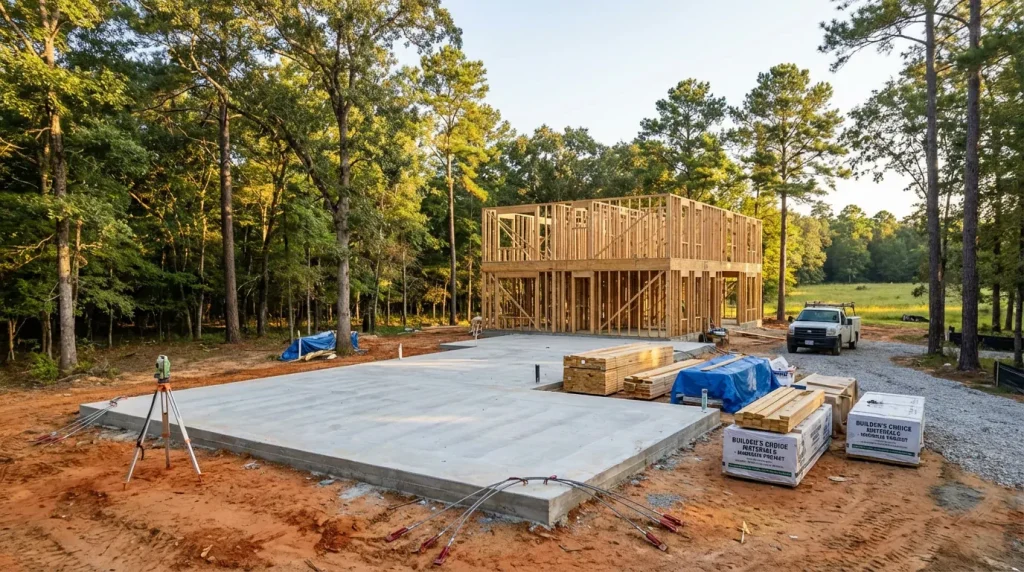
- Magnolia Soil Demands Engineering: Houston's expansive clay formations require post-tensioned slab or pier-and-beam foundations — ask every builder how they address soil conditions on your specific lot.
- Design-Build Eliminates Finger-Pointing: Single-contract design-build firms provide one point of accountability from blueprint through final walkthrough, preventing the communication breakdowns common when architects and contractors work independently.
- Contract Clarity Prevents Budget Blowups: Demand line-item bids with allowance categories defined, not lump-sum estimates that hide markup and create change order traps.
- References Should Be Uncomfortable: Don't just call the three names a builder provides — visit active job sites unannounced, check Montgomery County permit records, and read reviews beyond Google's first page.
- Local Track Record Beats National Scale: A builder with 15+ years completing custom homes in Montgomery County neighborhoods like High Meadow Ranch and Thousand Oaks understands the permitting, soil, and subcontractor landscape that newcomers simply don't.
Why Choosing the Right Custom Home Builder in Magnolia Is a High-Stakes Decision
Building a custom home is one of the largest financial commitments most families will ever make. In Magnolia's booming market — where Montgomery County issued over 4,800 residential building permits in 2024 according to U.S. Census Bureau data — the number of builders competing for your business can feel overwhelming.
Here's the thing: not all of those builders are equal. Some carry decades of custom home building process experience in this specific market. Others are production builders who slap "custom" on their marketing and hand you a catalog of pre-designed floor plans with minor modifications.
The difference between those two categories? It shows up three years after move-in, when foundation cracks appear in the home built by a company that didn't understand Magnolia's soil. I've watched homeowners spend $50,000+ on repairs that proper geotechnical engineering would have prevented entirely.
This evaluation framework gives you the tools to tell the difference before you sign anything. Use it on every builder you interview — including Keechi Creek Builders.
What Credentials Should You Look for in a Magnolia Custom Home Builder?
Credentials separate serious custom builders from companies that dabble in custom work between production home projects. The National Association of Home Builders maintains a certification program that requires ongoing education, testing, and industry commitment.
Three certifications matter most for custom home construction in the Magnolia market:
- Graduate Master Builder (GMB): The NAHB's highest residential builder designation. Fewer than 2% of builders nationwide hold this credential. It requires completion of multiple prerequisite certifications, continuing education hours, and demonstrated project experience.
- Certified Aging-in-Place Specialist (CAPS): Critical for multigenerational home designs increasingly popular in Magnolia's acreage communities, where families build homes designed to serve multiple life stages.
- Certified Green Professional (CGP): Demonstrates expertise in energy-efficient construction techniques that reduce long-term operating costs in Houston's brutal summer climate.
Ask for documentation. Any reputable builder will produce certificates without hesitation. If a builder gets defensive about credential verification, that's your answer right there.
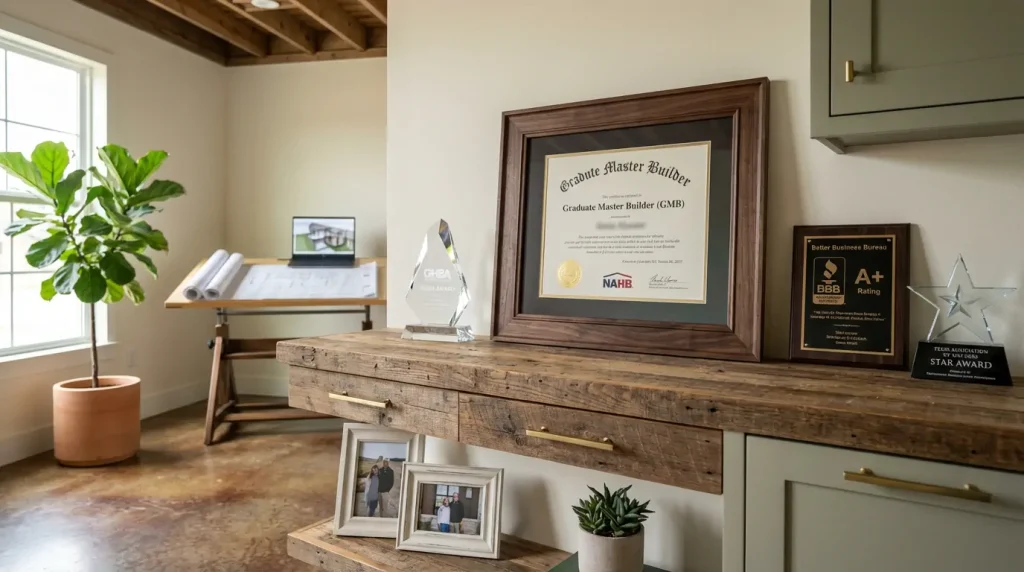
Beyond national certifications, look for active membership in the Greater Houston Builders Association (GHBA) and Texas Association of Builders (TAB). These organizations require dues, participation, and adherence to professional standards — builders who invest in membership are signaling long-term commitment to the industry.
How Do You Evaluate a Builder's Experience in Montgomery County?
Experience isn't just years in business. It's years building custom homes in this specific market with these specific conditions. Montgomery County presents challenges that builders from other regions don't anticipate.
| Evaluation Factor | What to Ask | Red Flag |
|---|---|---|
| Local tenure | "How many custom homes have you completed in Montgomery County?" | Fewer than 10 completed projects in the area |
| Soil expertise | "What foundation system do you recommend for my lot, and why?" | Generic answer without referencing soil testing |
| Permitting knowledge | "Do you handle Montgomery County and City of Magnolia permits?" | Unfamiliarity with dual-jurisdiction requirements |
| Subcontractor network | "How long have your core subs worked with you?" | New subcontractor relationships or unnamed crews |
| Insurance verification | "Can I see your general liability and workers' comp certificates?" | Reluctance to provide current documentation |
Magnolia sits in a unique regulatory zone. Properties inside city limits follow City of Magnolia building codes, while properties in unincorporated Montgomery County follow county regulations. Some neighborhoods along the FM 1488 corridor and Highway 249 straddle both jurisdictions. Your builder needs to navigate this seamlessly.
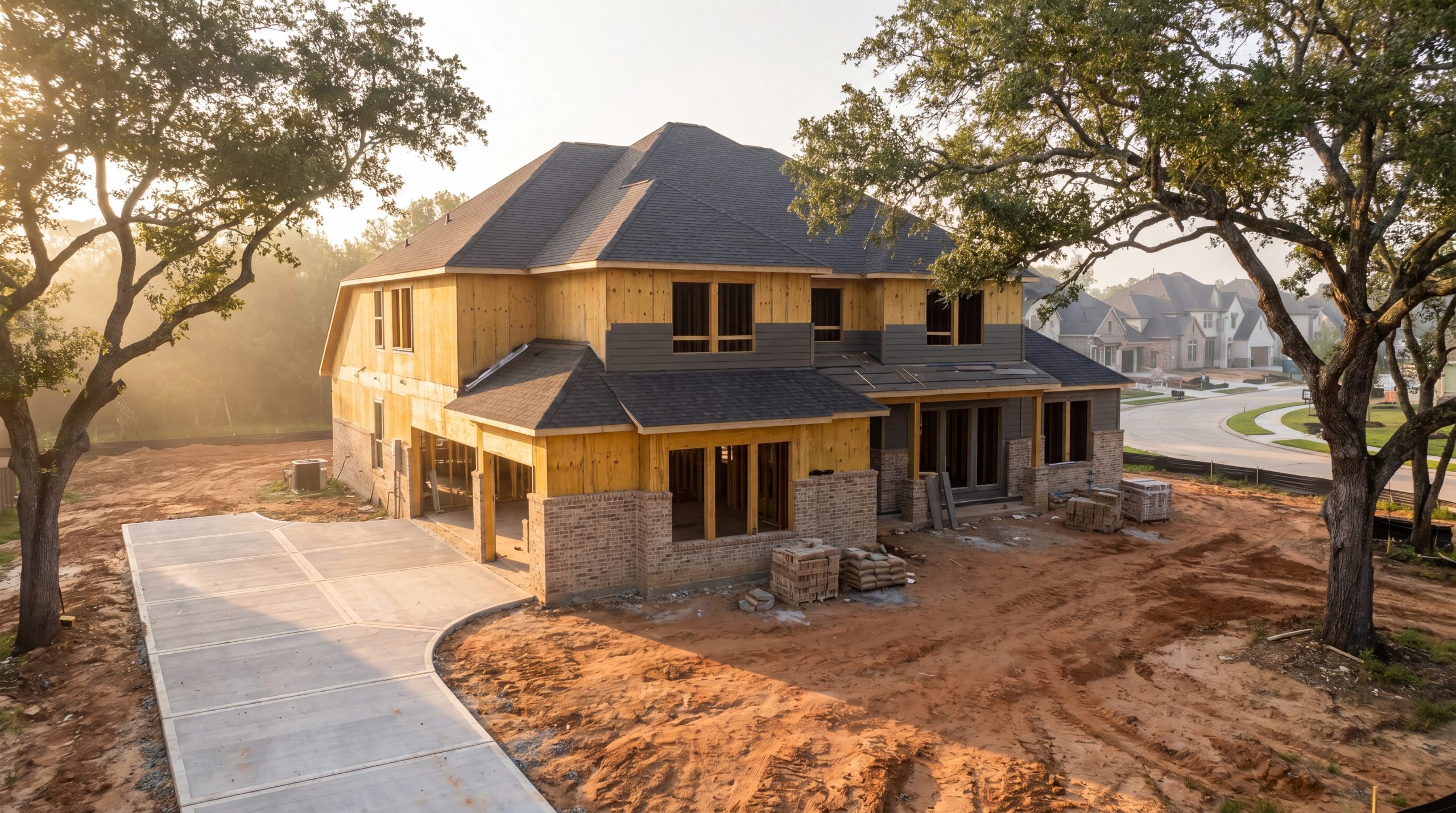
The clay soil conditions around Magnolia deserve particular scrutiny. The red-orange expansive clay formations in communities like High Meadow Ranch, Indigo Lake Estates, and Sendera Lake Estates swell when wet and shrink during drought. A builder without specific experience managing these conditions will either over-engineer your foundation (costing you tens of thousands unnecessarily) or under-engineer it (costing you far more down the road).
What Questions Should You Ask a Custom Home Builder Before Signing?
Forget the softball questions. Every builder in Magnolia will tell you they're committed to quality and communication. The questions that actually reveal character are the ones most homeowners don't think to ask.
Process and accountability questions:
- "Walk me through your change order process. What triggers a change order, and how are costs calculated?"
- "Who is my single point of contact during construction, and what happens if that person leaves your company?"
- "What's your warranty coverage, and does it include structural elements beyond the standard Texas statutory warranty?"
Financial transparency questions:
- "Will you provide a line-item bid, or is this a lump-sum proposal?"
- "What are your allowance amounts for finishes, and what happens when selections exceed allowances?"
- "How do you handle material cost escalations after contract signing?"
A builder who values transparency will welcome these questions. They'll have systems for addressing each one because they've built those systems through years of custom home building experience.
One thing I'd push hard on: ask for their last three completed homes' final cost versus original contract price. The industry average for cost overruns on custom homes hovers around 15-20%. Builders using a design-build model with integrated estimating typically hold that number well below 10%.
How Does Design-Build Compare to the Traditional Architect-Then-Bid Model?
This is where most Magnolia homeowners get tripped up. The traditional model — hiring an architect independently, then bidding the plans to builders — sounds logical. But it creates a structural problem.
When the architect and builder are separate companies, nobody owns the gap between design intent and construction reality. The architect draws what looks beautiful. The builder prices what's actually buildable. The homeowner gets caught in the middle.
Design-build firms solve this by keeping design and construction under one contract. The builder's estimating team reviews plans during the design phase, catching constructability issues before they become expensive change orders.
| Model | Pros | Cons |
|---|---|---|
| Design-Build | Single accountability, integrated estimating, faster timeline, fewer change orders | Less design independence, builder controls architect relationship |
| Architect-Then-Bid | Design freedom, competitive bidding, independent oversight | Communication gaps, longer timeline, change order exposure, finger-pointing risk |
| Owner-Builder | Maximum savings potential, full control over subcontractors | Requires construction knowledge, no warranty, personal liability, financing challenges |
For custom homes in Magnolia's $500K-$2M+ range, the design-build model consistently delivers fewer surprises. That's not just opinion — it's what the data shows across hundreds of completed projects in the Greater Houston market.
What Should You Look for When Comparing Builder Bids in Magnolia?
Comparing custom home builder bids is nothing like comparing quotes for a kitchen appliance. You can't do an apples-to-apples comparison unless every bid uses the same specifications, and they never do unless you force the issue.
Here's what separates a trustworthy bid from a low-ball trap:
- Specification detail: Every material, fixture grade, and finish level should be named specifically. "Builder-grade cabinets" means nothing. "Kraftmaid semi-custom, maple, Dove White" means everything.
- Allowance transparency: Legitimate builders define allowance categories with realistic dollar amounts. If the lighting allowance is $3,000 for a 3,500 sq ft custom home, that builder is planning to surprise you with overages.
- Exclusion clarity: What's NOT included matters as much as what is. Landscaping, window treatments, appliances, septic systems, and well drilling are common exclusions that add $30,000-$100,000 to your true project cost.
- Timeline with milestones: Not just "12-18 months" but specific phases with completion targets. Foundation, framing, dry-in, mechanical rough-in, finishes, final inspection.
Request that every builder you're comparing use identical specifications for their bids. Provide the same set of architectural plans, the same finish selections, and the same scope of work. Otherwise, you're comparing apples to oranges and the lowest number wins — which is exactly how homeowners end up with the wrong builder.
How Do You Verify a Builder's Reputation Beyond Online Reviews?
Read reviews, absolutely. A builder with 47+ reviews and a 4.9/5.0 rating on Houzz has earned that reputation through consistent performance. But online reviews are just the starting point.
Real verification requires legwork. Drive through neighborhoods where the builder has completed homes and knock on doors. Ask homeowners about their experience two, three, five years after move-in. Foundation settling shows up in year two. Drainage problems reveal themselves after heavy rain seasons. Trim carpentry that looked perfect at closing starts separating if the wood wasn't properly acclimated.
Your verification checklist:
- Check Better Business Bureau for complaint history and resolution patterns. An A+ rating with the BBB since 2011 tells you something meaningful about long-term customer commitment.
- Pull Montgomery County permit records to verify the builder actually completed the projects they claim.
- Visit an active job site. The cleanliness, organization, and professionalism of the construction site directly predicts the quality of the finished home.
- Ask for references specifically from projects similar to yours in scope and budget.
Don't skip the jobsite visit. Seriously. A clean, organized construction site with labeled materials and protected finishes reflects a builder who values craftsmanship at every stage — not just at the final walkthrough.
What Magnolia-Specific Factors Affect Your Custom Home Build?
Magnolia isn't generic Houston suburbia. The communities north of Houston along FM 1488 and the 249 Tollway present specific conditions that your builder must understand deeply.
Soil and foundation realities: The expansive clay formations in Montgomery County require geotechnical soil testing before foundation design. Post-tensioned concrete slabs are standard, but some lots — particularly those near creek beds in neighborhoods like Mostyn Manor and around the Magnolia West area — may require engineered pier systems reaching 15-25 feet to stable strata.
Septic and utility considerations: Many Magnolia acreage properties require private septic systems and wells. Site preparation costs including septic installation, well drilling, pad clearing, and driveway construction can add $30,000-$75,000 to your total project budget. Your builder should include these in their preliminary estimates, not present them as surprises after contract signing.
HOA and deed restriction navigation: Communities like High Meadow Ranch, Thousand Oaks, and Audubon have specific architectural review committees with design standards. Your builder needs ARC submission experience in these specific communities. Builders new to Magnolia often underestimate the approval timeline, delaying your project start by weeks.
Climate-responsive construction: Magnolia sits in the transition zone between East Texas Piney Woods and coastal prairie, experiencing both extreme heat (100°F+ summers) and occasional freezing events. Building envelope design, HVAC sizing, and moisture management strategies must account for both extremes. Experienced Keechi Creek Builders' design-build team engineers these factors into every project from day one.
How Long Does the Custom Home Building Process Take in Magnolia?
Realistic expectations prevent frustration. A true custom home in Magnolia — meaning purpose-designed for your family on your lot — typically takes 10-16 months from groundbreaking to final walkthrough. That timeline doesn't include the 2-4 months of pre-construction work: design development, engineering, permitting, and site preparation.
Builders who promise faster timelines are either cutting corners or building from pre-designed plans with minor modifications (which isn't truly custom). Weather delays are real in the Houston area — the region averages 50+ inches of annual rainfall, and concrete and framing work halts during extended wet periods.
Ask your builder for a detailed construction schedule with phase milestones. A builder who can produce this immediately has built enough homes to know exactly how long each phase takes in Montgomery County, accounting for local inspection timelines and subcontractor availability.
Frequently Asked Questions
What is the average cost of a custom home in Magnolia, TX?
Custom homes in Magnolia typically range from $150-$350+ per square foot depending on finishes, site conditions, and complexity. A 3,000 sq ft custom home on acreage generally falls between $450,000 and $1,050,000 before land costs. Foundation engineering for Montgomery County's clay soils adds $10,000-$30,000 but prevents far costlier structural issues. Get detailed estimates from at least three credentialed builders before committing.
What questions should you ask a custom home builder?
Focus on accountability and transparency: request their change order history, ask for final-cost-versus-contract data from recent projects, verify insurance certificates, and demand line-item bids rather than lump-sum proposals. Ask specifically about their experience with Montgomery County permitting and Magnolia's expansive clay soil conditions. The questions a builder welcomes tell you as much as the answers they provide.
How do I verify a custom home builder's credentials in Magnolia?
Check NAHB's directory for certifications like Graduate Master Builder (GMB), verify GHBA membership through their online directory, pull BBB reports for complaint history, and confirm active contractor insurance through the Texas Department of Licensing and Regulation. Visit completed projects in Magnolia neighborhoods and speak with homeowners directly. Any reputable builder will facilitate this verification without hesitation.
What is the difference between custom and semi-custom home builders?
True custom builders design and construct your home entirely from scratch based on your family's specific requirements, lot conditions, and lifestyle vision. Semi-custom builders offer modifications to existing floor plans — upgraded finishes, minor layout changes, or different elevations. The distinction matters because true custom construction requires significantly more design expertise, engineering capability, and project management sophistication.
Why does foundation engineering matter so much in the Magnolia area?
Magnolia sits on expansive clay formations that swell 20-30% when saturated and shrink during drought, creating soil movement that conventional foundations cannot accommodate. Post-tensioned slab foundations with proper engineering resist this movement through steel cable tension systems. Builders without geotechnical testing and structural engineering expertise risk foundation failures that cost $50,000+ to repair — failures that proper upfront engineering prevents entirely.
How do I compare bids from different custom home builders?
Provide identical specifications to every builder: same architectural plans, same finish selections, same scope of site work. Request line-item bids that break out labor, materials, and allowances separately. Compare exclusions carefully — the lowest bid often excludes items like landscaping, appliances, septic systems, or well drilling that add $30,000-$100,000 to your actual cost.
Should I choose a design-build or architect-then-bid approach?
Design-build provides single-contract accountability and catches constructability issues during design rather than during construction. This model typically produces fewer change orders, faster timelines, and more predictable final costs. The traditional architect-then-bid approach offers more design independence but creates communication gaps between separate design and construction teams. For luxury custom homes in Magnolia's $500K+ range, design-build consistently delivers fewer budget surprises.
Conclusion
Choosing the right custom home builder in Magnolia comes down to verifiable credentials, demonstrated local experience, and transparent business practices. Use this evaluation framework on every builder you meet — check their NAHB certifications, verify their Montgomery County project history, compare line-item bids on identical specifications, and visit active jobsites before signing any contract. The builders who welcome this scrutiny are the ones worth hiring. Your dream home on Magnolia acreage deserves nothing less than a builder who's earned the right to build it.