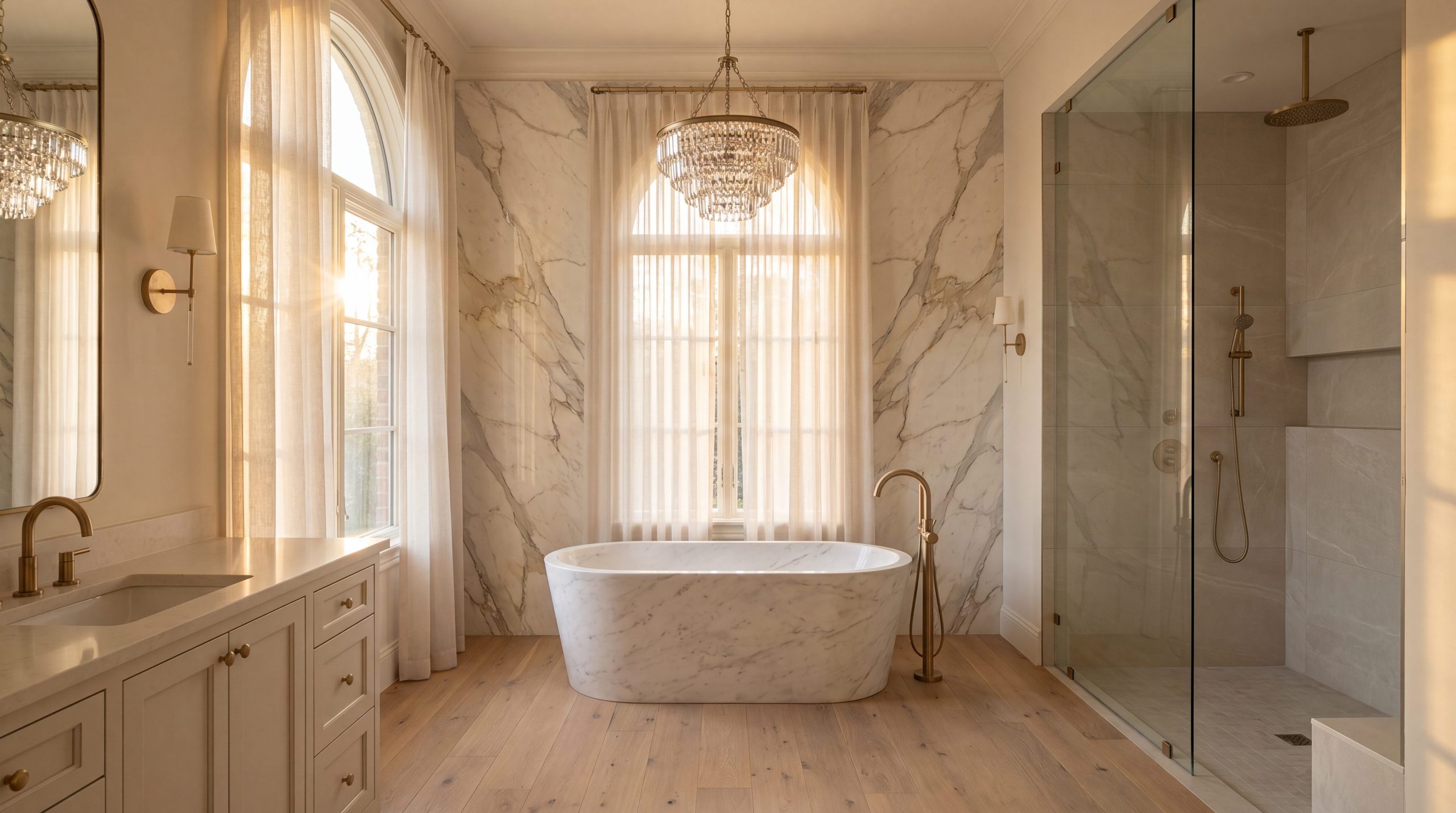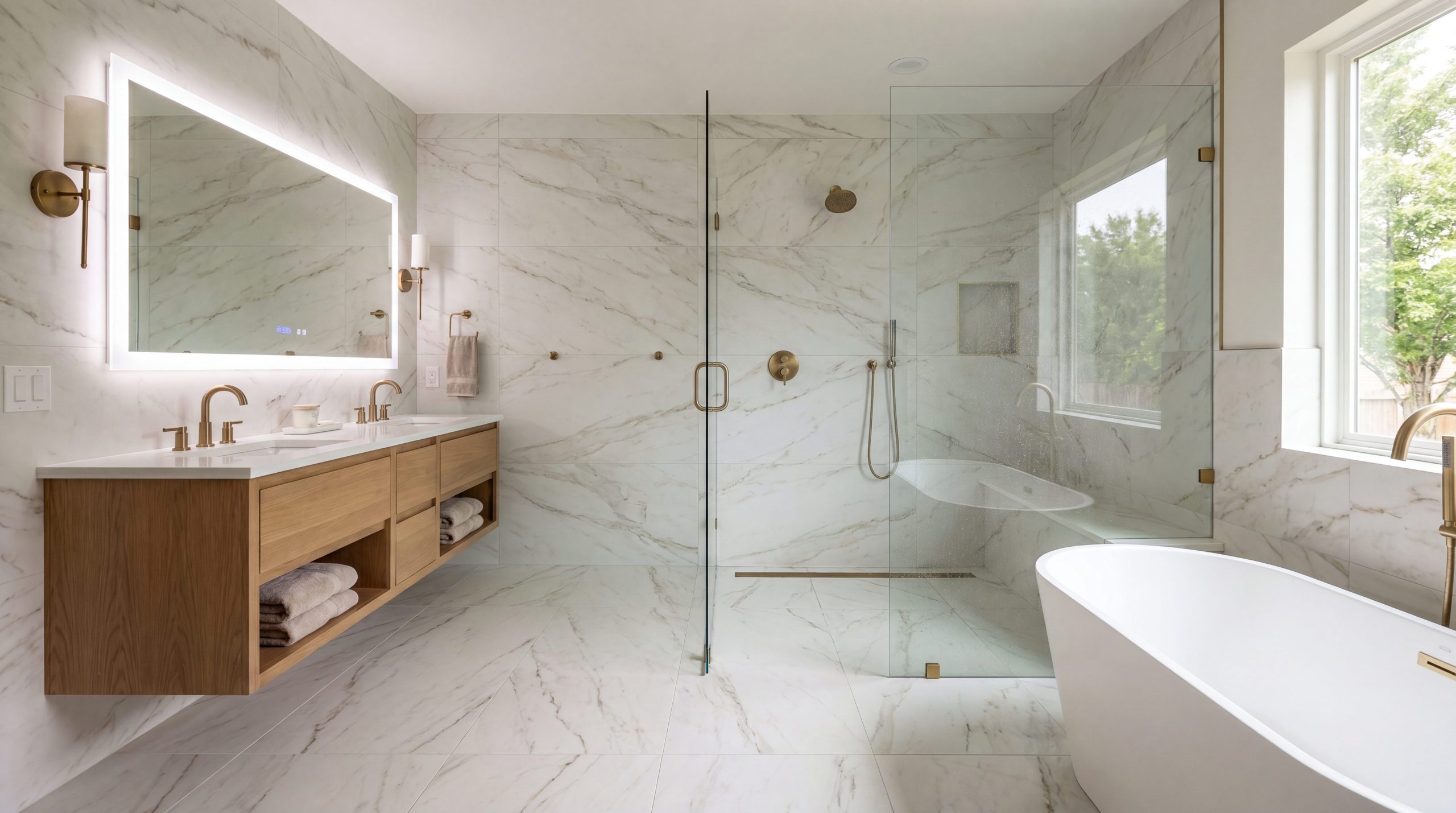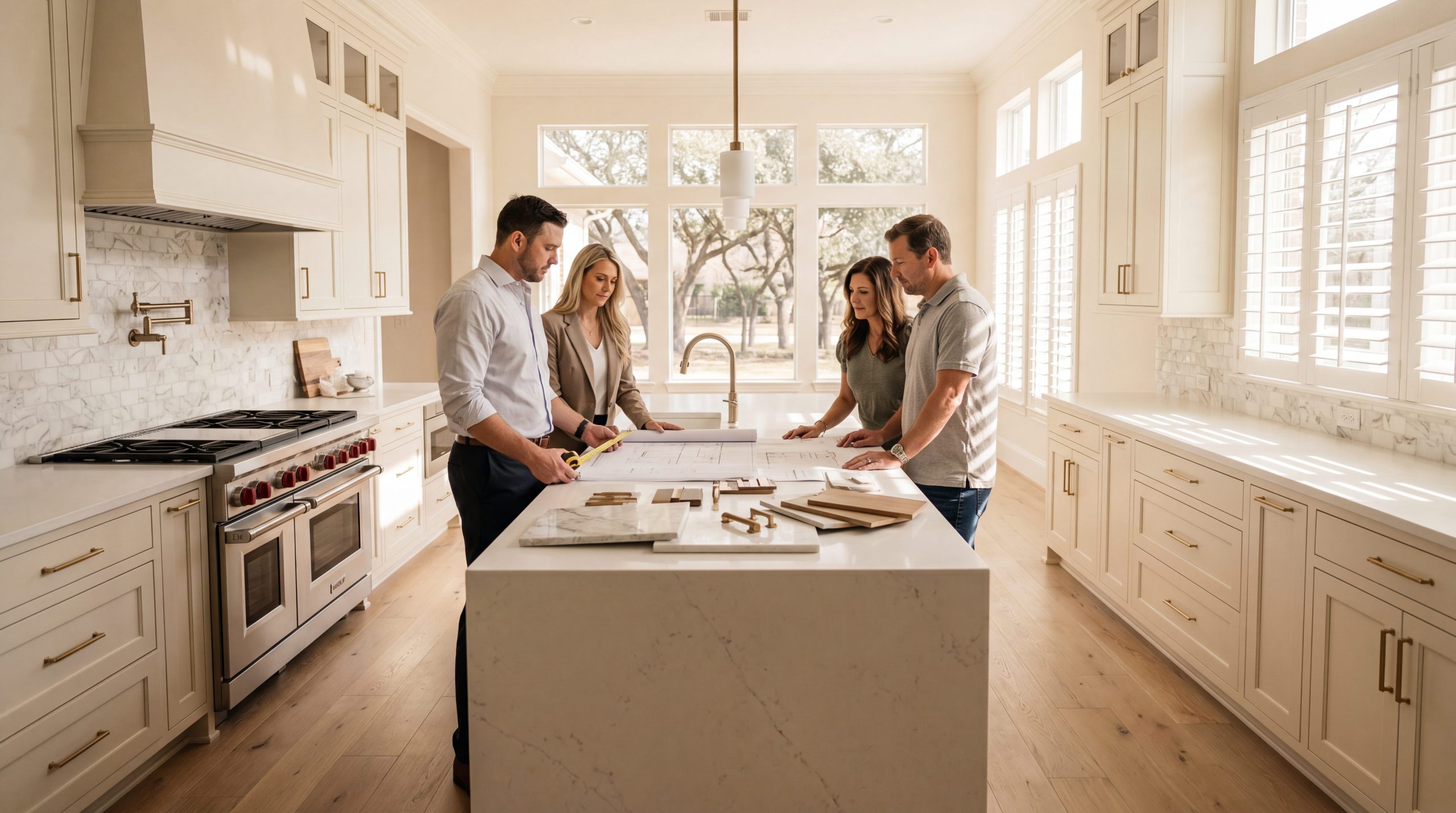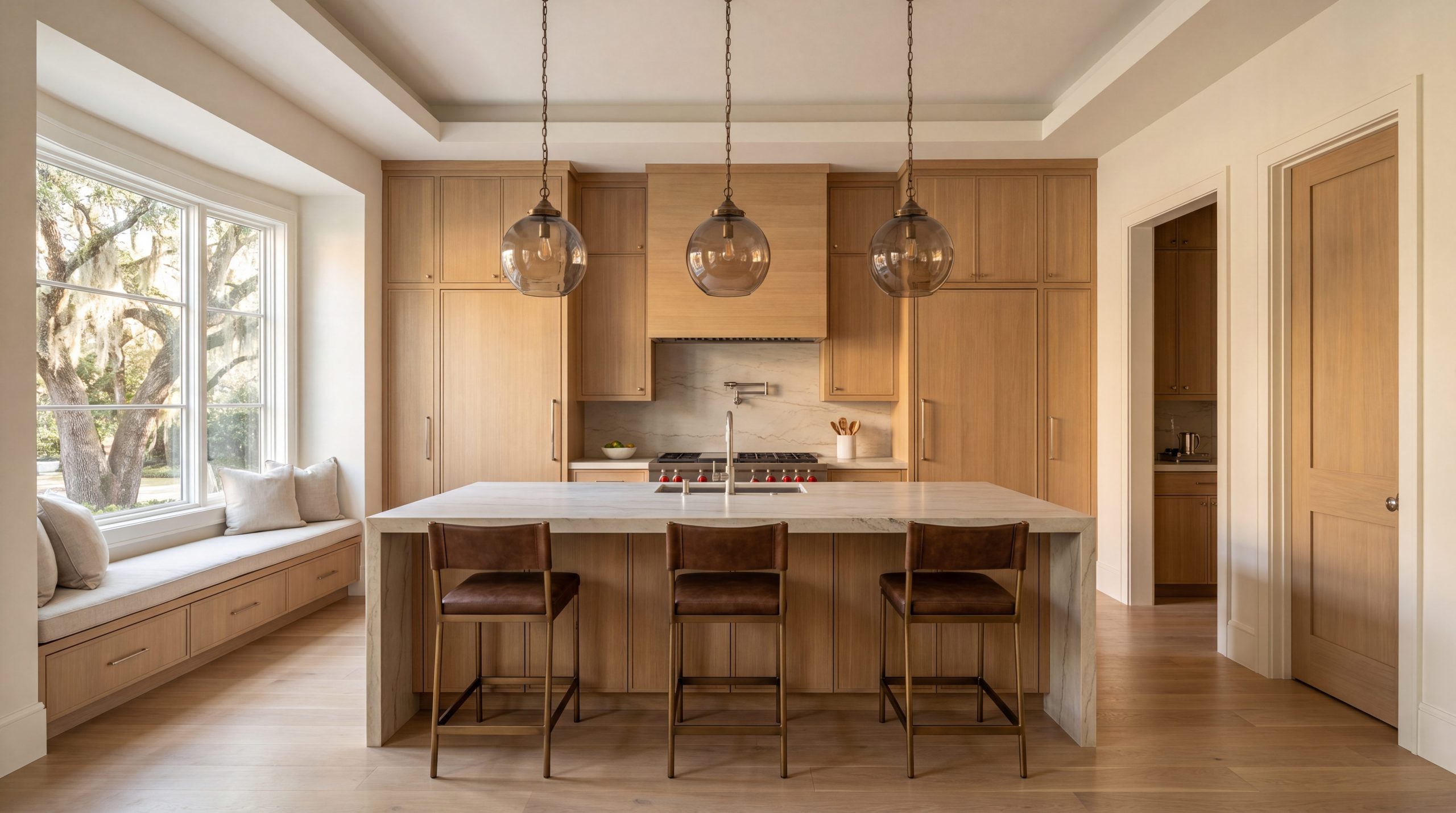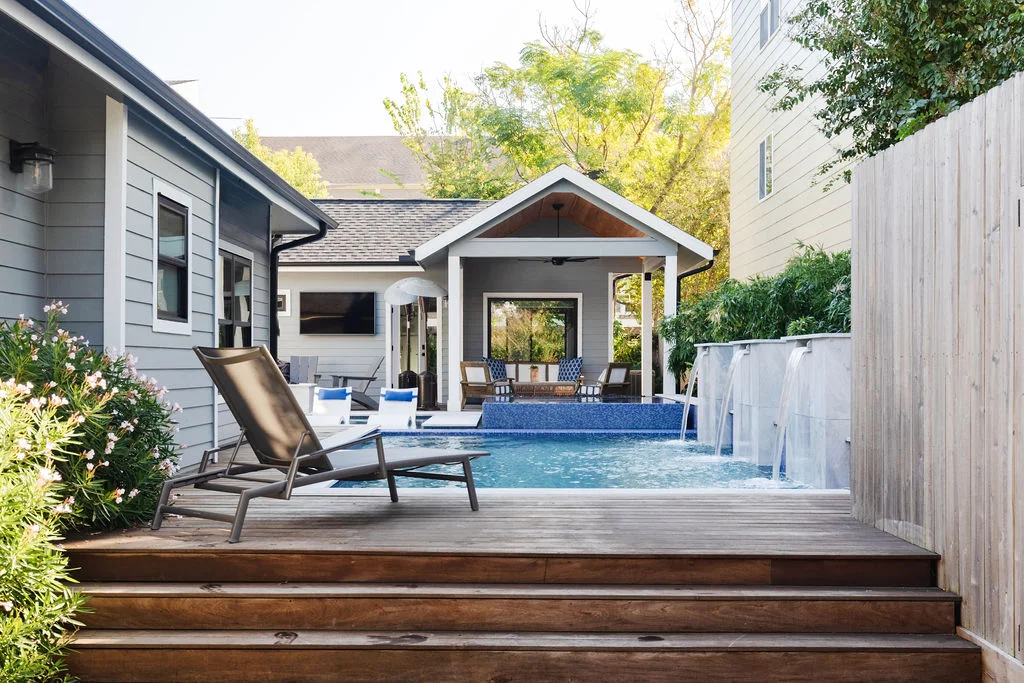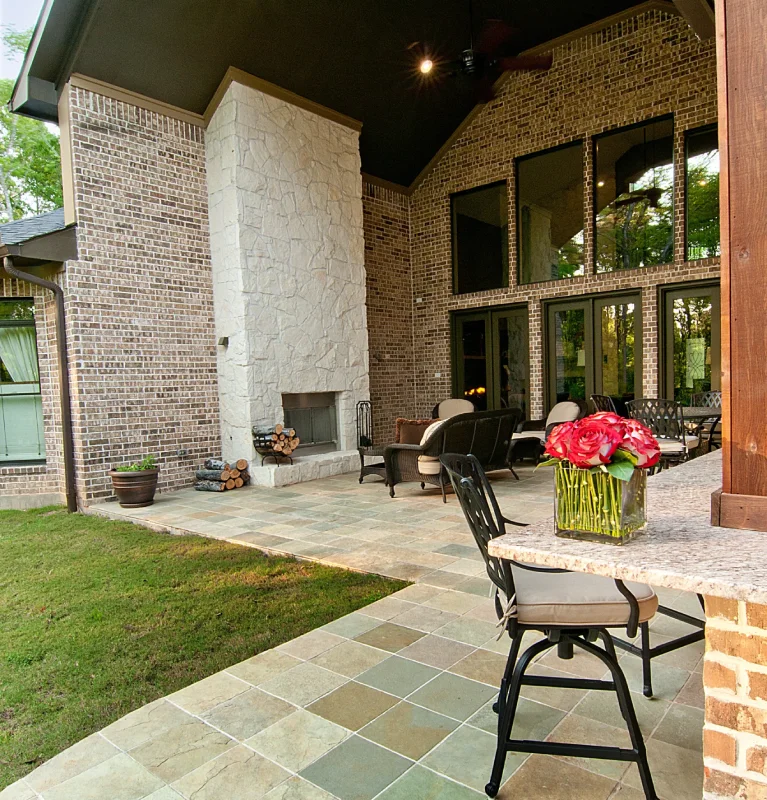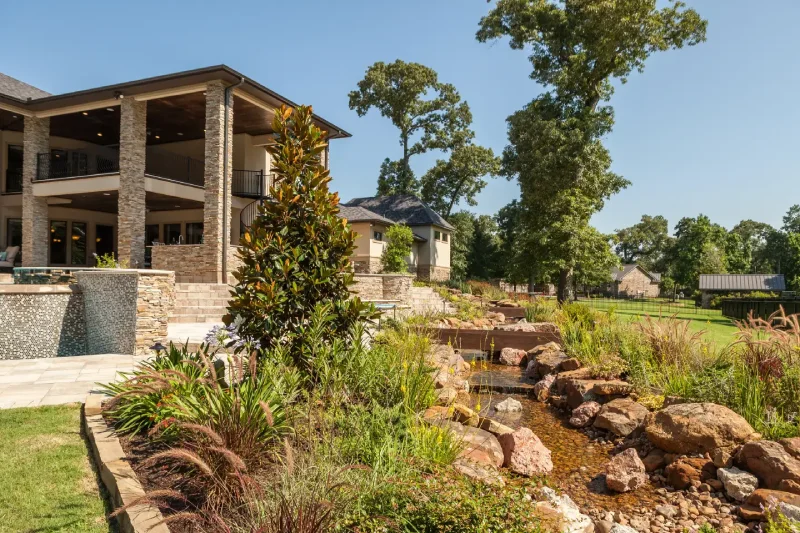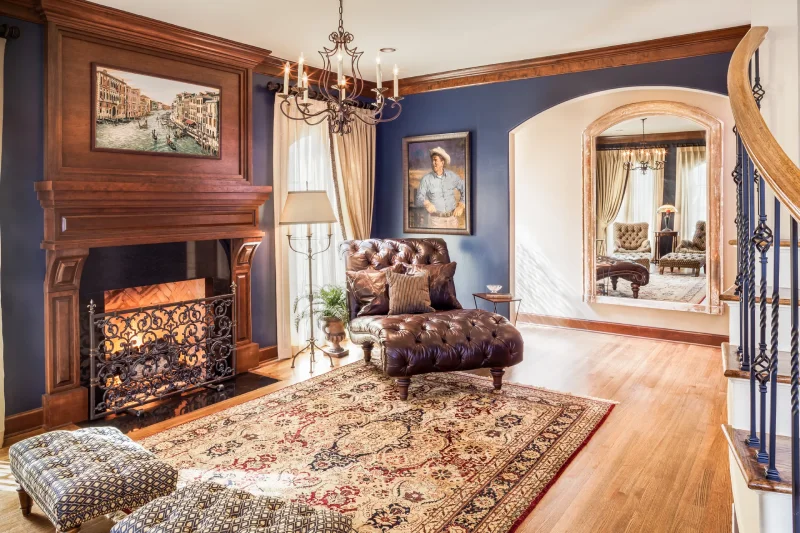
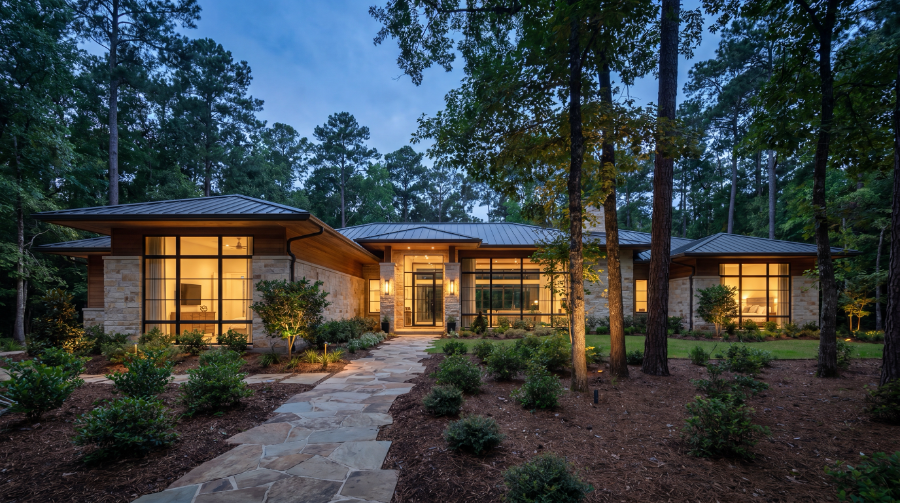
Custom home design in The Woodlands, TX is moving toward transitional and Hill Country Modern architecture that pairs natural stone, cedar, and steel-framed glass with the community's pine canopy. The styles winning Development Standards Committee approval today emphasize forest preservation, indoor-outdoor flow, and restrained, material-driven exteriors over ornamentation.
Key Takeaways
- Transitional architecture and Hill Country Modern are the dominant custom home design directions in The Woodlands for 2026, replacing heavy traditional Tuscan and Mediterranean styling.
- Material trends favor natural stone, cedar accents, standing-seam metal, and large steel-framed windows that frame the forest rather than compete with it.
- The Development Standards Committee (DSC) reviews every exterior design; styles that respect canopy preservation, muted color palettes, and contextual massing clear review faster.
- Indoor-outdoor living, open-but-defined floor plans, and integrated smart-home and aging-in-place features now read as standard expectations for affluent Woodlands buyers, not upgrades.
- Each village — from Carlton Woods to Creekside Park — carries a distinct architectural character that should shape design decisions from the first sketch.
- Keechi Creek Builders approaches design through an integrated design-build process, anticipating DSC preferences and Montgomery County requirements before a single elevation is finalized.
Why Custom Home Design in The Woodlands Starts With the Forest
Custom home design in The Woodlands, TX has always answered to one defining feature: the pine and hardwood canopy that George P. Mitchell preserved when he founded the master-planned community in 1974. In The Woodlands, Texas, architecture is not designed against the landscape — it is designed to disappear into it. That single principle separates homes that feel native to the community from those that look transplanted from a Houston gallery suburb.
For The Woodlands homeowners, the design conversation has shifted decisively over the past several years. The heavy Tuscan and Mediterranean elevations that dominated custom construction a decade ago have given way to architecture that is quieter, more material-honest, and more deliberately connected to the surrounding forest. Understanding where these trends are heading — and which ones earn Development Standards Committee approval — protects both your design vision and your investment.
That shift is reinforced by the community itself. Unlike the production-built neighborhoods of greater Houston, The Woodlands was planned around its forest from the start, and Montgomery County's setting north of the city gave the community room to grow without surrendering its tree cover. The benefit of building a custom home here, rather than buying a builder-grade product, is the freedom to design around your specific lot, your family's lifestyle, and the canopy that makes the property worth owning. Whether you are building on your own lot or selecting one through the design process, the architecture should begin with the land.
This guide draws on Keechi Creek Builders' design-build experience across the community. For prospects earlier in the journey, our complete guide to building a custom home in The Woodlands covers process and budgeting; this article focuses specifically on the design and architectural decisions that define a forest-context home.
The Architectural Styles Defining The Woodlands in 2026
The Woodlands architectural styles gaining momentum share a common thread: they read as calm, layered, and contextual. Four directions account for the majority of new custom home design across the community.
Transitional Architecture
Transitional architecture in The Woodlands is the single most-requested direction in KCB's design studio. It blends the symmetry and proportion of classic architecture with the clean lines and uncluttered detailing of contemporary design. The result is a home that feels timeless rather than trend-locked — painted brick or smooth stucco grounded by natural stone, simplified trim, black or bronze window frames, and a restrained roofline. Transitional homes age gracefully precisely because they avoid the stylistic extremes that date a property within a decade.
Hill Country Modern
Hill Country Modern homes in Texas have migrated east from the Austin corridor and found a natural home under The Woodlands canopy. This style pairs the rugged, material-driven vocabulary of the Texas Hill Country — limestone, board-and-batten, standing-seam metal roofing — with modern massing and expansive glass. In a forest setting, the effect is striking: low-slung horizontal forms, deep overhangs that manage the Gulf Coast sun, and walls of steel-framed glazing that pull the tree line indoors.
Modern Farmhouse, Refined
The modern farmhouse has matured. The high-contrast white-and-black version that saturated social media has been replaced by a more sophisticated interpretation — warmer whites, mixed natural materials, cedar soffits, and authentic metal accents rather than decorative gestures. For The Woodlands, the refined farmhouse works best when its scale is disciplined and its palette borrows from the bark, stone, and foliage of the lot itself.
Warm Contemporary
Pure contemporary design — flat or low-slope roofs, geometric massing, minimal ornamentation — remains a smaller share of Woodlands custom homes, in part because the Development Standards Committee scrutinizes stark modern elevations more closely. The version that succeeds here is warm contemporary: clean architectural lines softened by wood, stone, and landscape integration so the home reads as deliberate rather than austere.
Material Trends That Honor the Canopy
Material selection is where custom home design trends in Houston and The Woodlands diverge most sharply from production construction. The palette winning favor today is natural, tactile, and chosen to harmonize with the forest rather than stand out from it.
- Natural stone — Texas limestone, Lueders, and chopped fieldstone — used as grounding base material and full-height accent walls rather than thin veneer trim.
- Cedar accents on soffits, entry ceilings, garage doors, and feature gables, adding warmth and a direct material echo of the surrounding trees.
- Steel-framed windows and oversized glazing that frame canopy views, flood interiors with filtered light, and dissolve the boundary between built and natural space.
- Standing-seam metal roofing and deep overhangs engineered for Gulf Coast rain loads and solar control.
- Muted, forest-derived color palettes — greens, warm grays, charcoals, and natural wood tones — that the DSC consistently favors over high-contrast schemes.
These materials do more than satisfy aesthetic preferences. Cedar and stone weather predictably in The Woodlands' humid climate, and properly detailed steel-framed glazing balances daylight with the energy performance affluent buyers now expect as standard.
How the Development Standards Committee Shapes Design
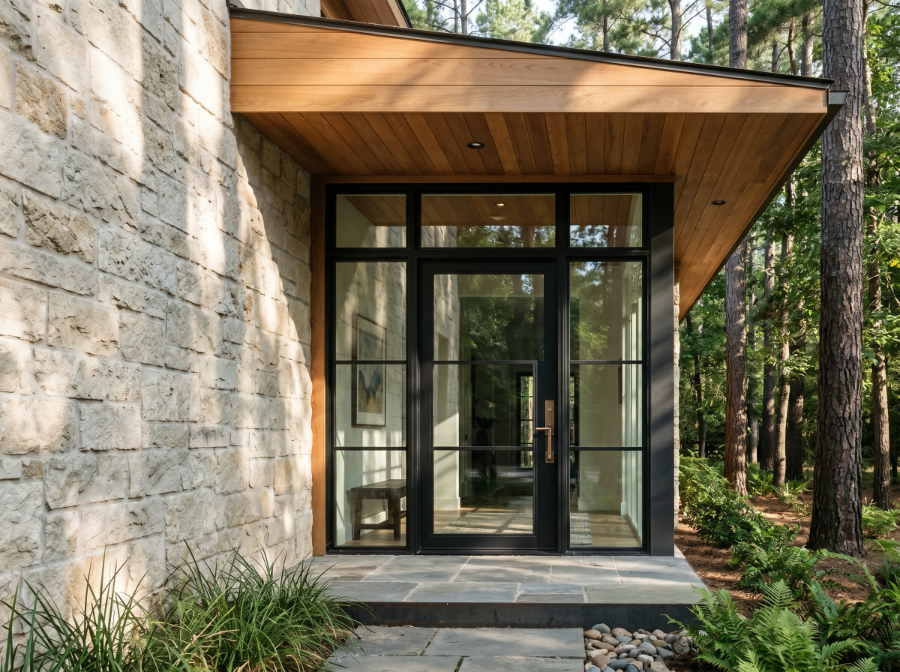
In most of Greater Houston, exterior design is constrained only by deed restrictions and a homeowners association's general guidelines. The Woodlands is different. The Development Standards Committee (DSC) functions as a private architectural review authority, and every custom home exterior — massing, materials, color, roofline, and site placement relative to the tree canopy — passes through its review before Montgomery County issues building permits.
From DSC approval through final walkthrough, design decisions carry regulatory weight that inexperienced builders underestimate. The committee's preferences are consistent and knowable: contextual massing that respects neighboring homes, preservation of significant trees, muted exterior palettes, and authentic materials over imitation finishes. Designs that ignore these preferences face revision cycles that add weeks — sometimes months — to a project timeline.
This is precisely where design intent and approval probability intersect. KCB designs with the DSC in mind from the first elevation, anticipating committee concerns before they become objections. For The Woodlands homeowners, that institutional knowledge is the difference between a smooth review and a frustrating one — and it is a core reason clients choose our custom home builders in The Woodlands for design-led projects.
Design Trends by Village
The Woodlands comprises distinct villages, each with its own architectural character, lot conditions, and DSC expectations. Smart custom home design begins with the specific village context.
| Village | Character | Design Direction That Fits |
| Carlton Woods | Ultra-luxury, gated, golf-course estates on large wooded lots | Refined transitional and Hill Country Modern at estate scale; stone-and-glass forward |
| Creekside Park | Newer, family-oriented, architecturally diverse | Modern farmhouse and warm contemporary; flexibility within DSC guidelines |
| Sterling Ridge | Established, spacious lots, mature canopy | Transitional architecture that preserves significant trees and frames the forest |
| Grogan's Mill | Original village, dense mature canopy, renovation-heavy | Contextual transitional design and tear-down rebuilds that respect the founding character |
| Alden Bridge | Family-popular, diverse price points | Disciplined-scale transitional and refined farmhouse with natural material palettes |
Whether you are building in Carlton Woods or designing a forest-edge home in Sterling Ridge, the architectural language should answer to the village first and personal taste second. That sequencing is what produces a home that feels inevitable in its setting.
Interior Design Trends: Indoor-Outdoor Living and Defined Open Plans
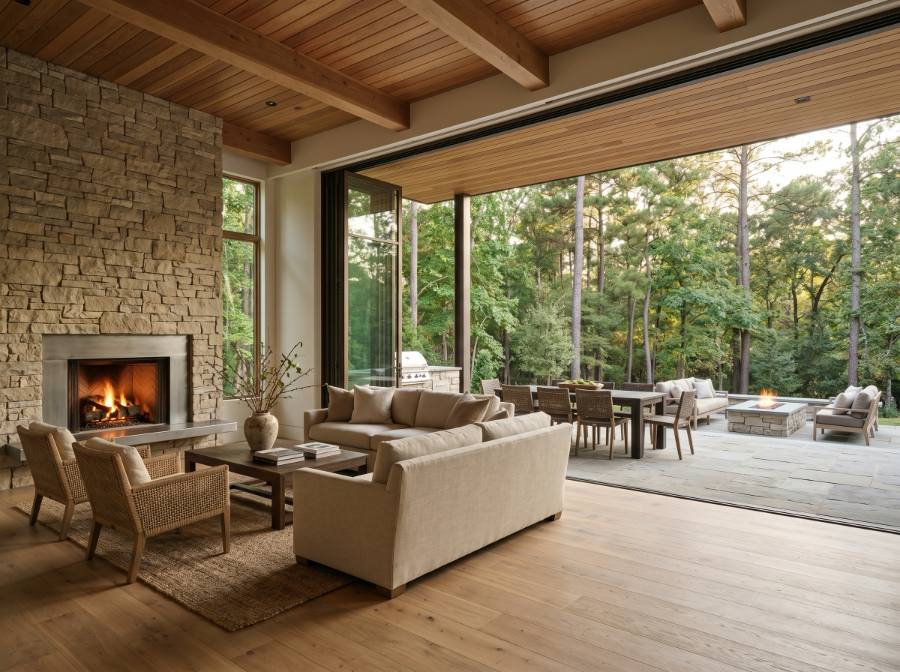
Interior trends in The Woodlands track the exterior shift toward natural, connected, and intentional space. The fully open floor plan of the 2010s has evolved into the open-but-defined plan — zones that flow visually while retaining acoustic and functional separation for working, cooking, and gathering.
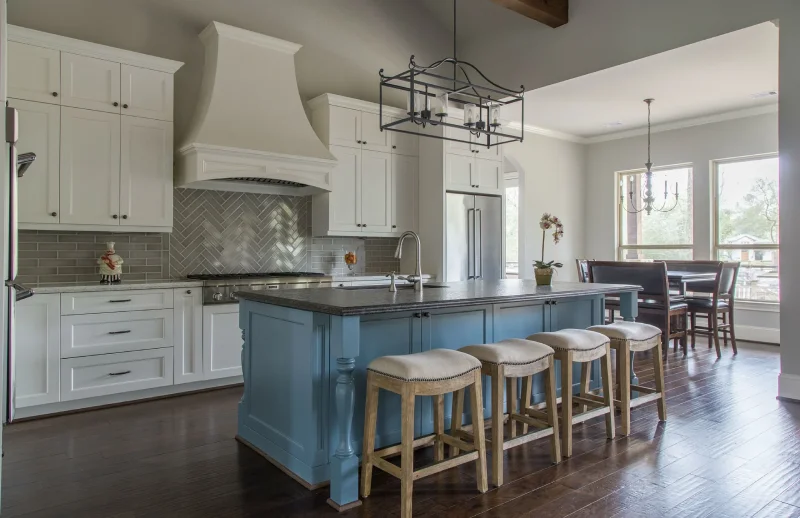
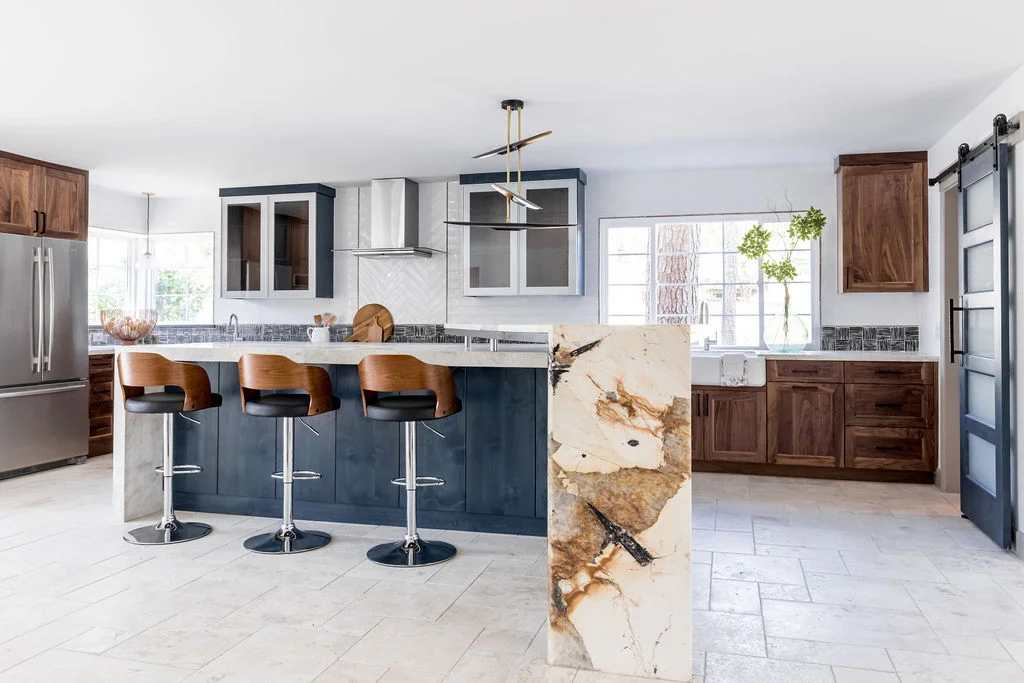
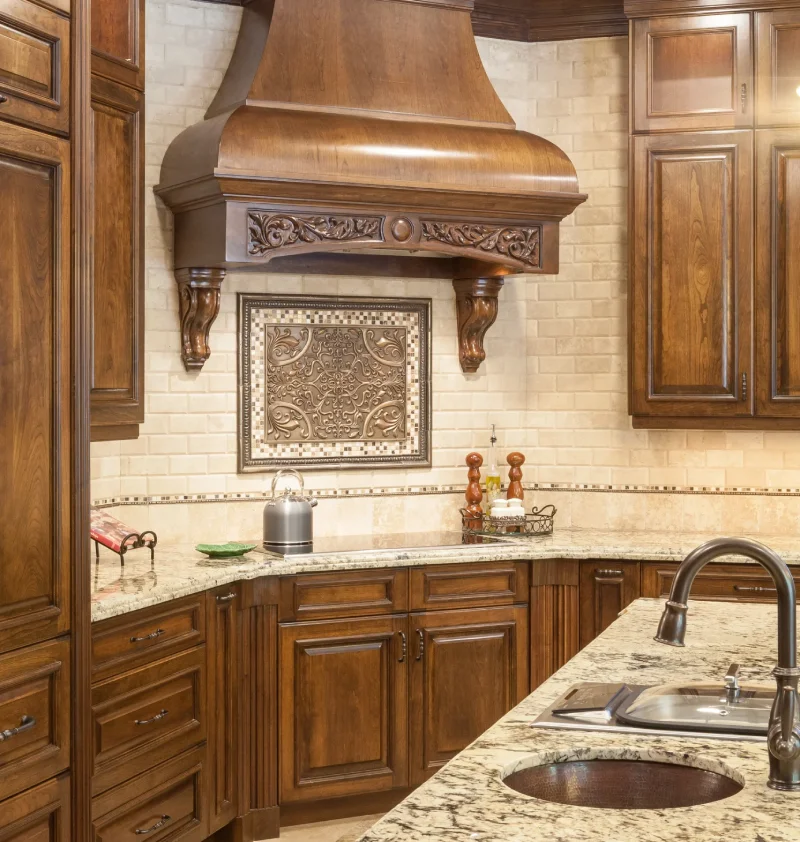
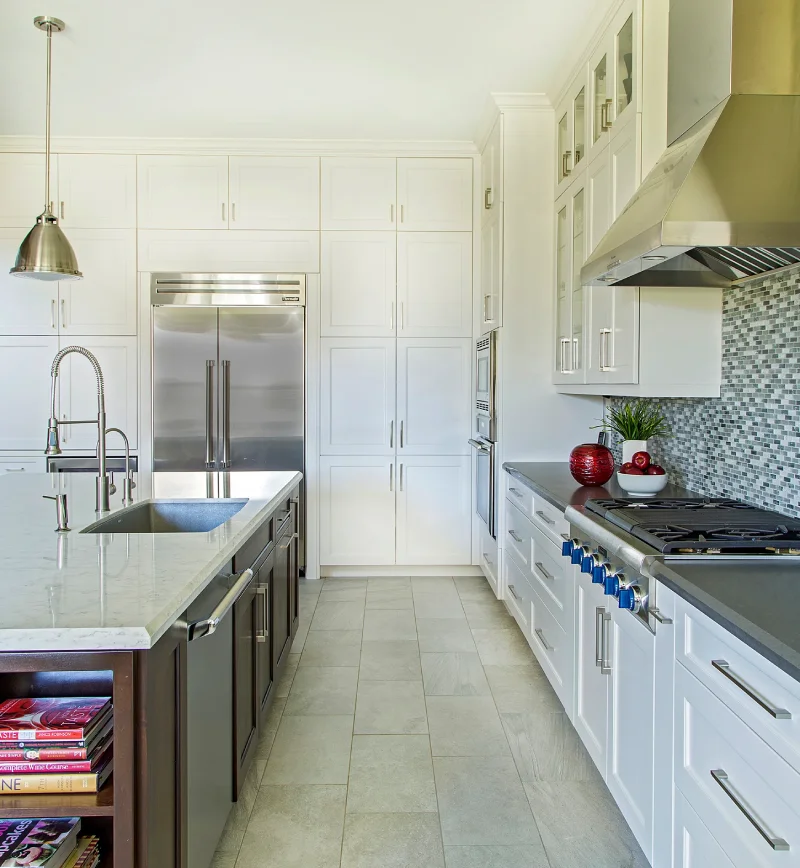
Indoor-outdoor living is the defining interior trend. Retractable glass walls, covered outdoor kitchens, and screened living rooms extend usable space into the canopy for much of the year. Inside, the kitchen remains the architectural anchor of the home — a reality that makes thoughtful design essential whether building new or, for existing residents, pursuing kitchen remodeling in The Woodlands. Natural stone surfaces, integrated appliances, and walk-in pantries define the current standard.
Smart-home integration — lighting scenes, climate zoning, shading, and security — is now specified during design rather than added afterward, allowing wiring and infrastructure to be engineered into the build cleanly.
Designing for the Long Term: Accessibility and Efficiency as Luxury
Two design priorities have moved from optional to expected among affluent Woodlands buyers, particularly empty-nesters building a forever home. The first is universal design. Wider doorways, curbless showers, comfort-height fixtures, and a main-floor primary suite are no longer framed as accessibility accommodations — they are sophisticated, future-proof planning that protects long-term value. Both Brandon Lynch and senior project manager Tommy Strong hold the Certified Aging-in-Place Specialist (CAPS) designation, allowing these features to be integrated as luxury elements rather than visible add-ons.
The second is energy and material efficiency. The Woodlands' environmental ethos aligns naturally with high-performance design — tighter envelopes, Low-E glazing, and well-managed solar orientation that lower operating costs without compromising the architecture. These decisions are inseparable from structural and foundation engineering, especially on the community's expansive clay soils, which is why design and engineering belong on the same integrated team.
What Today's Design Trends Mean for Long-Term Value
Design is not only an aesthetic decision in The Woodlands — it is a value decision. Homes designed in the transitional and Hill Country Modern idiom tend to hold their appeal because they avoid the stylistic extremes that date a property and depress resale interest. In a market where buyers are sophisticated and inventory is scrutinized, a home that reads as authentic to its forest setting commands stronger long-term value than one chasing a passing trend.
Three design choices consistently protect value in the community: authentic natural materials that age gracefully rather than peel or fade, a disciplined exterior palette that satisfies the Development Standards Committee and future appraisers alike, and floor plans that balance open, connected living with the defined spaces families actually use. Each of these decisions is easier to get right when design, engineering, and construction sit on one integrated team from the first sketch — and far more expensive to correct after the fact.
How Keechi Creek Builders Approaches Custom Home Design in The Woodlands, TX
Great architecture in a forest context is not the product of a mood board — it is the product of disciplined design intelligence applied to a specific lot, village, and regulatory environment. Keechi Creek Builders approaches custom home design in The Woodlands, TX through an integrated design-build process: architectural design, structural engineering, material selection, and construction managed by one team under one contract.
That integration matters most at the design stage. Because our engineers and designers work together from the first sketch, design decisions are tested against structural reality, clay-soil foundation requirements, and DSC preferences simultaneously — not discovered to be unworkable after an architect hands off drawings to a separate builder. The process includes AutoCAD drafting and photorealistic 3D renderings, so clients walk through every room, test finishes, and approve the design before construction begins. As GHBA Custom Builder of the Year and a 32-time industry award winner, KCB brings a documented design record to the community's most demanding lots.
Frequently Asked Questions
What custom home design styles are most popular in The Woodlands right now?
Transitional architecture and Hill Country Modern are the most-requested custom home design styles in The Woodlands for 2026, followed by refined modern farmhouse and warm contemporary. All four favor natural stone, cedar, steel-framed glass, and muted, forest-derived palettes over the heavy Tuscan and Mediterranean styling that dominated a decade ago.
Does the Development Standards Committee restrict architectural style in The Woodlands?
The Development Standards Committee (DSC) reviews every custom home exterior in The Woodlands — massing, materials, color, roofline, and tree preservation — before Montgomery County issues permits. It does not ban styles outright, but it favors contextual, material-honest designs with muted palettes. Stark modern elevations face closer scrutiny, so experienced design-build input shortens the review cycle.
What exterior materials are trending for Woodlands custom homes?
Natural stone such as Texas limestone, cedar accents on soffits and gables, standing-seam metal roofing, and oversized steel-framed windows define the current material trend. These tactile, natural materials weather predictably in the humid climate and harmonize with the pine canopy, which is both an aesthetic preference and a consistent DSC favorite.
How does forest preservation affect custom home design in The Woodlands?
Forest preservation shapes nearly every design decision in The Woodlands. Significant trees often dictate site placement, home orientation, and footprint, and the DSC reviews tree impact during approval. The strongest designs treat the canopy as an asset — framing views through large glazing and orienting living spaces toward preserved stands rather than clearing the lot.
Is Hill Country Modern a good fit for The Woodlands?
Yes. Hill Country Modern translates well to The Woodlands because its material vocabulary — limestone, board-and-batten, standing-seam metal, and expansive glass — pairs naturally with a forest setting. Low horizontal massing and deep overhangs manage the Gulf Coast sun, and the style's warmth helps modern designs clear DSC review more readily than stark contemporary elevations.
Should custom home design account for aging-in-place features?
Increasingly, yes. Many affluent Woodlands buyers are building forever homes, and universal design features — main-floor primary suites, curbless showers, wider doorways, and comfort-height fixtures — now read as luxury, future-proof planning. Keechi Creek Builders' CAPS-certified team integrates these elements into the architecture so they enhance both accessibility and long-term resale value.
Designing a Home That Belongs to the Forest
The most successful custom home design in The Woodlands, TX is the design you stop noticing as separate from its setting — architecture that honors the forest, satisfies the Development Standards Committee, and reflects how you actually live. Achieving that requires more than style preferences; it requires a team that understands the community's villages, materials, regulatory environment, and clay-soil engineering as a single design problem. To explore a forest-context design for your lot, connect with Keechi Creek Builders to schedule a design consultation. You can also review the firm's credentials and award record through the American Institute of Architects standards that inform professional residential design. Call (281) 914-4951 to begin.