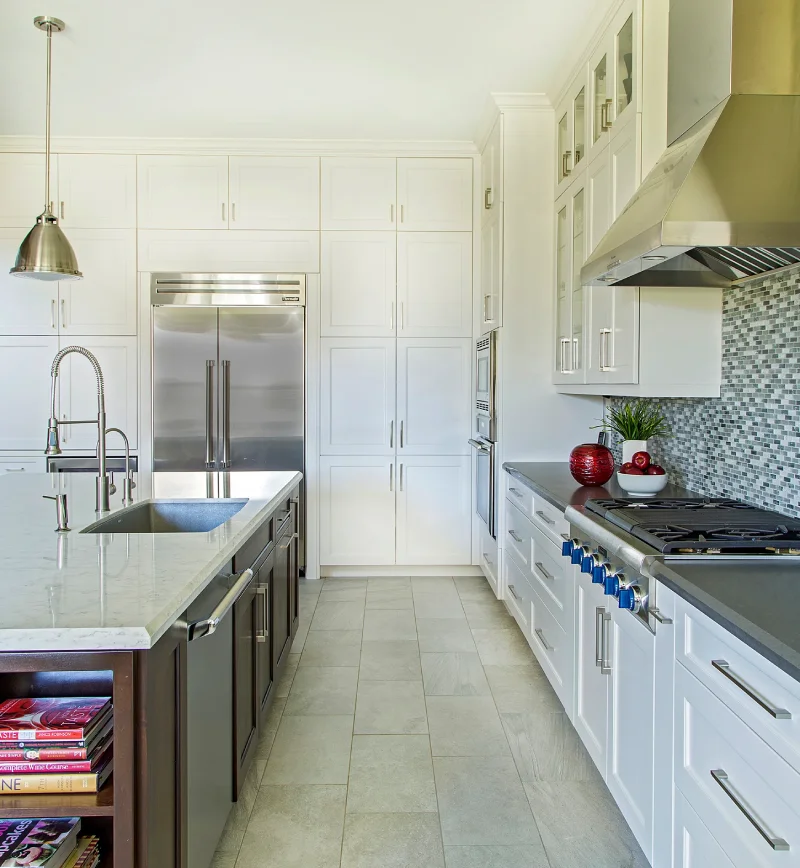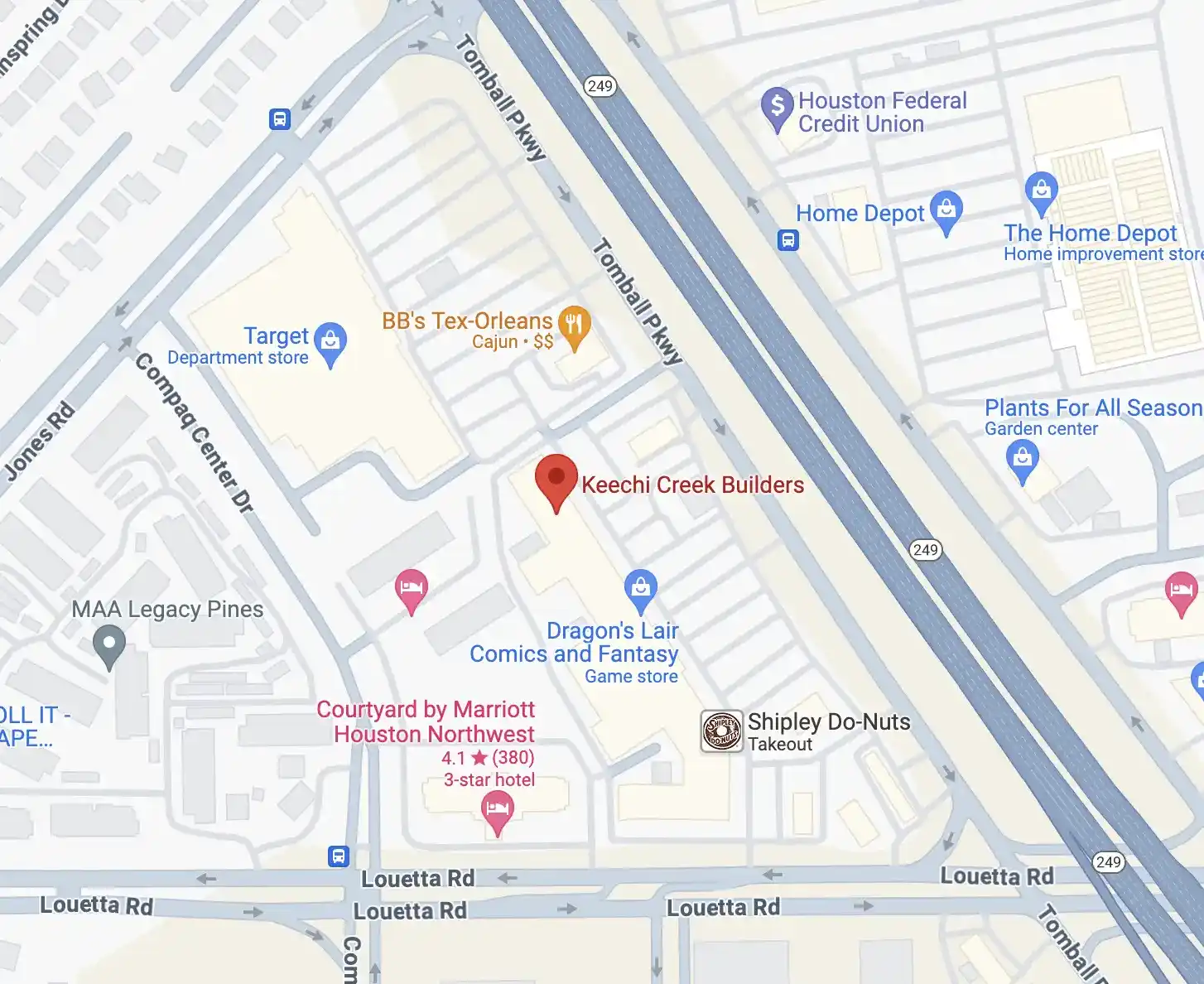
Building a custom home in Magnolia, TX means navigating Montgomery County's dual-jurisdiction permitting, engineering foundations for Houston's expansive clay soils, and budgeting for acreage site preparation that production home buyers never encounter. Whether you build on your lot or purchase acreage through a realtor, Magnolia homeowners who understand these realities before breaking ground save months of delays and tens of thousands in preventable costs.
Key Takeaways
- Two Jurisdictions, Two Rulebooks: Properties inside Magnolia city limits follow City of Magnolia building codes, while unincorporated Montgomery County properties follow county regulations — and your builder needs to know exactly which applies to your lot.
- Clay Soil Isn't Optional Knowledge: The red-orange expansive clay formations throughout Montgomery County swell 20-30% when saturated, making geotechnical soil testing and engineered foundation design non-negotiable for every custom home project.
- Septic and Well Costs Surprise Newcomers: Many Magnolia acreage properties require private septic systems ($10,000-$25,000) and wells ($8,000-$15,000), adding $30,000-$75,000 to total site preparation budgets that buyers from master-planned communities don't anticipate.
- HOA Rules Vary Wildly by Neighborhood: Communities like High Meadow Ranch enforce strict architectural review standards, while unrestricted acreage tracts along FM 1488 offer near-complete design freedom — know your deed restrictions before finalizing floor plans.
- Custom Timelines Are Real Timelines: A true custom home in Magnolia takes 10-16 months of construction plus 2-4 months of pre-construction design, engineering, and permitting — builders promising faster than that are cutting corners or building semi-custom.
- Engineering Background Matters Here: Magnolia's soil, drainage, and floodplain conditions demand a builder with structural engineering knowledge, not just carpentry skills — the difference shows up in foundation performance for decades.
Why Magnolia Has Become the Hottest Custom Home Market North of Houston
If you're looking to build your dream home on acreage, something's happening in Magnolia that builders and buyers both feel. The area along FM 1488 and the 249 Tollway has transformed from quiet ranching country into one of the most desirable custom home building markets in the Greater Houston area.
The numbers tell the story. Montgomery County issued over 4,800 residential building permits in 2024, and a significant portion landed in the Magnolia corridor. What's driving this? Oversized acreage lots that you simply can't find in Cypress or The Woodlands anymore. School districts that families trust. And a commute to Houston that the 249 Tollway has cut dramatically.
But here's what most people don't realize until they're knee-deep in the building process: constructing a custom home in Magnolia isn't like buying in a master-planned community where the builder hands you a brochure and a closing date. Every lot out here has its own personality — its own soil conditions, drainage patterns, utility requirements, and regulatory quirks. That's what makes Magnolia building both exciting and complex.
What Does the Custom Home Building Process Actually Look Like in Magnolia?
The custom home building process in Magnolia follows a sequence that experienced builders know by heart, but first-time custom home buyers rarely anticipate. Every homeowner looking to build their dream home to life on Magnolia acreage needs to understand this timeline. There's a reason the pre-construction phase exists, and skipping it is how projects go sideways.
Phase 1: Pre-Construction (2-4 months)
This is where the real work happens before a single shovel hits dirt. Geotechnical soil testing comes first — you need to know what your foundation is sitting on before designing it. Then comes site surveying, architectural design, structural engineering, and permit submissions. In Magnolia, you're also dealing with septic system design (if applicable), well permits, and potentially HOA architectural review committee approvals.
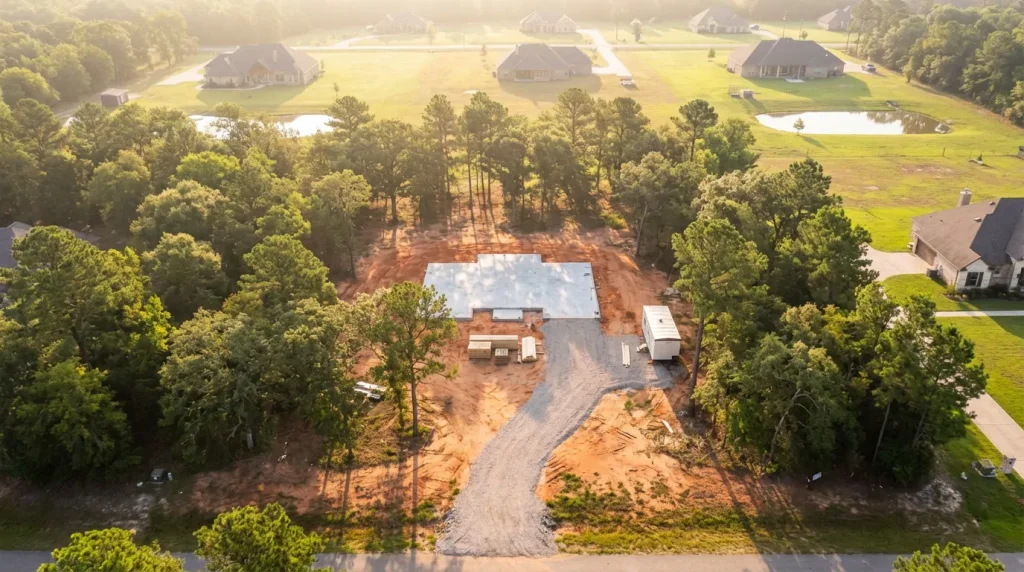
Phase 2: Site Preparation (2-4 weeks)
Pad clearing, grading, driveway construction, and utility rough-ins. For Magnolia acreage properties, this phase often includes septic installation, well drilling, and establishing construction access for concrete trucks and material deliveries. Don't underestimate this — site prep on a wooded 2-acre lot runs $30,000-$75,000 depending on clearing requirements and utility distances.
Phase 3: Construction (10-16 months)
Foundation, framing, mechanical rough-in (plumbing, electrical, HVAC), insulation, drywall, finishes, and final inspections. Weather delays are real in the Houston area — budget for 50+ inches of annual rainfall interrupting concrete pours and framing schedules.
The builders who deliver projects on time in this market are the ones who've built enough custom homes around Magnolia to know exactly how long each phase takes with Montgomery County inspection timelines.
How Does Montgomery County's Dual-Jurisdiction System Affect Your Build?
This catches almost every first-time Magnolia builder off guard. The City of Magnolia has its own building department with code adoption and plan review requirements. Properties outside city limits fall under Montgomery County's jurisdiction, which applies different code versions and inspection protocols.
| Factor | City of Magnolia | Unincorporated Montgomery County |
|---|---|---|
| Building Code | 2021 International Residential Code (IRC) | 2015 IRC |
| Plan Review | Required — submitted to city building department | Required — submitted to county permit office |
| Septic Permitting | City sewer where available; OSSF where not | Montgomery County OSSF Department |
| Tree Removal | Tree removal permit required in city limits | Generally not required outside city |
| Driveway Culvert | City engineering department approval | County Precinct Commissioner's office |
| Flood Zone Review | City floodplain administrator | FEMA maps + county review |
The complication? Some Magnolia neighborhoods straddle both jurisdictions. Properties along the FM 1488 corridor, Highway 249, and in newer developments near the city's extraterritorial jurisdiction (ETJ) can fall under either authority — or in rare cases, require approvals from both.
Your custom home builder in Magnolia needs to determine your lot's jurisdiction definitively before starting design work. Filing permits with the wrong authority doesn't just delay your project — it can require redesign if code requirements differ between jurisdictions.
What Soil and Foundation Challenges Should You Expect in Magnolia?
Let's talk about what's under your feet. Pretty much every custom home site in Magnolia sits on expansive clay soil. Not some of them. Virtually all of them. The red-orange clay formations characteristic of this part of Montgomery County swell when saturated and shrink during drought, creating ground movement that destroys improperly engineered foundations.
I've seen homeowners spend $50,000+ repairing foundation damage that proper engineering would have prevented with a $15,000-$25,000 upfront investment. The math isn't complicated — it just requires a builder who understands soil mechanics rather than one who pours the same slab on every lot.
Here's what proper foundation preparation looks like in Magnolia:
- Geotechnical soil testing ($1,500-$3,000): A soil engineer drills test borings on your specific lot, measuring clay content, plasticity index, and bearing capacity. This isn't optional — it's the foundation of your foundation.
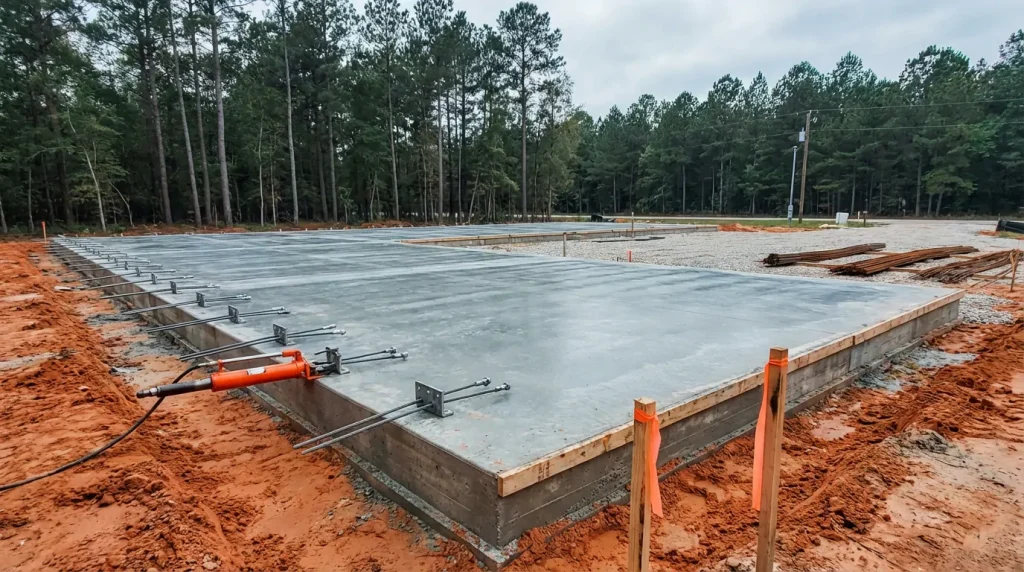
- Structural engineering ($3,000-$8,000): Based on soil data, a structural engineer designs the foundation system — typically post-tensioned concrete slab with steel cable reinforcement for standard lots, or engineered pier systems for problem sites near creek beds.
- Drainage planning: Magnolia gets 50+ inches of rain annually. Your foundation needs proper drainage to prevent the moisture fluctuation cycles that cause clay soil movement. French drains, surface grading, and foundation watering systems during drought are standard best practices.
Communities like High Meadow Ranch, Indigo Lake Estates, and Sendera Lake Estates sit on particularly active clay formations. Lots near Mostyn Manor and the Magnolia West area occasionally require deeper pier systems extending 15-25 feet to stable strata. An engineer-founded custom home builder understands these neighborhood-specific conditions because they've built on this soil for years.
How Much Does It Cost to Build a Custom Home in Magnolia?
Let's put real numbers on the table, because the vague "$150-$350 per square foot" ranges floating around online don't tell the whole story for Magnolia acreage properties.
The home construction itself typically runs $150-$300+ per square foot in 2026, depending on finishes, architectural complexity, and structural requirements. A 3,000 sq ft custom home with mid-range to upper-end finishes generally falls between $450,000 and $900,000 for the structure alone.
But that's not your total project cost. Magnolia's acreage building environment adds expenses that buyers from subdivision backgrounds don't anticipate:
| Cost Category | Typical Range | Notes |
|---|---|---|
| Land / lot | $150,000 - $500,000+ | 1-5+ acre tracts; varies wildly by location and road frontage |
| Site preparation | $30,000 - $75,000 | Clearing, grading, pad construction, driveway |
| Septic system | $10,000 - $25,000 | Conventional or aerobic; required on most acreage lots |
| Well drilling | $8,000 - $15,000 | Depth varies by location; includes pump and pressure tank |
| Foundation engineering | $10,000 - $30,000 | Geotechnical testing + structural engineering + enhanced foundation |
| Utility connections | $5,000 - $20,000 | Electrical service, gas line (if available), internet/telecom |
| Home construction | $450,000 - $1,500,000+ | 2,500 - 5,000+ sq ft; $150-$300+/sq ft |
A realistic all-in budget for a quality custom home on Magnolia acreage? $700,000 to $2 million+, depending on lot, size, and finish level. The investment is significant, but you're getting homes designed and built to your exact specifications — every detail tailored to how your family actually lives. Keechi Creek Builders provides detailed preliminary estimates that include every line item — not just the structure — so you know your true project cost before committing to build your dream home.
What Magnolia Neighborhoods Should You Consider for Custom Home Construction?
Magnolia offers a range of custom home building environments, from deed-restricted communities with architectural review boards to wide-open acreage with minimal restrictions. Knowing the landscape helps you match your vision to the right setting.
Master-planned communities with custom home lots:
High Meadow Ranch remains the benchmark for upscale custom home living in Magnolia, with acreage lots, community amenities, and architectural standards that protect property values. The craftsmanship expectations here are high — homeowners want every detail tailored to their family's lifestyle. Thousand Oaks offers similar appeal with wooded homesites and a family-oriented atmosphere. Audubon draws builders and buyers seeking larger lots with modern community infrastructure where dream homes designed around custom floor plans take shape on generous acreage.
Unrestricted acreage tracts:
Properties along FM 1488 west of town and scattered throughout unincorporated Montgomery County offer near-complete design freedom. No HOA, no architectural review committee, no minimum square footage requirements beyond county code. This is where equestrian properties, barndominiums, and truly unique custom designs take shape. The tradeoff? You're responsible for all site infrastructure — septic, well, driveway, and utility connections.
Emerging neighborhoods:
The 249 Tollway expansion has opened new corridors between Magnolia and Tomball, creating opportunities for custom home construction on previously inaccessible acreage. Communities like Mostyn Manor and developments along Nichols Sawmill Road are attracting builders who see long-term value in this growth trajectory.
Your builder should have direct experience in your target neighborhood. Permit requirements, soil conditions, utility availability, and subcontractor familiarity vary meaningfully between Magnolia communities. A custom home builder who's completed ten homes in High Meadow Ranch knows every detail of that community's ARC submission process — and that local expertise is what separates the best home builders in Magnolia from companies that simply serve the broader Houston area.
What Permits and Inspections Will Your Custom Home Require?
The permitting process in Magnolia isn't complicated if your builder knows the territory. It becomes complicated when a builder unfamiliar with local requirements submits incomplete applications or files with the wrong jurisdiction.
City of Magnolia permits (inside city limits):
Building permit application submitted via email to the city building department. Plans must comply with 2021 IRC standards. Expect plan review to take 2-3 weeks depending on complexity. Inspections follow a standard sequence: foundation, framing, mechanical rough-in, insulation, and final. The city requires contractor registration before permit issuance.
Montgomery County permits (outside city limits):
County permit office handles plan review under 2015 IRC standards. On-site sewage facility (OSSF) permits go through the Montgomery County environmental health department. Driveway culvert permits require Precinct Commissioner approval. Floodplain development permits apply to any construction in FEMA-designated flood zones — check FEMA flood maps before purchasing land.
Additional permits you might need:
Septic system permits through the OSSF department, well permits through the county, tree removal permits (city only), right-of-way permits for utility connections, and HOA/ARC approvals for deed-restricted communities. A builder like Keechi Creek's design-build team handles every permit as part of their pre-construction process — you shouldn't be chasing paperwork while trying to finalize your kitchen design.
How Do You Finance Custom Home Construction in Magnolia?
Construction financing for custom homes works differently than conventional mortgages, and the process trips up buyers who haven't built before.
You'll typically need a construction-to-permanent loan. This starts as a construction loan that funds draws to your builder at predetermined milestones (foundation complete, framing complete, dry-in, etc.), then converts to a traditional mortgage at completion. Not every lender offers these products, and the ones who do require more documentation than a standard home purchase.
Here's the reality: most construction lenders require 20-25% down payment on the total project cost (including land if you're purchasing simultaneously). They'll also want to approve your builder — established companies that build custom homes with verified construction expertise and loan experience make this process dramatically easier. A builder who carries Graduate Master Builder and Certified Green Professional designations from NAHB signals the kind of institutional credibility that lenders trust.
Talk to your construction lender before finalizing your builder selection. Some lenders maintain preferred builder lists, and being on that list accelerates the approval process significantly.
What Climate Factors Should Your Magnolia Custom Home Address?
Magnolia sits in the transition zone between East Texas Piney Woods and coastal prairie, creating a climate profile that demands specific construction responses. Whether you're building a luxury home or a quality starter custom, this isn't just about aesthetics — it's about building performance and long-term durability that protects your dream home investment for decades.
Heat management: With summer temperatures routinely exceeding 100°F, your building envelope design matters enormously. Spray foam insulation, radiant barrier roof decking, low-E window glazing, and properly sized HVAC systems (not oversized — that creates humidity problems) are baseline requirements. Energy-efficient construction isn't a luxury feature in this climate. It's basic competence.
Moisture control: Houston's coastal moisture meets Montgomery County's clay soil to create a uniquely challenging moisture environment. Proper vapor barriers, ventilated attic spaces, and drainage design prevent the mold and moisture intrusion issues common in Gulf Coast construction. Your builder should discuss moisture management strategy during design — not discover it during construction.
Storm resilience: The Magnolia area experiences severe thunderstorms, occasional hail events, and the outer bands of tropical weather systems. Impact-resistant roofing, hurricane clips on framing connections, and proper window protection systems aren't required by code in every jurisdiction but represent sound building practice for custom homes built to last generations.
Frequently Asked Questions
How much does it cost to build a custom home in Magnolia, TX?
Custom home construction in Magnolia typically costs $150-$300+ per square foot for the structure, but total project costs including land, site preparation, septic, well, and foundation engineering run $700,000 to $2 million+ depending on size and finishes. Acreage site preparation alone adds $30,000-$75,000 beyond the home construction cost. Get all-inclusive estimates from credentialed builders before comparing bids.
What permits are required to build a custom home in Magnolia?
Building permits are required from either the City of Magnolia (inside city limits, 2021 IRC) or Montgomery County (unincorporated areas, 2015 IRC). Additional permits may include OSSF septic system permits, well permits, driveway culvert permits, floodplain development permits, and tree removal permits. Your builder should determine your lot's jurisdiction and handle all permit submissions during pre-construction.
How long does it take to build a custom home in Magnolia, TX?
A true custom home in Magnolia takes 10-16 months of construction plus 2-4 months of pre-construction work including design, engineering, and permitting. Total timeline from first meeting to move-in is typically 14-20 months. Weather delays from Houston's 50+ inches of annual rainfall can extend timelines, particularly during foundation and framing phases.
What type of foundation is best for custom homes in Magnolia?
Post-tensioned concrete slab foundations are standard for most Magnolia custom homes due to the area's expansive clay soils. These foundations use steel cables tensioned after concrete curing to resist soil movement. Lots near creek beds or with particularly active clay formations may require engineered pier-and-beam systems extending 15-25 feet to stable strata. Geotechnical soil testing determines the appropriate system for each lot.
Do I need a septic system for a custom home in Magnolia?
Most Magnolia acreage properties outside master-planned communities require private septic systems because municipal sewer service isn't available. Conventional or aerobic septic systems cost $10,000-$25,000 depending on soil conditions and system type. The Montgomery County OSSF Department reviews and permits all septic installations. Your builder should factor septic costs into preliminary estimates.
What should I look for when choosing a custom home builder in Magnolia?
Look for a custom home builder in Magnolia with NAHB certifications (GMB, CAPS, CGP), active GHBA and TAB membership, verifiable Montgomery County project history, and specific experience with Magnolia's soil conditions and permitting requirements. The best home builders in Magnolia TX request line-item bids, welcome job site visits, and verify insurance documentation freely. A custom home builder in Montgomery County who understands the dual-jurisdiction regulatory environment and has established relationships with local subcontractors will deliver a smoother construction experience.
Is it cheaper to build or buy a custom home in Magnolia?
Building custom typically costs more per square foot than purchasing an existing home, but you get exactly the home you want on the lot you choose — with modern building codes, energy efficiency, and warranty protection. In Magnolia's current market, custom construction also avoids the premium pricing on existing luxury homes where demand exceeds supply. The financial comparison depends on your specific requirements, timeline, and lot costs.
Conclusion
Building a custom home in Magnolia requires more local knowledge than most buyers anticipate. The dual-jurisdiction permitting, clay soil foundation requirements, septic and well infrastructure, and neighborhood-specific deed restrictions create a building environment that rewards preparation and punishes assumption. Choose a builder with deep Montgomery County experience, verified credentials, and a design-build process that handles every detail — from soil testing through the final walkthrough where craftsmanship meets your family's vision. The families who thrive in their Magnolia custom homes are the ones who invested in understanding the custom home building process before breaking ground.