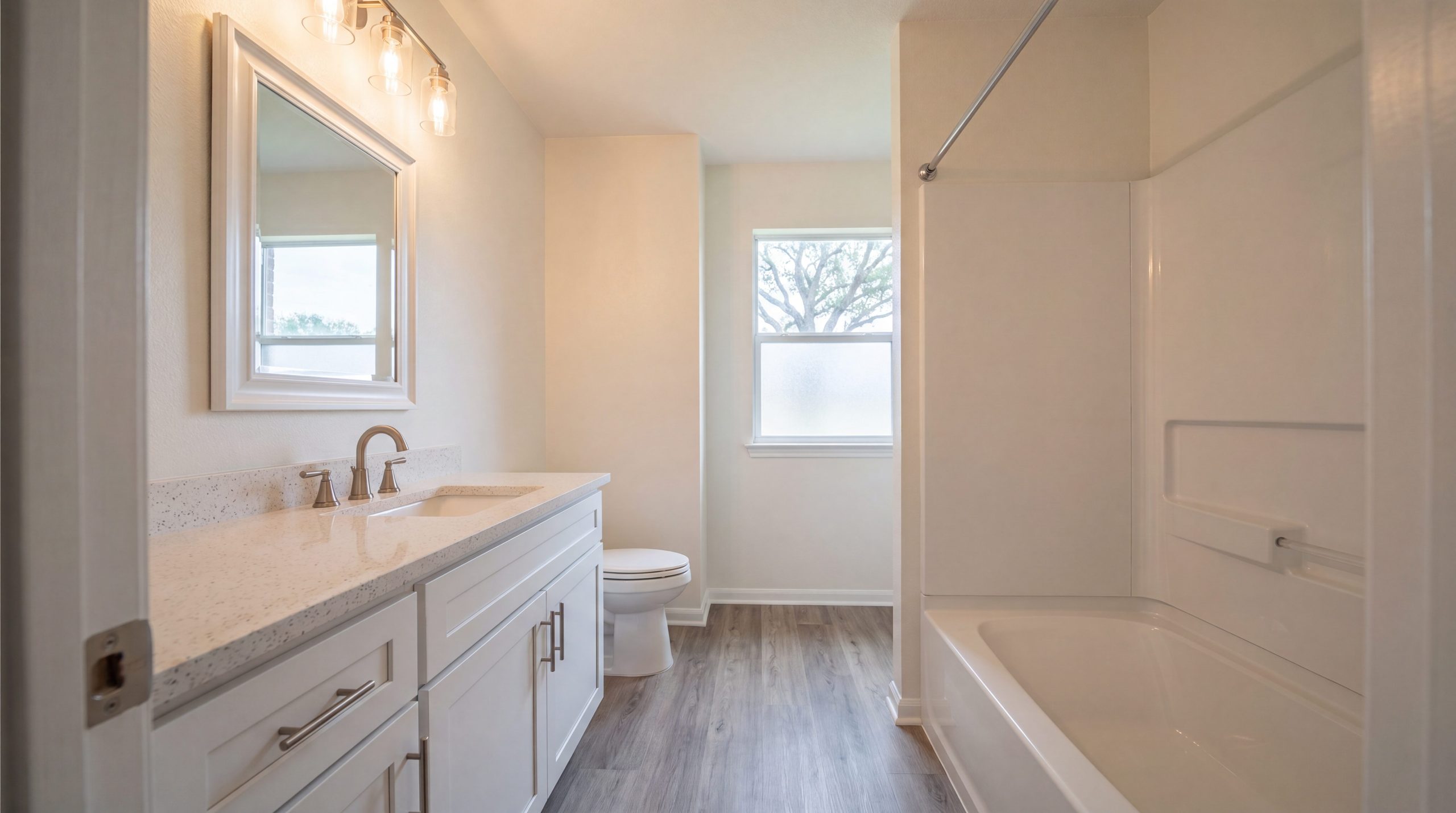
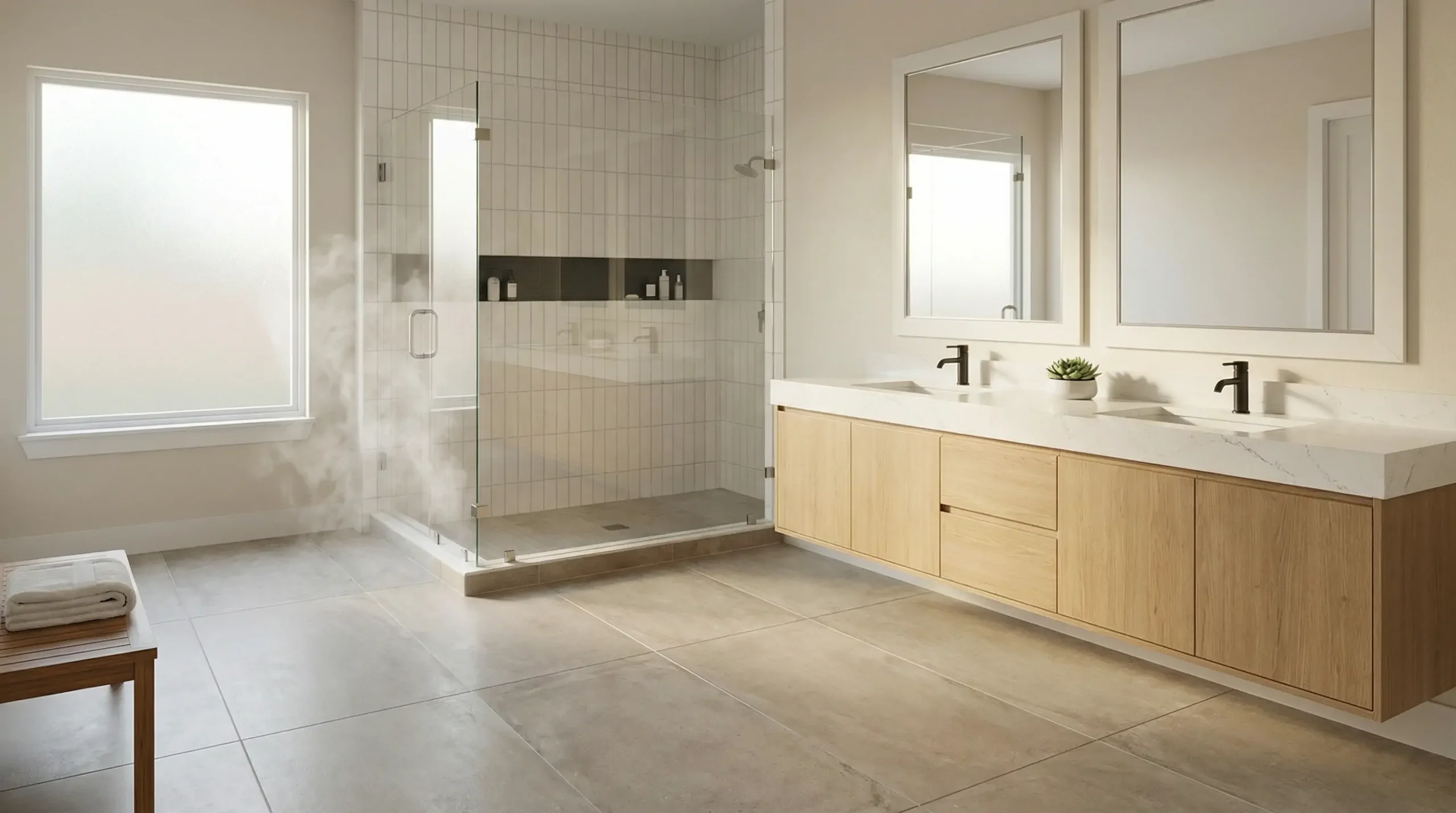
Your bathroom materials face a daily battle you might not even notice. While you're enjoying your morning shower, Houston's subtropical humidity is testing every surface, every grout line, every seal in that space.
Most homeowners don't think about climate when selecting bathroom tile—but Houston climate conditions actually demand specific material choices that differ significantly from recommendations you'll find in national design magazines. Here in Cypress and throughout the Greater Houston area, we've seen beautiful bathrooms fail within years—not because of poor installation, but because the materials simply weren't built for our environment.
The key factor in bathroom material selection for Houston's climate is water absorption rate. Porcelain tile with absorption below 0.5% dramatically outperforms standard ceramic tile (3-7% absorption) in high-humidity environments, while engineered quartz countertops eliminate the ongoing sealing maintenance that natural stone demands in our moisture-rich climate.
Why Houston's Subtropical Climate Demands Specific Bathroom Materials
Houston's subtropical humidity creates bathroom conditions that cause porous materials to fail faster than most homeowners expect. According to Houston climate data published by the National Weather Service, our region receives approximately 50 inches of annual rainfall and maintains average relative humidity between 60-90% throughout the year. That moisture doesn't stay outside—it follows you into your bathroom and lingers long after you've left.
Here's where it gets interesting. Standard bathroom materials rated for "normal" conditions assume humidity levels around 40-50%. Our bathrooms regularly exceed that by 30-40 percentage points during and after showers. Sound familiar? This constant moisture exposure causes porous materials to absorb water, expand slightly, then contract as they dry—a cycle that breaks down grout, loosens tiles, and creates microscopic pathways for mold growth.
The CDC's published guidance on mold growth and health impacts notes that mold can begin growing on wet surfaces within 24-48 hours. In Houston bathrooms with inadequate material selection, those conditions exist almost constantly. We've encountered bathrooms in Bridgeland and Towne Lake homes—properties less than ten years old—where improper material choices led to mold behind tile that wasn't visible until renovation began.
Understanding waterproofing systems that protect against Houston's moisture challenges starts with selecting materials that resist moisture penetration in the first place. The waterproofing membrane matters, but so does every surface that moisture contacts daily.
Best Tile Options for Humidity-Resistant Bathroom Floors and Walls
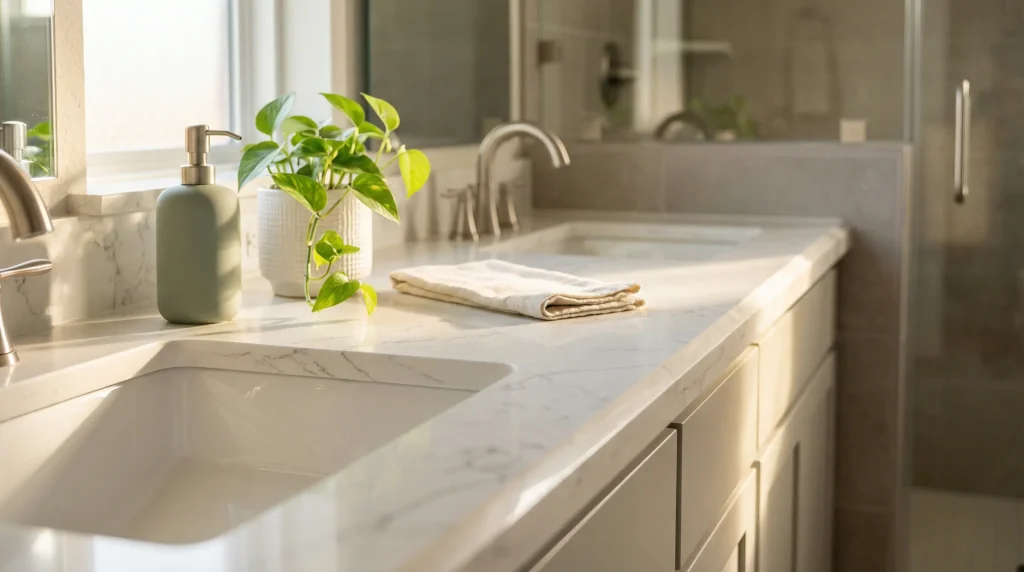
The main difference between porcelain and ceramic tile comes down to water absorption rate—and that single specification determines how your bathroom surfaces will perform over years of Houston humidity exposure. Industry standards from ANSI (American National Standards Institute) classify porcelain tile as "impervious" because it absorbs less than 0.5% of its weight in water. Standard ceramic tile absorbs 3-7%, classifying it as "non-vitreous" or "semi-vitreous."
That difference sounds small until you consider the implications over years of daily use. In Houston's humidity, ceramic tile acts like a slow sponge. Moisture penetrates the tile body, reaches the substrate, and creates conditions for mold growth and adhesive failure. Porcelain tile effectively seals itself against this moisture migration.
Large Format Tile Advantages
Beyond material composition, tile sizing matters for humidity control. Large format tiles—typically 12x24 inches or larger—reduce the total linear feet of grout in your bathroom. Grout remains more porous than tile regardless of sealing, so fewer grout lines means fewer opportunities for moisture penetration.
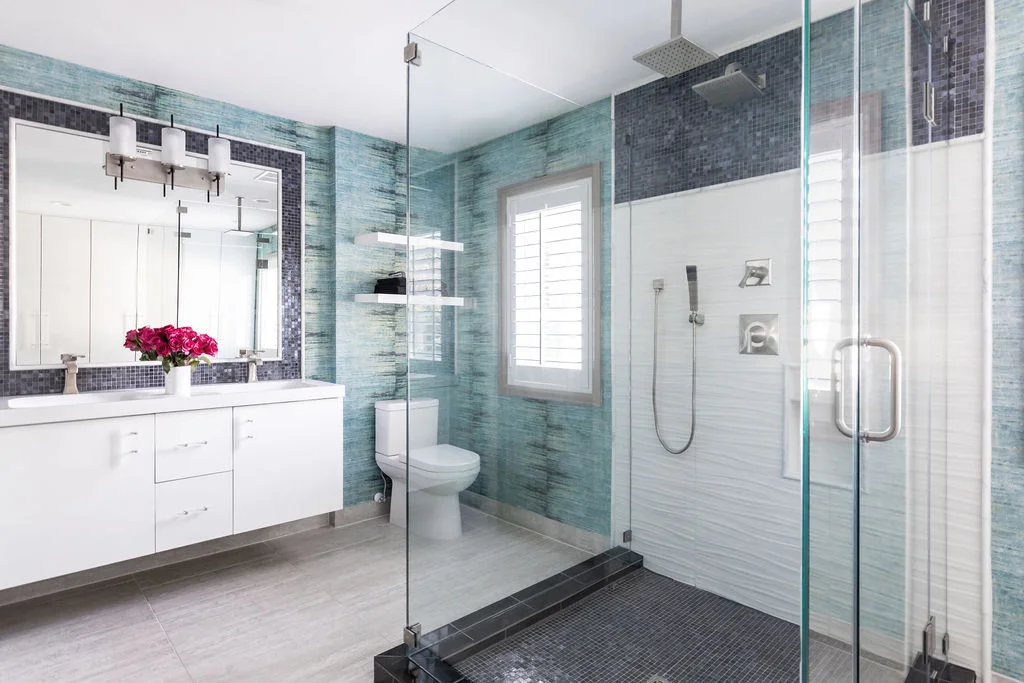
We recommend large format porcelain for primary bathroom floors and shower walls. The contemporary aesthetic appeals to most Cypress homeowners, but the real benefit is performance. A shower with 24x48 inch tiles might have 60% fewer grout lines than the same shower with 4x4 inch tiles.
Installation Considerations
Even the best tile fails without proper installation. The Tile Council of North America (TCNA) specifies that wet-area installations require waterproof membrane systems beneath the tile. Products like Schluter-DITRA and KERDI create continuous barriers that protect wall cavities and subfloors even if grout or tile eventually fails.
For our comprehensive bathroom remodeling services serving Cypress homeowners, proper substrate preparation and membrane installation represent non-negotiable requirements—not optional upgrades.
Countertop Materials That Perform in High-Moisture Environments
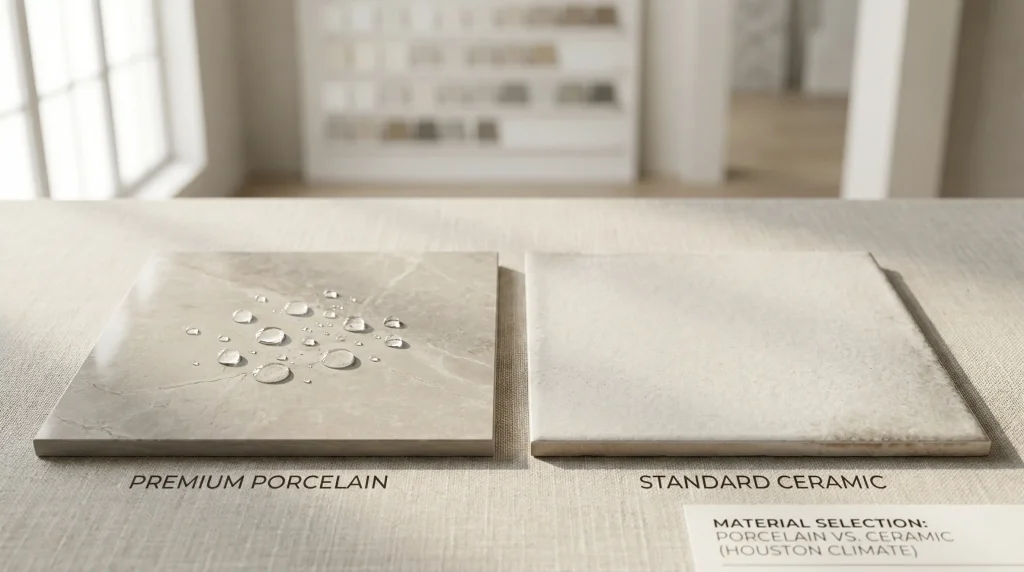
Quartz countertops eliminate sealing maintenance entirely while providing superior moisture resistance compared to natural stone options. Engineered quartz consists of approximately 93% ground quartz aggregate bound with polymer resins—creating a completely non-porous surface that never requires sealing. That's why they've become the dominant choice for Houston bathrooms.
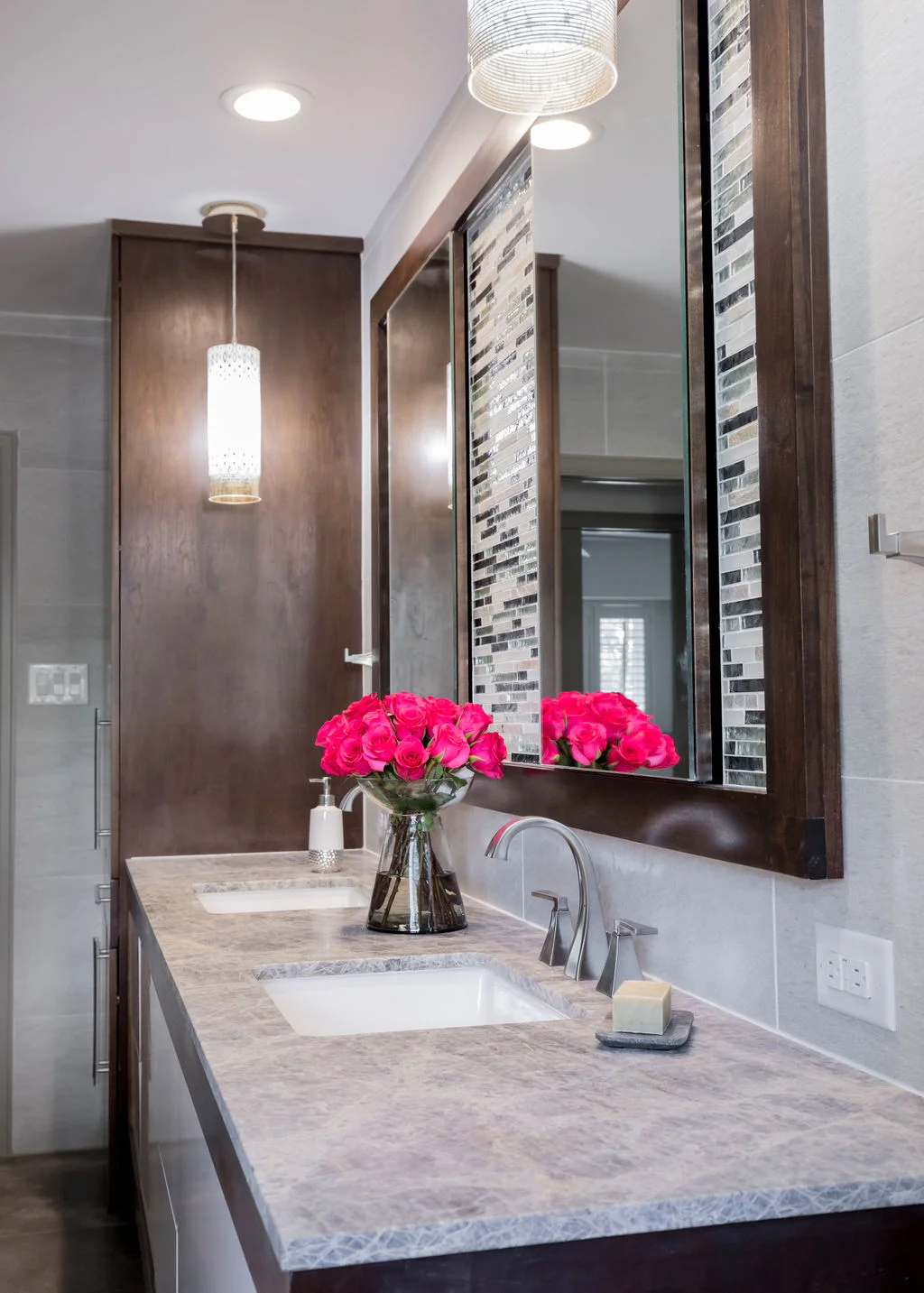
Natural stone—granite, marble, quartzite—remains beautiful but demands commitment. The Natural Stone Institute recommends sealing most granite and marble every 6-12 months to maintain moisture resistance. Skip a sealing cycle in Houston's humidity, and you'll notice water spots, potential staining, and in severe cases, moisture penetration that can't be reversed without professional restoration.
Material Comparison for Bathroom Applications
| Material | Porosity | Sealing Required | Humidity Performance |
| Quartz | Non-porous | Never | Excellent |
| Granite | Low-medium | Every 6-12 months | Good with maintenance |
| Marble | Medium-high | Every 6-12 months | Fair with maintenance |
| Quartzite | Low | Every 12 months | Good with maintenance |
The maintenance burden matters more than most homeowners initially realize. That 6-12 month sealing schedule sounds manageable until life gets busy. Missed maintenance in Houston's climate leads to damage that sealing can't fix.
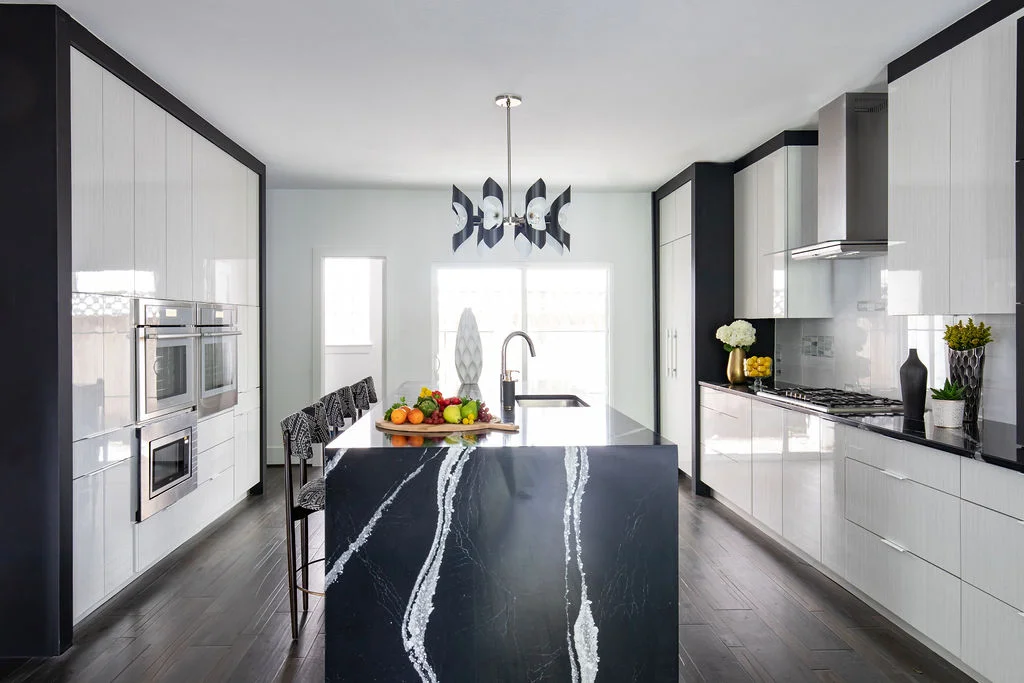
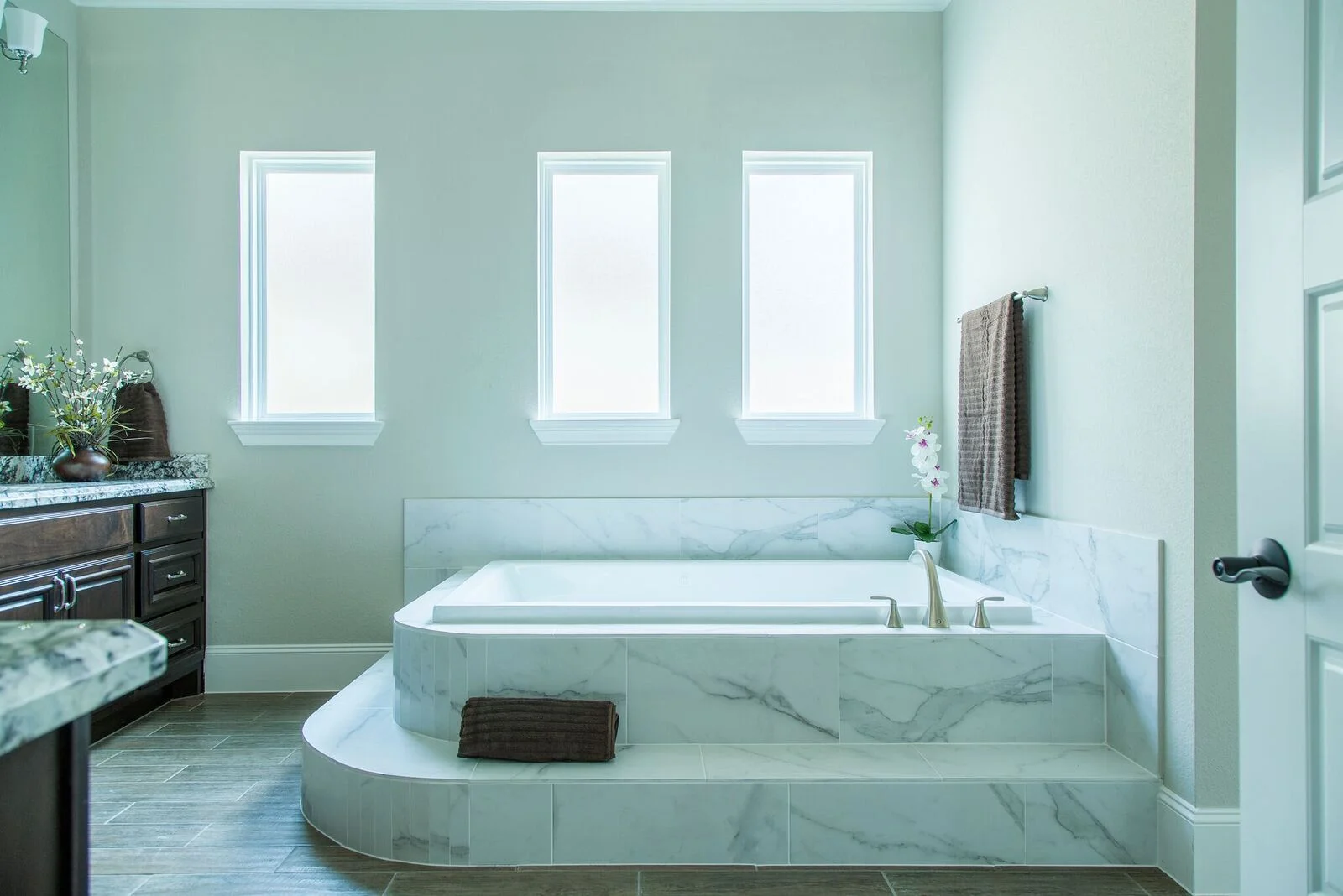
For homeowners exploring spa-inspired bathroom features popular in Cypress luxury homes, quartz delivers the upscale appearance without the ongoing maintenance anxiety. You can achieve dramatic veining patterns that rival Calacatta marble while maintaining a surface that shrugs off Houston's humidity.
Common Material Selection Mistakes That Lead to Moisture Damage
The most common mistake involves choosing materials based on appearance without understanding maintenance requirements—and honestly, we see this constantly. We've consulted on numerous bathroom renovations in Cypress where the previous contractor installed beautiful natural stone, but the homeowner had no idea ongoing sealing was required. By the time we arrived, water damage had penetrated the substrate.
Mistakes We See Repeatedly
- Wrong tile absorption class: Using decorative ceramic wall tile on shower floors where standing water pools
- Unsealed natural stone: Installing marble or travertine without explaining the sealing schedule
- Inappropriate grout selection: Using unsanded grout in wet areas where sanded grout provides better moisture resistance
- Skipping membrane systems: Installing tile directly to drywall or cement board without waterproof membrane
- Inadequate ventilation: Selecting moisture-sensitive materials without upgrading exhaust fan capacity
Builder-grade bathrooms from the 1990s and 2000s often used materials that were cost-effective but poorly suited for long-term performance in Houston's climate. If your home dates from that era, the original materials have likely absorbed years of moisture and may be approaching failure even if they look acceptable on the surface.
The hidden cost of cheaper materials compounds over time. Installing ceramic tile that fails in seven years instead of porcelain that lasts twenty doesn't save money—it costs more in replacement labor, potential water damage repairs, and the disruption of a second renovation.
Key Takeaways
In summary, here are the essential points for selecting bathroom materials in Houston's climate:
- Porcelain tile with less than 0.5% water absorption dramatically outperforms ceramic tile in Houston's 60-90% humidity environment, providing lasting moisture resistance that ceramic cannot match.
- Large format tiles reduce grout lines by up to 60%, minimizing the most vulnerable moisture penetration points in your bathroom surfaces.
- Quartz countertops eliminate sealing maintenance entirely, while natural stone requires professional sealing every 6-12 months to maintain moisture resistance in humid climates.
- Proper waterproof membrane installation beneath tile creates critical secondary protection that prevents moisture damage even if surface materials eventually fail.
- Material selection mistakes in Houston bathrooms often don't become visible for years, making it essential to choose climate-appropriate materials from the start rather than correcting failures later.
Frequently Asked Questions
What's the best tile for Houston bathroom floors?
Porcelain tile with a water absorption rate below 0.5% provides the best performance for Houston bathroom floors. This classification—called "impervious" under ANSI standards—resists moisture penetration that causes failure in high-humidity environments. Large format porcelain further reduces vulnerable grout lines.
Does ceramic tile work in Houston bathrooms?
Ceramic tile can work in Houston bathrooms but requires more careful selection and maintenance than porcelain. Choose ceramic tiles rated "vitreous" (absorption under 3%) rather than "semi-vitreous" or "non-vitreous" options. Even then, expect shorter lifespan and increased maintenance compared to porcelain in our humid climate.
How often should I seal bathroom countertops in Houston?
Natural stone countertops—granite, marble, quartzite—require sealing every 6-12 months in Houston's humidity. Quartz countertops require no sealing because their engineered composition creates a non-porous surface. This maintenance difference makes quartz increasingly popular for Houston-area bathrooms.
Why do bathroom tiles fail in Houston homes?
Bathroom tiles fail in Houston primarily due to moisture penetration through porous materials and inadequate waterproofing systems. High humidity causes porous tiles to absorb water, which damages adhesive bonds and creates conditions for mold growth. Proper material selection and membrane installation prevents these failures.
What grout works best in humid bathrooms?
Sanded grout provides better moisture resistance than unsanded grout in wet bathroom areas. Epoxy grout offers the highest moisture resistance but costs more and requires professional installation. For most Houston bathrooms, sanded polymer-modified grout sealed after installation provides good long-term performance.
Selecting Materials That Match Houston's Reality
The key takeaway is straightforward: Houston's subtropical climate demands material choices based on moisture performance, not just appearance. Porcelain tile, quartz countertops, and proper waterproofing systems create bathrooms that remain beautiful and functional for decades rather than years.
For Cypress homeowners planning bathroom renovations, these material decisions represent the foundation of a successful project. The surfaces you select will face Houston's humidity every day—choosing materials engineered for that challenge makes everything else easier.