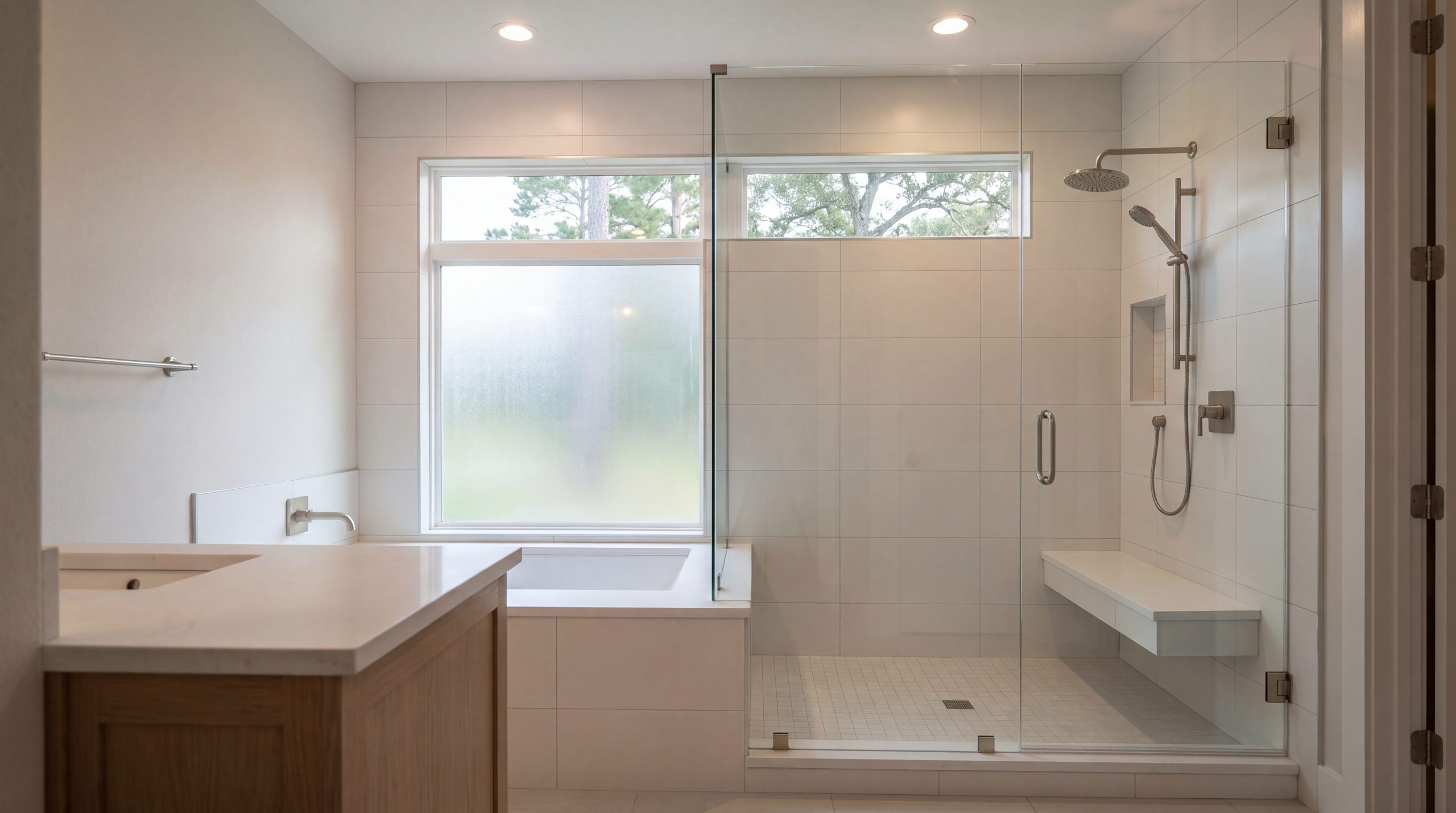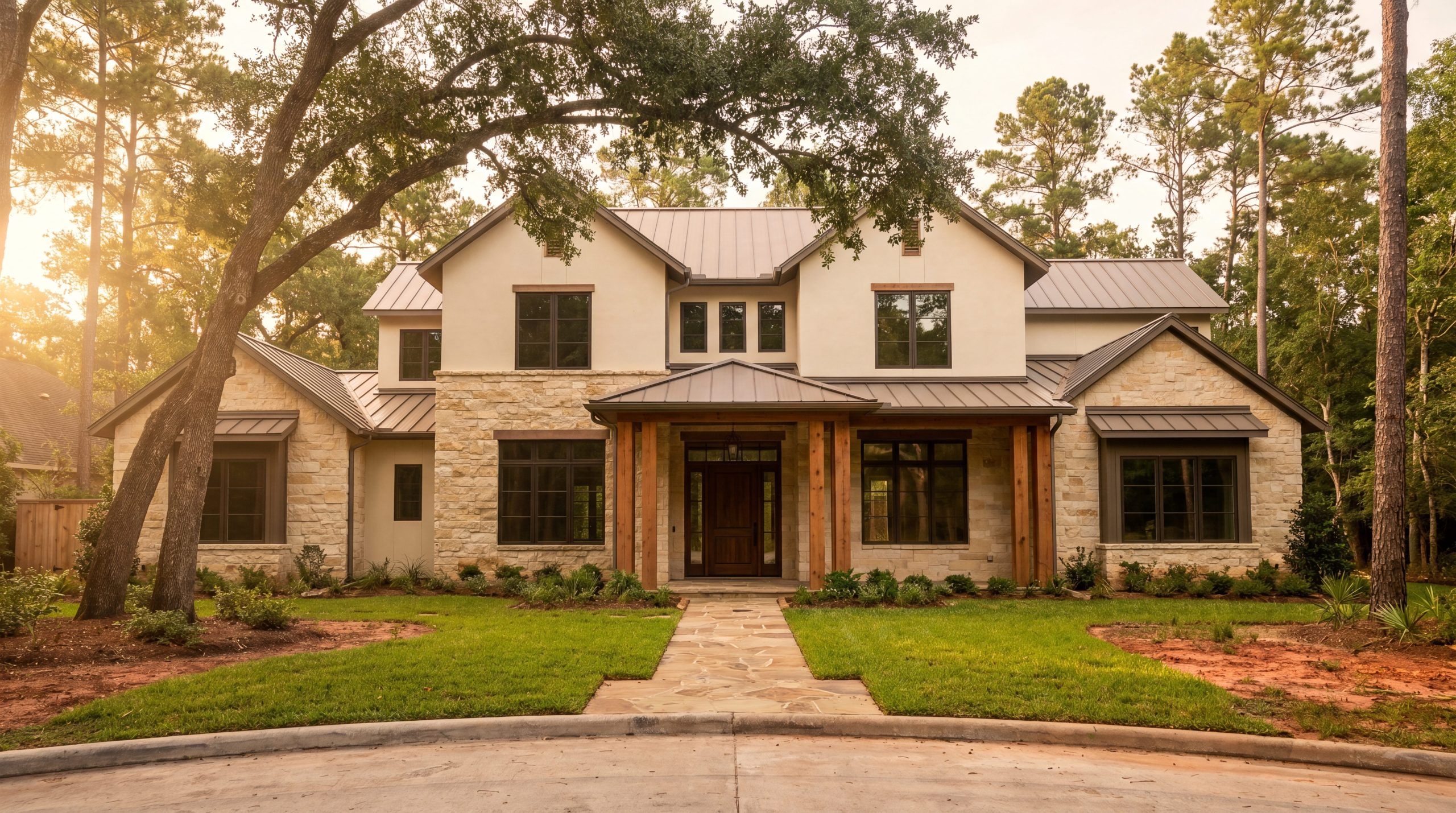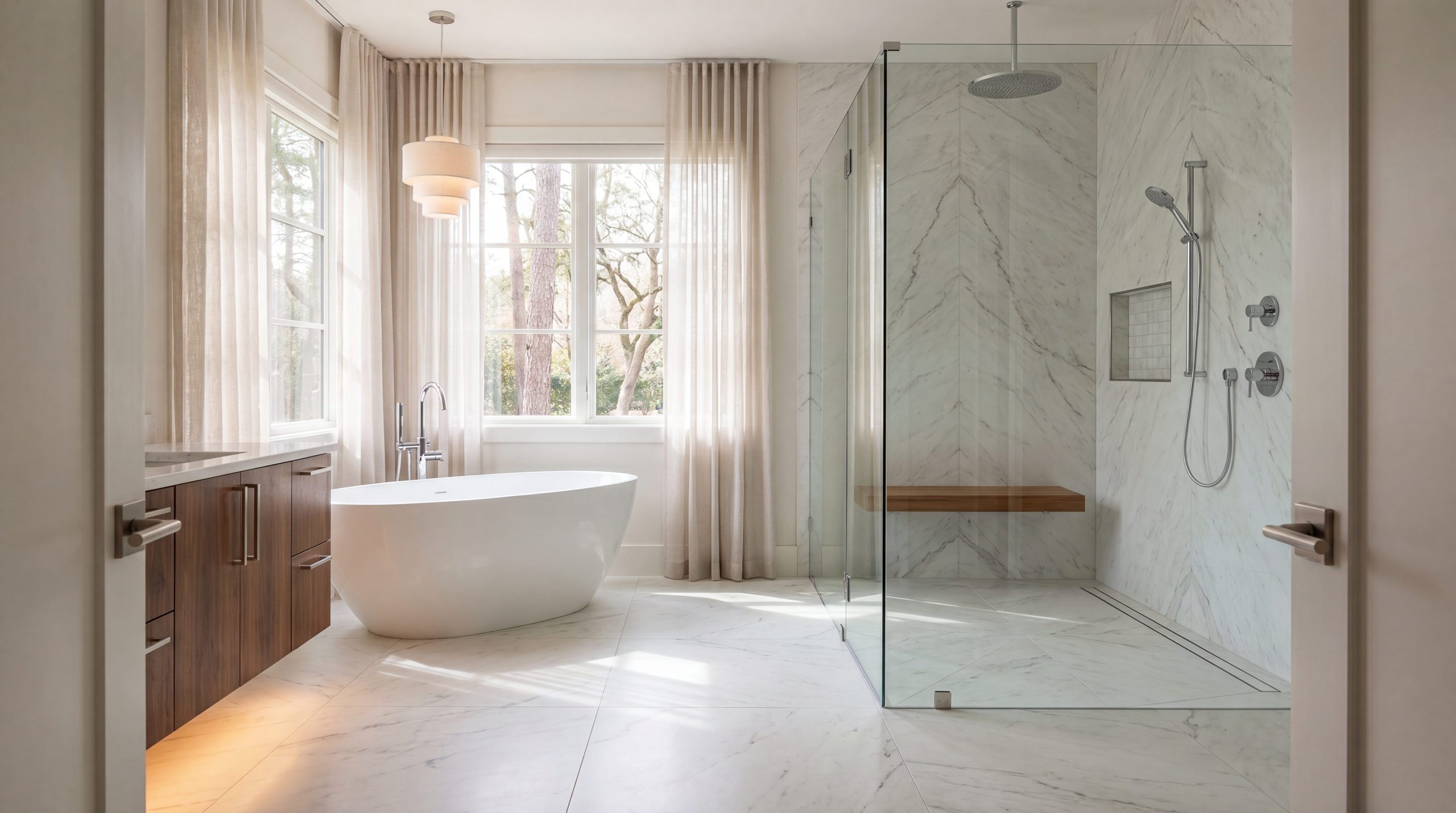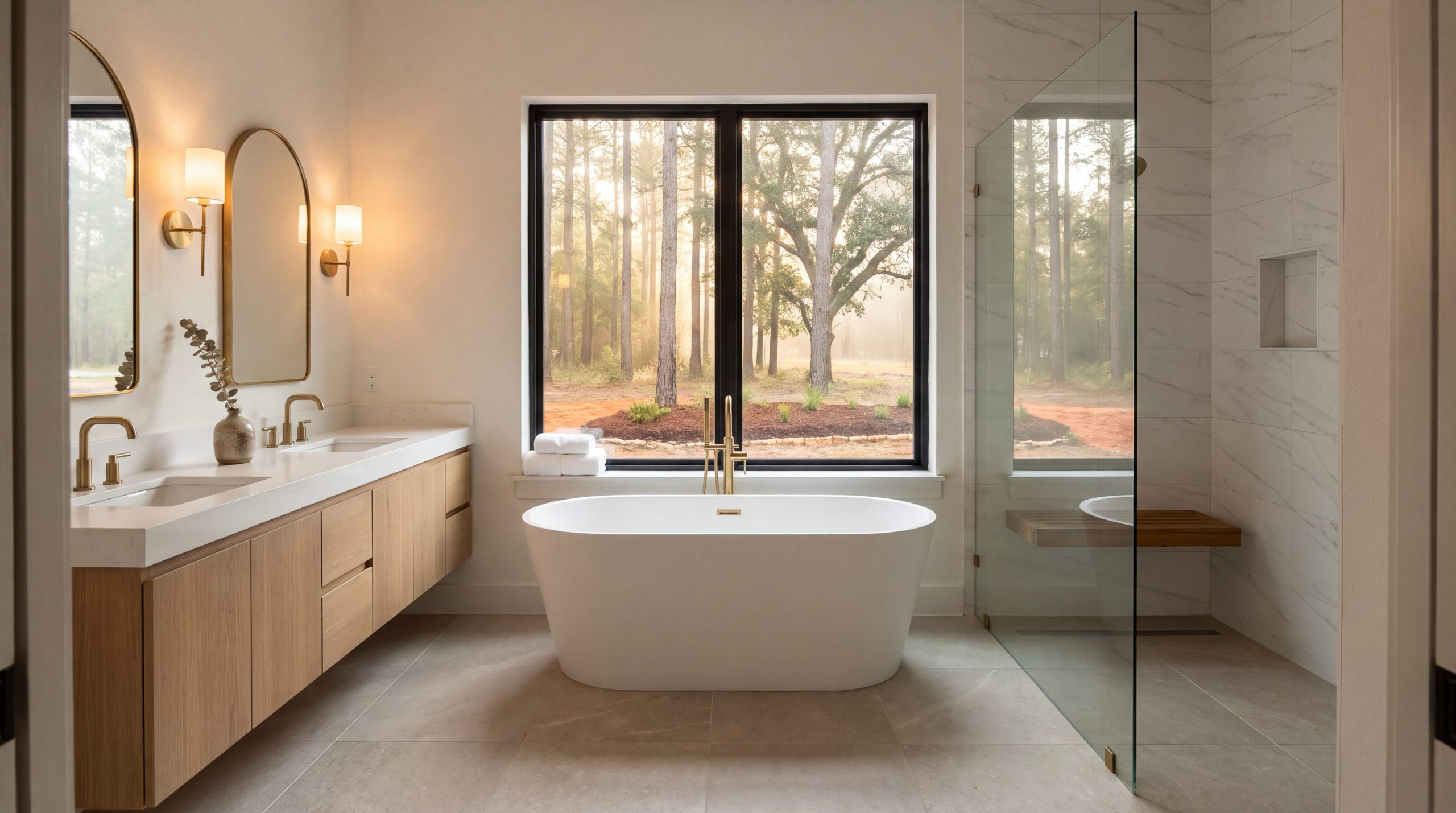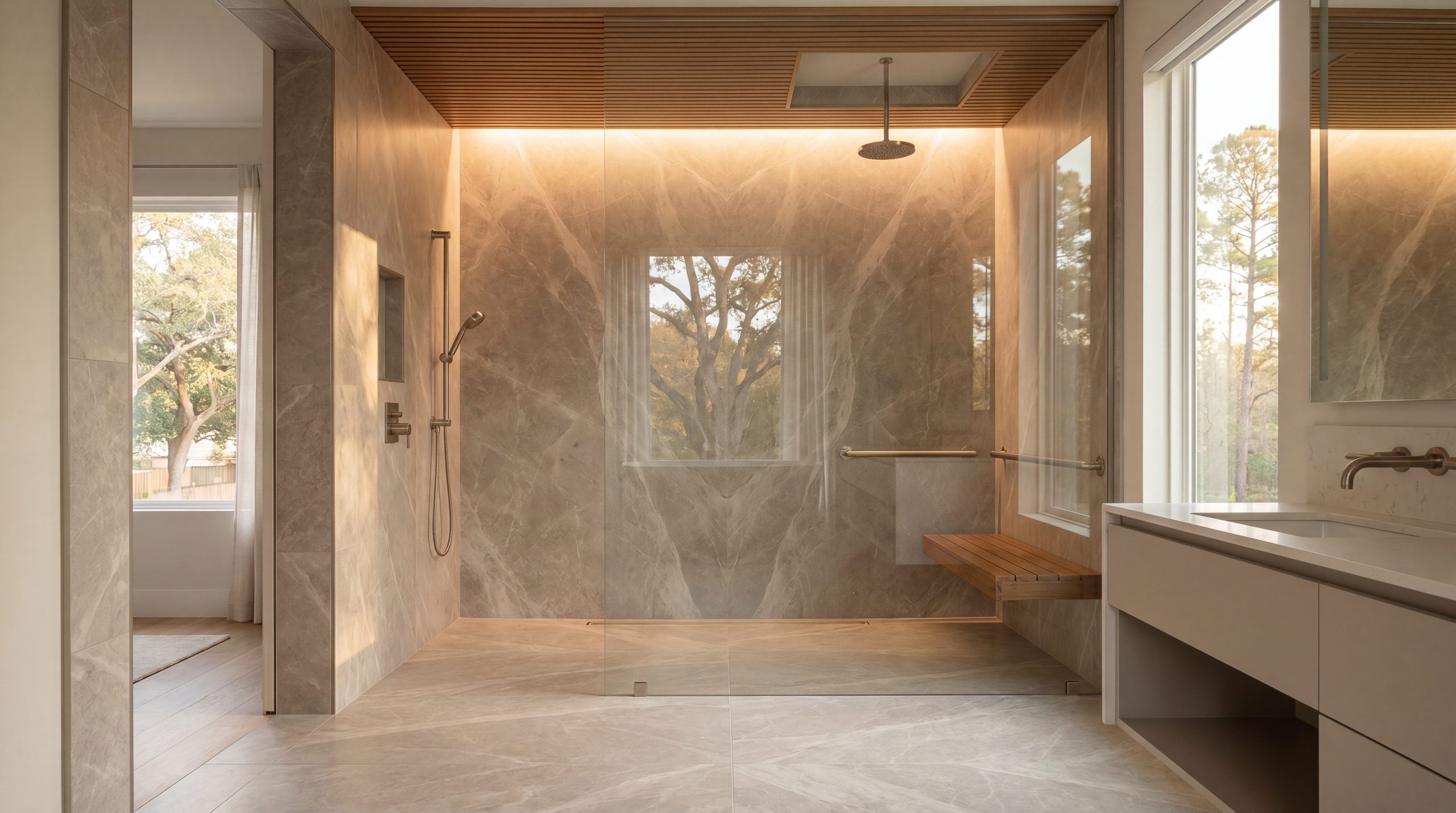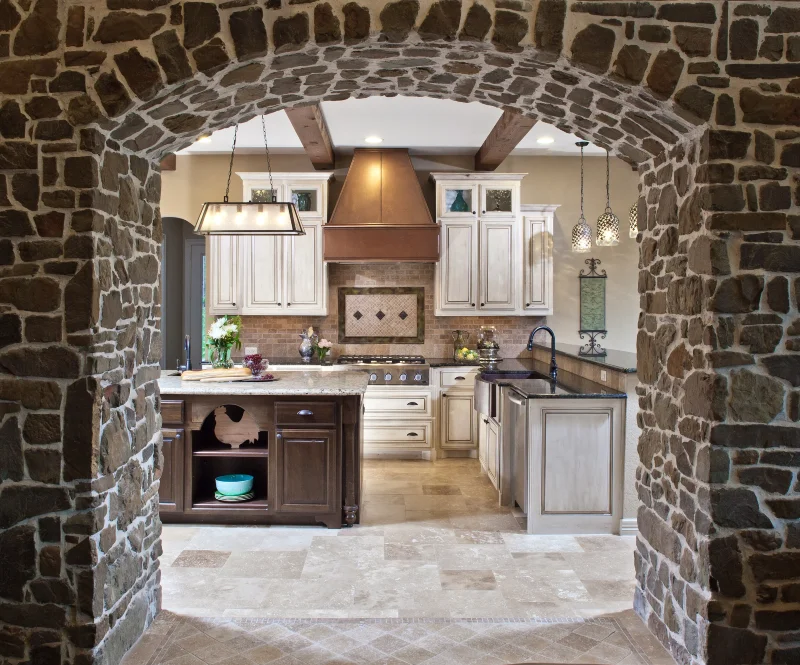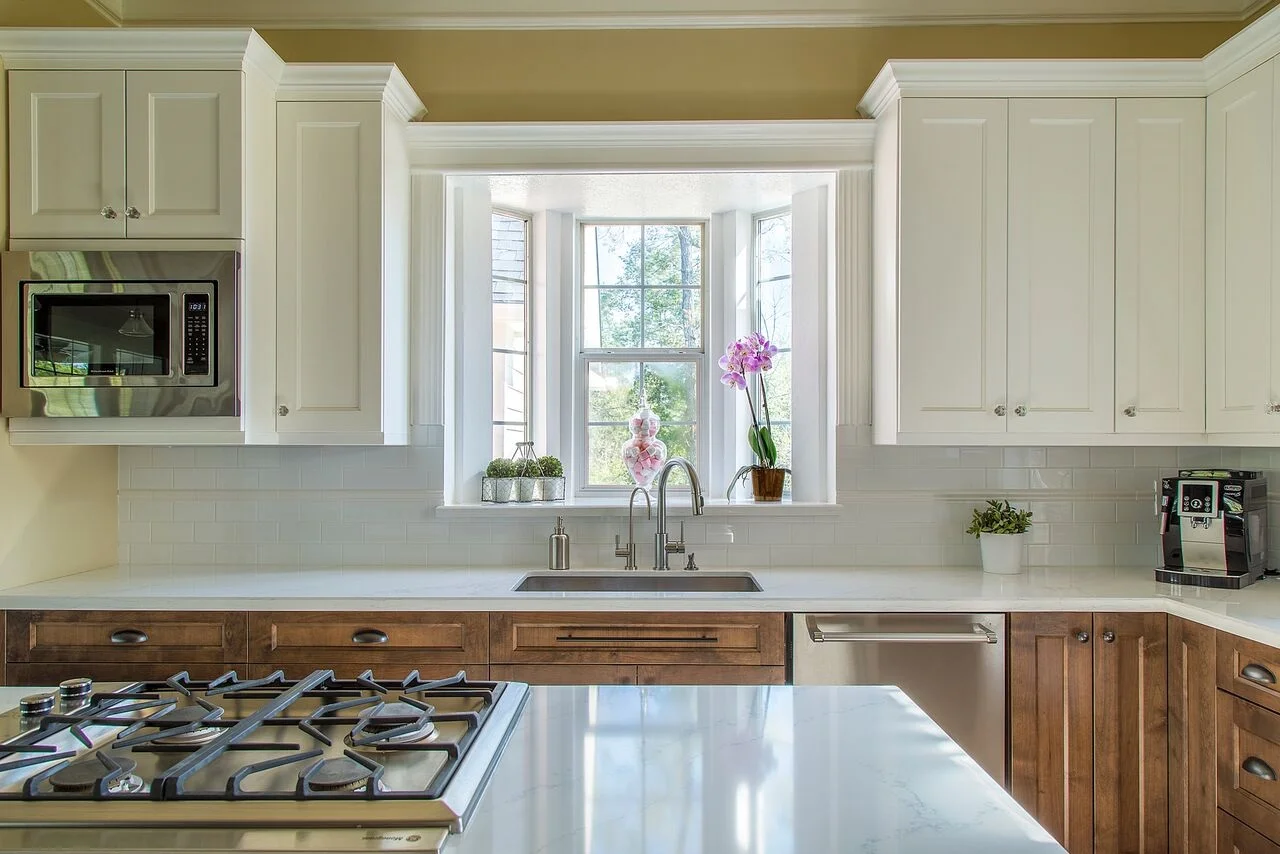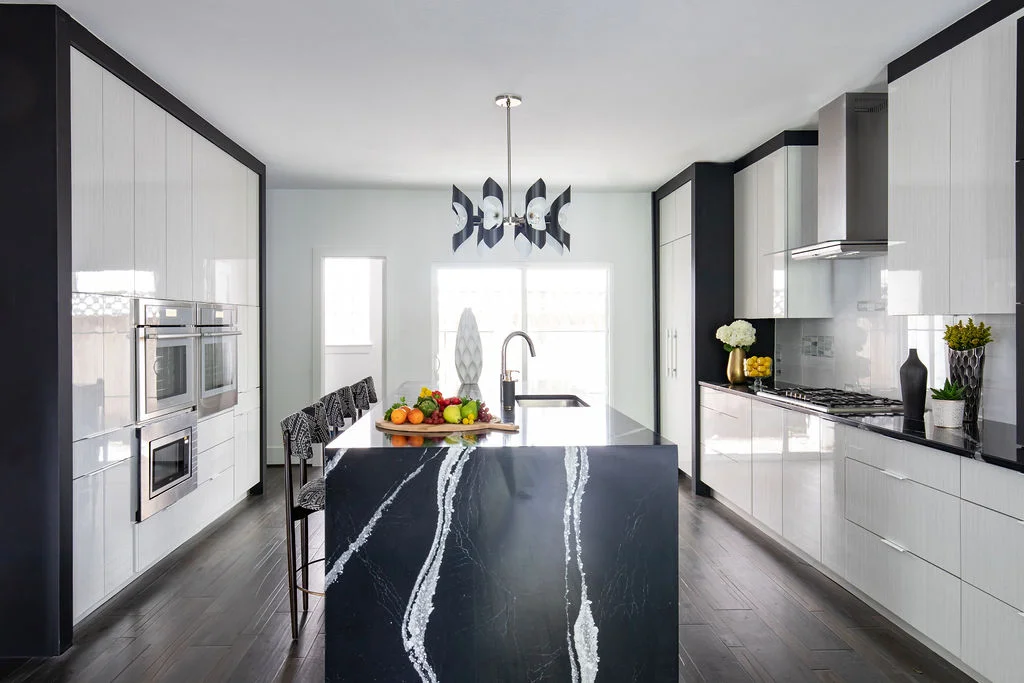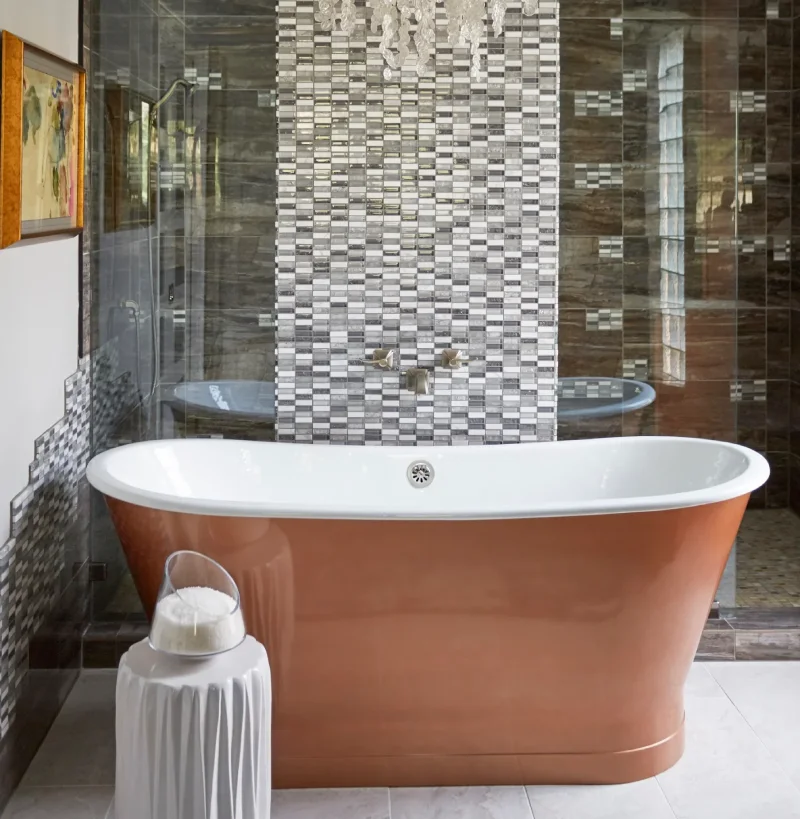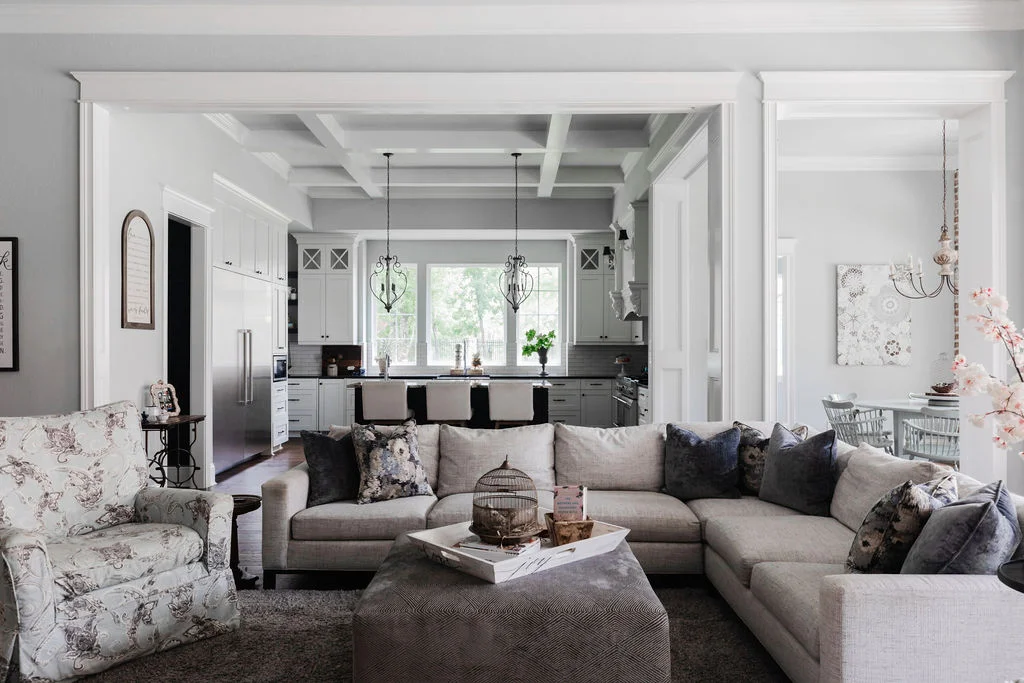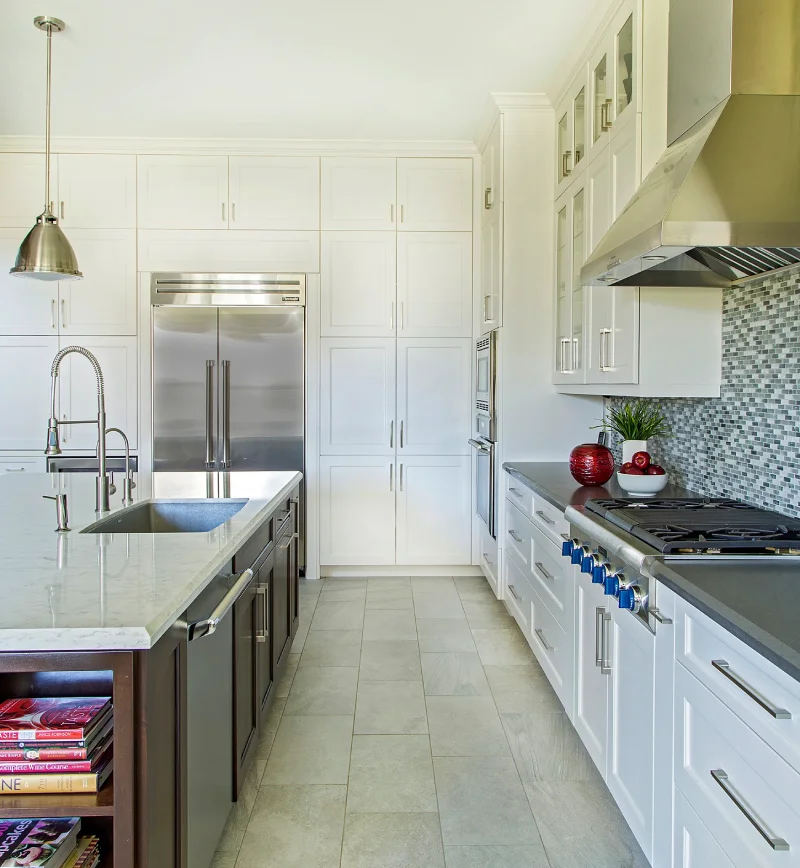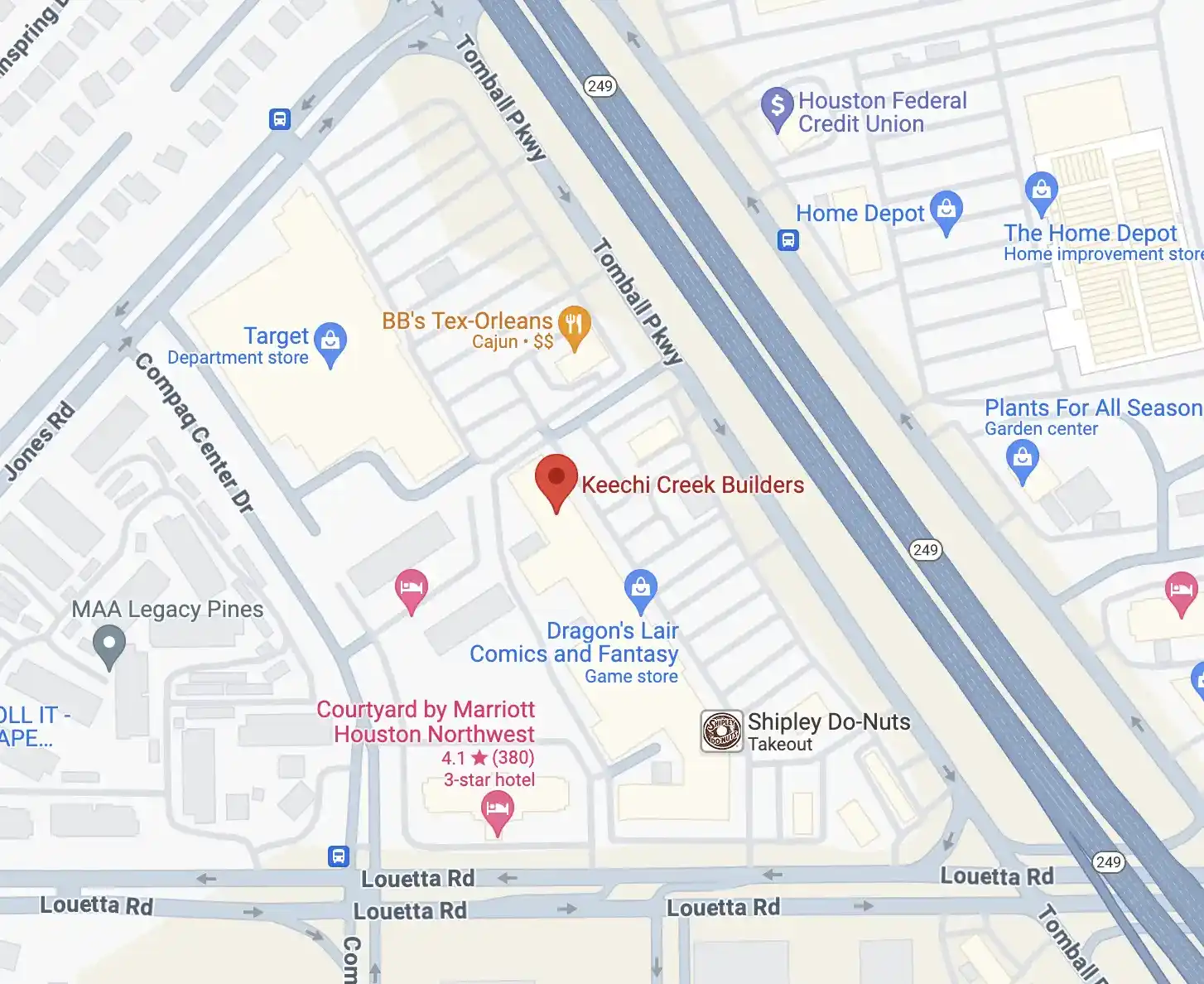
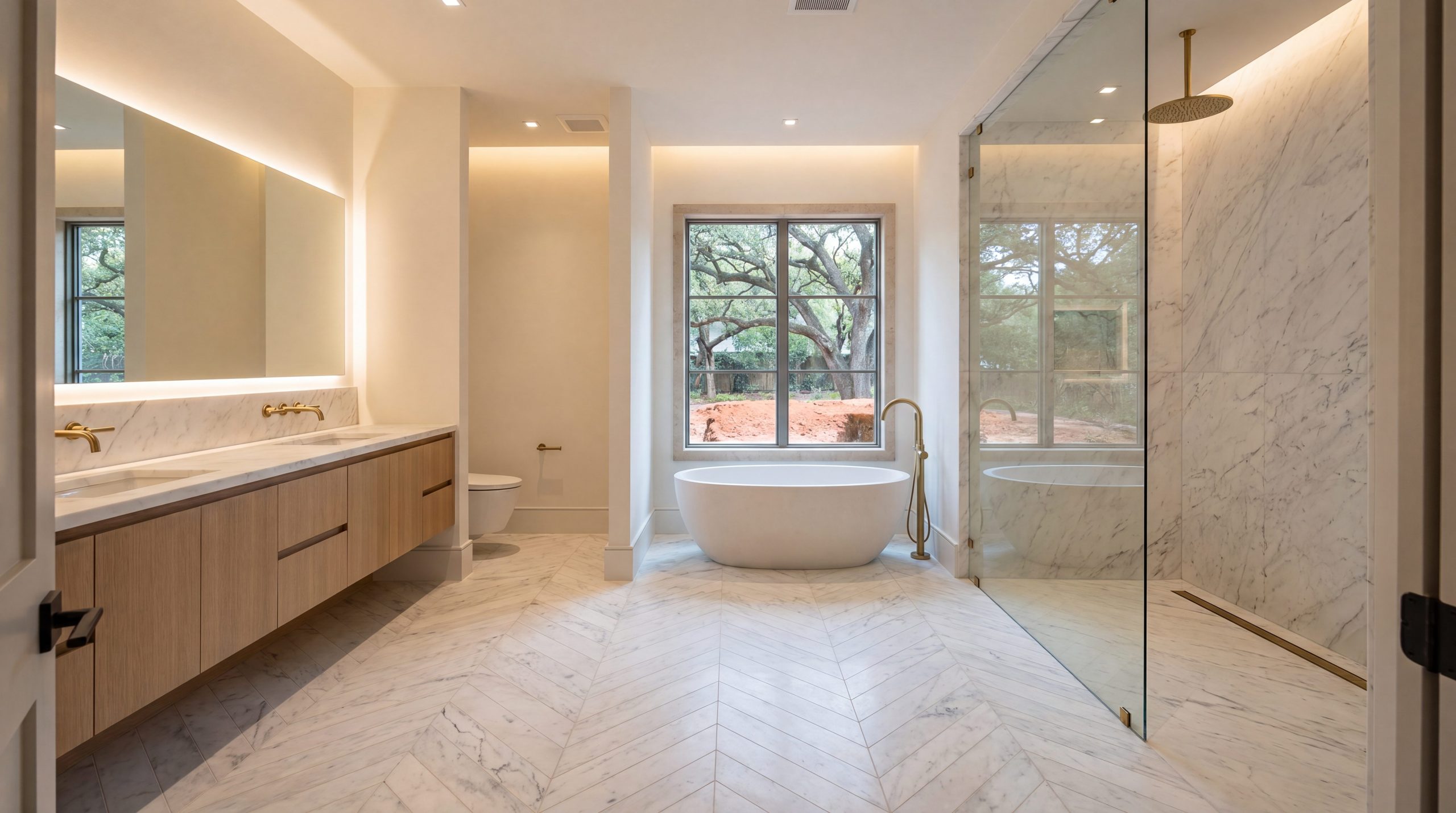
The design build vs contractor bathroom remodel decision comes down to who is accountable. A design-build firm such as Keechi Creek Builders owns design, budget, schedule, village ARB submission, and construction under a single contract — with one project manager, one warranty, and one change-order process. A traditional contractor model fragments those responsibilities across an architect, a designer, a general contractor, and the trades, and the Memorial homeowner becomes the de-facto integrator across every coordination gap.
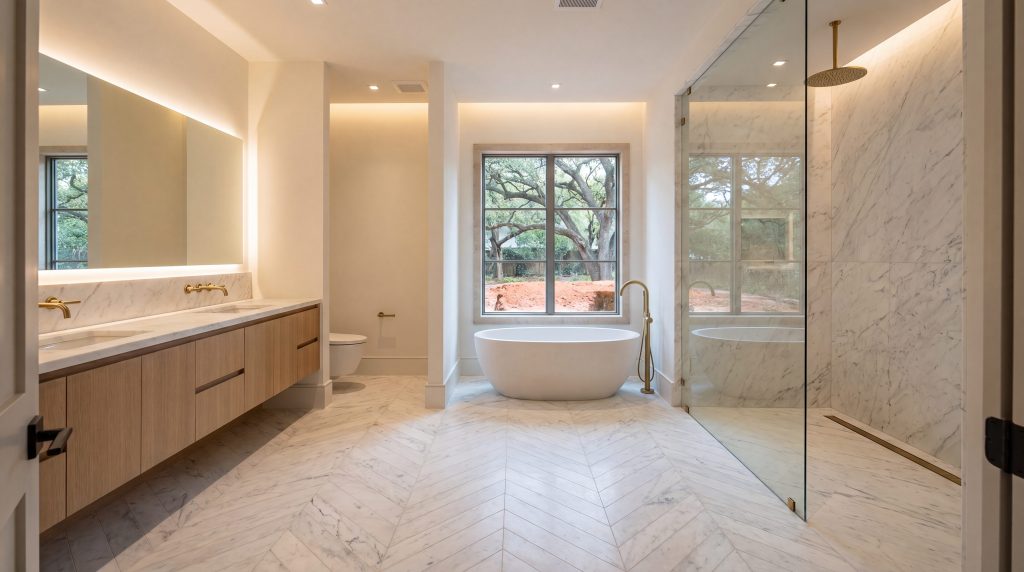
Key Takeaways
- One Contract vs. Three or Four. Design-build consolidates design, construction, ARB submission, and warranty under one signed agreement; the traditional model splits the homeowner's exposure across an architect, a designer, a general contractor, and the specialty trades.
- Real Budget Numbers During Design. A design-build remodeler prices the bathroom while it is still being drawn; the traditional process produces finished drawings months before the homeowner sees a defensible construction estimate.
- Single-Firm Accountability for Bathroom Failures. A slab leak, a Schluter KERDI shower failure, or a misaligned vanity rough-in is one firm's problem in design-build; in the traditional model, the designer, plumber, and general contractor each have a defensible reason it is the other party's fault.
- Memorial Villages ARB Submission Is Handled. Each of the six Memorial Villages operates its own Architectural Review Board, and KCB has navigated all six; the traditional model forces the homeowner or architect to learn each village's submission protocol on the fly.
- Change Orders Are One Document, Not Three. A mid-construction change in design-build is one revised drawing, one fee, one schedule update; in the traditional contractor model, every change loops back through architect, designer, and trades with markup at each stop.
- Plumbing Assessment Happens at Design, Not Demo. A plumber sits on the design-build team during programming; in the traditional model, the existing galvanized supply or cast-iron drain situation is discovered after demolition, when the design and the schedule are already fixed.
- Total Schedule Is Shorter and More Predictable. Memorial design-build bathrooms ship in 14 to 22 weeks from contract to final inspection; the traditional model often takes 28 to 40 weeks once design coordination, bidding, and contractor coordination are layered in.
What Is a Design-Build Firm — and How Does It Differ From a Traditional Contractor?
A design-build firm is a single licensed company that owns the bathroom from the first design sketch through the final walkthrough — the same firm holds the designer, the project manager, the lead carpenter or superintendent, and either employs or subcontracts the trades directly under that firm's quality and schedule control. Keechi Creek Builders has operated as an integrated design-build practice in Memorial, Houston and Harris County for 17+ years, and Brandon Lynch has structured the company so a Memorial homeowner signs one contract, talks to one project manager, and receives one warranty document at completion.
A traditional contractor model — sometimes labeled "design-bid-build" by the Design-Build Institute of America — splits those responsibilities across three or four independent parties. The homeowner first contracts with an architect or an interior designer to produce the drawings and the specification. Those drawings then go out to bid to a set of general contractors. The winning general contractor then contracts with the plumber, the electrician, the tile setter, and the cabinet shop. In Memorial Villages, where each of the six villages operates a separate Architectural Review Board, the homeowner is also typically the party assembling and submitting the ARB package.
Either model can produce a finished bathroom. The defensible question is which model better matches the way a Memorial luxury bathroom — $40,000 on the low end, $150,000-plus at the top of the Hunters Creek Village market — actually gets built.
How Does Design-Build Change the Bathroom Design Process Itself?
The most visible difference is that the people who will build the bathroom are in the room while it is being designed. A KCB design-build bathroom moves through programming, schematic design, design development, and construction documents with the project manager, the lead carpenter, and a licensed plumber participating in every working session. The plumbing system, the structural framing implications of a curbless walk-in shower, the cost of the Calacatta marble against the Calacatta-look porcelain, and the NKBA layout standards all get priced in real time against the homeowner's budget.
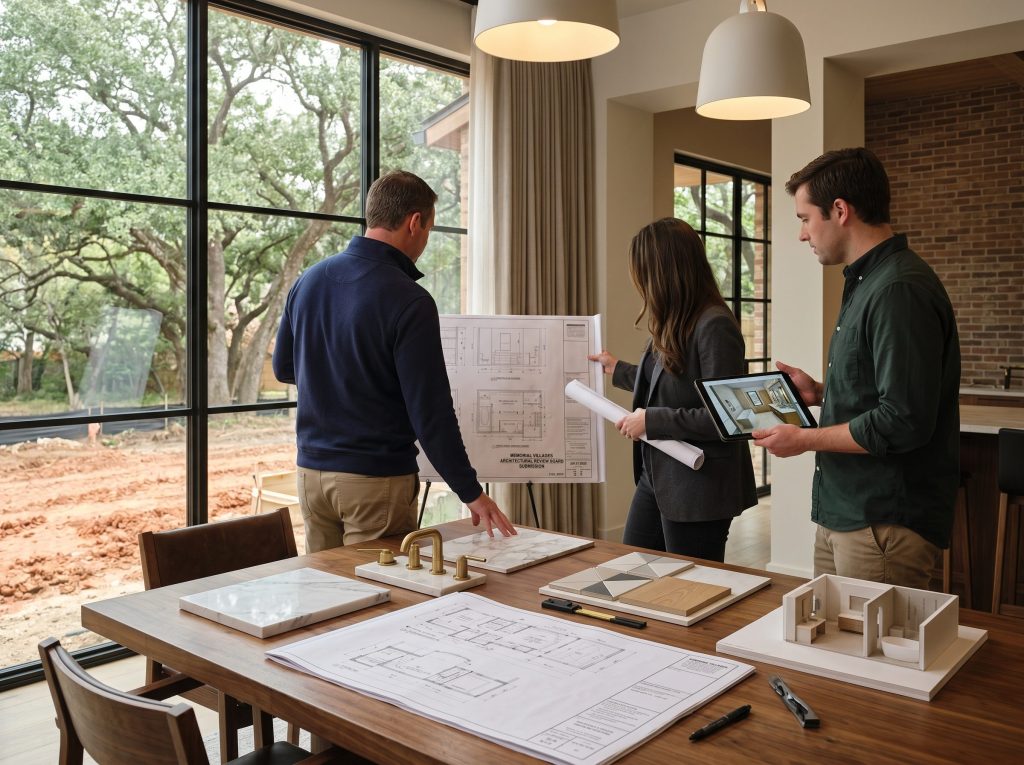
In the traditional model, the designer or architect produces a beautiful set of drawings without that real-time pricing input. The homeowner falls in love with the design. The drawings then go to bid. The first general contractor's bid comes back $35,000 to $60,000 over budget. The homeowner is now in a value-engineering loop with a designer who is invested in the original specification and a contractor who needs to win the job. The bathroom that ships is rarely the bathroom that was drawn.
For a Bunker Hill Village or Piney Point Village primary bathroom in the $80,000 to $150,000 range, the design-build process produces a final design the homeowner is signing for with a real construction estimate inside it — not a wish-list drawing that needs to be redesigned twice.
Who Is Accountable When Something Goes Wrong in a Bathroom Remodel?
This is the question that separates the two models cleanly.
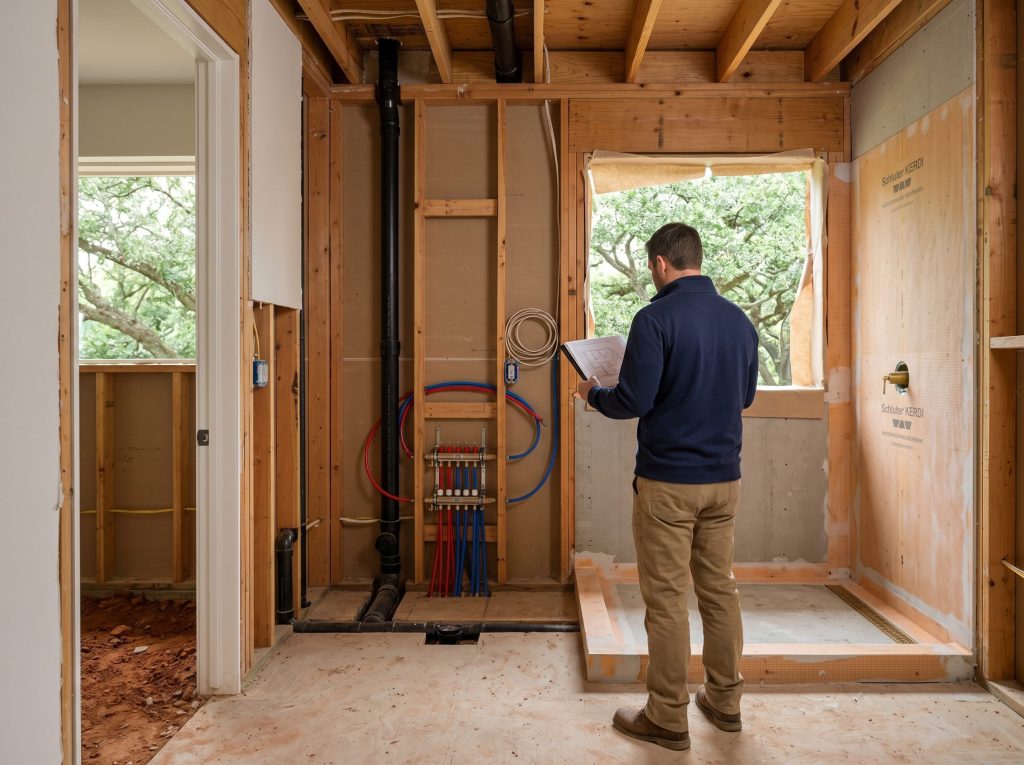
A defensible Memorial bathroom remodel touches plumbing supply, plumbing drainage, framing, electrical, waterproofing membrane, tile substrate, tile and stone, glass, fixtures, ventilation, and finish carpentry — and each of those is a defensible failure point. When a Schluter KERDI shower starts wicking moisture into the adjacent wall cavity at month 14, the design-build firm has one answer: the firm owns the failure, the firm warranties the system, the firm dispatches a crew to investigate and remediate. In the traditional contractor model, the same failure produces a multi-party investigation — was the membrane installed correctly (general contractor's responsibility), was the curbless drain specified correctly (designer's responsibility), or did the plumbing rough-in slope the drain incorrectly (the plumbing subcontractor's responsibility)?
|
Failure scenario |
Design-Build (KCB) |
Traditional Contractor Model |
|
Slab leak detected at month 9 |
KCB diagnoses + repairs under single warranty |
Architect, GC, and plumber dispute responsibility |
|
Shower membrane fails at month 14 |
KCB owns full membrane warranty |
GC, designer, tile sub each defend their scope |
|
Vanity rough-in misaligned with cabinet |
KCB rebuilds at no charge |
Cabinet shop blames plumber; GC arbitrates |
|
Village ARB rejection of submitted plans |
KCB revises and resubmits |
Homeowner is the project manager |
|
Mid-construction owner-driven change |
One change order, one fee, one schedule update |
Architect, GC, and trades each price a change |
The structural reality is that a multi-party project has multiple parties who can defensibly point at each other. A single-firm-accountability project does not.
How Does Design-Build Handle the Memorial Villages Architectural Review Board?
Each of the six Memorial Villages — Hunters Creek Village, Bunker Hill Village, Piney Point Village, Hedwig Village, Hilshire Village, and Spring Valley Village — operates an independent Architectural Review Board with its own submission protocol, review cycle, and approval criteria. A primary bathroom remodel that touches an exterior window, an exterior wall penetration for a new vent, or any roofline modification routes through the village ARB before construction.
In a KCB design-build project, the ARB submission is a deliverable inside the design phase. KCB has navigated all six village ARB processes and knows which village wants a notarized owner signature, which village runs a 30-day review cycle, and which village requires a pre-application meeting with the village engineer. The homeowner signs the submission package and KCB shepherds it through the cycle.
In a traditional model, the architect or general contractor may or may not have navigated the specific village ARB before. The homeowner often ends up as the de-facto submission coordinator, learning each village's quirks on the fly while the rest of the project waits.
|
Brandon's Builder Insight In 17 years of integrated design-build practice in the Memorial Villages, the moment that justifies the design-build model is the third week of construction — when the demolished wall reveals an unexpected cast-iron drain offset that nobody saw at programming. In our model, my plumber, my superintendent, and our designer huddle on-site that afternoon and produce a revised rough-in plan before the trades go home for the day. In the traditional model, that same surprise generates a stop-work, an RFI to the architect, a price increase from the plumber, and a two-week delay while everyone gets paid to think. |
In 17 years of integrated design-build practice in the Memorial Villages, the moment that justifies the design-build model is the third week of construction — when the demolished wall reveals an unexpected cast-iron drain offset that nobody saw at programming. In our model, my plumber, my superintendent, and our designer huddle on-site that afternoon and produce a revised rough-in plan before the trades go home for the day. In the traditional model, that same surprise generates a stop-work, an RFI to the architect, a price increase from the plumber, and a two-week delay while everyone gets paid to think.
Is Design-Build More Expensive Than Hiring a Traditional Contractor?
The honest answer is that the headline number is comparable — and the all-in number is reliably lower in design-build for the Memorial luxury bathroom segment.
The headline number is comparable because the design-build firm prices design, construction management, and trade coordination into one fixed proposal, while the traditional model splits the same total dollars across an architect fee (typically 8% to 15% of construction), a designer fee, a general contractor's overhead and profit, and the trade markups. The two sums usually land within a few percent of each other.
The all-in number diverges because of three structural factors. First, design-build prices the project against the bathroom's actual scope from the first week, which decisively reduces value-engineering churn. Second, single-firm accountability eliminates the change-order markup stacking that happens in multi-party projects. Third, the schedule itself is shorter in design-build — and a shorter Memorial bathroom remodel is a cheaper Memorial bathroom remodel because the homeowner is not living through demolition for an extra two months.
For most Memorial Villages primary bathroom budgets between $40,000 and $150,000-plus, design-build delivers the same scope on a tighter schedule with fewer surprises, and the final invoice closes nearer to the original proposal.
How Do Change Orders Work in Each Model?
A mid-construction change in a KCB design-build bathroom is a single internal document. The lead designer revises the affected drawing sheet, the superintendent prices the labor and material delta, the project manager updates the schedule, and a one-page change order goes to the homeowner for signature. The total elapsed time is usually 24 to 72 hours.
A mid-construction change in a traditional contractor project moves through the architect (drawing revision), the affected trade subcontractor (price impact), the general contractor (overhead and profit markup on the trade impact), and back to the homeowner. Each handoff adds days and adds markup. By the time the change order is signed, the trades have been idle for a week and the schedule has slipped further than the change itself justifies.
What About the Homeowner Who Already Has a Designer?
A meaningful share of Memorial homeowners enter a bathroom remodel with a designer relationship already in place — typically an interior designer who has worked on prior rooms of the house. The design-build model still applies, and KCB has structured projects multiple ways to honor those existing relationships. The homeowner's existing designer can join the design-build team in a consulting role with KCB owning the project management and trade coordination; or KCB can take the designer's specification and execute it as design-build construction; or the homeowner can request that the existing designer continue lead design and KCB function as a high-coordination general contractor. The right structure depends on the specific designer and the specific scope. The objective is single-firm accountability for the construction outcome — which is what protects the homeowner.
|
Actionable Tip Before signing any bathroom remodel contract, ask the prospective firm to walk you through how a hypothetical month-14 shower waterproofing failure would be diagnosed, who would warranty it, and how a repair would be coordinated. The design-build firm will give you one name and one number. The traditional contractor will give you a flowchart. The clarity of that single answer is the clarity you are buying. |
Before signing any bathroom remodel contract, ask the prospective firm to walk you through how a hypothetical month-14 shower waterproofing failure would be diagnosed, who would warranty it, and how a repair would be coordinated. The design-build firm will give you one name and one number. The traditional contractor will give you a flowchart. The clarity of that single answer is the clarity you are buying.
Frequently Asked Questions
What's the difference between design-build and a general contractor for a bathroom?
A general contractor builds from drawings someone else produced — typically an architect or an interior designer the homeowner hired separately. A design-build firm is a single licensed company that produces the design and builds the project under one contract. For a Memorial bathroom remodel, the practical difference is that design-build puts the construction team in the room during design, prices the project in real time, and provides one accountable warranty at completion. The general contractor model relies on the homeowner to coordinate across three or four contracts.
Is design-build more expensive for a bathroom remodel?
The headline contract number is usually comparable to the traditional model — design-build internalizes the design, construction management, and trade coordination fees that the traditional model splits across an architect, a designer, a general contractor, and the trades. The all-in number is reliably lower in design-build because the project is priced against actual scope from the first week, change orders carry one markup instead of stacked markups, and the shorter schedule reduces the cost of disruption to the household.
Who is responsible for a problem with my bathroom remodel — the designer or the builder?
In a design-build project, one firm — the design-build remodeler — owns every part of the outcome and warranties the system as one assembly. In a traditional contractor model, the designer is responsible for the specification, the general contractor is responsible for the construction, and each trade subcontractor is responsible for its scope. When a shower waterproofing membrane fails or a vanity rough-in is misaligned, that fragmentation creates a multi-party negotiation rather than a single accountable response.
How do change orders work in design-build vs traditional contracting?
In design-build, a mid-construction change is one internal document — the designer revises the drawing, the superintendent prices the labor and material delta, the project manager updates the schedule, and a single change order goes to the homeowner. In the traditional model, the change loops through the architect (drawing revision), the trade subcontractor (price impact), and the general contractor (markup on the trade impact). Each handoff adds days and adds markup, and the trades are often idle while the change order is finalized.
Does design-build handle the Memorial Villages ARB submission?
Yes, in the KCB design-build model the Architectural Review Board submission for the relevant Memorial village is a deliverable inside the design phase. Each of the six Memorial Villages operates an independent ARB with its own protocol, and KCB has navigated all six. The homeowner reviews and signs the submission package, and KCB shepherds it through the review cycle. In the traditional model, the ARB submission typically falls on the homeowner or the architect, and the project waits until the submission is approved before construction can begin.
What if I already have a designer — can I still do design-build?
Yes. KCB has structured Memorial projects multiple ways to honor an existing designer relationship. The homeowner's existing designer can join the KCB design-build team in a consulting role with KCB owning construction management; KCB can execute the designer's specification under a design-build construction contract; or KCB can operate as a high-coordination general contractor with the existing designer leading design. The right structure depends on the specific designer's scope and the specific project — the objective is single-firm accountability for the construction outcome.
How long does a Memorial design-build bathroom take versus a traditional contractor remodel?
A defensible Memorial design-build primary bathroom moves from contract to final inspection in 14 to 22 weeks, depending on scope, ARB submission cycle, and any structural or plumbing surprises. The traditional contractor process typically takes 28 to 40 weeks once the architect's design phase, the competitive bidding cycle, the general contractor's mobilization, and the cross-party coordination during construction are layered in. The schedule difference alone is one of the strongest practical arguments for the design-build model in the Memorial Villages segment.
Single-Firm Accountability Is What You Are Actually Buying
The design build vs contractor bathroom remodel decision is not really a decision about a process — it is a decision about who is on the hook for the outcome. A Memorial Villages primary bathroom is a $40,000-to-$150,000-plus integrated assembly of plumbing, framing, electrical, waterproofing, tile, stone, glass, and fixtures, and every joint between those assemblies is a defensible failure point. The design-build model concentrates accountability for every joint inside one firm. The traditional model distributes it across three or four firms and asks the homeowner to be the integrator.
Call (281) 914-4951 first to talk through your Memorial bathroom scope directly with Brandon Lynch, or send a message via the Keechi Creek Builders contact page — KCB replies to every Memorial homeowner inquiry within 24 hours, and the first conversation is a discussion about how design-build accountability would apply to your specific bathroom. For broader Memorial construction context, see our bathroom remodeling in Memorial service page or our custom home builder in Memorial practice.