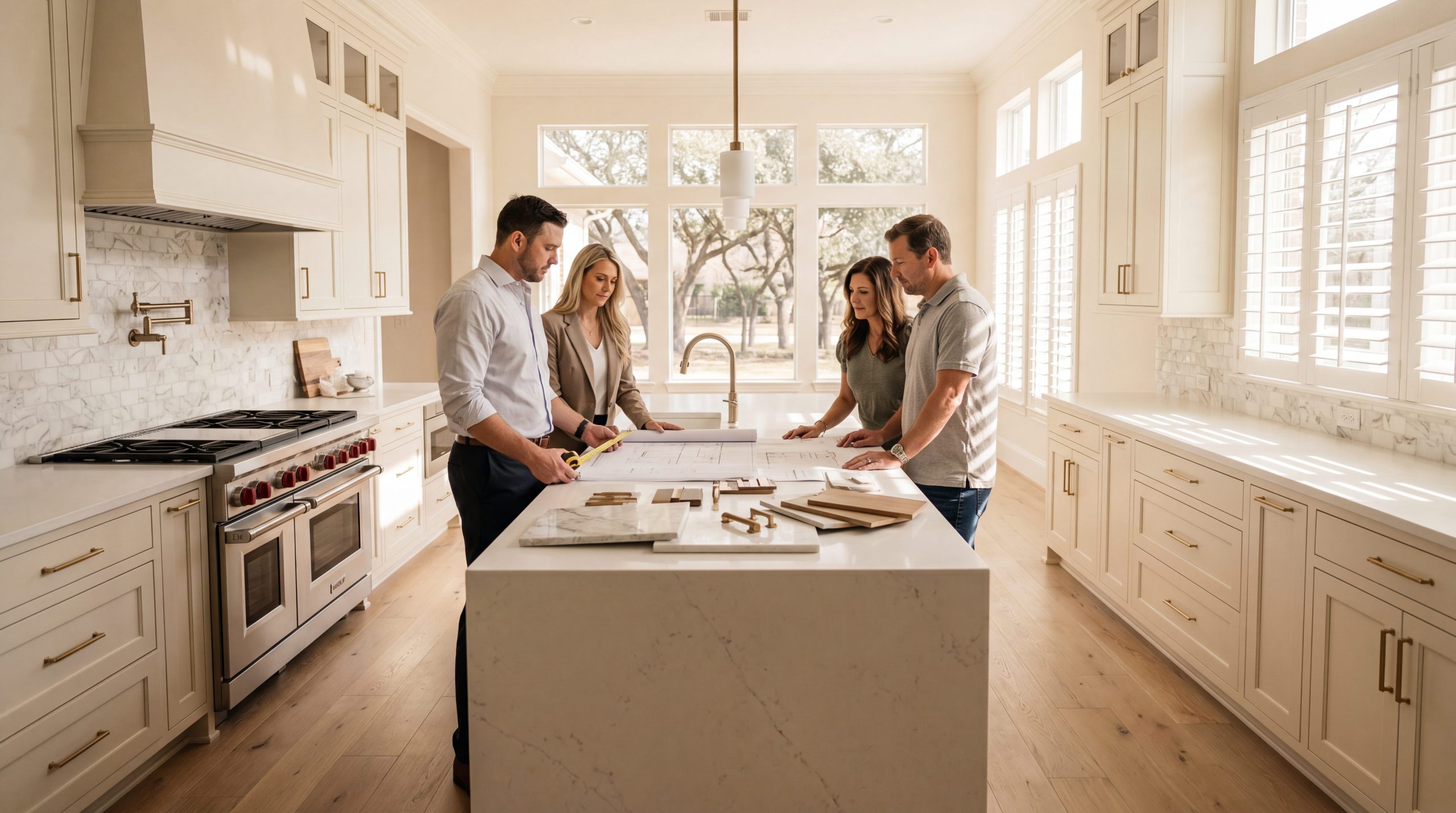
When building in Tomball, TX, focus on questions covering local experience, site drainage, and transparent pricing to protect your budget. Key questions include their experience with local soil/regulations, timeline from groundbreaking, warranty details, and how they handle change orders. Ensure you understand if they use in-house crews and what's included in the base price.
Introduction
Choosing the right builder for your custom home in Tomball, TX, is one of the most consequential decisions you will ever make — and the wrong choice can cost you tens of thousands of dollars in overruns, delays, and heartbreak. The good news is that a focused set of questions, asked before you sign a single contract, transforms you from a hopeful buyer into an informed decision-maker. This guide arms you with the exact questions that separate a qualified, trustworthy home builder in Tomball, TX from one who could put your investment at risk.
Key Takeaways
- Budget for transparency — demand a line-item cost breakdown and confirm whether the base price includes site preparation, landscaping, and permit fees, which typically add 10–15 percent to the total project cost.
- Verify local experience — ask for at least three completed projects in the Tomball or Magnolia area that you can physically tour, because soil conditions and regulations here differ sharply from other Houston-area markets.
- Confirm the timeline in writing — custom home construction in the Tomball area generally takes 18 to 30 months from design to move-in, so insist on a phase-by-phase schedule with milestone dates.
- Demand a clear change-order process — request a written policy that specifies how change orders are priced, approved, and documented, since unmanaged changes are the leading cause of budget overruns in residential construction.
- Inspect warranty terms carefully — Texas law (HB 2024) requires a minimum six-year structural warranty, so verify your builder meets or exceeds the standard 1-year workmanship, 2-year mechanical, and 6-year structural coverage tiers.
- Compare subcontractor vetting methods — ask whether the builder uses in-house crews or subcontractors, and request proof of licensing, insurance, and the quality-control inspection schedule for every trade on your job site.
How to Evaluate a Builder's Experience in the Tomball Area
A builder's track record in the local market is not a nice-to-have — it is a safety net for your entire project. Tomball straddles Harris and Montgomery counties, which means permitting requirements, flood-zone designations, and utility-connection processes can change based on exactly where your lot sits. A builder who has worked extensively in this corridor already understands those jurisdictional differences and can navigate them without costly trial and error.
Start by asking how many years the builder has been completing custom homes in the Tomball, Magnolia, and Cypress communities. Longevity matters, but relevance matters more. A builder with fifteen years of production-home experience in another city may still stumble over Tomball's Unified Development Code or the deed-restriction reviews common in this area's established neighborhoods.
Questions That Reveal True Local Expertise
- How long have you been building custom homes specifically in the Tomball and northwest Houston corridor?
- Can you provide addresses and references for at least three recently completed projects I can visit in person?
- How do you handle site drainage and the expansive clay soil conditions that are common throughout Harris and Montgomery counties?
- Are you a member of the Greater Houston Builders Association, and have you received any industry awards or recognitions?
Typical Builder Experience Benchmarks — Tomball Area
| Experience Indicator | What to Look For | Red Flag |
| Years building in Tomball/NW Houston | 10 or more years in the local market | Fewer than 3 years or no local projects |
| Completed local projects | Portfolio of 15+ custom homes in the area | Unable to provide verifiable addresses |
| Soil and drainage knowledge | Explains post-tensioned slab foundations and site grading in detail | Gives vague or generic answers about foundation work |
| Industry affiliations | Active member of GHBA, TAB, or BBB-accredited | No professional memberships or awards |
Understanding the Construction Timeline and Communication Process
One of the most common sources of frustration in new home construction is a misaligned expectation about how long the project will take and who will keep you informed along the way. In the Tomball area, a fully custom home typically requires 4 to 9 months for design and pre-construction, 2 to 5 months for permitting and approvals, and 12 to 18 months for the physical build. Weather events, material lead times, and inspection scheduling can each add weeks to any phase.
Ask your builder to provide a written phase-by-phase timeline before you sign the contract. That document should include specific milestones — foundation pour, framing completion, rough-in inspections, and drywall — with target dates and a clear explanation of what could cause delays. A builder who resists putting a timeline in writing is signaling a lack of process discipline.
Communication Questions to Ask Before You Commit
- Who will be my single point of contact throughout the entire project — and what happens if that person leaves the company?
- How often will I receive progress updates, and in what format (written reports, photos, scheduled site meetings)?
- How frequently will I have access to inspect the home during construction, and will the project manager accompany me?
- What project management software or client portal do you use so I can track milestones in real time?
A builder who assigns a dedicated project manager and offers a client-facing portal demonstrates a level of organizational maturity that directly reduces your risk of surprises and delays.
Protecting Your Budget — Base Price, Change Orders, and Hidden Costs
Budget overruns are the number-one fear among custom-home clients, and the root cause is almost always ambiguity about what is — and is not — included in the contract price. In the Tomball market, construction hard costs typically range from $175 to $275 per square foot for mid-range to high-end custom homes. Luxury projects with premium materials and complex architectural designs can exceed $300 per square foot. These figures generally exclude land, landscaping, pools, and extensive outdoor living areas.
Your first budget question should be blunt: "What exactly is included in the base price?" The answer should cover foundation engineering, framing, roofing, all mechanical systems, interior finishes, standard appliances, driveway, and basic landscaping. Anything not listed is an additional cost — and surprises in that column are what destroy budgets.
Change-Order Management — The Make-or-Break Policy
A change order is any modification to the original scope of work after the contract is signed. It could be as small as upgrading a faucet or as large as reconfiguring an entire floor plan. Without a clearly documented process, change orders become a financial black hole.
- What is your written process for initiating, pricing, approving, and documenting a change order?
- Is there a markup on change orders beyond the cost of materials and labor?
- Do you use an escalation clause for volatile materials like lumber or steel, and how is the risk shared between us?
- Will I see a revised budget summary after every approved change order?
Estimated Cost Breakdown — 3,500 Sq. Ft. Custom Home in Tomball
| Cost Component | Typical Low Estimate | Typical High Estimate |
| Land acquisition (1-acre lot) | $150,000 | $300,000 |
| Soft costs (design, permits, financing) | $75,000 | $120,000 |
| Hard costs (construction at $175–$275/sq. ft.) | $612,500 | $962,500 |
| Site improvements and landscaping | $30,000 | $75,000 |
| Contingency fund (10% of hard costs) | $61,250 | $96,250 |
| Estimated total project range | $928,750 | $1,553,750 |
These figures are synthesized estimates for planning purposes. Actual costs vary significantly based on site conditions, finish selections, and current material pricing. Industry data indicates that maintaining a contingency fund of at least 10 percent is a best practice that protects against unforeseen conditions.
Verifying Construction Quality — Subcontractors, Materials, and Inspections
The quality of your finished home depends on who actually swings the hammer, lays the tile, and runs the wiring. Many custom builders in the greater Tomball area rely heavily on subcontractors rather than in-house crews. That is not inherently a problem — but it demands a rigorous vetting and supervision process from the general contractor.
Ask your builder whether they use their own employees or subcontractors for each major trade: foundation, framing, electrical, plumbing, HVAC, and interior finishes. For every subcontractor, request proof of current licensing, general liability insurance, and workers' compensation coverage. Then ask about the inspection cadence — how often does the builder's own superintendent walk the site, and what checklist do they use?
Material Standards and On-Site Inspection Frequency
- What building materials do you specify as standard, and where can I see samples or visit a supplier showroom?
- How do you handle the expansive clay soil in the Tomball area when engineering the foundation? Do you use post-tensioned slab-on-grade as a baseline?
- How many formal inspections does your team conduct beyond the code-required municipal inspections?
- Will the structural engineer who designed the foundation also inspect it before the pour?
In Southeast Texas, the expansive clay soil — locally known as "gumbo" — requires foundation engineering that accounts for seasonal swelling and shrinkage. Post-tensioned slab-on-grade foundations are generally the standard for this area, and foundation costs alone can represent 15 percent or more of total hard costs. A knowledgeable builder will explain this proactively, not wait for you to ask.
Warranty Coverage and Post-Completion Support
A warranty is only as strong as the builder standing behind it. Under Texas HB 2024, which took effect September 1, 2023, builders who provide a qualifying written warranty benefit from a reduced statute of repose — but that warranty must meet specific minimums. The law establishes a 1-2-6 framework: one year for workmanship and materials, two years for plumbing, electrical, heating, and air-conditioning systems, and six years for major structural components. The best custom builders in the Tomball and Magnolia area meet or exceed these minimums.
Ask for a written copy of the warranty before signing the contract — not after closing. Review it for all three tiers of coverage: workmanship and materials (one year minimum), mechanical delivery systems (two years minimum), and major structural components including the foundation, load-bearing walls, and roof structure (six years minimum). Clarify whether the warranty is administered directly by the builder or through a third-party insurer, because the claims process can differ significantly.
Post-Move-In Service Questions
- What is the process for submitting a warranty claim after I move in — is there an online portal, a dedicated contact, or a general phone line?
- Do you conduct a scheduled walkthrough at 30 days, 6 months, and 11 months after closing to proactively identify issues?
- What items are explicitly excluded from your warranty?
- Do you offer any ongoing maintenance or concierge service after the warranty period ends?
Typical Warranty Coverage Tiers — Custom Homes in Texas (Per HB 2024)
| Coverage Category | Minimum Duration Under Texas Law | What It Typically Includes |
| Workmanship and materials | 1 year | Paint, caulking, drywall, grout, weather-stripping, cabinet adjustments |
| Mechanical delivery systems | 2 years | Plumbing, electrical, HVAC, water heaters |
| Major structural components | 6 years | Foundation, load-bearing walls, roof structure, beams, floor systems |
| Appliances and fixtures | Manufacturer warranty (varies) | Covered by individual manufacturer terms, not the builder |
A builder who schedules proactive walkthroughs at regular intervals after move-in demonstrates a commitment to long-term quality — not just closing the sale. This level of post-completion care is a hallmark of builders who have earned repeat referrals in the Tomball community.
Navigating Local Permits, Regulations, and HOA Requirements in Tomball
Permitting and regulatory compliance are not glamorous topics, but they are among the most critical factors that determine whether your project stays on schedule and on budget. In the Tomball area, where your lot is located dictates which governing body oversees your build. Properties within the City of Tomball's incorporated limits fall under the city's Unified Development Code and its adopted International Residential Code with local amendments. Lots in unincorporated Harris County or Montgomery County follow a different set of county-level regulations with generally fewer zoning restrictions but strict floodplain and septic-system requirements.
If your lot is in a deed-restricted community, you will also need approval from an Architectural Control Committee before the city or county will issue your building permit. This additional review can add weeks to the permitting timeline and may impose restrictions on exterior materials, roof pitch, setbacks, and even color palettes. Always confirm current requirements with your local municipality or a licensed contractor before proceeding.
Permit and HOA Questions to Ask Your Builder
- Will you handle the entire permitting process, including plan submittal, revision responses, and final inspections?
- Are you familiar with both Harris County and Montgomery County building requirements, since Tomball straddles both jurisdictions?
- What is the typical permitting timeline in the City of Tomball versus the unincorporated county, and how will you account for it in the schedule?
- If my lot is in a community with an Architectural Review Committee, have you successfully completed homes under that committee's guidelines before?
- What are the current impact fees, utility connection costs, and inspection fees I should budget for?
Always confirm current requirements with your local municipality or a licensed contractor before proceeding. Regulations, fee schedules, and code amendments are updated periodically, and only official sources can guarantee accuracy for your specific project.
Frequently Asked Questions
What is the average cost to build a custom home in Tomball, TX?
The total project cost for a custom home in Tomball generally ranges from roughly $930,000 to over $1.5 million for a 3,500-square-foot home, depending on land cost, site conditions, and finish selections. Construction hard costs alone typically fall between $175 and $275 per square foot. Luxury projects with premium materials and complex designs can start at $300 per square foot or higher.
How long does it take to build a custom home in Tomball?
Most custom home projects in the Tomball area take between 18 and 30 months from the start of architectural design to move-in day. The timeline includes 4 to 9 months for design and pre-construction, 2 to 5 months for permitting, and 12 to 18 months for the physical build. Weather delays and material lead times can extend any phase.
Do I need a special foundation for the soil conditions in Tomball, TX?
Yes. The expansive clay soil found throughout the Tomball and greater Houston area requires engineered foundation solutions, typically a post-tensioned slab-on-grade. This type of foundation uses steel cables under tension to resist the soil's tendency to swell and shrink with moisture changes. Foundation costs in this region can represent 15 percent or more of total hard construction costs.
What should be included in a builder's base price?
A transparent base price should cover foundation engineering, framing, roofing, all mechanical systems (HVAC, plumbing, electrical), interior finishes at the specified grade, standard appliances, and a basic landscape package. Items commonly excluded are land, pools, extensive outdoor kitchens, window treatments, and upgraded appliances. Always request a written, itemized scope of work before signing.
How do I verify a builder's reputation in Tomball?
Start by checking membership in the Greater Houston Builders Association and the Better Business Bureau. Ask for references from at least three recent clients in the Tomball or Cypress area, and visit completed homes in person. Review any industry awards — such as GHBA PRISM Awards or Texas Association of Builders Star Awards — as these provide third-party validation of craftsmanship and client satisfaction.
What permits do I need to build a custom home in Tomball, TX?
You will generally need a building permit from either the City of Tomball or the relevant county (Harris or Montgomery), along with trade-specific permits for electrical, plumbing, and mechanical work. If your lot is in a deed-restricted community, you will also need Architectural Control Committee approval before the building permit is issued. Always confirm current requirements with your local municipality or a licensed contractor before proceeding.
Conclusion
Building a custom home in the Tomball area is a deeply personal investment that rewards careful preparation. The right questions — about local experience, transparent budgeting, construction quality, warranty coverage, and regulatory navigation — give you the clarity and confidence to make a decision you will never regret. Every answer your builder provides should leave you feeling more informed, not less certain.
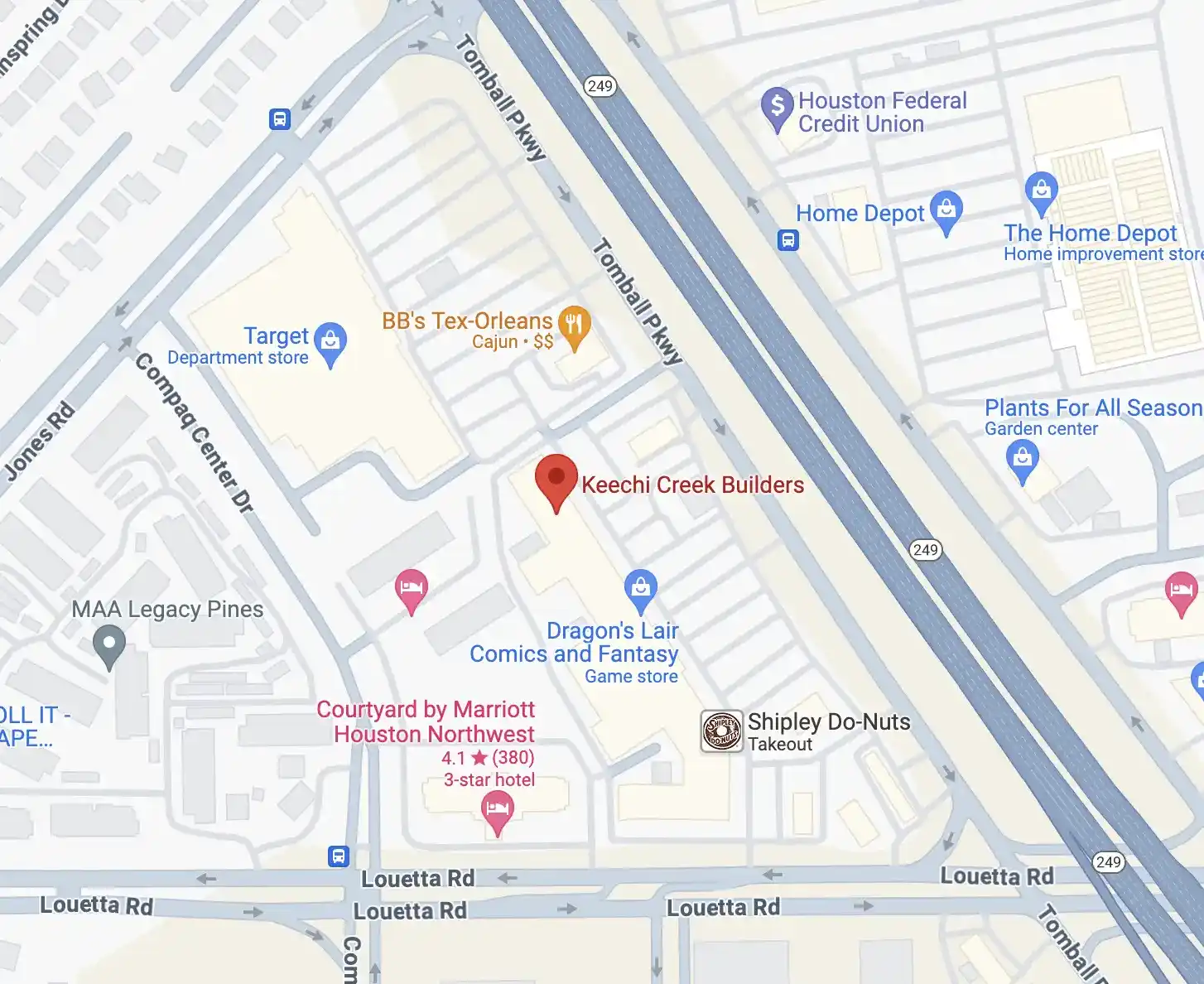
When you are ready to move from questions to answers, Keechi Creek Builders offers an integrated design-build experience that eliminates the communication gaps and budget surprises that derail so many custom home projects in Tomball, TX. Call 281-688-1454 or visit keechicreekbuilderstx.com to schedule your personalized consultation and discover what it means to build with a single, award-winning team from first sketch to final walkthrough. Your forever home deserves a builder who treats your vision as their mission