Your neighbor's bathroom renovation nightmare started with a contractor who seemed professional enough. Three months later, the "almost finished" project sits incomplete, the contractor's phone goes straight to voicemail, and the BBB complaint reveals a pattern she wishes she'd discovered sooner.
When you're planning a bathroom transformation in your Bridgeland, Towne Lake, or Fairfield home, the contractor you choose matters more than any tile selection or fixture upgrade. Here's the challenge: Texas doesn't require general contractors to hold a state license, which means anyone can legally offer bathroom remodeling services regardless of training, experience, or financial stability. This regulatory gap puts the responsibility for vetting bathroom remodeler credentials in Cypress squarely on your shoulders.
The credentials that distinguish qualified Cypress bathroom remodelers include specific NAHB certifications (Graduate Master Builder, Certified Graduate Remodeler, Certified Aging in Place Specialist), active professional association memberships, verifiable trade licenses for plumbers and electricians, comprehensive insurance coverage, and documented project history. These qualifications demonstrate commitment to professional standards that protect your investment.
Texas stands as one of the few states without statewide general contractor licensing requirements for residential remodeling. This means no state agency verifies a contractor's training, examines their work history, or confirms their financial stability before they advertise bathroom renovation services. Anyone can print business cards tomorrow and legally call themselves a bathroom remodeler—and many do.
Here's the thing: when someone asks if a contractor is "licensed" in Texas, the answer is complicated. The state doesn't issue general contractor licenses for residential work. What Texas does regulate are specific trades. Plumbers must hold licenses through the Texas State Board of Plumbing Examiners. Electricians require licensing through the Texas Department of Licensing and Regulation. These trade-specific requirements exist because improper plumbing and electrical work creates safety hazards that affect entire communities.
For Cypress homeowners, this regulatory environment means something important: you can't rely on state oversight to filter out unqualified bathroom remodelers. The verification burden falls entirely on you.
Cypress sits in unincorporated Harris County within Houston's extraterritorial jurisdiction—a regulatory position that affects permit requirements. Cosmetic bathroom updates typically don't require permits, but any work involving plumbing modifications, electrical changes, or structural alterations does. Licensed plumbers and electricians must pull permits for their work, creating at least some official oversight for those portions of your project.
The challenge? General contractors coordinating these trades don't face similar accountability. Industry data consistently shows that most small contractors fail within three years of starting their business. Without state licensing requirements creating barriers to entry, homeowners must evaluate contractor stability through other means—professional credentials, association memberships, and documented track records.
The key takeaway is that "licensed contractor" means something different in Texas than in states with comprehensive licensing. Your protection comes from verifying voluntary credentials and professional affiliations, not from assuming state oversight exists.
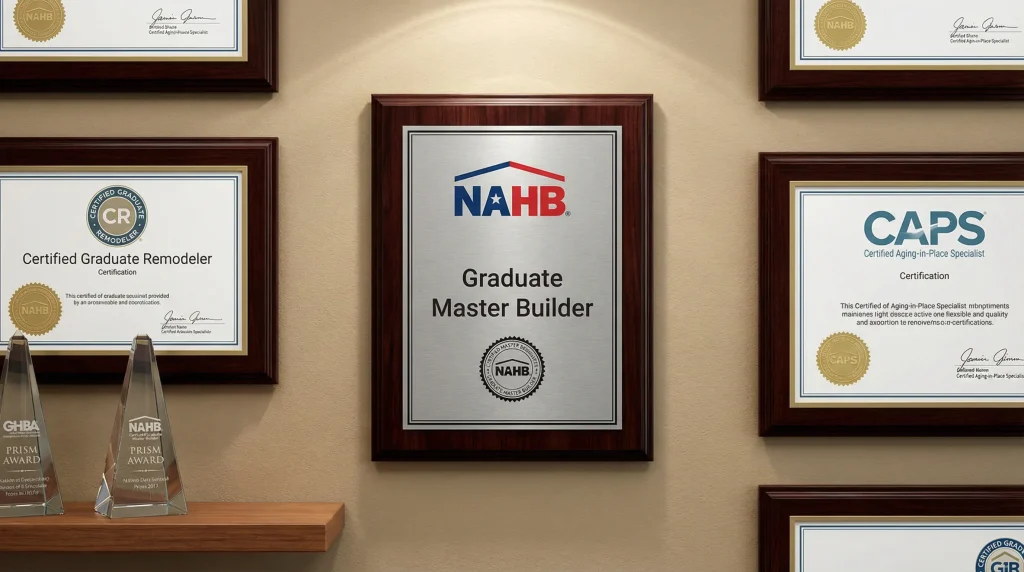
The National Association of Home Builders offers voluntary professional certifications that represent the gold standard for remodeling expertise. These credentials require extensive coursework, examinations, and ongoing continuing education—commitments that contractors pursuing quick profits won't make.
According to NAHB, their certification programs require candidates to complete specific educational curricula, pass comprehensive examinations, and maintain credentials through continuing education. This isn't a weekend seminar or a certificate purchased online. A certified bathroom contractor in Texas holding NAHB credentials has invested significant time and money in professional development.
The Graduate Master Builder (GMB) represents the highest designation NAHB offers. Earning this credential requires completion of multiple educational tracks covering construction, business management, and customer relations—plus demonstrated professional achievement. When you see GMB credentials, you're looking at a contractor who has committed years to professional excellence.
The Certified Graduate Remodeler (CGR) designation focuses specifically on renovation expertise. This matters for bathroom projects because remodeling presents unique challenges distinct from new construction. Working within existing structures, managing occupied homes, integrating new work with old—these skills require specialized knowledge that CGR certification validates.
In a state without mandatory licensing, voluntary professional certifications reveal something important about a contractor's character. They've chosen to pursue credentials they don't legally need. They've invested in education when they could have skipped it. They've subjected themselves to examination standards when no law required it.
Research from industry associations consistently shows that contractors holding professional certifications demonstrate lower complaint rates and higher customer satisfaction scores. The investment in credentials correlates with investment in quality work.
The key takeaway is that NAHB certifications—particularly GMB, CGR, and CAPS designations—provide the professional accountability framework that Texas's regulatory environment doesn't require. These voluntary credentials distinguish serious professionals from casual operators.
Verifying bathroom remodeler credentials requires checking multiple sources: NAHB certification directories, Better Business Bureau profiles, state trade license databases, and direct documentation requests. Claims on websites and business cards mean nothing without verification.
Start with NAHB's online directory to confirm any claimed certifications. The database lists credential holders by name and location, showing exactly which designations they've earned and whether certifications remain current. A contractor claiming CGR or CAPS certification should appear in this searchable database.
Next, check the Better Business Bureau profile. You can verify a contractor's BBB accreditation status and complaint history for businesses operating in the Houston area. Look beyond the letter rating—read complaint details and response patterns. How a company handles problems reveals more than a simple grade. BBB accreditation requires businesses to meet specific standards and respond to consumer complaints, creating accountability that non-accredited competitors avoid.
For the licensed trades working on your project, verify credentials directly. Search the Texas State Board of Plumbing Examiners database for plumber licenses. Check TDLR records for electrician licenses. These searches take minutes and confirm that regulated work will be performed by qualified professionals.
Don't hesitate to ask contractors directly for credential verification. Professional remodelers expect these requests and provide documentation readily. Ask for:
A contractor who resists providing documentation or makes excuses raises immediate red flags. Legitimate professionals welcome verification because it distinguishes them from unqualified competitors.
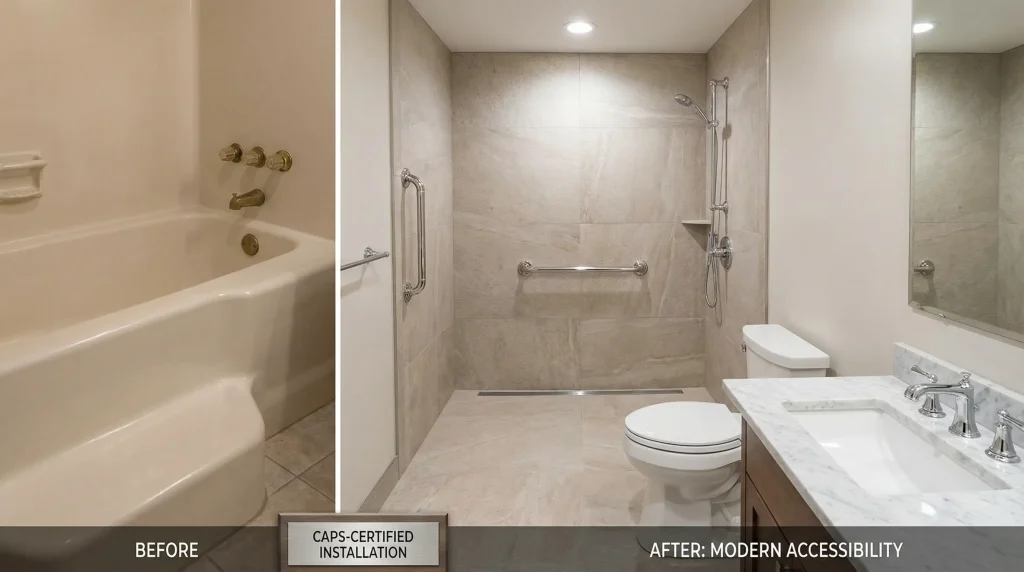
Different bathroom renovation goals align with specific certifications: CAPS for aging-in-place modifications, CGR for luxury transformations, CGP for sustainable building, and CLC for pre-1978 homes requiring lead-safe practices. Matching certifications to your project type ensures you're working with specialists, not generalists.
The Certified Aging in Place Specialist (CAPS) program trains contractors in designing and building bathrooms that accommodate residents as they age. If your project includes grab bar installation, curbless shower conversion, comfort-height toilets, or wider doorways for wheelchair access, CAPS certification matters significantly.
Research shows that falls represent the leading cause of injury among older adults, and bathrooms present particular risks due to wet surfaces and confined spaces. CAPS-certified contractors understand how to integrate safety features without sacrificing aesthetic appeal—a skill that requires specific training.
You can explore NAHB's official CAPS certification requirements and training standards to understand what this credential represents. When both principals of a remodeling company hold CAPS certification—which is uncommon—it signals organizational commitment to accessibility expertise rather than individual specialty.
A CGR certified remodeler has completed comprehensive training in renovation-specific challenges. Bathroom remodeling within existing Cypress homes built in the 1990s-2000s often reveals surprises behind walls: outdated plumbing, inadequate electrical capacity, or moisture damage from Houston's humid climate. CGR training prepares contractors to navigate these discoveries professionally rather than with improvised solutions.
The Certified Green Professional (CGP) designation indicates expertise in energy-efficient systems, water conservation fixtures, and sustainable materials. If your bathroom renovation priorities include WaterSense-certified fixtures, low-VOC materials, or improved ventilation, CGP certification ensures your contractor understands these systems.
For homes built before 1978, EPA regulations require contractors to follow lead-safe work practices during renovation. The Certified Lead Contractor (CLC) designation confirms training in proper containment, cleanup, and occupant protection procedures. This isn't optional—it's legally required for covered projects.
The key takeaway is that certification specializations matter. A CAPS certified contractor brings different expertise than a CGP specialist. Matching credentials to your project type ensures you're hiring proven specialists.
Industry awards from organizations like the Greater Houston Builders Association represent peer recognition—validation from fellow professionals who understand quality construction and can distinguish excellent work from adequate work. These aren't participation trophies.
When the GHBA presents Prism Awards or the Texas Association of Builders grants Star Awards, they're not evaluating marketing materials. Judges examine actual completed projects against industry standards. Award categories often specify project types and budget ranges, allowing meaningful comparisons.
A bathroom contractor with GHBA Prism Award recognition in the bathroom category has demonstrated excellence validated by industry peers. This differs fundamentally from self-proclaimed "best bathroom remodeler" claims that any business can make.
Active membership in professional associations—GHBA, TAB, NAHB, NKBA—requires meeting specific criteria and paying annual dues. But membership means more than financial commitment. Association members agree to ethical standards, gain access to continuing education, and subject themselves to complaint resolution processes.
When contractors maintain long-term association memberships spanning ten or fifteen years, they've demonstrated sustained commitment to professional standards. They've invested in industry relationships and continuing education rather than operating in isolation.
Better Business Bureau accreditation requires businesses to meet specific standards including responding to consumer complaints, being transparent about business practices, and honoring commitments. An A+ BBB rating maintained over many years—not just achieved once—indicates consistent professional conduct over time.
The distinction between accredited and non-accredited businesses matters. Accredited businesses have agreed to BBB oversight and committed to respond when problems arise.
Warning signs of credential problems include contractors who can't provide certificate copies, claim credentials not verifiable through issuing organizations, lack any professional association memberships, have no online presence or reviews, or pressure you to skip permit requirements. Legitimate contractors welcome verification.
Any contractor can say they're certified, experienced, or award-winning. The question is whether they can prove it. When you ask for documentation and receive excuses—"I'll send that later," "My certificates are being updated," "You can just check our website"—consider that a significant warning sign.
Professional contractors keep credential documentation readily accessible because they've invested in earning those credentials. They want you to verify because verification distinguishes them from competitors making empty claims.
In 2025, legitimate remodeling businesses maintain online presences that can be verified. This includes BBB profiles, association directory listings, and review histories on platforms like Houzz or Google. A contractor with no verifiable digital footprint raises questions about how long they've actually been operating and what their track record looks like.
The absence of reviews is particularly telling. Businesses completing dozens of projects over many years accumulate feedback. A company claiming years of experience but showing no review history may not have the track record they claim.
When contractors suggest skipping permits "to save you money" or "because nobody checks anyway," they're revealing a willingness to cut corners that likely extends to the work itself. Permits exist to ensure compliance with safety codes. Contractors who avoid them may also avoid insurance, proper licensing for their trade workers, or other protections that shield you from liability.
According to consumer protection guidance from the FTC, homeowners should never hire contractors who pressure them to bypass permit requirements. This behavior frequently correlates with other problematic practices.
The contractors who resist your credential verification efforts are the same contractors who create the horror stories neighbors share. Those who welcome documentation requests, readily provide certificate copies, and encourage you to check references have nothing to hide.
In summary, here are the essential points about bathroom remodeler credentials in Cypress:
Does Texas require bathroom remodelers to be licensed?
Texas doesn't require statewide licensing for general contractors performing residential remodeling. However, specific trades working on your bathroom—plumbers and electricians—must hold state licenses. This regulatory gap means homeowners must verify contractor qualifications through professional certifications and association memberships rather than relying on state oversight.
What is the difference between CGR and GMB certifications?
The Certified Graduate Remodeler (CGR) designation focuses specifically on renovation expertise, covering challenges unique to working within existing structures. The Graduate Master Builder (GMB) represents NAHB's highest designation, requiring completion of multiple educational tracks plus demonstrated professional achievement. A contractor holding both has invested extensively in professional development.
How do I verify if a contractor holds NAHB certifications?
NAHB maintains an online certification directory searchable by name and location. Any contractor claiming GMB, CGR, CAPS, or other NAHB designations should appear in this database with current credential status. If they don't appear, the claimed certification either doesn't exist or has lapsed.
Why does CAPS certification matter for bathroom remodeling?
The Certified Aging in Place Specialist (CAPS) credential trains contractors in designing and building spaces that accommodate residents as they age safely. For bathroom projects involving grab bars, curbless showers, comfort-height toilets, or accessibility features, CAPS certification ensures the contractor understands both safety requirements and aesthetic integration—skills that generic contractors lack.
What should I do if a contractor can't provide credential documentation?
Treat inability or unwillingness to provide credential documentation as a significant red flag. Professional contractors maintain ready access to their certifications, insurance certificates, and license documentation because they've invested in earning these credentials. Excuses about delayed documentation often indicate the credentials don't exist or have expired.
The key takeaway is that credential verification protects your investment and your project outcome in a state without mandatory contractor licensing. The credentials that matter—NAHB certifications like GMB, CGR, and CAPS, active professional association memberships, verifiable BBB accreditation, and documented project history—require effort to verify but provide meaningful assurance that generic claims cannot match.
When you're ready to discuss your bathroom renovation project with a team that welcomes credential verification, we invite you to ask us the same questions we've outlined here. We built our reputation on earning credentials that demonstrate commitment to professional excellence—and we're always happy to prove it.