You've probably seen alphabet soup after a builder's name—GMB, CAPS, CGP—and wondered whether those letters actually mean anything. Here's the truth: in an industry where anyone with a truck and a business card can call themselves a "builder," these credentials separate professionals who've invested years in education from those who haven't.
When you're planning a custom home in Magnolia, Texas, evaluating builder qualifications feels overwhelming. Marketing claims sound identical. Websites showcase beautiful photos. But custom home builder certifications in Texas offer something marketing can't fake: third-party verification that a builder has completed rigorous education, passed examinations, and commits to ongoing professional development.
The National Association of Home Builders (NAHB) credentials—including Graduate Master Builder (GMB), Certified Aging in Place Specialist (CAPS), and Certified Green Professional (CGP)—represent the construction industry's highest professional designations. These certifications require hundreds of hours of coursework, successful examination, and annual continuing education to maintain. Unlike state licensing, which establishes minimum legal requirements, NAHB certifications identify builders who voluntarily pursue expertise far beyond what's required to operate.
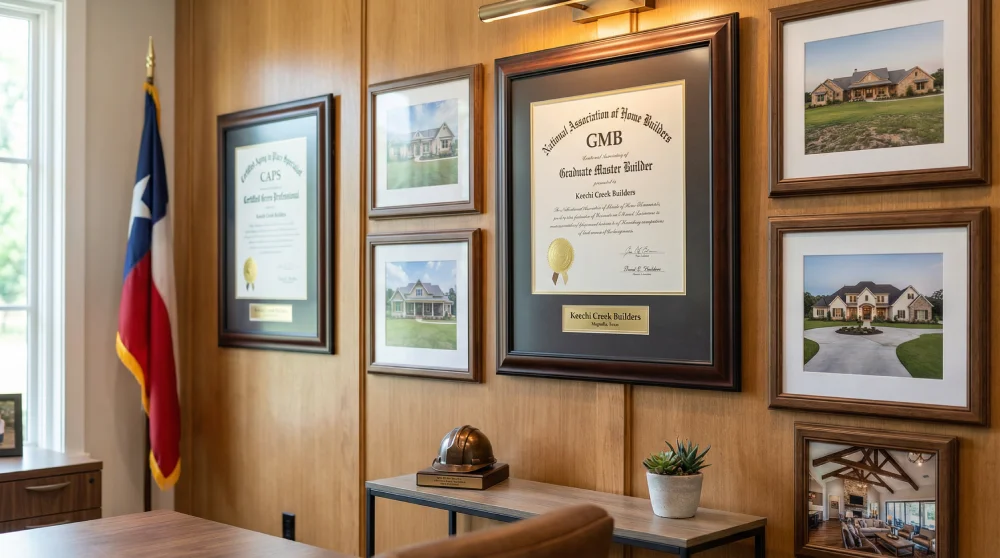
NAHB builder certifications are professional designations verifying that a builder has completed specialized education, passed comprehensive examinations, and maintains ongoing continuing education requirements. These credentials exist to establish industry standards that protect consumers and distinguish builders committed to professional development from those meeting only basic licensing requirements.
Here's the thing: Texas requires general contractors to register with the state, but that registration doesn't guarantee construction knowledge. It confirms you've paid fees and met administrative requirements. NAHB certifications work differently—they verify actual expertise through a three-part process that includes completing designated coursework, passing proctored exams, and earning continuing education credits annually.
The distinction matters more than most homeowners realize. According to NAHB's official credentials and education programs for builders, these designations cover construction technology, business management, customer relations, and specialized building science. A builder pursuing NAHB credentials invests significant time and money demonstrating competence that no state requires them to prove.
We've found that homeowners in Montgomery County often struggle to differentiate between builders who talk about quality and those who've documented it through credentials. Professional designations create objective evaluation criteria. When fifteen builders claim "decades of experience," certifications reveal which ones backed that claim with formal education and examination.
Credentials expire without ongoing learning. This means certified builders stay current with building codes, construction methods, and industry standards—not just the practices they learned years ago.
The Graduate Master Builder designation represents NAHB's pinnacle achievement for residential construction professionals, requiring completion of all NAHB education courses across construction, business, sales, and management disciplines. Fewer than one percent of American builders hold this credential, making it the industry's most exclusive professional designation.
Earning a GMB isn't a weekend seminar. The curriculum spans years of coursework covering construction technology, land development, business management, marketing, sales, and customer service. Builders must typically earn prerequisite designations—like Certified Graduate Builder (CGB) or Certified Green Professional—before qualifying for GMB candidacy. The path requires genuine commitment to mastering every aspect of residential construction.
What makes GMB holders different in practice? The comprehensive training means they understand your project from multiple angles simultaneously. They're not just skilled at framing walls—they understand how design decisions affect construction schedules, how material selections impact long-term maintenance, and how client communication prevents the misunderstandings that derail projects.
The key takeaway about GMB certification is this: it identifies builders who've invested in complete professional development rather than specializing narrowly. For custom home projects in Magnolia where complexity increases—acreage development, soil engineering challenges, HOA navigation—that breadth of knowledge translates to fewer surprises and better problem-solving.
Maintaining GMB status requires annual continuing education. Credential holders must document ongoing learning to keep their designation active. This ensures GMB builders stay current with evolving building codes, construction technology, and industry best practices rather than relying solely on past training.
CAPS (Certified Aging in Place Specialist) certifies expertise in designing homes for accessibility and long-term livability, while CGP (Certified Green Professional) verifies knowledge of sustainable building practices and energy efficiency. Both require specialized coursework, examination, and continuing education—making them valuable credentials for homeowners with specific accessibility or sustainability priorities.
The Certified Aging in Place Specialist designation addresses a growing reality: most people want to remain in their homes as they age, but most homes aren't designed for changing mobility needs. CAPS-certified builders complete training covering accessibility design, common home modifications, and solutions for mobility challenges affecting bathrooms, kitchens, entryways, and living spaces.
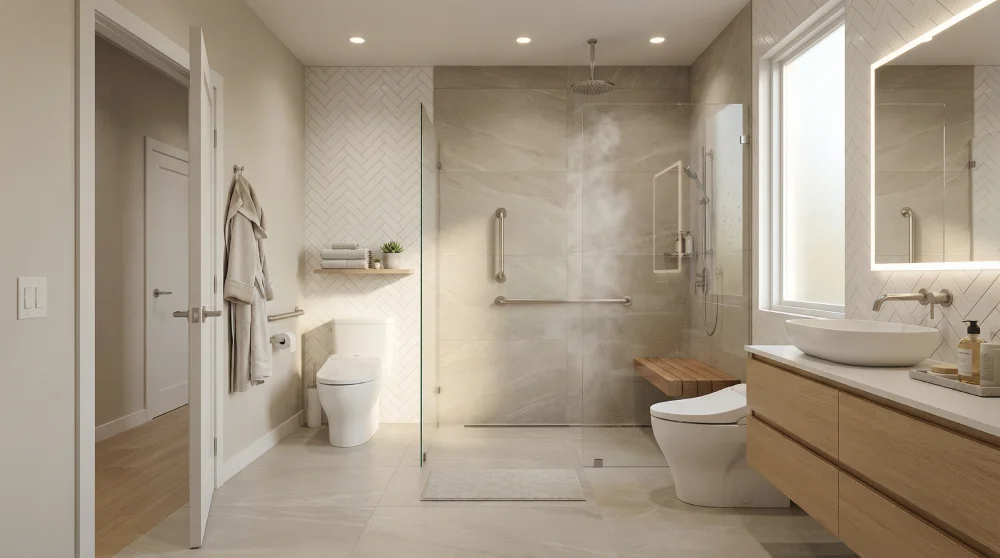
Research from the National Institute on Aging research on falls prevention at home shows that home modifications significantly reduce fall risks for older adults. CAPS training teaches builders to incorporate these safety features—grab bars, curbless showers, wider doorways, appropriate lighting—without sacrificing aesthetics. The result looks like luxury design, not institutional accommodation.
For Magnolia families building multi-generational homes or planning long-term ownership, CAPS certification indicates a builder understands how to create spaces that adapt to changing needs. We've worked with clients who initially dismissed accessibility features as unnecessary, then thanked us years later when aging parents moved in or temporary injuries made standard designs problematic.
That's the real value here.
The Certified Green Professional designation covers sustainable building practices, energy efficiency, indoor air quality, water conservation, and environmentally responsible material selection. CGP-certified builders understand the National Green Building Standard and can implement energy-saving strategies appropriate for Texas's climate challenges.
Given Houston-area cooling costs, energy efficiency directly affects monthly expenses for decades. CGP training teaches builders which insulation strategies, window specifications, and HVAC approaches deliver genuine savings versus marketing gimmicks. In Montgomery County's humid subtropical climate, proper moisture management and air sealing matter as much as equipment selection.
Verify builder certifications by checking NAHB's online credential directory, requesting documentation directly from the builder, and confirming that continuing education requirements are current. Legitimate certified builders welcome credential verification and can explain specifically how their training applies to your project.
The verification process takes minutes but prevents significant problems. Start with NAHB's credential directory, which lists current designation holders. If a builder claims GMB, CAPS, or CGP certification, their name should appear in the appropriate database with active status.
Don't stop at directory confirmation. Ask builders directly: "When did you complete your certification? What continuing education have you completed recently? How does your training specifically help with my project?" Certified professionals answer these questions confidently and specifically. Vague responses or resistance to discussion raises legitimate concerns.
Red flags include: credentials claimed on websites but not verifiable through NAHB, expired certifications presented as current, and inability to discuss how training applies to your specific situation. Green flags include: proactive credential disclosure during initial consultations, specific examples connecting training to project challenges, and documentation readily available upon request.
For comprehensive guidance on evaluating builder qualifications beyond certifications, see our complete guide to choosing a custom home builder in Magnolia. Credentials represent one important evaluation factor among several you'll want to consider.
In summary, here are the essential points about custom home builder certifications in Texas:
What's the difference between a state contractor license and NAHB certification?
State licensing confirms a builder has met minimum legal requirements to operate—paying fees, registering a business, sometimes passing basic examinations. NAHB certifications are voluntary professional designations requiring hundreds of hours of education, comprehensive exams, and annual continuing education. Licensing establishes the floor; certification demonstrates commitment to expertise far above that floor.
How long does it take a builder to earn GMB certification?
The Graduate Master Builder designation typically requires several years of progressive education. Builders must complete all NAHB courses covering construction technology, business management, sales, marketing, and customer service. Most earn prerequisite designations first, then advance to GMB candidacy. The investment reflects genuine long-term commitment to professional development.
Do certifications expire if builders don't maintain them?
Yes. NAHB credentials require annual continuing education to remain active. Builders must document ongoing learning each year to maintain their designations. This requirement ensures certified professionals stay current with evolving building codes, construction methods, and industry standards rather than relying solely on initial training.
Should I choose a CAPS-certified builder even if I don't need accessibility features now?
Consider your long-term plans. If you intend to stay in your home for decades, accessibility features become increasingly valuable—whether for aging in place, accommodating visiting elderly relatives, or managing temporary injuries. CAPS-certified builders know how to incorporate these features subtly during initial construction, when modifications cost far less than retrofitting later.
How do I verify a builder's certifications are current and legitimate?
Check NAHB's online credential directory for the builder's name and active status. Then ask the builder directly about their certification date, recent continuing education, and specific applications to your project. Legitimate certified builders answer confidently with specific examples. Vague responses or verification resistance warrants caution.
The key takeaway is this: in an industry where marketing claims often outpace actual expertise, NAHB certifications provide objective verification that a builder has invested years in professional education and commits to ongoing development.
For Magnolia homeowners evaluating custom home builder certifications in Texas, credentials like GMB, CAPS, and CGP create evaluation criteria that cut through identical-sounding marketing messages. These designations don't guarantee a perfect project—but they identify professionals who've demonstrated commitment to expertise beyond minimum requirements.
Understanding what certifications mean empowers you to ask better questions, recognize genuine qualifications, and make informed decisions about who will build your family's home. That knowledge transforms an overwhelming selection process into a confident evaluation—exactly what a decision this significant deserves.