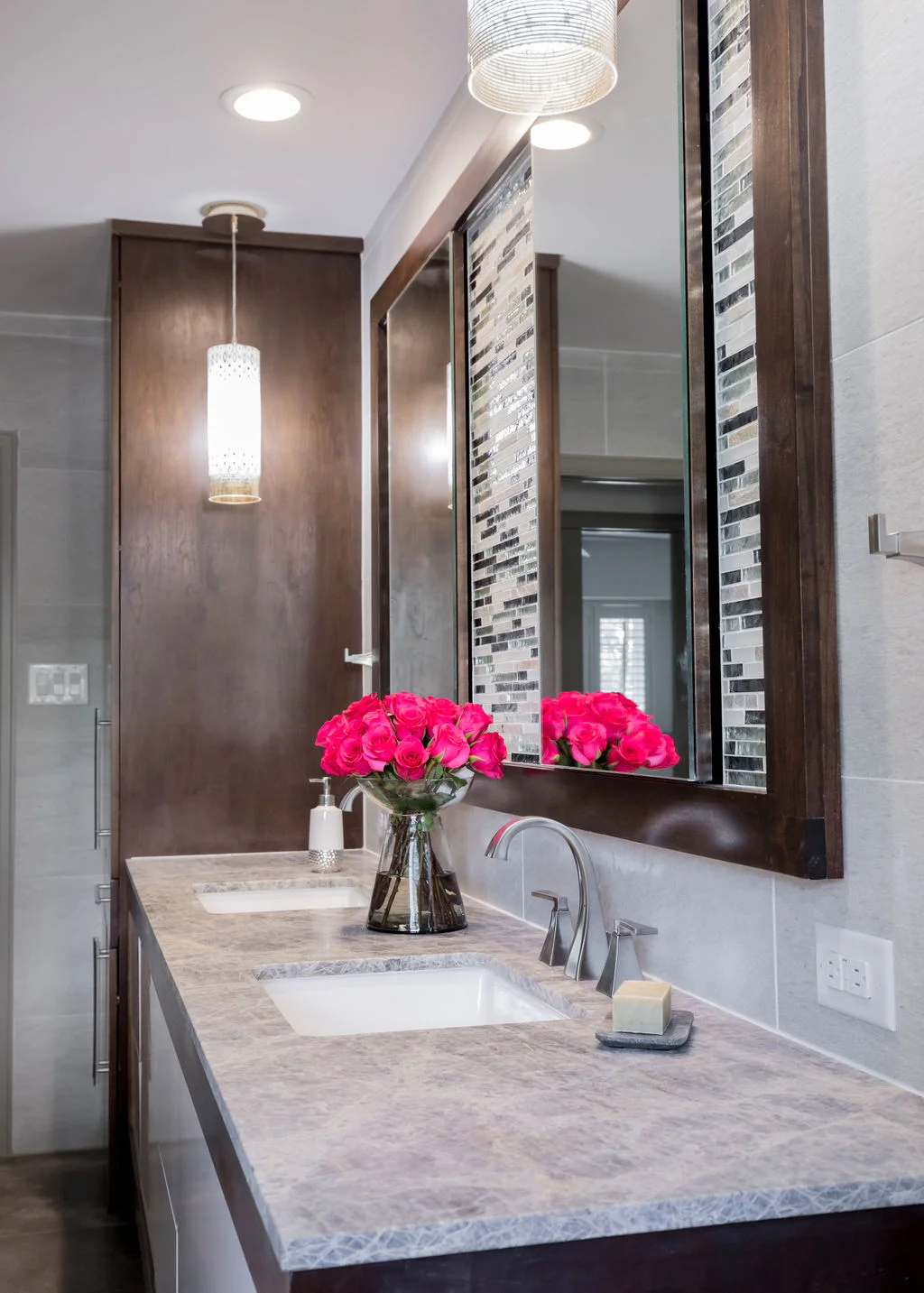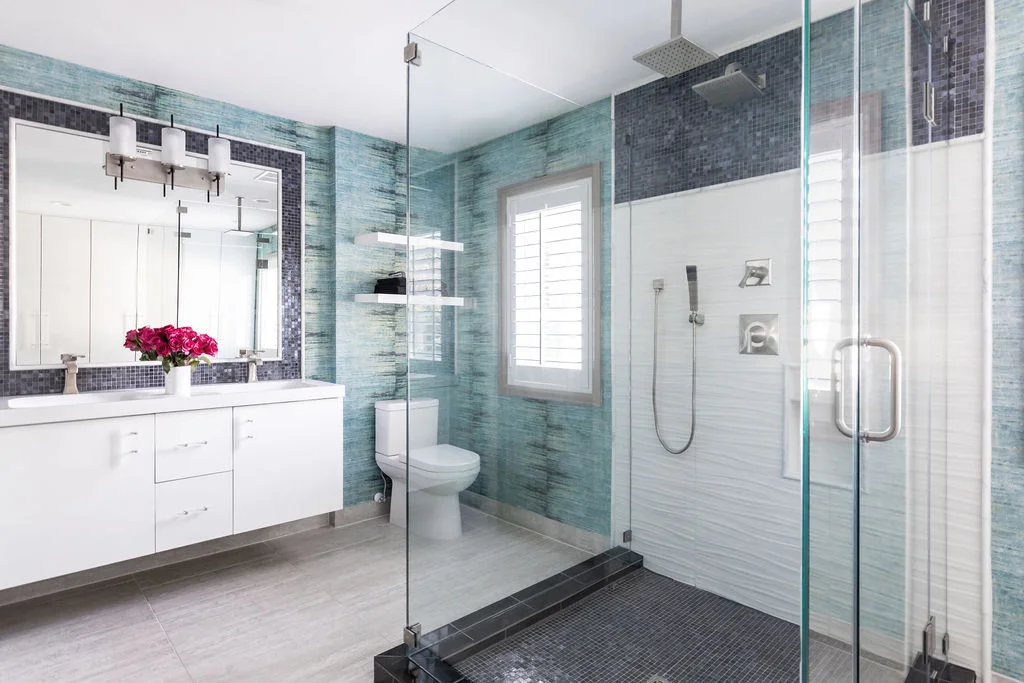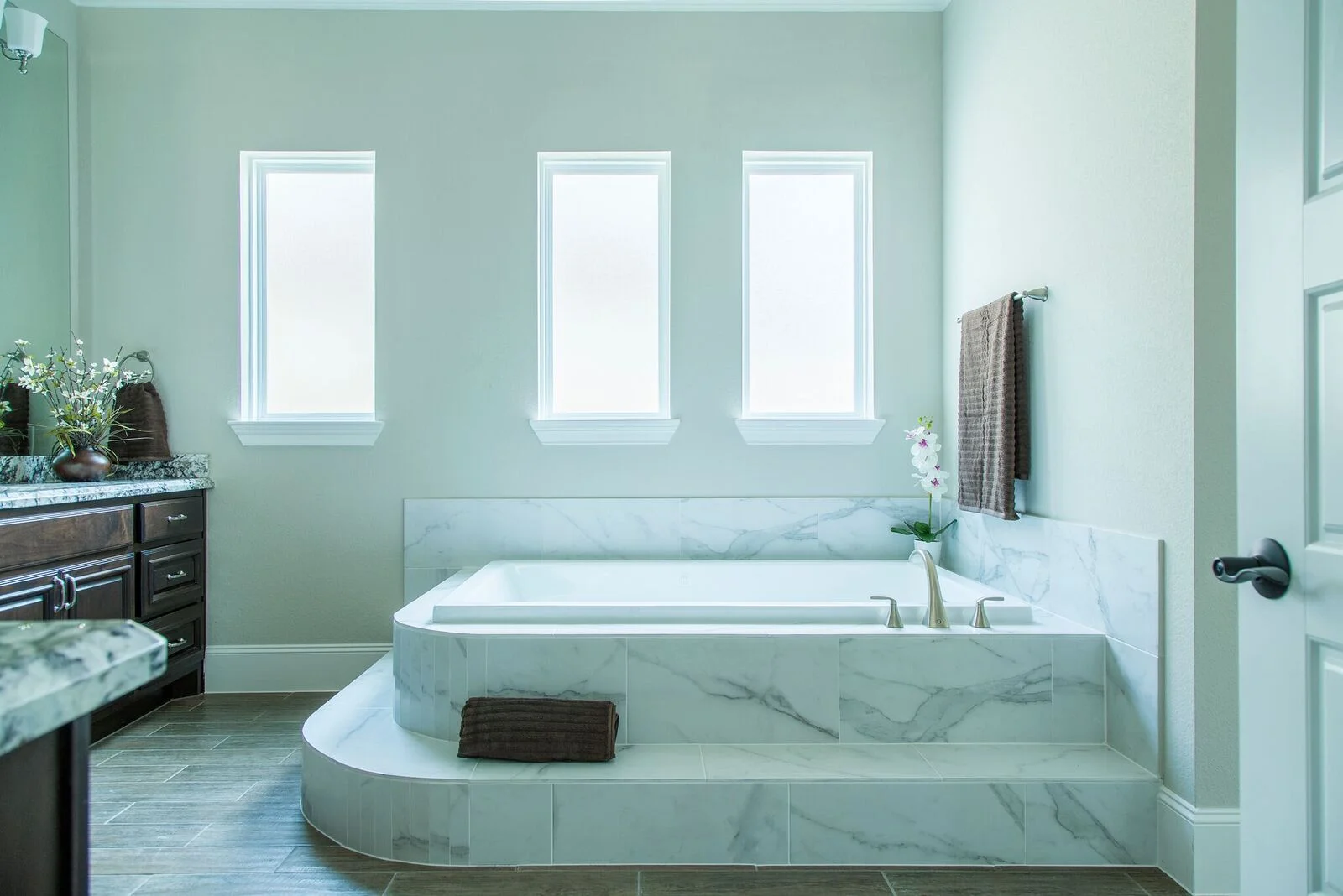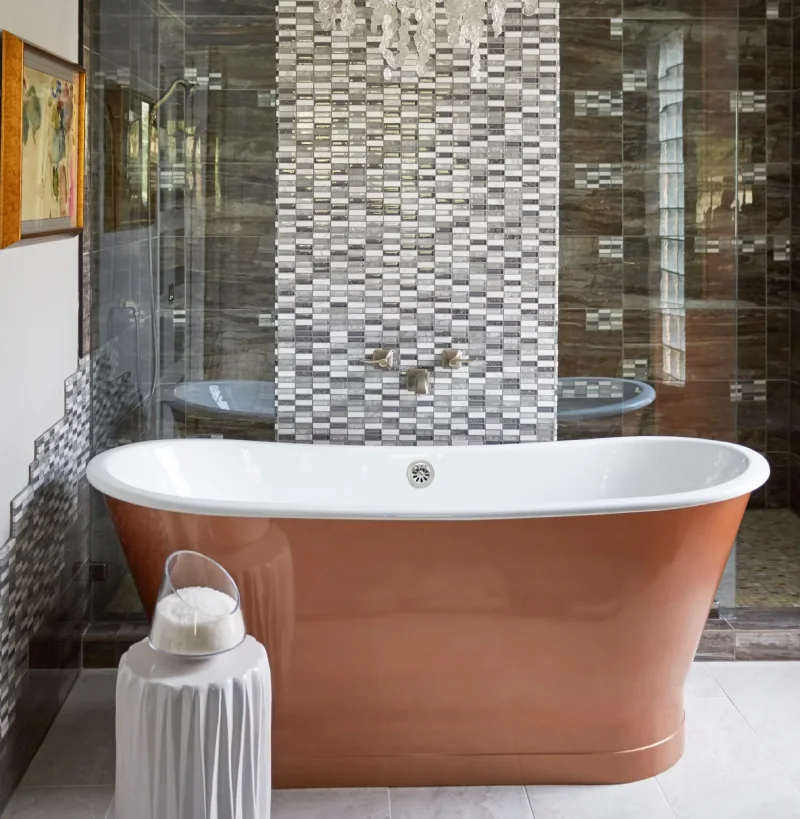
That gorgeous tile work you've been dreaming about? It's only as good as what's behind it. In Cypress, where humidity never really takes a break, the invisible layers protecting your bathroom renovation matter just as much as the finishes you can see.
When we talk with homeowners planning bathroom renovations in Bridgeland, Towne Lake, or Fairfield, waterproofing rarely tops their initial wish list. They're thinking about freestanding tubs, walk-in showers, and heated floors. But here's the thing: without proper bathroom waterproofing in Cypress TX, those beautiful finishes sit on borrowed time.
Bathroom waterproofing creates a continuous moisture barrier behind your tile and fixtures, protecting the structural elements of your home from Houston's relentless humidity and 47+ inches of annual rainfall. When installed correctly, waterproofing prevents the mold growth, wood rot, and substrate deterioration that can force complete bathroom rebuilds within 5-10 years.
Waterproofing isn't just about keeping water in the shower—it's about protecting your entire renovation investment from moisture that attacks from multiple directions. In our subtropical climate, water vapor moves through walls, humidity infiltrates from the air, and shower spray tests every seam and transition. A continuous waterproof membrane stops all three.
Think of your bathroom's waterproofing as the building envelope for wet areas. Just as your home's exterior protects against rain, your bathroom's moisture barrier protects the wood framing, drywall, and subfloor from water damage that starts invisibly and compounds over time.
We've seen it too many times: beautiful tile installations that looked perfect at completion, only to develop hollow sounds, cracked grout, and eventually loose tiles within a few years. The tile wasn't the problem. The waterproofing—or lack of proper waterproofing—was.
According to EPA's moisture control guidance for building design, controlling moisture in buildings prevents material degradation and protects indoor air quality. For bathrooms specifically, this means creating unbroken barriers at every surface that might contact water or humidity.
For Cypress homeowners, this takes on added significance. Hurricane Harvey flooded over 8,700 homes in the Cypress Creek watershed, and that event heightened awareness about moisture vulnerability in our homes. While most bathroom waterproofing addresses daily use rather than flood conditions, the same principles apply: water finds every gap, and prevention costs far less than repair.
Our comprehensive approach to bathroom remodeling in Cypress starts with this foundation—because protecting your investment means protecting what you can't see.
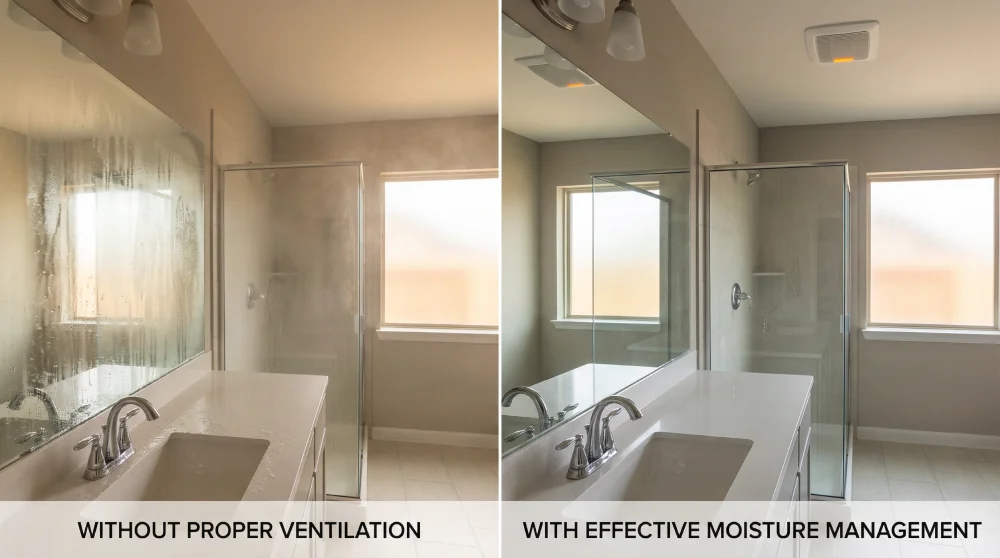
Houston's subtropical climate creates a dual moisture assault on bathrooms—47+ inches of annual rainfall combined with average humidity exceeding 75% means moisture pressure attacks from both inside and outside your walls simultaneously. Systems designed for drier climates simply aren't built for this continuous exposure.
The National Weather Service climate data for Greater Houston confirms what every Cypress resident already knows: we live in one of the most humid metropolitan areas in the country. But what does that mean for your bathroom?
Here's where it gets interesting. When you take a hot shower, you generate water vapor that naturally wants to move toward cooler, drier spaces—like the wall cavity behind your tile. Meanwhile, Houston's ambient humidity is trying to do the same thing from the outside in. Your bathroom walls face moisture pressure from both directions.
The 2021 International Building Code recognizes this challenge by requiring bathroom exhaust ventilation of at least 50 CFM (cubic feet per minute) to manage moisture. But ventilation alone can't stop water that's already behind your tile. That requires proper waterproofing at the substrate level.
Many homeowners assume cement board is waterproof. It isn't. Cement board is water-resistant—it won't fall apart when wet like drywall—but it still absorbs and transmits moisture. Without a true waterproof membrane over the cement board, water vapor passes right through to the framing behind.
In drier climates, this might take decades to cause problems. In Houston, moisture accumulation accelerates dramatically. We've opened up bathroom walls in 15-year-old Cypress homes and found substantial deterioration that started silently years earlier.
The real question isn't whether your bathroom will encounter moisture. It will. The question is whether you've installed systems designed to manage that moisture continuously, not occasionally.
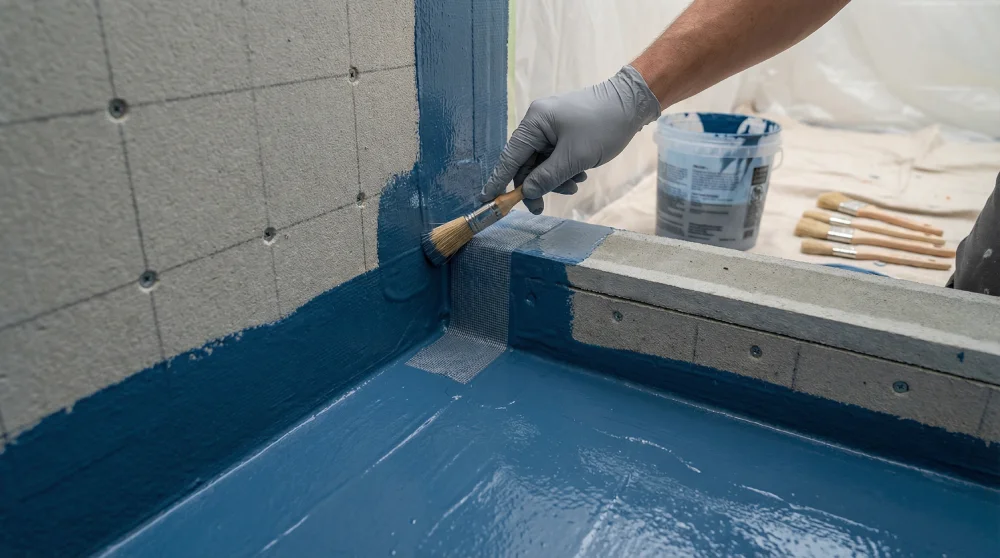
Professional bathroom waterproofing uses continuous membrane systems—either sheet membranes like Schluter-KERDI or liquid-applied products like Laticrete Hydro Ban—installed over properly prepared substrates with meticulous attention to every transition point where water might penetrate. The main difference between these systems lies in application method, not protection level.
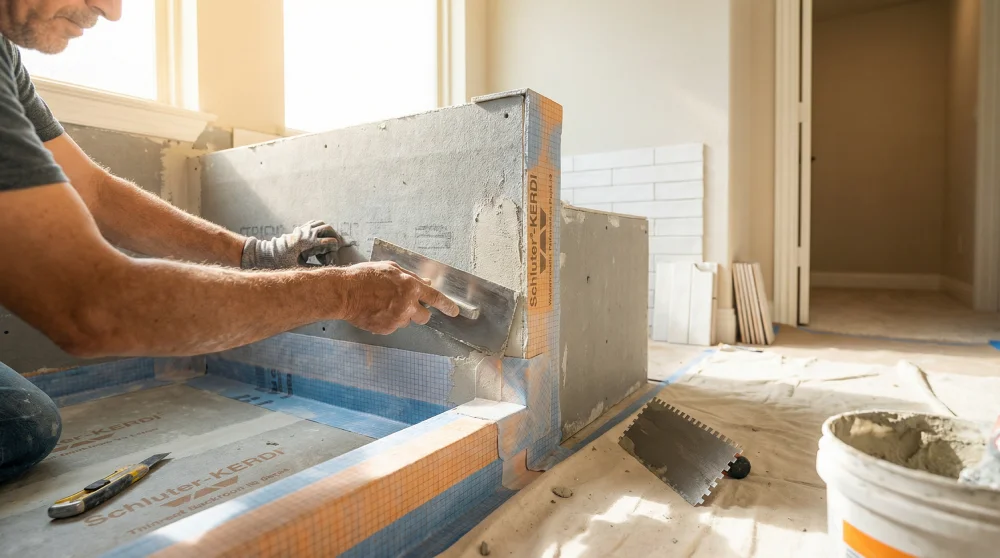
Schluter-KERDI represents the gold standard for sheet membrane waterproofing. This polyethylene membrane bonds directly to cement board using thin-set mortar, creating an impermeable barrier. Pre-formed corners, pipe collars, and curb pieces ensure consistent coverage at the most vulnerable transition points.
Industry standards require specific overlap dimensions—typically 2 inches—and compatible sealants at all penetrations. When installed according to manufacturer specifications, sheet membrane systems provide reliable waterproofing that doesn't depend on perfect application technique at every square inch.
Laticrete Hydro Ban and similar liquid membranes offer another professional approach. These products roll or brush onto the substrate, creating a monolithic waterproof layer without seams. They excel at complex geometries and custom shower configurations where pre-formed pieces might not fit precisely.
Liquid systems require proper mil thickness—the measurement of membrane depth—to achieve waterproof performance. Too thin, and water eventually penetrates. Professional installers use measured applications and multiple coats to ensure adequate coverage.
Regardless of system choice, certain areas demand extra attention:
When selecting bathroom materials suited for Houston's climate, the waterproofing system compatibility should guide your decisions. Not all tile adhesives bond properly to all membranes—verified compatibility matters.
The most damaging bathroom waterproofing failures share a frustrating characteristic: they remain completely invisible until water damage appears years later—by which point mold has spread, subfloors have deteriorated, and the only solution is complete demolition and rebuild. Prevention requires experienced installation and quality verification during construction.
The most common failure we encounter involves gaps in membrane coverage. A missing corner piece, an unsealed penetration, or inadequate overlap at a seam creates a pathway for moisture. And here's the thing—that single gap doesn't cause immediate failure. It causes slow, cumulative damage that compounds over years.
The CDC notes that mold growth begins within 24-48 hours when organic materials remain wet. Behind bathroom tile, where wood framing and paper-faced drywall hide from view, moisture accumulation from waterproofing gaps creates ideal conditions for mold colonies that spread invisibly.
Waterproof membranes require properly prepared substrates to bond effectively. Dusty surfaces, residual adhesives, or inadequate curing of cement board can all compromise membrane adhesion. When the membrane delaminates—even in small areas—water infiltration begins.
Using Manufacturer A's membrane with Manufacturer B's sealant and Manufacturer C's tile adhesive creates liability gaps and performance uncertainty. Professional waterproofing systems include compatible components specifically designed to work together. Mixing systems to save money often costs far more when failures occur.
Both liquid membranes and bonding adhesives require proper curing before subsequent layers. Rushing the schedule—applying tile before membrane fully cures, or grouting before adhesive sets—compromises the entire assembly.
During construction, proper waterproofing verification includes:
Contractors who resist inspection or rush through waterproofing stages often reveal their approach to quality throughout the project.
In summary, here are the essential points about bathroom waterproofing for Cypress renovations:
How long does bathroom waterproofing last if installed correctly?
Properly installed waterproof membrane systems last the lifetime of the bathroom installation—typically 20-30 years or more. The membrane itself doesn't wear out from normal use. Failures result from installation defects, not material degradation over time. Quality waterproofing outlasts the tile and fixtures it protects.
Does cement board provide adequate waterproofing for showers?
Cement board is water-resistant, not waterproof. It won't deteriorate like drywall when exposed to moisture, but it still allows water vapor to pass through to the framing behind. Professional shower installations require a dedicated waterproof membrane over the cement board substrate.
Can I waterproof over existing tile in a bathroom renovation?
Waterproofing membranes require specific substrate conditions to bond properly—clean, stable, and properly prepared surfaces. Applying membrane over existing tile rarely provides reliable results. Most professional renovations require tile removal and proper substrate preparation before waterproofing installation.
What's the difference between Schluter-KERDI and Laticrete Hydro Ban?
Schluter-KERDI is a sheet membrane that bonds with thin-set mortar, while Laticrete Hydro Ban is a liquid-applied membrane that creates a seamless barrier. Both provide professional-grade waterproofing when installed correctly. The choice often depends on shower configuration and installer preference.
How do I verify my contractor installed waterproofing correctly?
Ask for documentation of the waterproofing system used, including manufacturer and product names. Request photos of membrane installation before tile goes up. For shower pans, ask whether flood testing was performed. Professional contractors welcome these questions and provide documentation willingly.
The key takeaway is this: waterproofing represents the single most important invisible element of any bathroom renovation in Cypress, Texas—and getting it right requires professional expertise, proper materials, and verified installation quality.
We understand that homeowners planning bathroom renovations focus naturally on the finishes they'll see and touch every day. That enthusiasm drives beautiful results. But we've also seen what happens when waterproofing gets shortchanged—and those outcomes motivate our emphasis on getting the foundation right before the first tile goes up.
For Cypress homeowners ready to explore bathroom renovation possibilities, we're here to answer questions and discuss how proper waterproofing integrates with your vision for the space.