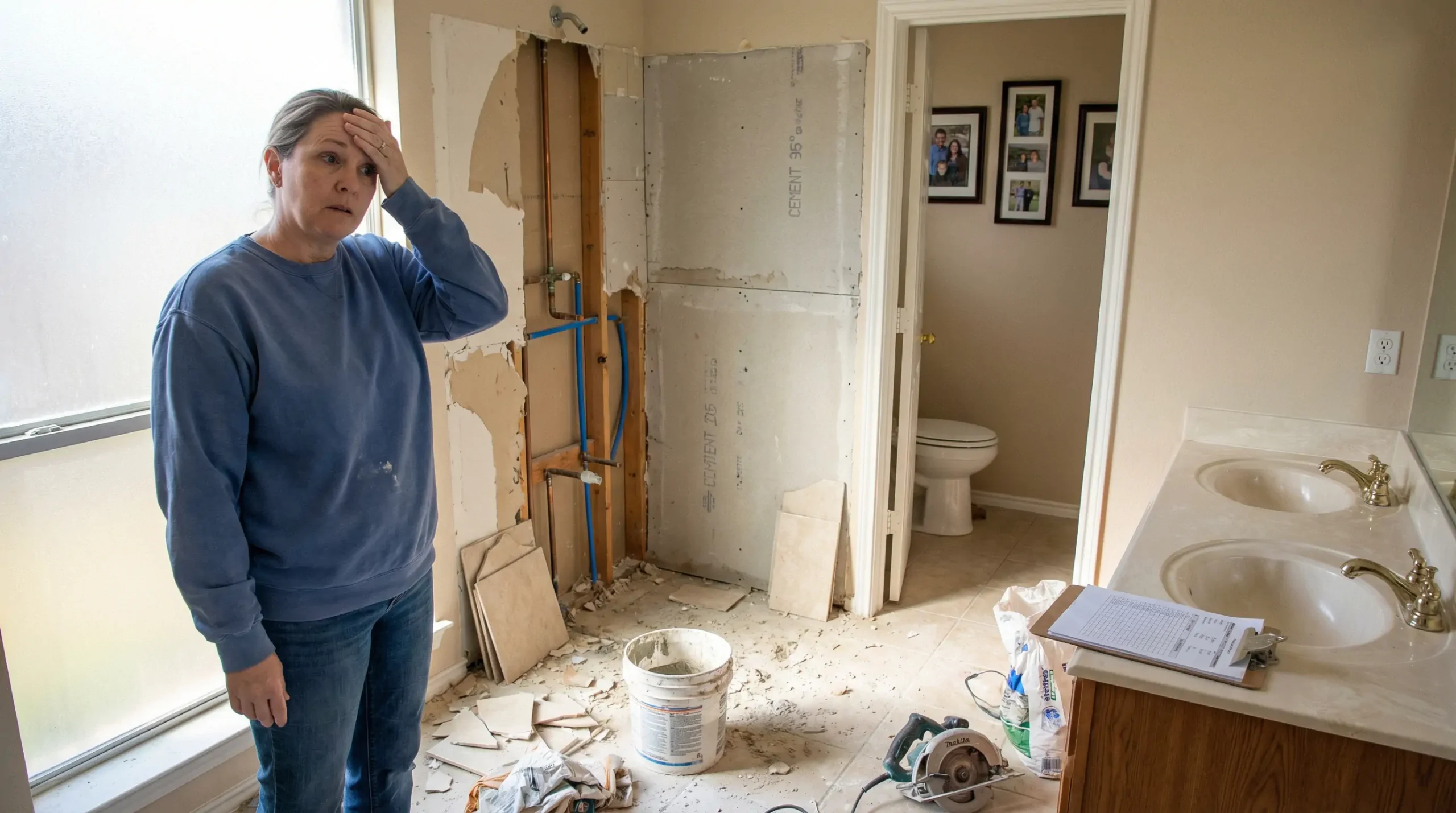
Your neighbor hired someone who seemed great—friendly, affordable, and available to start right away. Six months later, they're still waiting for their bathroom to be finished, and the contractor has stopped returning calls.
Sound familiar? If you're planning a bathroom renovation in Cypress or anywhere in the Houston area, you've probably heard stories like this. The challenge isn't finding a contractor willing to take your project. The challenge is finding one who'll actually deliver quality work and stick around to honor their commitments.
Recognizing bathroom remodeler red flags in Texas requires understanding one critical reality: the state doesn't require general contractors to hold a license. This regulatory gap means anyone can legally offer remodeling services without demonstrating competence, maintaining insurance, or proving financial stability. For Cypress homeowners investing in bathroom renovations—whether a powder room refresh or a primary suite transformation—knowing which warning signs indicate trouble can save thousands of dollars and months of frustration.
Texas doesn't require a statewide general contractor license, meaning anyone can legally market themselves as a bathroom remodeler without passing competency exams, carrying liability insurance, or maintaining a business bond that protects homeowners from project abandonment or substandard work. According to the Texas Department of Licensing and Regulation (TDLR), while electricians and plumbers must hold state licenses, the person coordinating your entire bathroom renovation faces no such requirement. This regulatory environment places the burden of verification squarely on you.
Here's the thing: most states require general contractors to demonstrate minimum qualifications before they can legally take on residential projects. They need insurance, bonds, and often continuing education. Texas takes a different approach—one that offers flexibility but creates genuine risk for homeowners who don't know what to look for.
The practical impact hits Cypress homeowners particularly hard. Your community sits within Houston's extraterritorial jurisdiction, where permit requirements for cosmetic bathroom work are minimal compared to incorporated cities. A contractor can show up, quote a price, and start demolition without ever proving they're qualified for the work.
The absence of licensing requirements creates three specific vulnerabilities:
Industry research consistently shows that most small contractors fail within their first three years of operation. Without licensing requirements creating barriers to entry, Texas sees a higher concentration of inexperienced operators—some of whom genuinely want to do good work but lack the expertise, and others who are simply looking for quick payments before moving on.
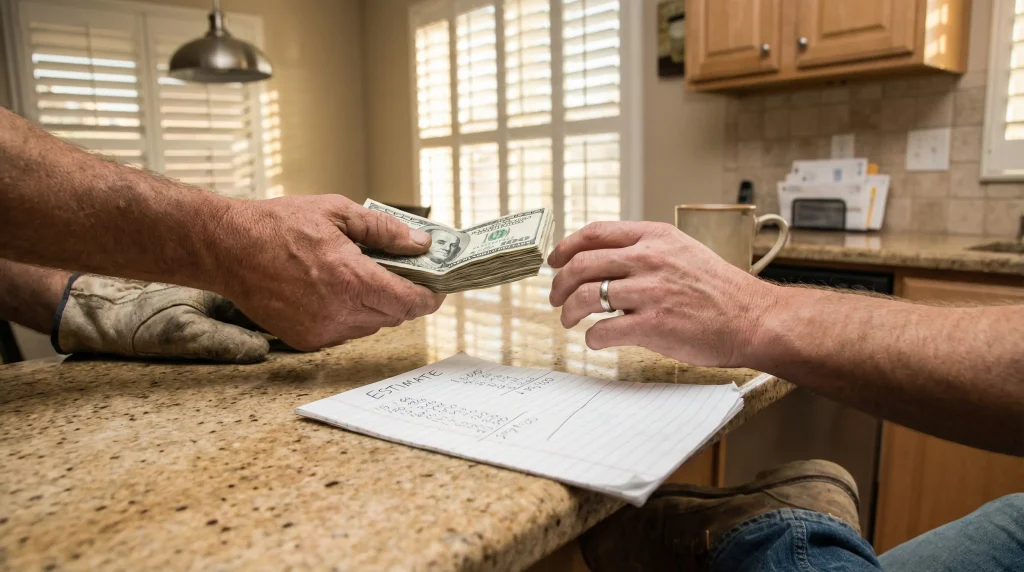
Demands for large upfront cash payments, refusal to provide written estimates, pricing significantly below market rates, and resistance to documenting payment schedules all indicate a bathroom contractor may lack financial stability, legitimate business operations, or intention to complete quality work. These patterns appear repeatedly in contractor complaint records maintained by consumer protection agencies.
The FTC guidance on avoiding home improvement contractor scams identifies cash-only demands as a primary warning sign. Here's why: legitimate contractors accept various payment methods and provide documentation. Cash-only operations often indicate someone avoiding tax obligations, lacking a real business structure, or planning to disappear before completing the work.
A trustworthy bathroom remodeler follows predictable payment patterns. Industry standards suggest:
Red flags include any contractor who demands 50% or more upfront, requests full payment before starting work, or pushes for cash to give you a "discount."
When a quote comes in dramatically lower than others, your first instinct might be relief. But experienced homeowners know that cheap bids often become expensive projects. Below-market pricing typically means one of three things: the contractor plans to cut corners on materials, they'll inflate costs through change orders once work begins, or they're simply taking deposits without intending to finish.
Vague estimates present another concern. A legitimate bathroom remodeler can itemize costs because they've actually planned the work. When someone offers only a lump sum with no breakdown, they either haven't thought through the project details or they're avoiding documentation that could hold them accountable.
Contractors who avoid written contracts, pressure immediate decisions, can't provide verifiable references, refuse to discuss permit requirements, or communicate inconsistently often lack the professionalism and accountability that bathroom renovations demand—and these patterns frequently precede project abandonment or substandard results. These warning signs reveal how a contractor will behave once construction begins.
Written contracts aren't just formalities—they define scope, timeline, materials, warranty terms, and dispute resolution procedures. Any contractor reluctant to put agreements in writing is protecting themselves, not you. The real question is: what happens when something goes wrong and you have no documentation?
"This price is only good today" might work for mattress sales, but it has no place in home remodeling. Legitimate contractors understand that bathroom renovations represent significant investments requiring careful consideration. They'll leave written estimates for you to review, answer follow-up questions, and give you time to make informed decisions.
When a contractor pressures you to sign immediately or pay a deposit before you've had time to think, they're likely worried you'll discover something problematic if given the chance to research them.
Before signing any contract, you should verify references—and that means actually calling past clients. Knowing essential questions to ask before hiring a bathroom contractor in Cypress helps you evaluate responses effectively. Be wary of contractors who:
Poor communication during the sales phase predicts poor communication during construction. If they're hard to reach now, imagine trying to get updates when your bathroom is demolished and you're waiting for progress.
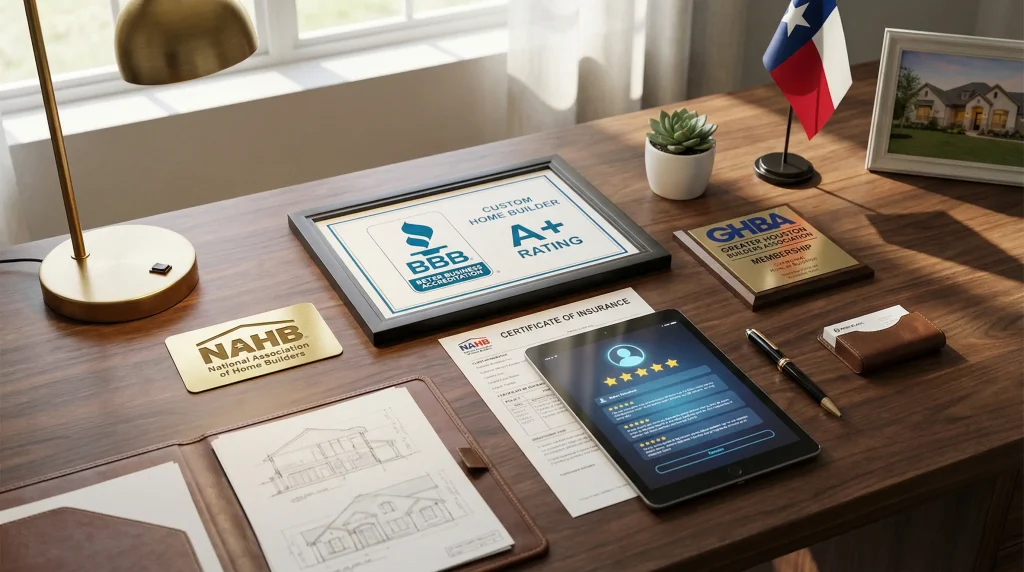
To protect yourself, verify bathroom contractor legitimacy by confirming active insurance coverage directly with their provider, checking BBB complaint history, researching industry credentials through the National Association of Home Builders credential verification, requesting and contacting recent references with completed projects similar to yours, and confirming business longevity under the same name.
The Better Business Bureau recommends checking not just a company's rating but their complaint pattern. A business with an A+ rating but multiple recent complaints about project abandonment tells a different story than the letter grade alone.
Not all credentials carry equal weight. Look for certifications from recognized industry organizations:
These voluntary certifications demonstrate a contractor's commitment to professional standards. Anyone can claim "quality work"—credentials provide verifiable evidence of investment in their craft.
Don't simply accept a certificate of insurance at face value. Call the insurance company directly and confirm:
This step takes minutes but protects you from significant liability if workers are injured on your property.
For understanding what credentials a qualified Cypress bathroom remodeler should have, longevity matters more than most homeowners realize. A company operating under the same name for a decade or more has demonstrated the financial stability and customer satisfaction necessary to survive in a competitive market.
Check whether the business has operated continuously or has changed names multiple times—a common tactic for escaping negative reviews and unresolved complaints.
In summary, here are the essential points for identifying bathroom remodeler red flags in Texas:
Does Texas require bathroom remodelers to have a license?
Texas doesn't require general contractors, including bathroom remodelers, to hold a state license. While electricians and plumbers must be licensed, the person coordinating your overall bathroom renovation faces no such requirement. This makes homeowner verification essential before signing any contract.
What percentage should I pay upfront for a bathroom remodel?
Industry standards suggest an initial deposit of 10-15% to secure scheduling and order materials. Any contractor demanding 50% or more upfront, or requiring full payment before work begins, presents a significant red flag. Progress payments should tie to specific completed milestones.
How can I verify a bathroom contractor's insurance?
Call the insurance company listed on the certificate of insurance directly. Confirm the policy is currently active, coverage amounts are adequate, and your contractor is the actual named insured—not a subcontractor using borrowed documentation. This verification takes minutes but provides substantial protection.
What credentials should I look for in a Texas bathroom remodeler?
Look for NAHB certifications including Graduate Master Builder (GMB), Certified Graduate Remodeler (CGR), and Certified Aging in Place Specialist (CAPS). These voluntary credentials demonstrate investment in professional development and adherence to industry standards that generic claims cannot verify.
Why do some bathroom renovation quotes come in much lower than others?
Significantly below-market pricing typically indicates plans to cut corners on materials, inflate costs through change orders after work begins, or collect deposits without intending to finish. Quality bathroom renovations require fair compensation for skilled labor and proper materials.
How do I check a contractor's BBB history effectively?
Look beyond the letter rating to examine complaint patterns, resolution history, and recency of issues. A company with an A+ rating but multiple recent complaints about project abandonment tells a more accurate story than the grade alone. Note how complaints were resolved and whether patterns exist.
The key takeaway is this: in Texas's unlicensed contractor environment, your protection comes from your own due diligence—not state oversight. The warning signs covered here aren't exhaustive, but they represent the patterns most commonly associated with contractor problems reported to consumer protection agencies.
For Cypress homeowners ready to move forward with confidence, recognizing these red flags is just the first step. Understanding what separates qualified professionals from opportunistic operators requires knowing which credentials, experience markers, and business practices indicate genuine commitment to your project's success.