Custom floor plans in Houston typically cost between $2,000 and $15,000 or more depending on complexity, square footage, and design approach. Homeowners can obtain plans through stock plan services, independent architects, or design-build firms. Working with a Houston design-build partner integrates planning, permitting, and construction into one streamlined process that eliminates coordination headaches.
Building a custom residence begins long before the first foundation is poured. It starts with a floor plan that captures your vision, accounts for your lifestyle, and translates both into precise construction documents. For Houston-area homeowners exploring custom building in The Woodlands, Cypress, Memorial, or surrounding communities, understanding how floor plans work is the first step toward a successful project.
This guide explains what floor plans include, how much they cost in the Houston market, and why your choice of planning approach affects everything from budget accuracy to construction timeline. Whether you need plans for a new build or documentation for an existing residence, the information below provides a clear path forward.
A floor plan is a scaled architectural drawing that shows the arrangement of rooms, walls, doors, and windows as viewed from above. Professional floor plans include precise measurements, spatial relationships, and annotations that guide every construction decision from framing through finishing. Without accurate plans, builders cannot provide reliable cost estimates, secure permits, or coordinate the dozens of trades involved in residential construction.
For custom residences, floor plans serve as the contractual foundation between homeowner and builder. They define square footage, room dimensions, and the relationship between interior spaces and exterior features. In Houston's diverse architectural landscape, floor plans must also account for regional considerations including soil conditions, flood plain requirements, and neighborhood architectural review board (ARB) standards.
| Floor Plan Component | Purpose | Why It Matters |
|---|---|---|
| Room Layout | Shows spatial arrangement and traffic flow | Determines livability and functionality |
| Dimensions | Provides exact measurements for all spaces | Enables accurate material ordering and cost estimation |
| Door and Window Placement | Indicates openings and swing directions | Affects furniture layout, natural light, and egress compliance |
| Wall Thickness | Distinguishes load-bearing from partition walls | Critical for structural engineering and modification planning |
| Electrical and Plumbing Notation | Shows fixture locations and utility runs | Coordinates MEP trades and prevents costly conflicts |
Three primary methods exist for obtaining residential floor plans: purchasing stock plans online, commissioning custom plans from an independent architect, or working with a design-build firm that integrates planning with construction. Each approach offers distinct advantages depending on your budget, timeline, and customization requirements. The choice you make at this stage influences every subsequent decision in your building journey.
Stock floor plans are pre-designed layouts available for purchase through websites and plan catalogs. Prices typically range from $800 to $3,000 for a complete set. These plans work well for homeowners who find a design that closely matches their needs and lot conditions. However, stock plans rarely account for Houston-specific requirements including foundation engineering for expansive clay soils, hurricane-resistant construction details, or specific ARB standards in communities like The Woodlands.
Independent architects create original floor plans tailored to your specific requirements. Houston-area architectural fees typically range from 8% to 15% of total construction cost, or $15,000 to $50,000+ for custom residence design. This approach delivers maximum personalization but requires homeowners to separately manage the relationship between architect, structural engineer, and builder. Coordination challenges often lead to budget overruns and timeline delays.
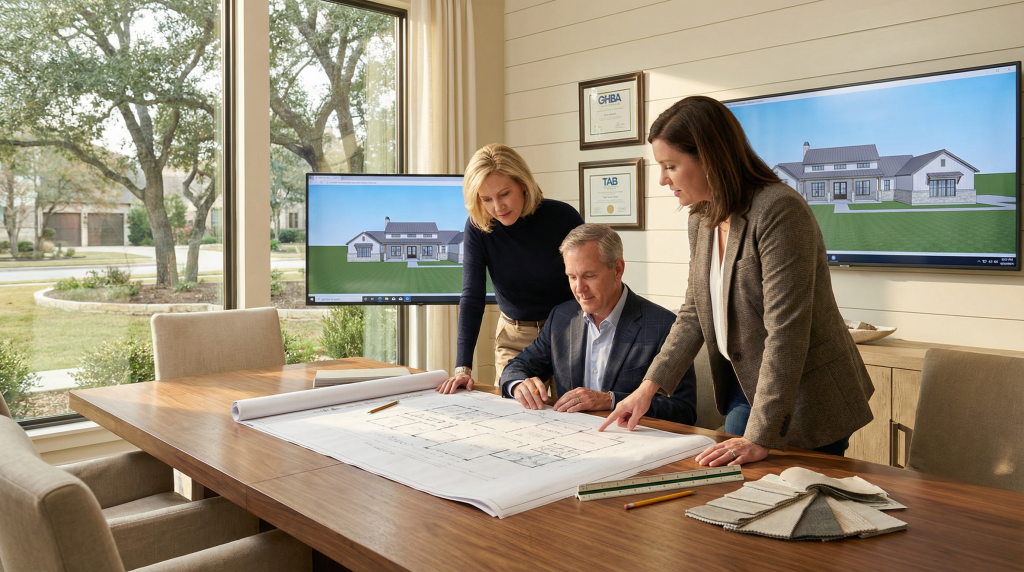
Design-build firms employ or partner directly with architects and engineers, creating floor plans within the same organization that will construct your residence. This integration eliminates finger-pointing between separate parties and enables real-time cost feedback during the design process. When your designer and builder work as one team, plan details reflect actual construction methods and material availability rather than theoretical specifications that may require expensive modifications later.
Custom floor plan costs in the Houston market vary significantly based on approach, complexity, and level of detail required. Stock plans represent the lowest cost option at $800 to $3,000. Independent architect fees range from $15,000 to $50,000 or more for full custom design. Design-build firms typically include design fees within their total project pricing, often ranging from $2,000 to $15,000 as a line item or built into overall construction costs.
| Planning Approach | Typical Cost Range | What's Included | Best For |
|---|---|---|---|
| Stock Plans | $800 - $3,000 | Basic floor plans, elevations, some construction details | Budget-conscious projects with flexible site conditions |
| Architect + Separate Builder | $15,000 - $50,000+ | Full custom design, construction documents, some project oversight | Homeowners wanting maximum design control |
| Design-Build Firm | $2,000 - $15,000 (often included) | Integrated design, engineering, permitting, and construction | Homeowners prioritizing budget certainty and timeline efficiency |
| Plan Modification Service | $1,500 - $5,000 | Changes to existing stock plans | Those who find a close match needing adjustments |
The true cost of floor plans extends beyond the initial design fee. Stock plans often require $5,000 to $15,000 in modifications to meet local codes, site conditions, and personal preferences. Architect-designed plans may need revision after builder review reveals constructability issues. Design-build integration addresses these hidden costs upfront by involving construction expertise from the earliest design conversations.
Professional building plans encompass far more than simple room layouts. A complete plan set includes architectural drawings, structural engineering specifications, and mechanical, electrical, and plumbing (MEP) layouts. Houston Permitting Center's residential plan review requirements require this full documentation before issuing construction permits. Incomplete plans result in permit delays, inspection failures, and costly field modifications.
Architectural drawings include floor plans for each level, exterior elevations showing all four sides, roof plans indicating slopes and materials, and detailed sections revealing wall assemblies and ceiling heights. These drawings establish the visual character and spatial organization of your residence. For custom homes in communities with ARB oversight, architectural drawings must demonstrate compliance with neighborhood design standards before construction begins.
Structural plans specify foundation design, framing details, and load calculations. Houston's challenging soil conditions require engineered foundations designed for specific site characteristics. Structural drawings include beam sizes, column locations, connection details, and reinforcement specifications. Your builder relies on these documents to order materials accurately and construct a residence that will perform safely for decades.
MEP drawings coordinate the systems that make a residence functional. Mechanical plans show HVAC equipment locations, duct routing, and ventilation requirements. Electrical plans indicate panel locations, circuit layouts, outlet placement, and lighting fixtures. Plumbing plans document fixture locations, supply lines, drain routing, and water heater specifications. Coordinated MEP planning prevents conflicts between systems that would otherwise require expensive demolition and rework during construction.
Homeowners planning renovations or additions often need floor plans for their existing residence. Original construction documents may be available from the county permit office, previous owners, or the original builder. Harris County and surrounding jurisdictions maintain permit records that sometimes include plan copies. Building departments typically charge $25 to $100 for document retrieval and copying.
When original plans are unavailable, professional measuring services can create accurate as-built documentation. Houston-area firms charge $500 to $2,000 depending on residence size and complexity. Laser measuring technology produces highly accurate floor plans suitable for renovation planning and permit applications. This investment pays dividends when your contractor can plan modifications with confidence rather than discovering structural surprises mid-project.
For heritage residences or historically significant properties, architectural historians may have documented the original design. Houston's Historic Preservation Office maintains records for designated landmarks. Local architectural archives at universities and historical societies occasionally hold residential plan collections that include private residences.
Design-build methodology integrates architectural design, engineering, and construction under single-source accountability. This approach eliminates the coordination gaps that plague traditional architect-then-builder sequences. When designers and builders collaborate from day one, floor plans reflect realistic construction methods, available materials, and accurate cost projections rather than theoretical designs that require expensive revision.
The design-build advantage becomes most apparent during the planning phase. Traditional architects design without direct construction feedback, often specifying details that increase costs without proportional value. Design-build teams evaluate every design decision against budget impact in real time. A wall relocation that seems minor on paper might save $15,000 in foundation costs. An alternate window configuration might improve both aesthetics and energy performance while reducing expense.
For Houston-area homeowners building in communities with ARB requirements, design-build coordination proves especially valuable. Experienced design-build firms navigate The Woodlands Development Standards, Memorial-area deed restrictions, and Cypress HOA guidelines as routine matters rather than unexpected obstacles. This familiarity translates to faster approvals and fewer costly redesigns.
Floor plan development timelines vary significantly by approach and project complexity. Stock plans are available immediately upon purchase. Independent architect design typically requires 8 to 16 weeks for custom residences. Design-build integrated planning often completes in 6 to 12 weeks due to parallel processing of design and engineering tasks. Your choice of approach affects not only the planning timeline but also the transition speed into permitting and construction.
| Planning Approach | Design Timeline | Permitting Timeline | Total Pre-Construction |
|---|---|---|---|
| Stock Plans (no modifications) | Immediate | 4-8 weeks | 4-8 weeks |
| Stock Plans (with modifications) | 2-4 weeks | 4-8 weeks | 6-12 weeks |
| Independent Architect | 8-16 weeks | 4-8 weeks | 12-24 weeks |
| Design-Build Integrated | 6-12 weeks | 4-6 weeks | 10-18 weeks |
Design-build firms often achieve faster permitting because construction teams review documents for code compliance before submission. Plans that require revision after permit office review add 2 to 6 weeks per cycle. Experienced design-build partners submit permit-ready documents that minimize revision requests and accelerate construction start dates.
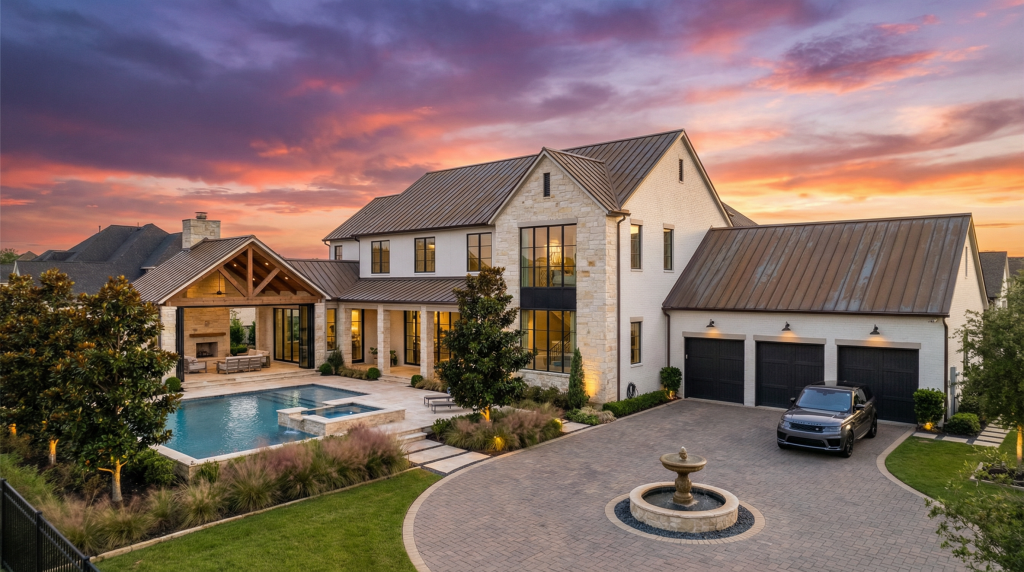
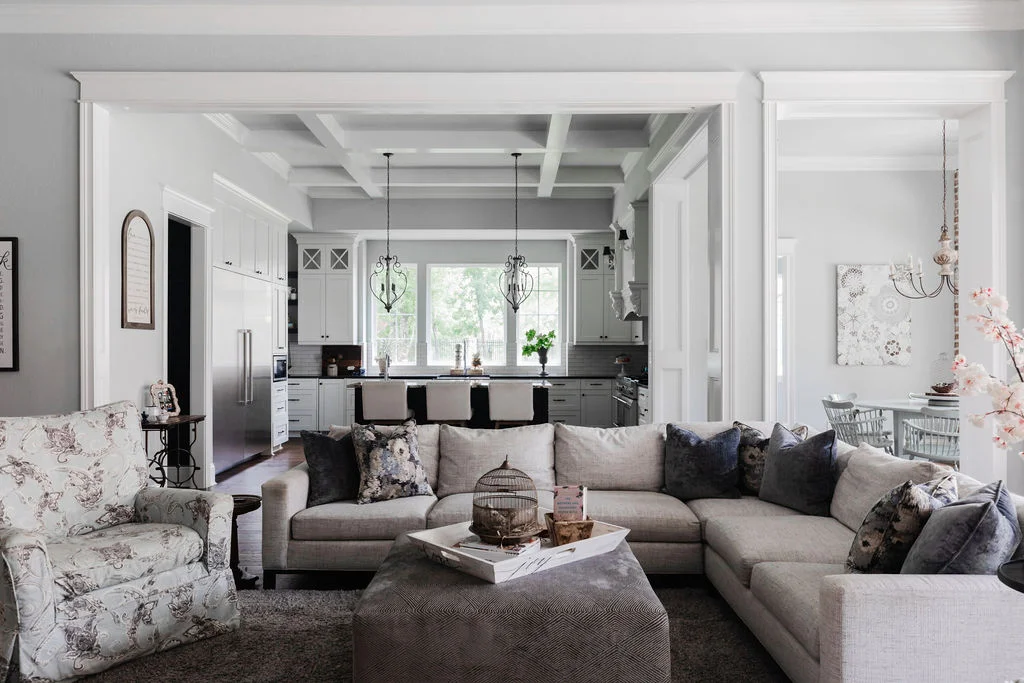
Houston custom residences reflect regional lifestyle preferences shaped by climate, lot sizes, and family structures. Open-concept great rooms that connect kitchen, dining, and living spaces remain the dominant layout choice. Multi-generational suites accommodating extended family have increased significantly in recent years. Outdoor living integration featuring covered patios, summer kitchens, and pool access represents a distinctly Houston approach to residential design.
Open floor plans maximize sight lines and facilitate family interaction across cooking, dining, and relaxation zones. Houston's generous lot sizes support sprawling single-story layouts that would be impractical in denser markets. Great room configurations typically anchor the plan with 15 to 20 foot ceiling heights, extensive glazing, and seamless transitions to outdoor living areas.
Multi-generational floor plans incorporate separate living quarters for extended family members. These suites typically include private bedroom, bathroom, and sitting area with direct exterior access. Some configurations add kitchenettes for semi-independent living. Houston's diverse population drives strong demand for multi-generational layouts that maintain family proximity while respecting privacy boundaries.
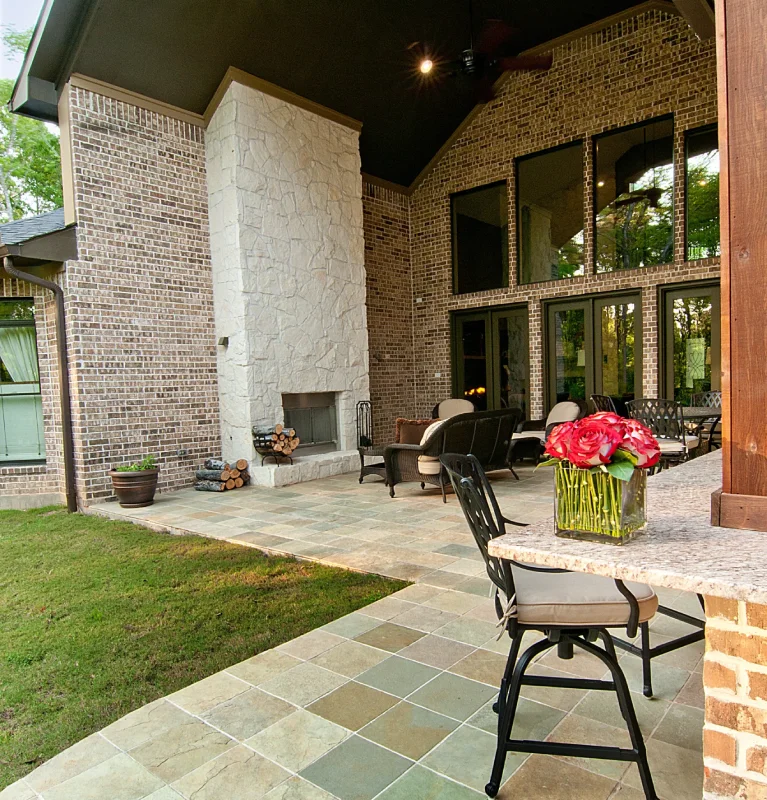
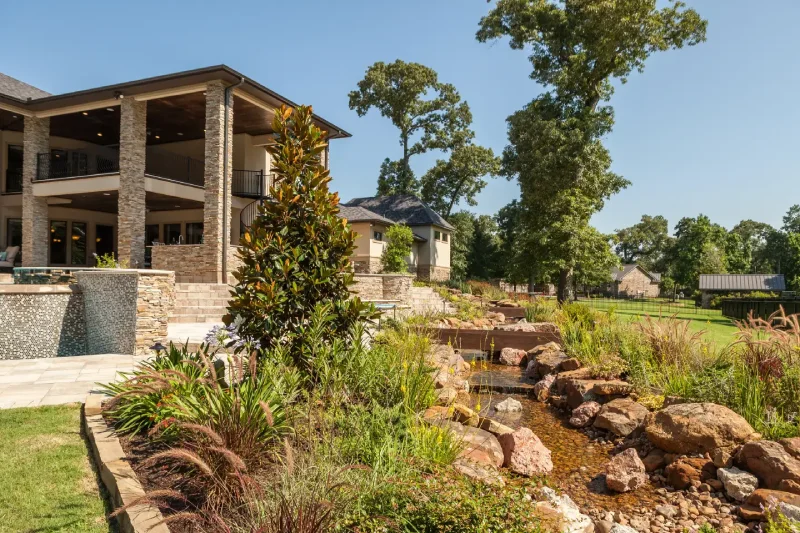
Houston's climate supports year-round outdoor enjoyment, making covered outdoor living spaces essential floor plan components. Successful layouts position great rooms adjacent to covered patios with wide door openings that blur indoor-outdoor boundaries. Summer kitchens, fire features, and pool access extend functional living space well beyond interior walls.
Houston-area building codes and community regulations directly influence floor plan design. City of Houston projects follow International Residential Code (IRC) with local amendments. Unincorporated Harris County applies similar standards. Communities like The Woodlands, Katy, and Cypress maintain additional architectural review requirements that affect exterior design, setbacks, and allowable materials.
Foundation design represents the most significant code-driven floor plan consideration in the Houston region. Expansive clay soils require engineered foundation systems, typically post-tensioned concrete slabs or pier-and-beam construction. Your floor plan's load distribution, plumbing penetrations, and structural bearing points must coordinate with foundation engineering from the earliest design stages.
Flood plain regulations affect properties throughout the Houston area. FEMA flood maps determine minimum finished floor elevations and sometimes require elevated construction. Floor plans for flood-prone sites must accommodate these elevation requirements while maintaining accessibility, aesthetic proportions, and connection to outdoor spaces.
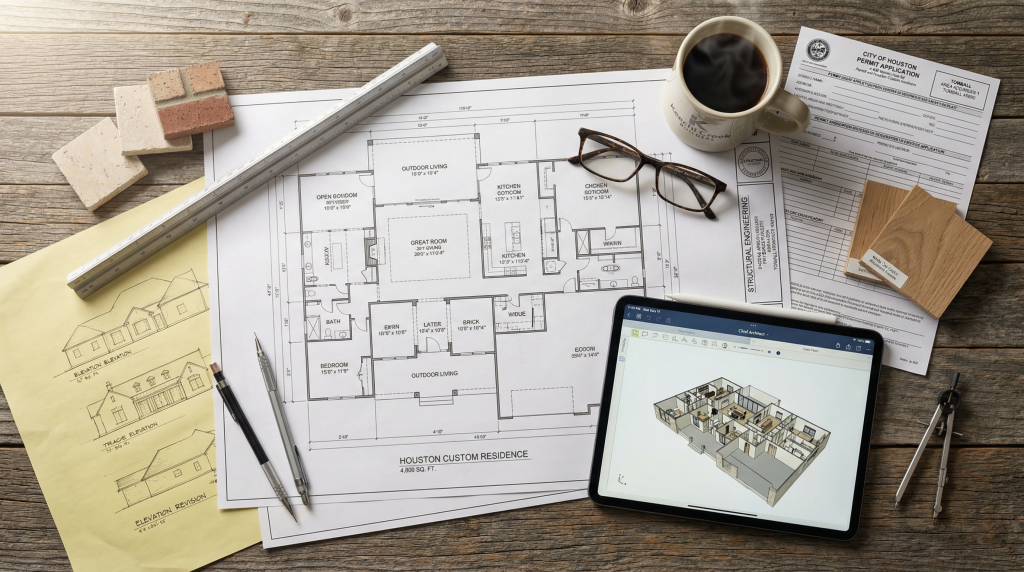
Due diligence before commissioning floor plans prevents costly surprises and misaligned expectations. Understanding your planning partner's process, qualifications, and deliverables establishes clear communication from the project's outset.
Essential questions include: What is included in your design fee and what costs extra? How many revision rounds are included? Who owns the completed plans and can I use them with a different builder if needed? Do you carry errors and omissions insurance? How do you handle changes requested after plan completion? What is your experience with my specific community's ARB requirements?
For design-build partners, additional questions apply: How does design fee integrate with construction pricing? At what point do I receive a fixed construction price? How do design changes during construction affect my contract? What happens if the final design exceeds my stated budget?
Custom floor plan costs in Houston range from $2,000 to $15,000 or more for design-build integrated services. Independent architects typically charge 8% to 15% of construction cost. Stock plans cost $800 to $3,000 before modification fees.
Check with your county permit office, previous homeowners, or original builder for existing plan copies. Harris County charges $25 to $100 for document retrieval. Professional measuring services create new as-built plans for $500 to $2,000.
Floor plan specifically refers to the overhead room layout drawing. Blueprint traditionally described the reproduction process for construction documents. Today, blueprint is commonly used interchangeably with building plans to mean the complete construction document set.
Yes. Stock plan modification services adjust existing designs for site conditions, personal preferences, and local code compliance. Expect to invest $1,500 to $5,000 for modifications plus additional engineering fees for Houston's foundation requirements.
Custom floor plan development requires 6 to 16 weeks depending on complexity and approach. Design-build integration typically achieves faster timelines than traditional architect-then-builder sequences due to parallel processing of design and engineering tasks.
Houston-area permits require architectural floor plans, elevations, structural engineering, foundation design, and MEP layouts. Additional documentation may include energy calculations, drainage plans, and ARB approval letters for regulated communities.
Texas law requires architect or engineer stamps on residential plans exceeding certain size thresholds or complexity levels. The Texas Board of Architectural Examiners provides a flowchart to help determine when licensed professionals are required for your specific project.
Research firms through professional associations, review portfolios of completed projects, verify licensing and insurance, and request references from recent clients. Design-build firms offer integrated planning with construction accountability.
Houston floor plans benefit from covered outdoor living spaces, energy-efficient window placement, and open configurations that support natural ventilation. Proper orientation minimizes western sun exposure while maximizing southern light penetration.
Floor plan revisions during construction are possible but typically expensive. Changes may require permit modifications, structural re-engineering, and material reordering. Design-build processes minimize mid-construction changes through thorough pre-construction planning.
Creating the floor plans for your custom residence represents the foundational decision that shapes every aspect of your building experience. The approach you choose determines not only the design you receive but also the accuracy of your budget, the efficiency of your timeline, and the coordination of your construction team.
Houston-area homeowners building in The Woodlands, Cypress, Memorial, Tomball, Magnolia, or Katy benefit from working with design-build partners who understand regional requirements and integrate planning with construction expertise. When your designer and builder operate as one team, floor plans translate directly into the residence you envisioned.
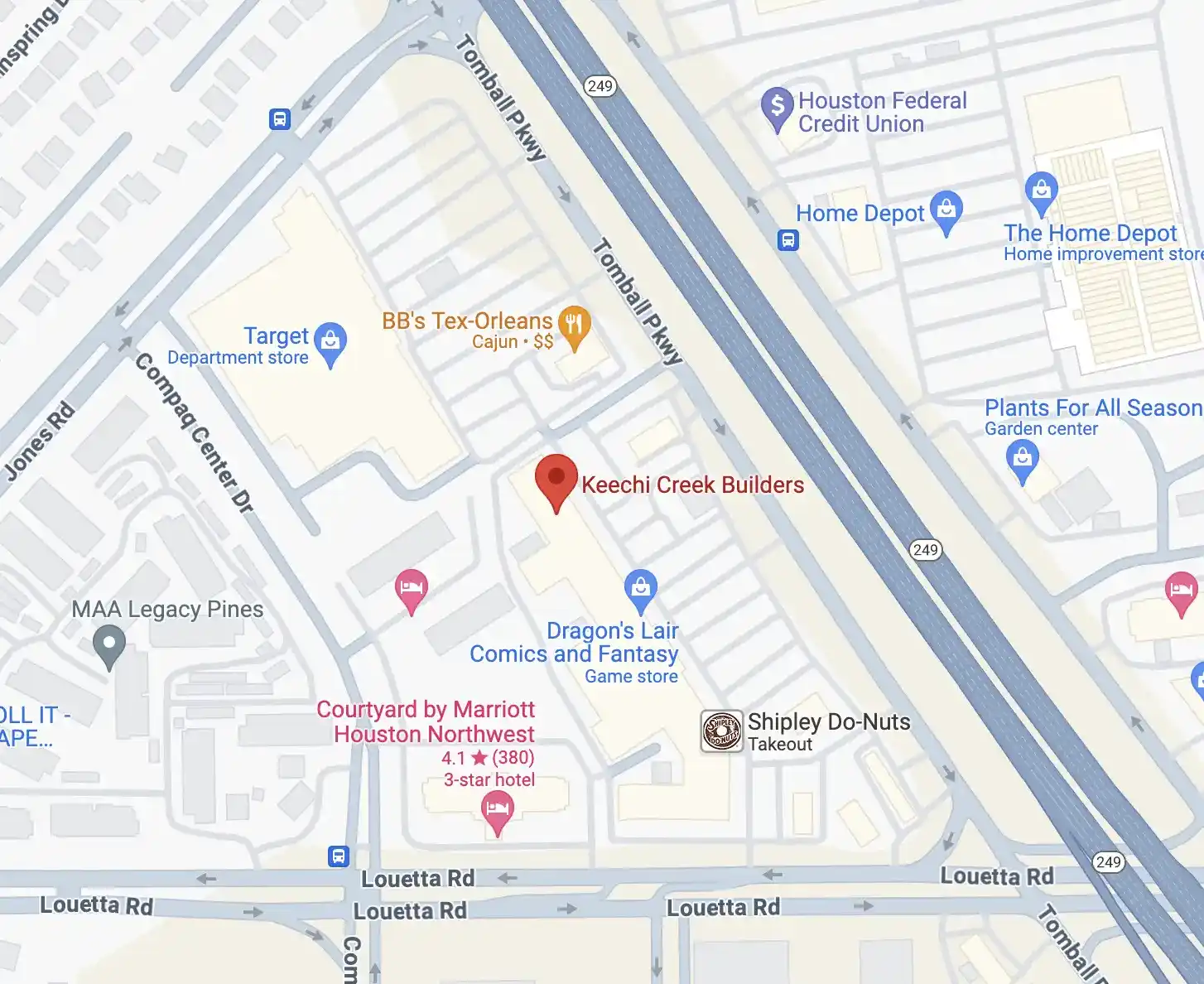
Keechi Creek Builders offers complimentary consultations for homeowners beginning the custom floor plan process. Contact our team to discuss your vision, lot conditions, and budget parameters. Our design-build approach delivers floor plans that reflect both your aspirations and the practical realities of Houston-area construction.