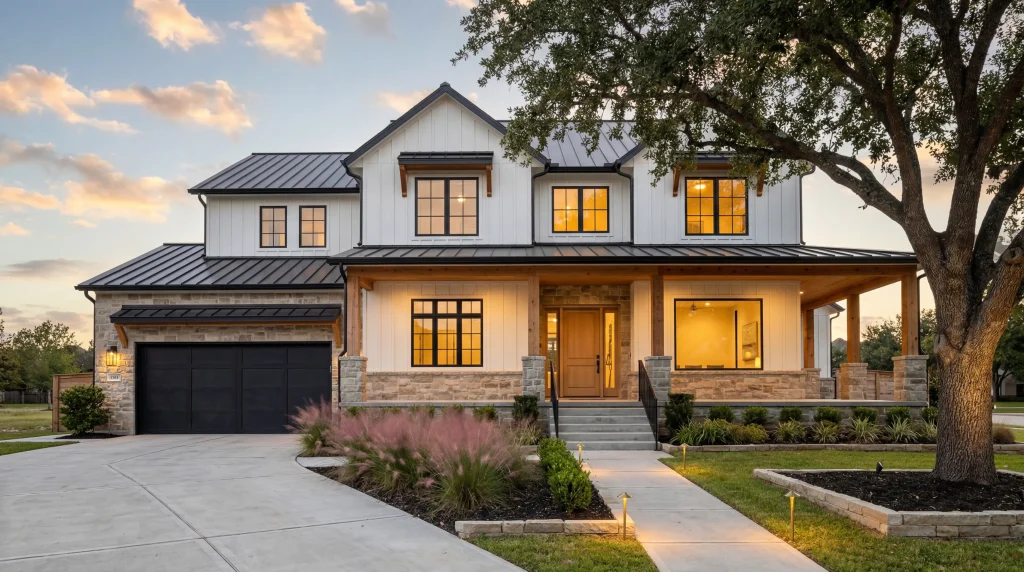
Cypress, Texas has transformed from open rice fields and pastureland into one of the most sought-after residential communities in the Greater Houston area—and the pace of that transformation hasn't slowed. For families seeking a custom home builder in Cypress, TX, the question today isn't whether to build here. The question is how to do it right, in a market where lot premiums, community covenants, and a layered regulatory framework separate informed buyers from frustrated ones.
Here's what you need to know about why Cypress is booming, what's shaping its new communities, and what building a custom residence here actually involves in 2026.
Population growth doesn't happen by accident. Cypress, an unincorporated community in Harris County, has seen the combined population of its primary zip codes—77429 and 77433—surpass 200,000 residents, according to extrapolated U.S. Census Bureau data. That figure continues to climb.
Three converging forces have driven that growth simultaneously over the past two decades:
| Growth Driver | What It Did for Cypress |
|---|---|
| US-290 & Grand Parkway expansion | Unlocked developable land corridors northwest of Houston; cut commute times to Downtown (~25 miles) to a manageable window for high-income professionals |
| Cypress-Fairbanks ISD performance | Consistently top-ranked in Texas; the primary relocation decision driver for families with school-age children leaving inner-loop Houston |
| Master-Planned Community investment | Howard Hughes Corporation, Caldwell Companies, and others transformed raw Harris County acreage into amenity-rich residential destinations that command measurable resale premiums |
That combination is exactly what drives demand for large, customized residences. Cypress evolved from a bedroom community into a self-contained economic hub with its own employment centers, healthcare campuses, and upscale retail along the US-290 corridor. When families are choosing between this community and the next, quality of place becomes the differentiator. And quality of place, when you build custom, starts with the builder you choose.
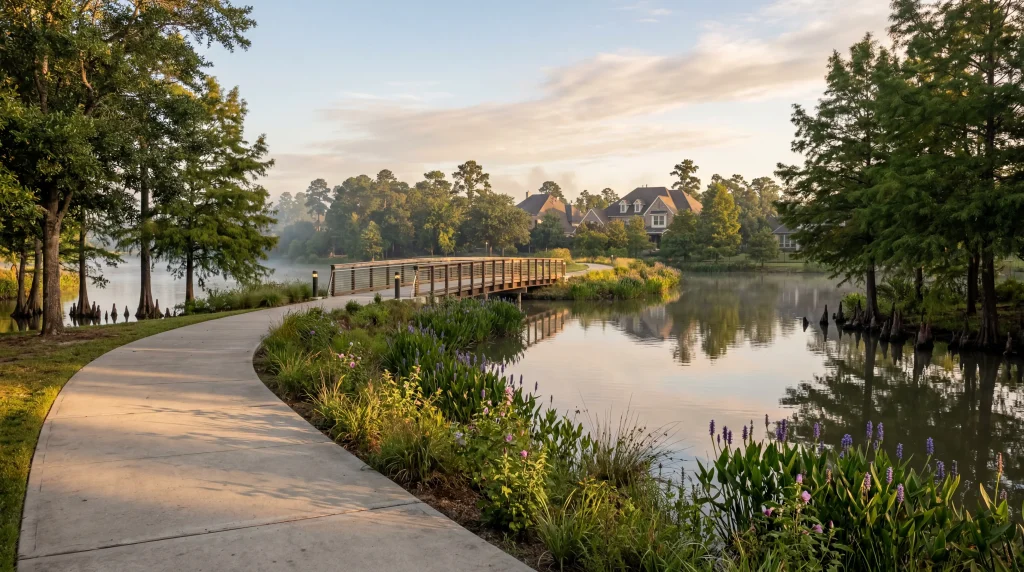
Two developments define the upper end of Cypress's new home market more than any others.
Bridgeland, developed by The Howard Hughes Corporation, has emerged as one of the most ambitious master-planned communities in the country. Spanning thousands of acres along Cypress Creek, Bridgeland designates specific parcels for custom builds—and those parcels come with Architectural Review Board (ARB) requirements that govern everything from exterior material palettes to roofline specifications. The ARB process here is rigorous by design. It protects property values, but it also demands that any custom home builder in Cypress, TX working on one of these lots know how to operate within those constraints without sacrificing the homeowner's vision.
Towne Lake, developed by Caldwell Companies, operates similarly. Its lakefront and water-access lots represent some of the most premium real estate in Harris County—lot costs in amenity-rich communities like these can represent 20–25% or more of the total project budget, according to Cypress custom home market research from the Houston-Galveston Area Council.
Both communities share a governance structure that buyers need to understand before committing to a lot:
That's not a reason to hesitate. It's a reason to be deliberate about which builder you work with. If you're exploring custom home build in the woodlands for comparison, the master-planned governance structure there follows similar principles—though the ARB frameworks differ meaningfully community by community.
For true custom construction in Cypress, TX, build costs ranged from $185 to over $350 per square foot as of 2025–2026, according to market data compiled from regional builder surveys and project documentation. Total project budgets for fully custom builds commonly fall between $600,000 and $2.5 million. That range is wide, and understanding what moves the needle matters more than fixating on the averages.
The primary cost variables in a Cypress custom build are:
| Cost Variable | Why It Matters in Cypress |
|---|---|
| Land / Lot premium | Lots in Bridgeland and Towne Lake carry premiums that don't exist in comparable communities further from Houston's employment core. Lot cost alone can represent 20–25% of the total budget. |
| MUD soft costs | Every build in unincorporated Cypress requires Municipal Utility District plan approval for water and sewer—a layer of engineering and review cost that Montgomery County projects don't carry. |
| ARB compliance | Material selections and exterior specifications required by Architectural Review Boards in master-planned communities can influence both design cost and construction cost if non-compliant choices require revision. |
| Foundation engineering | Harris County's soil conditions require engineered foundation systems on many lots. This is a necessary investment, not an optional upgrade. |
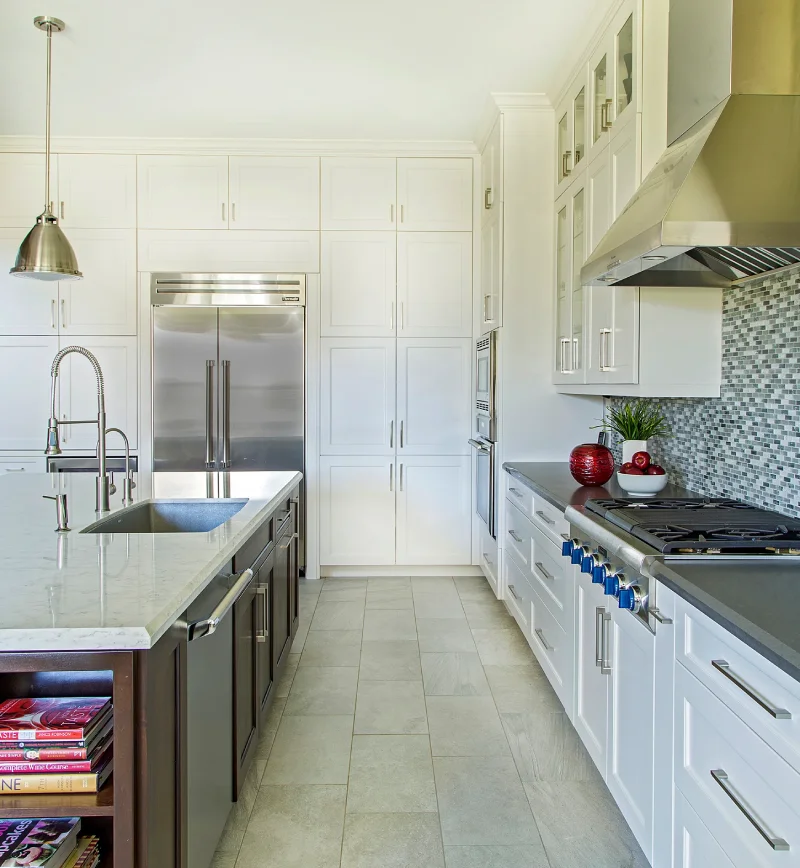
| Finish level selections | Professional-grade appliances, custom millwork, smart home integration, and natural stone surfaces move cost per square foot substantially from the floor of the range toward the ceiling. |
| Construction inflation | Material and labor costs in Greater Houston have increased approximately 18% since 2023, driven by skilled trade shortages and supply chain variability (Associated General Contractors of America, 2025). |
That last point deserves emphasis. The 18% inflation figure isn't a Cypress-specific phenomenon—it's a regional market condition that affects every project in the Houston metro. What it means practically is that budgets developed with 2022 or 2023 data are no longer accurate. Any serious conversation about building in 2026 needs to begin with current numbers from a builder actively pulling permits and managing subcontractor relationships today.
Cypress is unincorporated, which means Harris County—not a city government—holds jurisdiction over permitting and code enforcement. That simplifies some things. It complicates others.
Building codes here follow the International Residential Code (IRC) with local amendments adopted by Harris County Commissioners Court. There's no city council variance process, no city-specific zoning overlay to cross-reference. But there are three distinct regulatory layers that every new construction project in Cypress moves through—and they don't operate in simple sequence:
This is why experienced design-build firms with a documented Cypress project history hold a real scheduling advantage. The process isn't impossible—it's absolutely learnable. But you don't want your builder learning it on your timeline and your budget.
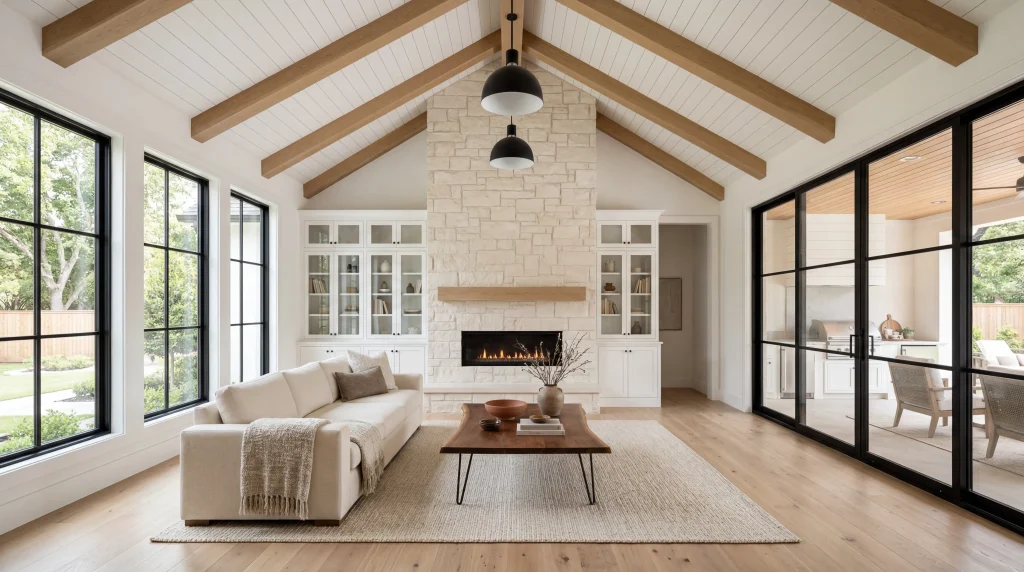
Walk through Bridgeland or Towne Lake and the architectural vocabulary is shifting. Traditional brick-dominant Texas traditional still holds its own, but two styles have become the dominant forces in upper-market Cypress new construction:
Modern Farmhouse blends the scale and warmth of traditional residential forms with contemporary open-concept interiors, standing seam metal roof accents, board-and-batten exteriors, and black aluminum window frames. It reads as elevated but approachable—a combination that resonates with buyers who want a curated residence without the coldness of strict contemporary design.
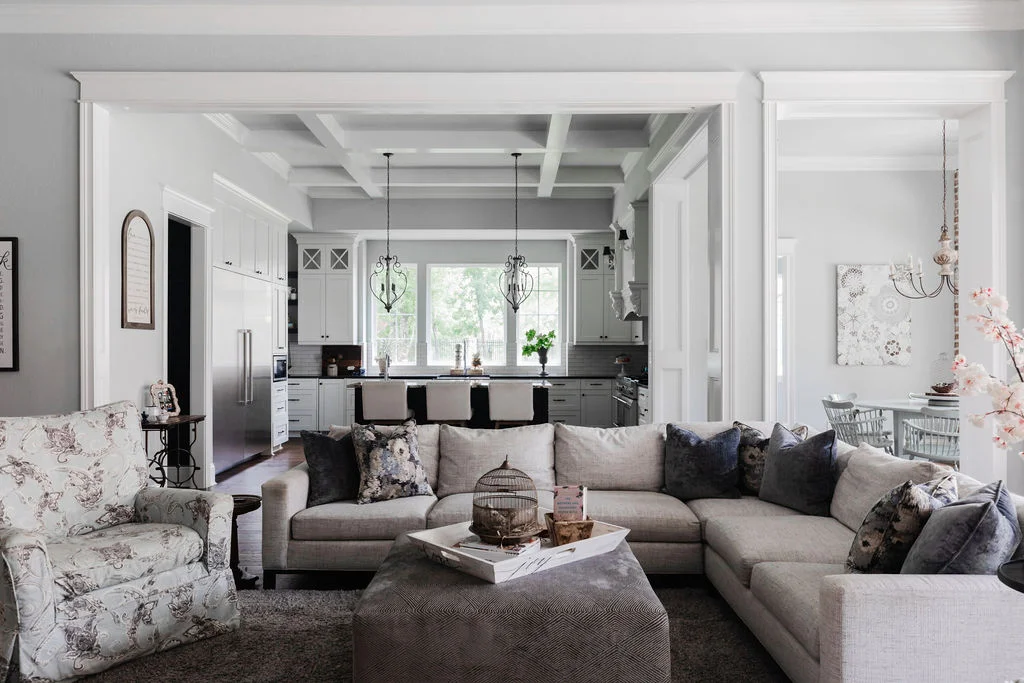
Transitional architecture layers classic structural forms—symmetrical elevations, detailed millwork, masonry bases—with clean contemporary interiors and restrained material palettes. Transitional homes photograph exceptionally well, hold broad resale appeal, and tend to age gracefully across shifting taste cycles.
Beyond architectural style, three feature categories now dominate buyer requests in Cypress's upper custom market:
For homeowners considering kitchen remodeling as an alternative to new construction, many of these same design priorities—open-concept conversions, integrated technology, high-performance ventilation—translate directly into renovation scope without the land acquisition and regulatory complexity of a ground-up build.
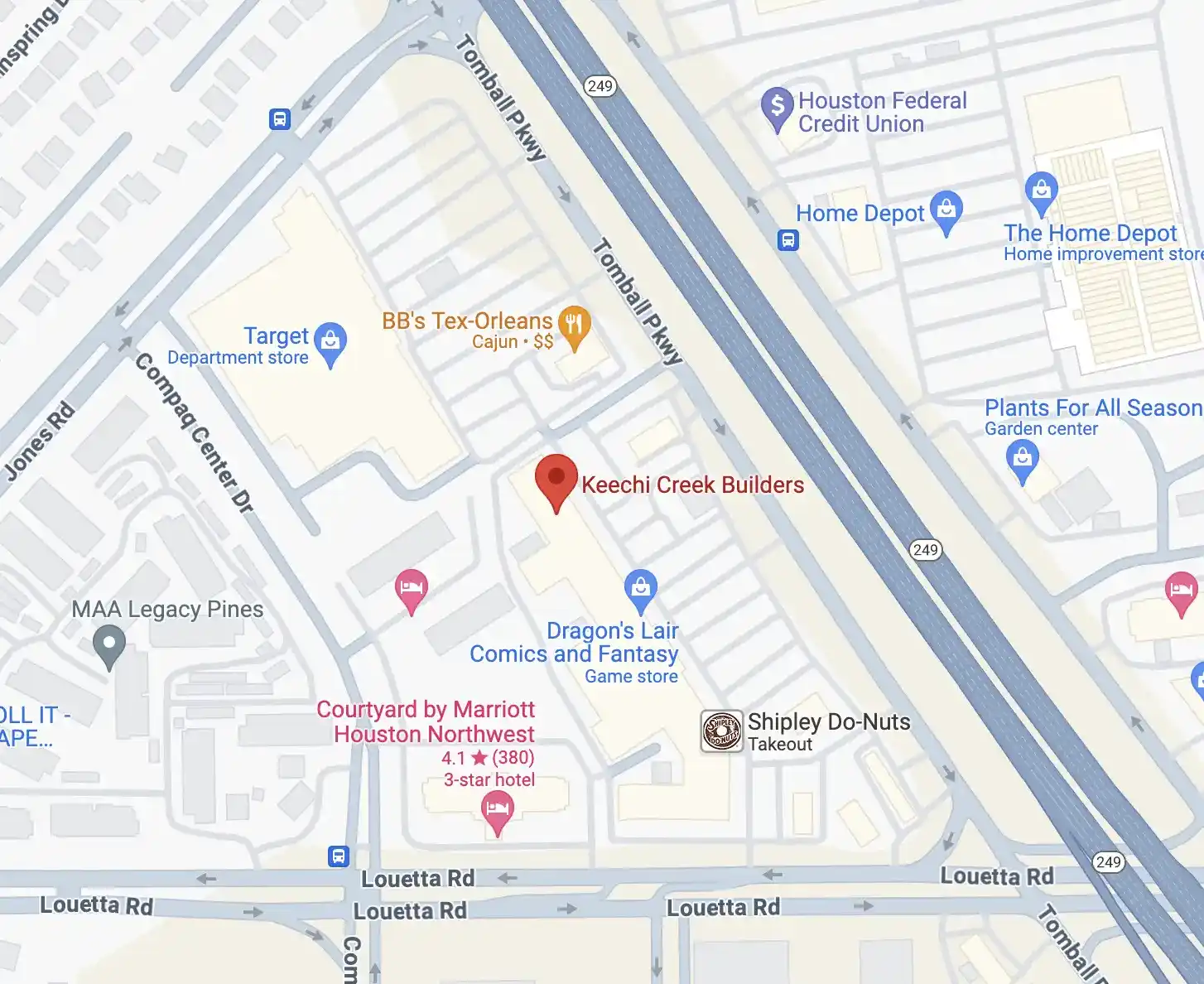
Keechi Creek Builders has been building and remodeling residences across Greater Houston since 2007—17 years of navigating the exact regulatory complexity that defines Cypress: Harris County permitting, MUD plan review, HOA and ARB submissions in communities that hold their builders to rigorous architectural standards.
| KCB Credential | Detail |
|---|---|
| Founder background | Brandon Lynch, Texas A&M construction science — engineer-led design-build methodology from day one |
| Industry recognition | GHBA Custom Builder of the Year; 32 awards from the Greater Houston Builders Association and Texas Association of Builders |
| BBB standing | A+ rating; BBB Winner of Distinction (2015–2019) for exemplary client service |
| Pre-construction process | 3D virtual walkthroughs before construction starts; clients see, adjust, and approve every detail before ground breaks |
| Project model | Single contract, single team, single point of accountability — architects, engineers, and craftsmen under one roof |
That integrated design-build process isn't just operationally efficient. In a market where ARB review, MUD plan approval, and Harris County permitting run concurrently, having one team accountable for all three tracks is a meaningful risk mitigation tool for homeowners who can't afford timeline surprises. The change-order spiral common in the traditional separate-architect-then-contractor model doesn't happen when design and construction share the same table from day one.
If you're evaluating a whole-home renovation rather than ground-up construction, Keechi Creek Builders handles both scopes with the same integrated team and the same standard of accountability.
Custom home construction in Cypress, TX ranges from $185 to $350+ per square foot as of 2025–2026, with total project budgets commonly falling between $600,000 and $2.5 million for fully custom builds. Lot costs within master-planned communities like Bridgeland or Towne Lake can represent 20–25% of the total budget, according to regional builder market data. Smart home integration, MUD-related engineering requirements, and premium finish selections all push costs toward the higher end of that range.
Yes. Communities like Bridgeland and Towne Lake operate under Architectural Review Boards that review design plans, exterior elevations, materials, and landscaping prior to construction. ARB approval is separate from Harris County permitting and typically adds 4–8 weeks to the pre-construction timeline. Working with a builder experienced in ARB submissions—including material sample preparation and elevation documentation—significantly reduces the risk of costly delays or required redesigns.
Harris County plan review for standard residential builds typically takes 10–21 business days, though MUD plan approval—required for water and sewer connection—runs on a parallel timeline that varies by district. Projects in flood zone areas or those requiring fill work require additional agency review. Experienced custom home builders account for MUD and Harris County review windows simultaneously to avoid schedule compounding.
A fully custom builder designs and constructs a residence to your specific program from the ground up, with no predetermined floor plan constraints. A semi-custom builder offers a library of base plans with modification options. In Cypress, fully custom builds are most common on private lots or in designated custom sections of master-planned communities. If your program includes non-standard room configurations, lot-specific engineering, or specialty spaces, a fully custom builder is almost always the better path.
Cypress, TX has demonstrated consistent long-term residential appreciation, supported by CFISD school district performance, expanding employment infrastructure along US-290 and the Grand Parkway, and continued investment by major master-planned community developers. Homes within amenity-rich communities consistently command resale premiums over comparable homes outside those communities, according to regional real estate market analysis. Custom-built residences within established Cypress communities have historically outperformed production builds at resale.
Cypress is one of the most active and complex custom home markets in the Greater Houston area. The growth is real, the communities are exceptional, and the regulatory environment—Harris County, MUDs, ARBs—rewards homeowners who build with a team that already knows the territory. Keechi Creek Builders has spent 17 years earning that knowledge. If you're evaluating a custom home or a major renovation in Cypress, TX, we'd welcome the conversation. Contact Keechi Creek Builders to schedule a consultation with Brandon Lynch and the team.