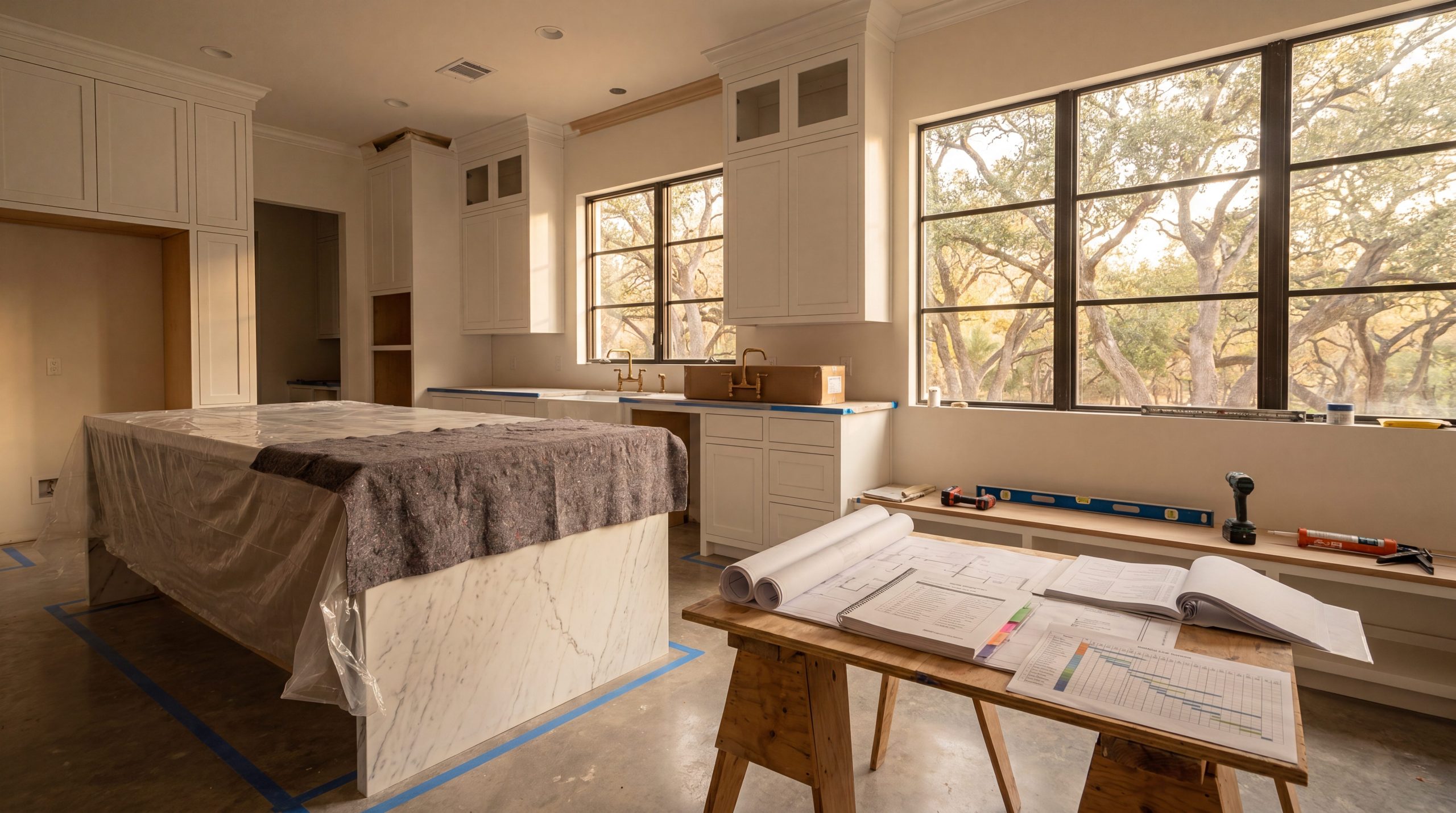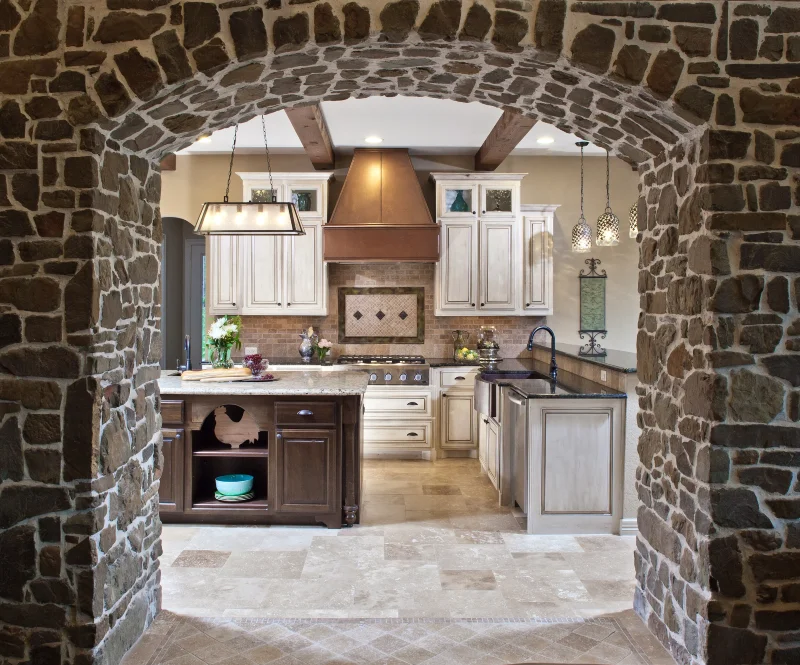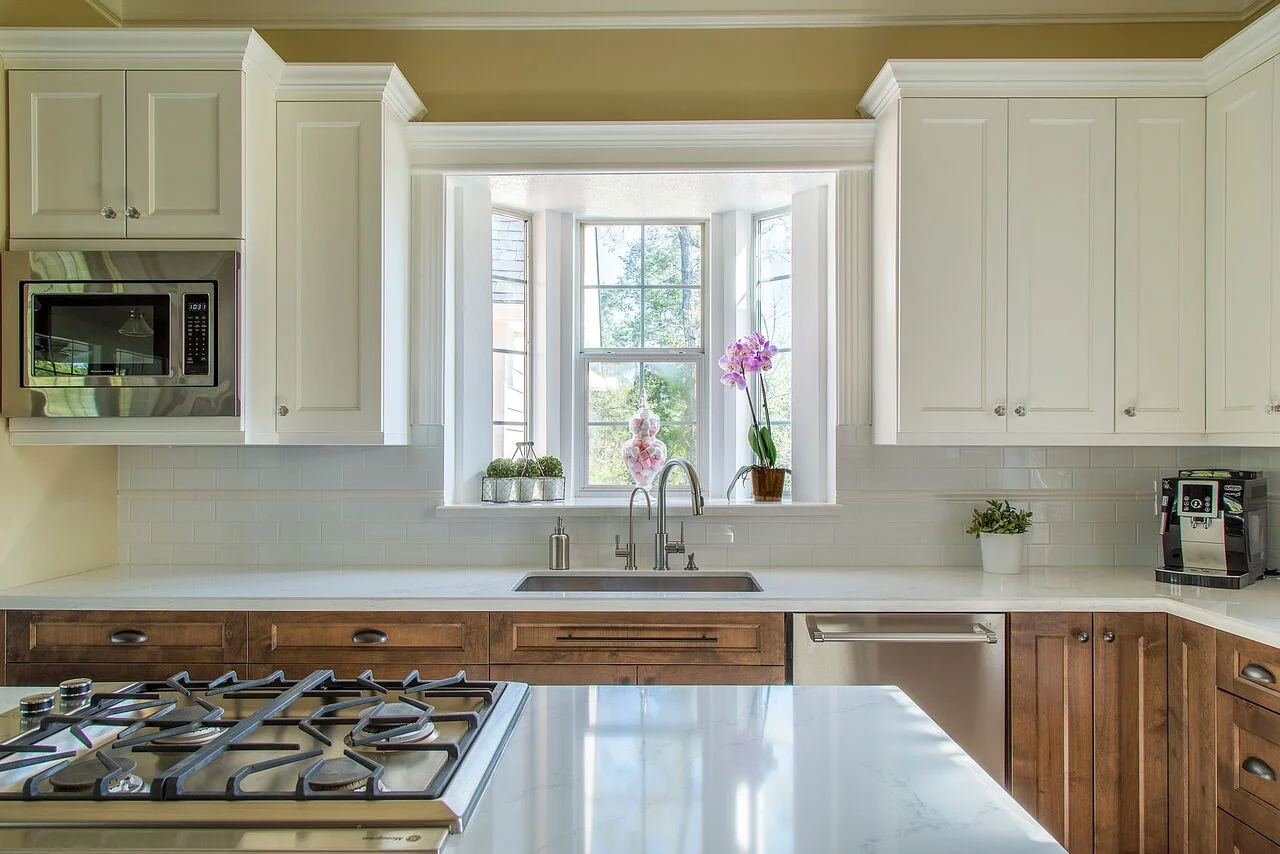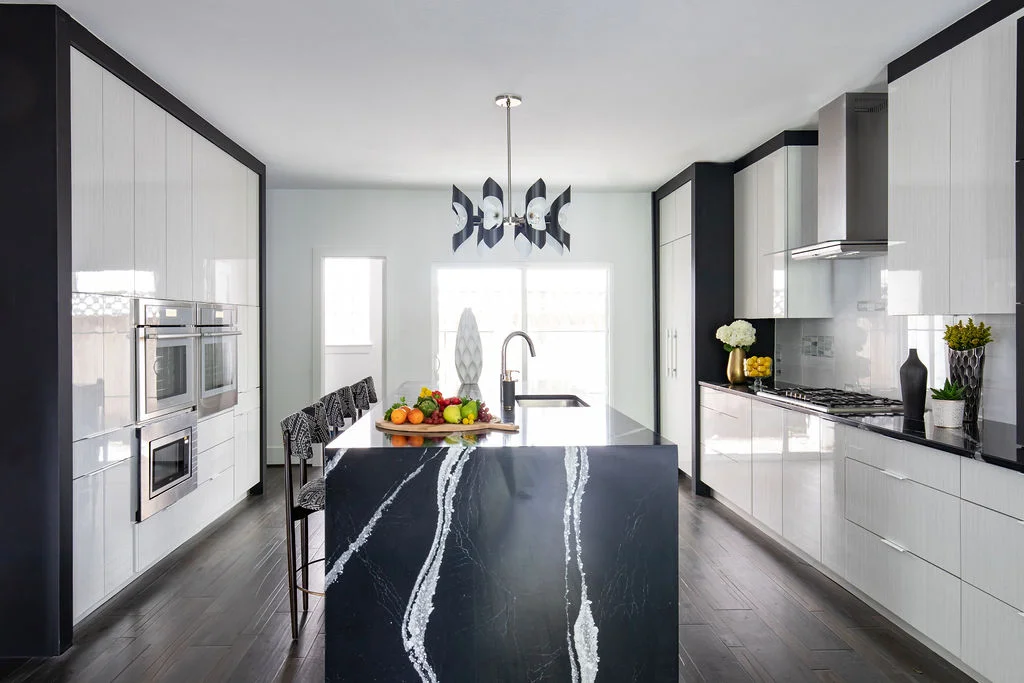
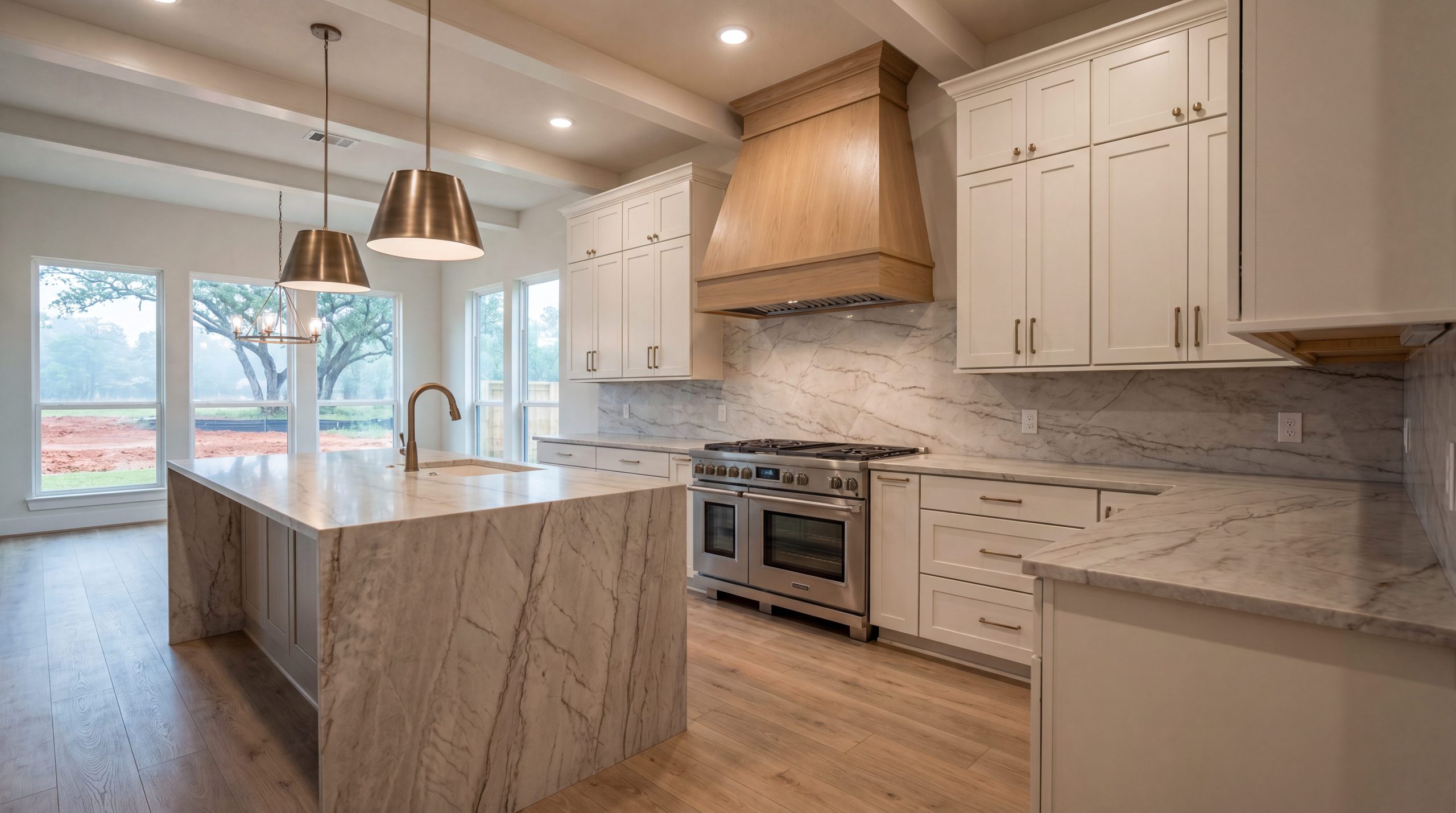
A Bridgeland builder-grade kitchen upgrade in Cypress almost always starts in the same place — cabinet fronts and the island — because those two changes carry 70 percent of the visual transformation and protect the home's investment value without requiring a full gut renovation. Keechi Creek Builders has guided dozens of Bridgeland homeowners through this exact sequence of priorities since the master-planned community opened.
Key Takeaways
- Start With Cabinet Fronts, Not the Whole Kitchen: New shaker doors, soft-close hardware, and a painted finish over existing builder cabinet boxes deliver the biggest visual change for the dollar — typically 35 to 45 percent of the upgrade's total impact.
- The Island Is Priority Number Two: Replacing or expanding the builder's stock island with a quartzite waterfall version sets the Bridgeland kitchen's new center of gravity and unlocks better lighting, seating, and storage decisions downstream.
- Bridgeland Is a Howard Hughes Master-Planned Community: Built by the Howard Hughes Corporation from 2017 onward, Bridgeland sits in Harris County (not Montgomery County), and any exterior change triggers Howard Hughes Corporation Design Review Committee review.
- Pure Interior Upgrades Usually Skip ARB Review: Cabinets, countertops, backsplash, lighting, and appliances generally do not require Architectural Review Board submission — only exterior envelope changes do.
- Production Builders Use Predictable Patterns: Bridgeland homes from Trendmaker, Perry Homes, Toll Brothers, and others ship with stock or low-tier semi-custom cabinets, mid-grade granite, builder-standard appliances, and a single undersized island — the upgrade sequence targets each one.
- Plan the Upgrade Within 2 to 5 Years of Move-In: Cypress homeowners who personalize early protect resale value, avoid living with the elements that frustrate them most, and amortize the investment over the years they'll enjoy it.
- Design-Build Beats Piecemeal Hiring: A single design-build contract for the upgrade eliminates the designer-to-contractor handoff that drives change orders, blown timelines, and finger-pointing on Bridgeland projects.
Why Do So Many Bridgeland Homeowners Upgrade Their Builder-Grade Kitchen?
Bridgeland is the largest active master-planned community in Cypress and one of the most ambitious in Texas. Developed by the Howard Hughes Corporation from 2017 forward, the community has drawn dual-income families to homes from Trendmaker, Perry Homes, Toll Brothers, and other national production builders. The homes are beautiful, well-located, and zoned to Cypress-Fairbanks ISD. The kitchens, however, are engineered to a production budget — and that's the gap Cypress homeowners feel within the first year of move-in.
Keechi Creek Builders has watched the pattern repeat across the community since Bridgeland opened. Builder-grade kitchens ship with stock or low-tier semi-custom cabinets, basic raised-panel doors in oak or maple finishes, mid-grade granite or entry-level quartz countertops, builder-standard pendants over an undersized island, and a four-burner range with a builder-installed microwave-hood combination overhead. None of it is bad construction. All of it is generic — and that generic finish stops matching the home's investment value within two to three years.
The Cypress homeowner asking what should change first is rarely asking for a full gut renovation. They want a prioritized roadmap that delivers the biggest visual and functional change for the budget they're willing to commit. That roadmap exists, and Brandon Lynch and the KCB design-build team have refined it across every Bridgeland village from Lakeland Heights through Parkland Village.
What Should You Change First in a Bridgeland Builder-Grade Kitchen?
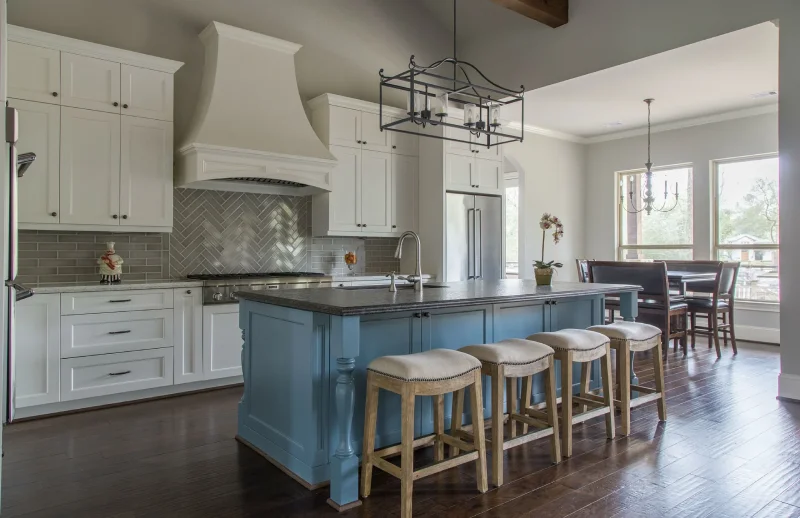
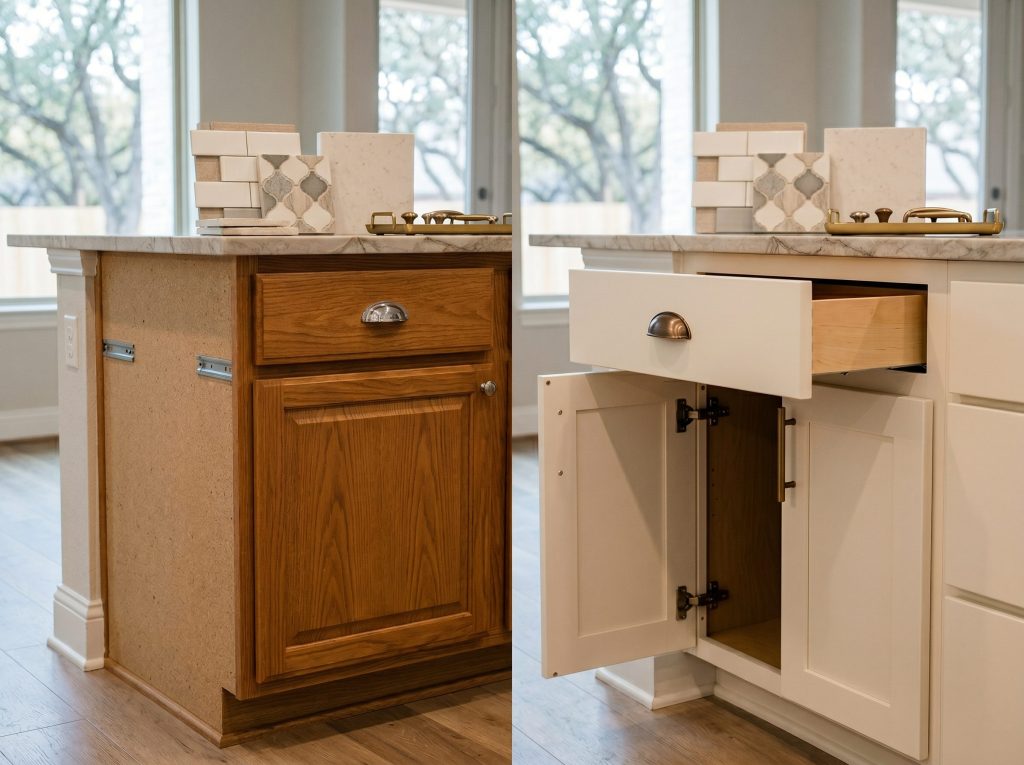
Cabinet fronts. Every time. The single highest-impact upgrade in a Bridgeland builder-grade kitchen is replacing the stock raised-panel doors and drawer fronts with a custom shaker or slab profile in a painted finish, swapping the hinges for soft-close versions, and upgrading the drawer slides to undermount full-extension. The cabinet boxes themselves are usually salvageable. The doors, drawer fronts, and hardware carry the visual weight of the kitchen, and replacing them transforms how the room reads without touching the layout or the plumbing.
The reason cabinet fronts come first is structural in a design sense. Every other decision — countertop selection, backsplash material, lighting, hardware finish, appliance package — gets calibrated to the cabinet finish the homeowner chooses. A warm-white painted shaker invites a different palette than a stained walnut slab. Locking in the cabinet finish first means every downstream decision flows naturally from the visual anchor rather than fighting it.
Typical first-pass upgrade scope:
- New Custom Doors and Drawer Fronts: Shaker or slab profile in a painted warm-white, soft greige, or muted moody color (deep navy, forest, or charcoal for accent runs and the island).
- Soft-Close Hinges and Undermount Slides: Replace the builder's basic hinges and side-mount slides with concealed soft-close hinges and full-extension undermount drawer hardware.
- Hardware Refresh: Replace builder-issued chrome pulls with brushed bronze, matte black, antique brass, or polished nickel — the choice sets the metal palette for faucet, lighting, and appliance trim.
- Refacing or Box Replacement: Where cabinet boxes are particleboard with visible swelling or damaged toe-kicks, the better path is full custom box replacement; where boxes are sound, refacing delivers a luxury-tier finish at a fraction of the cost.
How Much Does the Cabinet Upgrade Cost in Bridgeland?
A targeted cabinet-front upgrade across a typical Bridgeland kitchen — roughly 25 to 35 linear feet of base and wall cabinets — usually lands between $18,000 and $42,000 installed depending on door style, finish, and hardware tier. A full custom box replacement adds $25,000 to $55,000 on top of that. Both numbers assume design-build delivery through a Cypress firm with established cabinet shop relationships; piecemeal hiring through a cabinet retailer plus a separate installer typically runs 15 to 25 percent higher when the final scope is reconciled.
What's the Second Priority — Island, Countertops, or Lighting?
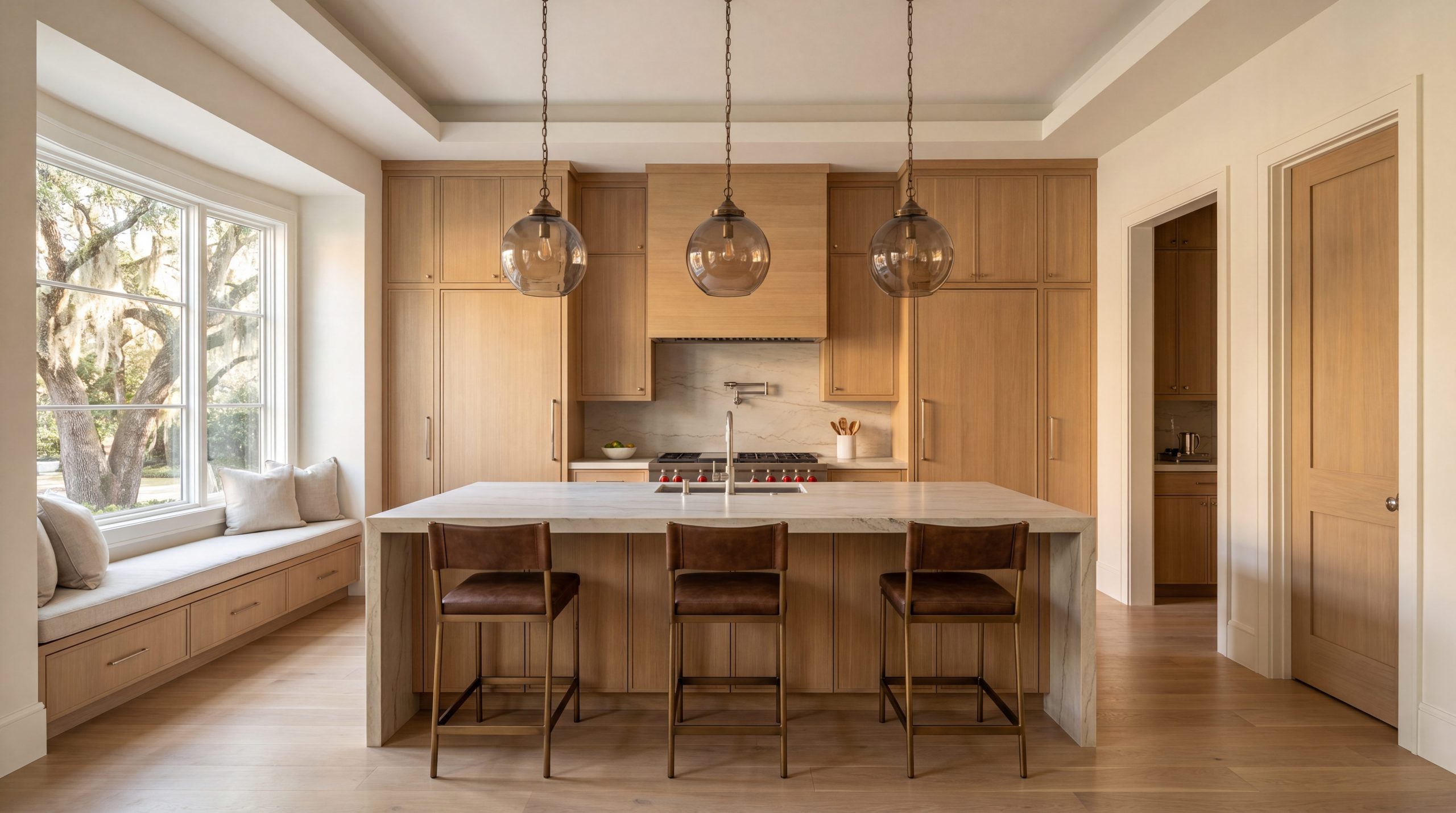
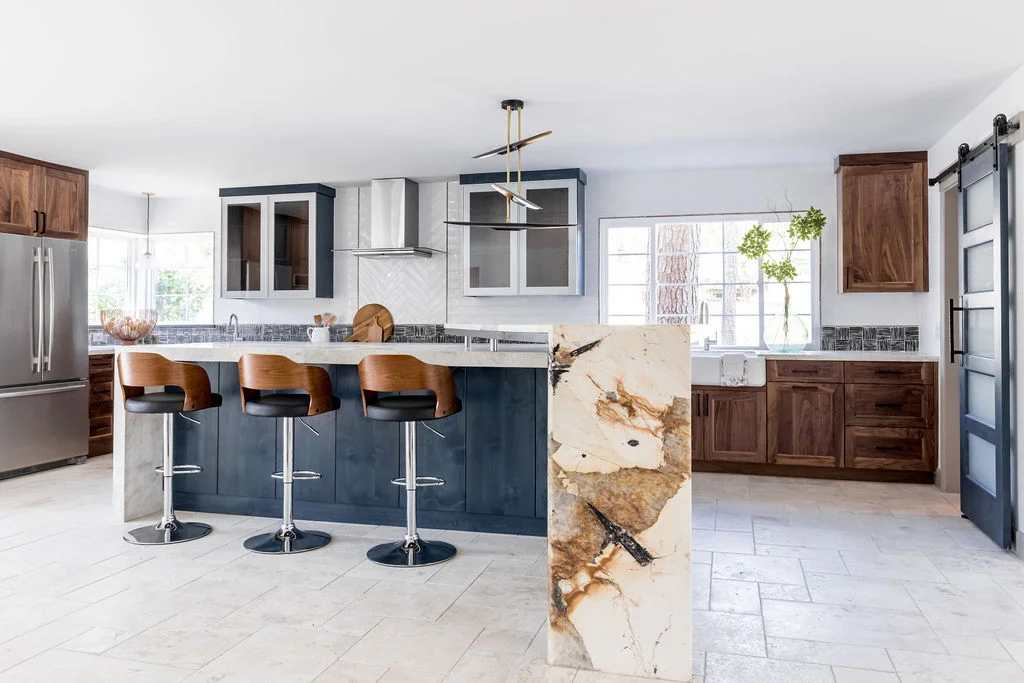
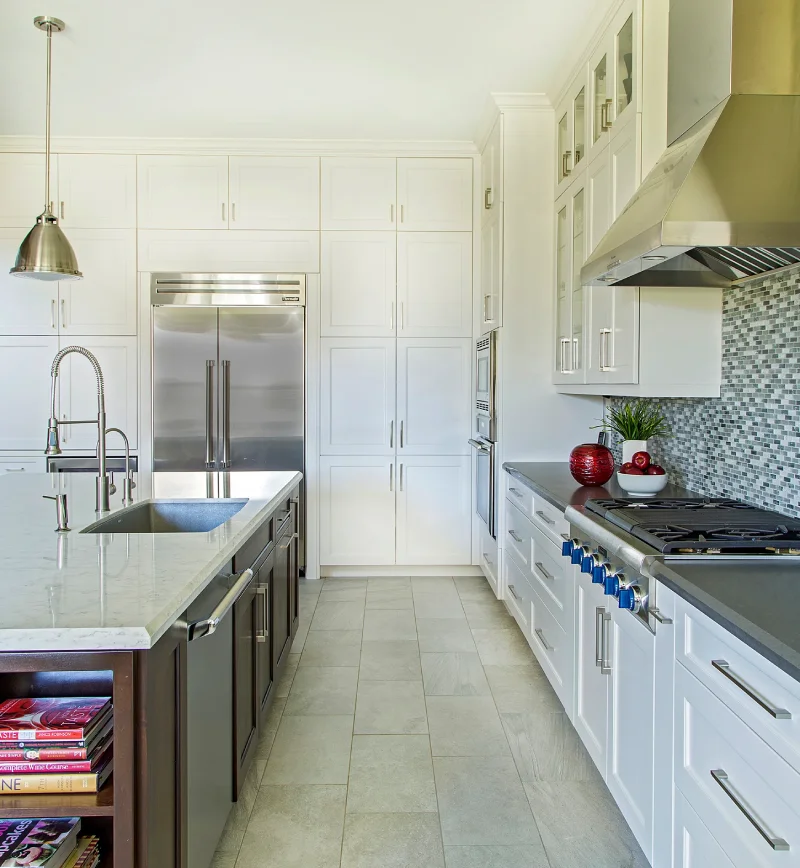
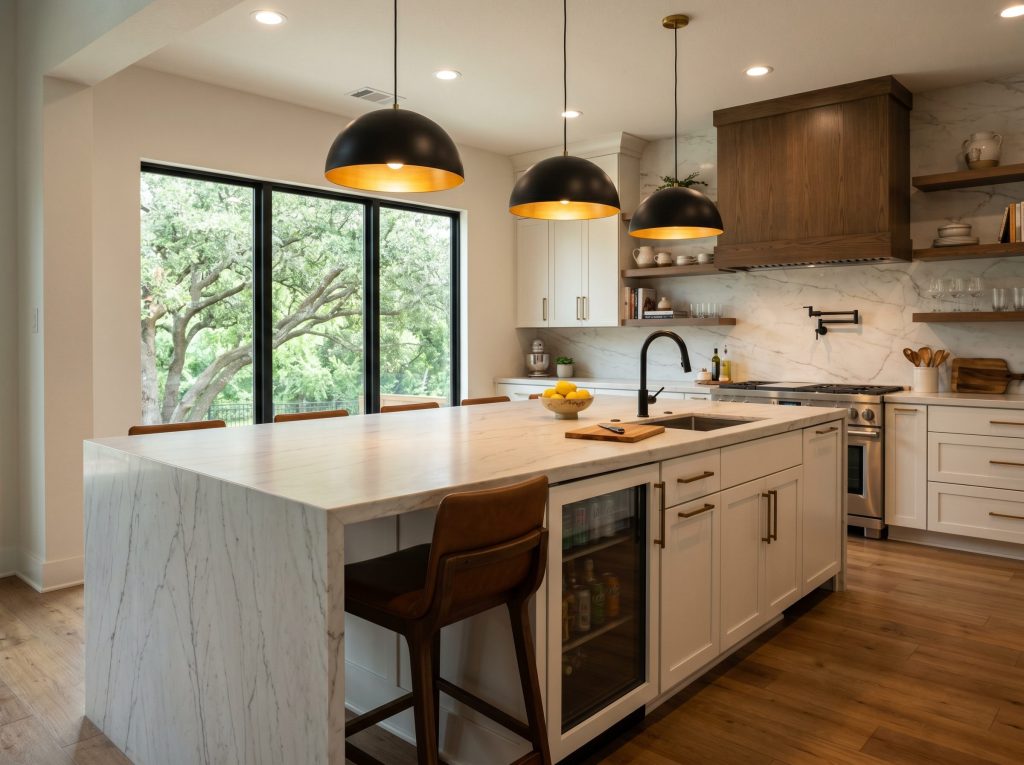
The island. After cabinet fronts, the kitchen island is the single piece of the room that determines whether the space functions the way the family actually lives. Bridgeland builders ship most homes with a small, single-purpose island sized for the production budget — typically four to six feet long, granite-topped, with a basic dishwasher-and-sink layout and no seating. The family that bought the home wants something bigger: a nine-to-twelve-foot rectangular island with a quartzite or honed-quartz waterfall edge, integrated seating for three or four, a prep sink, and ideally a beverage refrigerator or microwave drawer built into the great-room-facing side.
|
Brandon's Builder Insight After seventeen years building and remodeling kitchens across Cypress, I've learned that the Bridgeland island is where homeowners go wrong if they let a retailer drive the decision. Cabinet showrooms quote a beautiful island that doesn't fit the room because they sell islands, not kitchens. I size every Bridgeland island against three real constraints — the traffic lane to the great room, the swing arc of the refrigerator door, and the centerline of the existing range hood vent. Get those three right and the island feels inevitable. |
The island upgrade unlocks the rest of the kitchen. Once the island is sized correctly, the pendant lighting plan can be redesigned around it, the cooktop or range layout reads differently relative to the new center of gravity, and traffic flow from the great room into the kitchen finally works the way the floor plan promised when the homeowner walked the model.
Typical second-pass upgrade scope, after cabinet fronts:
- Island Resize or Replacement: Remove the builder's stock island, install a new custom-built island sized to the room (typically 9 to 12 feet long, 42 to 48 inches deep).
- Waterfall Quartzite or Honed Quartz Top: A book-matched waterfall edge on the visible ends becomes the visual anchor of the upgraded kitchen.
- Integrated Seating and Storage: Counter-height seating for three or four, deep drawers on the prep side, panel-ready beverage refrigerator on the great-room side.
- Pendant Lighting Rebuild: Replace the builder's two-pendant layout with three statement pendants sized to the new island, ideally on a dimmer circuit with the rest of the kitchen's ambient lighting.
Do You Need ARB Approval for a Bridgeland Kitchen Upgrade?
For most kitchen upgrades, no. The Howard Hughes Corporation Design Review Committee — which functions as Bridgeland's Architectural Review Board — reviews modifications that affect the exterior envelope or anything visible from common areas. A pure interior kitchen upgrade focused on cabinet fronts, countertops, backsplash, lighting, hardware, and appliances does not normally trigger ARB submission. The Cypress homeowner can move forward with design and construction without waiting on the committee.
ARB submission becomes required when the upgrade affects exterior elements. Common Bridgeland triggers include:
- Adding or Relocating Windows: A new kitchen window or relocation of an existing one alters the elevation visible from the street.
- Range Hood Vent Termination: Moving the range hood vent to a new exterior wall requires both ARB review and Harris County mechanical permitting.
- Load-Bearing Wall Removal: Removing a load-bearing wall that changes the elevation visible from the street is an ARB and engineering trigger.
- Exterior Doors: Adding an exterior door or modifying an existing one for kitchen-to-patio flow triggers review.
- Village-Specific Design Guidelines: Some Bridgeland villages carry tighter HOA design guidelines that govern visible finish choices.
When ARB submission is required, Keechi Creek Builders prepares the packet on the homeowner's behalf, manages the Howard Hughes Corporation Design Review Committee review process, and coordinates the Harris County permit application in parallel so the timeline stays compressed. Standard ARB review adds two to four weeks to the front end of the project — predictable and absorbable into the design schedule rather than a surprise delay. Bridgeland (see Wikipedia: https://en.wikipedia.org/wiki/Bridgeland,_Texas ) operates under the Howard Hughes Corporation's master-developer framework, which is well documented at https://en.wikipedia.org/wiki/Howard_Hughes_Corporation .
What Comes Third — Countertops, Backsplash, or Appliances?
Once cabinets and the island are locked in, the next layer is the surface-and-light story: perimeter countertops, the full-height backsplash, the lighting plan, and a coordinated hardware-and-faucet finish package. Most Bridgeland homeowners tackle these as a single coordinated phase rather than picking them off one at a time. The reason is design coherence — countertop selection drives backsplash selection, backsplash height drives lighting placement, and the hardware finish ties the entire palette together.
|
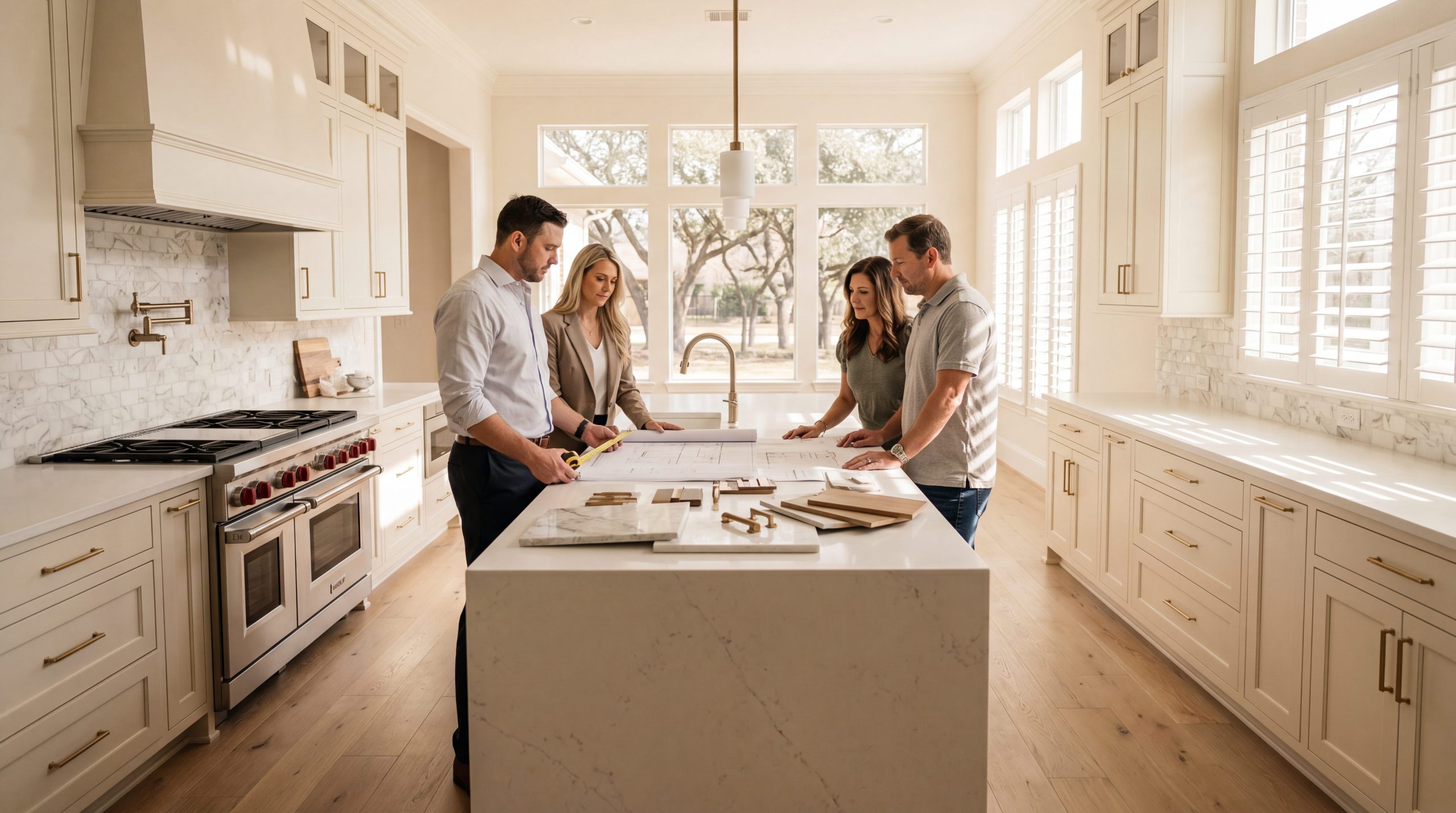
Actionable Tip Before you sign anything with a cabinet showroom or appliance retailer, request a single consolidated upgrade-priority worksheet from a Cypress design-build firm. The worksheet should list every kitchen element, your current builder-grade spec, the upgraded spec recommended for your village in Bridgeland, the estimated cost, and the visual-and-functional impact rating. That one document protects you from sequencing the upgrade in the wrong order. |
Typical surface-and-light scope:
- Perimeter Countertops: Match the island material when possible (quartzite is the current Bridgeland favorite for its veining and heat tolerance), or step down to a coordinated quartz on the perimeter with a feature quartzite on the island.
- Full-Height Backsplash: Replace the builder's four-inch return with a slab or large-format porcelain backsplash that runs counter to ceiling, with the range area often called out in a contrasting feature material.
- Three-Layer Lighting Plan: Recessed perimeter, statement pendants over the island, and undercabinet LED tape on every base run.
- Hardware and Faucet Finish Coordination: Lock the metal — brushed bronze, matte black, antique brass, or polished nickel — and carry it consistently through cabinet pulls, faucet, pot filler, range trim, and pendant accents.
|
Upgrade Priority |
Typical Bridgeland Cost Range |
Visual Impact |
Functional Impact |
|
Cabinet fronts (doors, drawers, hardware, slides) |
$18,000 – $42,000 |
High |
Medium |
|
Island resize or full replacement |
$22,000 – $55,000 |
High |
High |
|
Countertops + full-height backsplash |
$14,000 – $32,000 |
High |
Medium |
|
Three-layer lighting redesign |
$4,500 – $12,000 |
Medium |
High |
|
Appliance package upgrade (range, hood, fridge, dishwasher) |
$18,000 – $65,000+ |
Medium |
High |
|
Full custom cabinet box replacement |
$25,000 – $55,000 |
Medium |
High |
What About Appliances and the Range Hood?
The appliance package usually comes last in the upgrade sequence — but it's the upgrade with the most variability in budget. Most Bridgeland homeowners eventually replace the builder-installed 30-inch range and the over-the-range microwave-hood combination with a 36-inch or 48-inch professional range and a properly vented custom hood. Industry guidance from the National Kitchen and Bath Association (NKBA, https://www.nkba.org/ ) recommends a dedicated externally vented range hood for any cooktop with serious BTU output, which means the cheap recirculating combination has to come out.
Where the hood vent terminates matters. If the existing termination is on an interior soffit and the homeowner wants to upgrade to a real custom hood, the design team can usually keep the existing duct path. If the termination needs to relocate to a new exterior wall, ARB review applies and Harris County permitting needs to capture the mechanical scope. KCB's design-build team handles both paths under one contract.
Typical appliance-package scope for a Bridgeland upgrade:
- 48-inch Professional Range: Wolf, Thermador, or Monogram are the common Cypress specifications.
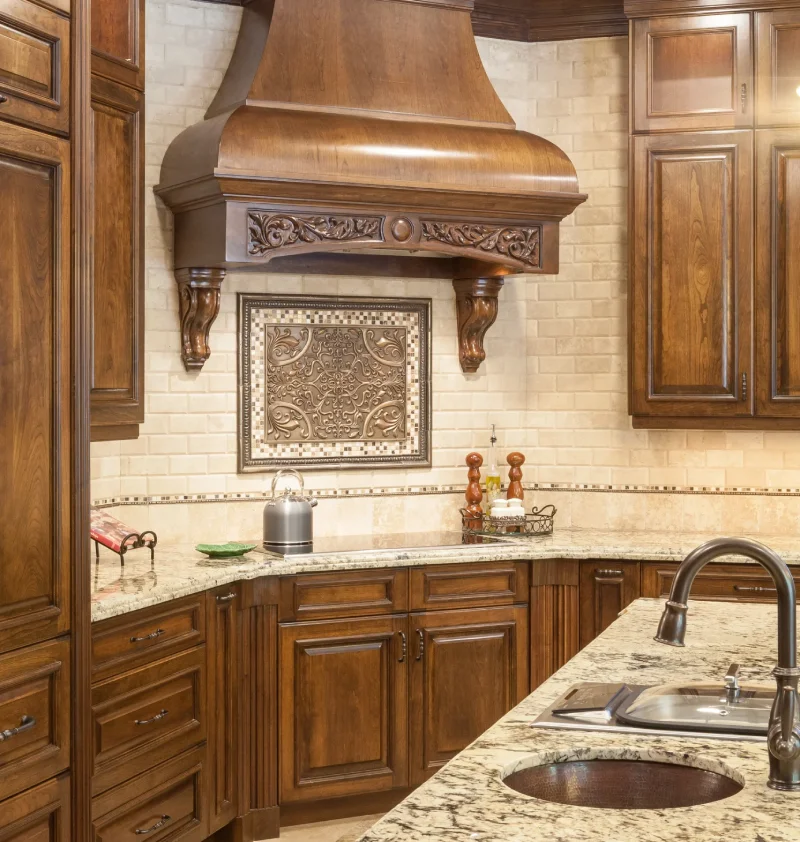
- Custom Hood: Wood-clad, plaster, or metal sheath sized to the range and ducted to a code-compliant exterior termination.
- Counter-Depth or Built-In Refrigerator: Panel-ready to match the cabinet finish, with the freezer drawer style most Bridgeland families prefer for entertaining.
- Beverage Refrigerator or Wine Column: Integrated into the island or the back kitchen run.
- Built-In Microwave Drawer: Hidden in the island or a perimeter base, freeing the wall space the builder's microwave-hood occupied.
How Long Does a Bridgeland Builder-Grade Kitchen Upgrade Take?
A full builder-grade kitchen upgrade in a Bridgeland home typically runs 8 to 14 weeks of on-site construction after design finalization, plus 6 to 8 weeks of design development and material procurement on the front end. Total calendar time from first consultation to walkthrough averages 16 to 20 weeks. Projects requiring Howard Hughes Corporation Design Review Committee approval for exterior work add two to four weeks to the front end. The Cypress homeowner planning around CFISD school schedules can reasonably target a summer or fall start to land the new kitchen before a major holiday hosting season.
A simpler refresh focused only on cabinet fronts, hardware, and countertops can complete in 5 to 7 weeks of on-site work. That tighter scope is the path most Bridgeland homeowners take in years two and three after move-in; the full upgrade including the island, lighting rebuild, and appliance package is the path most take between years three and five when they've decided the home is a long-term stay.
The National Association of Home Builders (NAHB, https://www.nahb.org/ ) tracks remodeling-market patterns that align closely with what KCB sees in Bridgeland — production-home owners who renovate within five years of move-in typically recover a higher percentage of their investment at resale than those who wait longer, because the upgrade lifts the home into a different comparable-sales tier in the neighborhood. Harris County (see Wikipedia: https://en.wikipedia.org/wiki/Harris_County,_Texas ) governs all Cypress kitchen permits, including the mechanical permits a relocated range hood vent requires.
Frequently Asked Questions
What is the most cost-effective first upgrade for a Bridgeland builder-grade kitchen?
The most cost-effective first upgrade is replacing the cabinet doors and drawer fronts with a custom shaker or slab profile in a painted finish, plus soft-close hinges and undermount drawer slides. Across a typical Bridgeland kitchen, that work runs $18,000 to $42,000 installed and delivers roughly 35 to 45 percent of the kitchen's total visual transformation. The cabinet boxes usually remain in place, which keeps demolition and disposal cost low while resetting the visual anchor for every downstream decision.
Do I need Howard Hughes Corporation Design Review Committee approval for an interior kitchen upgrade in Bridgeland?
Usually no. Pure interior upgrades — cabinets, countertops, backsplash, lighting, hardware, and appliances — do not normally require Howard Hughes Corporation Design Review Committee approval. ARB submission becomes required when the upgrade affects the exterior envelope or any element visible from common areas, such as a new window, a relocated range vent termination, or structural changes affecting the elevation. Keechi Creek Builders prepares the ARB packet for Bridgeland homeowners whenever submission is required and runs it in parallel with the Harris County permit.
Can I upgrade my Bridgeland kitchen one phase at a time instead of all at once?
Yes, and many Cypress homeowners do. The phased path that works best is cabinet fronts and hardware first, then the island and countertop replacement, then the lighting and backsplash, then the appliance package. Each phase stands on its own visually and functionally. The risk in phasing is that each new phase needs to match the design decisions locked in earlier — which makes the initial design-build consultation more important, not less, even when the homeowner plans to space the work across two or three years.
What appliances should I prioritize in a Bridgeland kitchen upgrade?
The range and the hood are the priority appliance upgrades because they carry the most visible design weight and the most functional change. Most Bridgeland homeowners step up to a 36-inch or 48-inch professional range from Wolf, Thermador, or Monogram and a properly vented custom hood. The refrigerator and dishwasher upgrades come next, typically panel-ready to match the cabinet finish. Built-in microwave drawers replace the over-the-range builder combination and free the wall space for the hood.
How does Keechi Creek Builders handle the design-build process for a Bridgeland kitchen upgrade?
Keechi Creek Builders runs a single design-build contract that covers consultation, design development, material specification, ARB submission when required, Harris County permitting, construction, and final walkthrough. Brandon Lynch and the KCB team handle the Howard Hughes Corporation Design Review Committee process directly for Bridgeland homeowners and coordinate every trade under one project management lead — eliminating the designer-to-contractor handoff that drives change orders on piecemeal projects across the Cypress market.
Is it worth upgrading a builder-grade kitchen if we might sell in five years?
Usually yes, particularly in Bridgeland. The upgrade typically lifts the home into a different comparable-sales tier in the community because most surrounding homes still carry the original builder-grade finish. The math works best when the upgrade prioritizes the elements buyers see first — cabinet fronts, the island, countertops, and lighting — and avoids over-investing in elements that don't move the appraisal. KCB's Cypress-specific scope-to-budget framework keeps the upgrade calibrated to the home's likely resale tier.
Ready to Plan the Right Bridgeland Kitchen Upgrade for Your Home?
Every Bridgeland builder-grade kitchen has its own starting point and its own right next step. Some Cypress homeowners need cabinet fronts and an island and nothing else for the next decade. Others are ready for the full surface-and-light upgrade including the appliance package and a custom hood vented through a new exterior termination that needs Howard Hughes Corporation Design Review Committee approval. The right plan depends on your home's village, your timeline, your budget, and how long you plan to enjoy the upgrade before resale. Keechi Creek Builders has built and remodeled across Bridgeland since the community opened, and Brandon Lynch's design-build team has walked dozens of Cypress homeowners through this exact prioritization conversation. You can read more about our Cypress kitchen practice on our kitchen-remodeling-cypress-tx page or learn about our custom-home-builder-cypress-tx work, and our main keechicreekbuilderstx.com homepage anchors everything we do in the Northwest Houston metro.
Call (281) 914-4951 first to talk through your Bridgeland kitchen upgrade with Brandon Lynch and the Keechi Creek Builders team — or send us a message via the contact page at https://www.keechicreekbuilderstx.com/contact-us/ and we will get back to you within 24 hours to start the conversation about your kitchen, your village, and the upgrade sequence that fits your home.