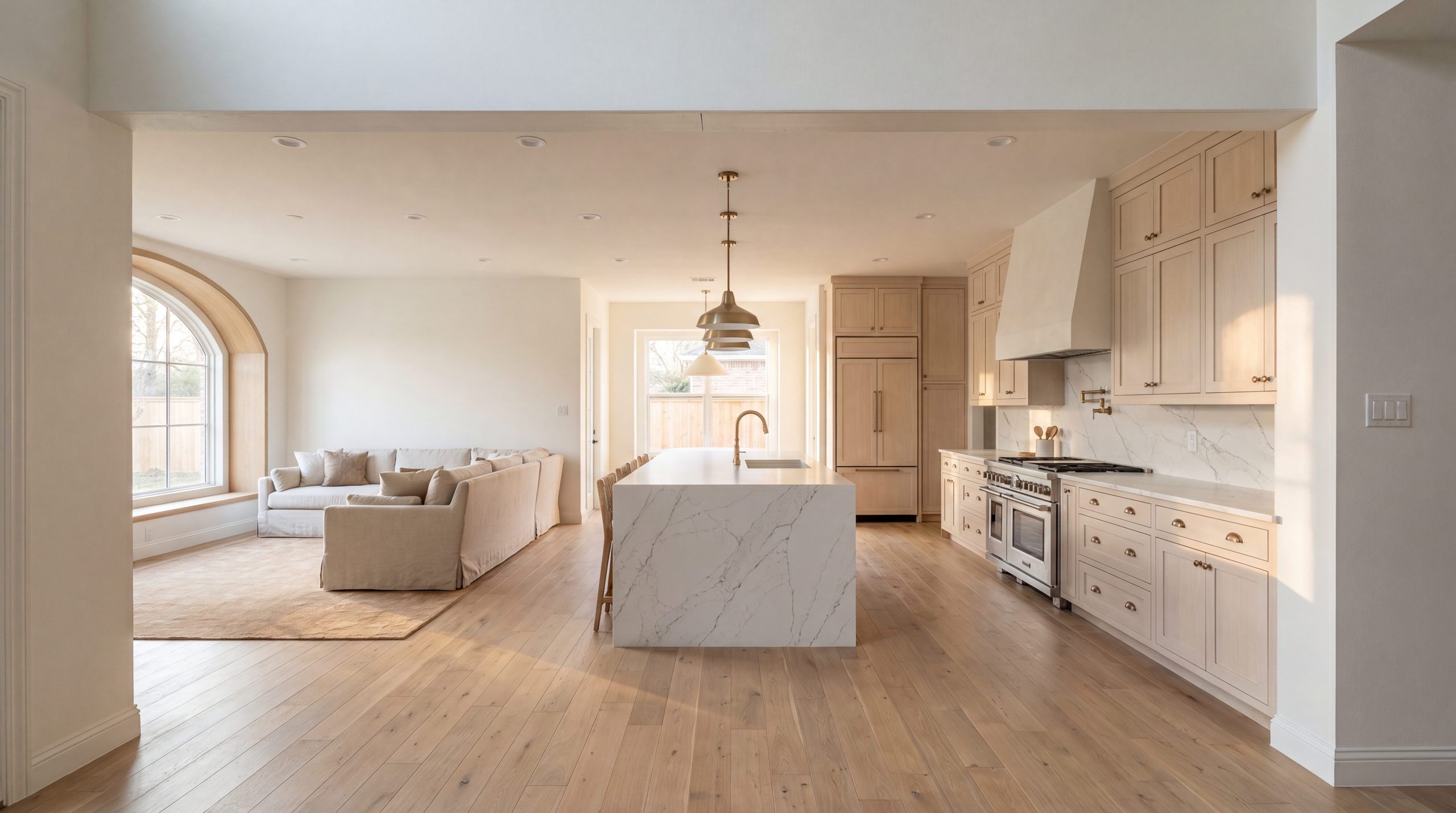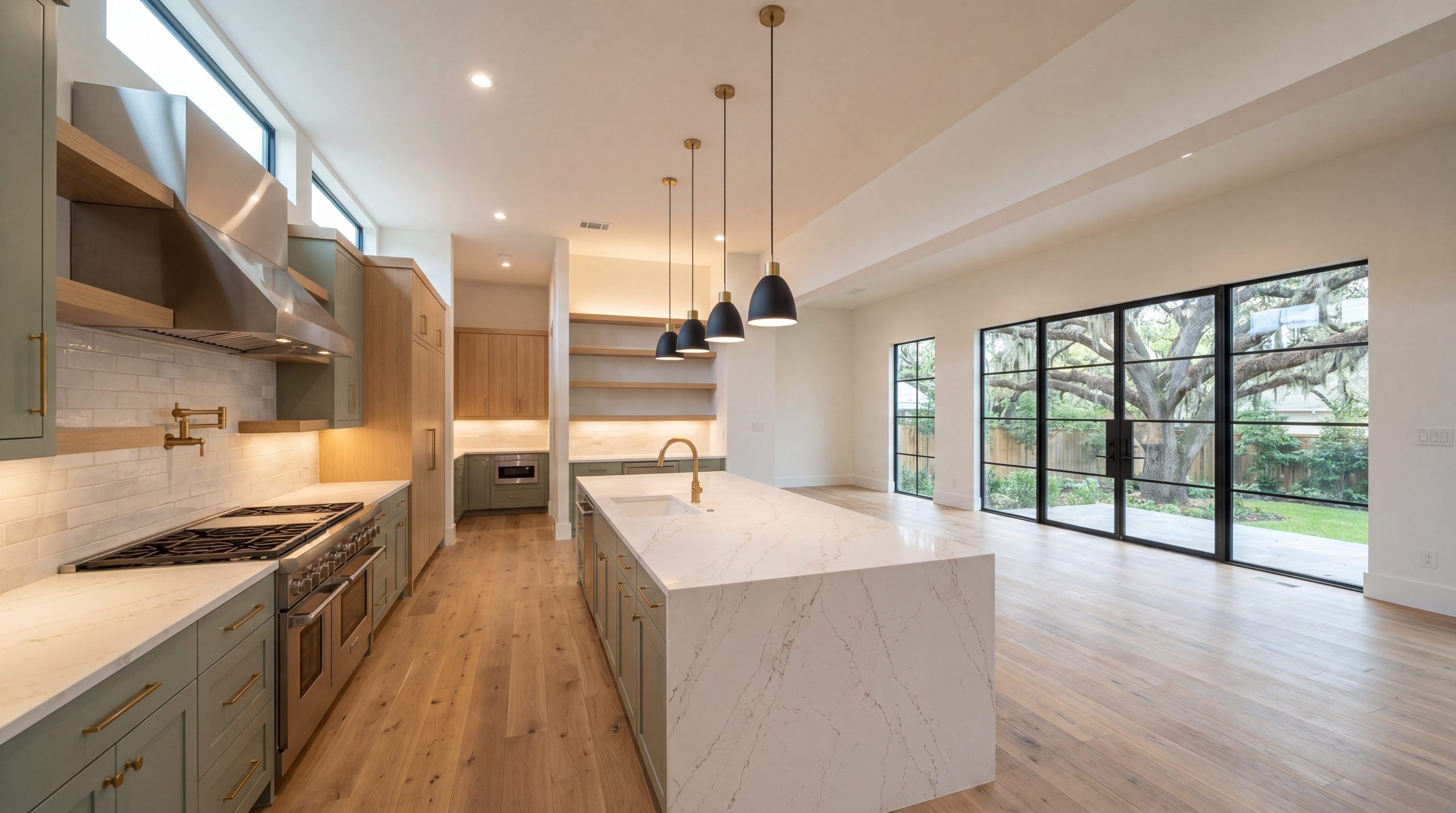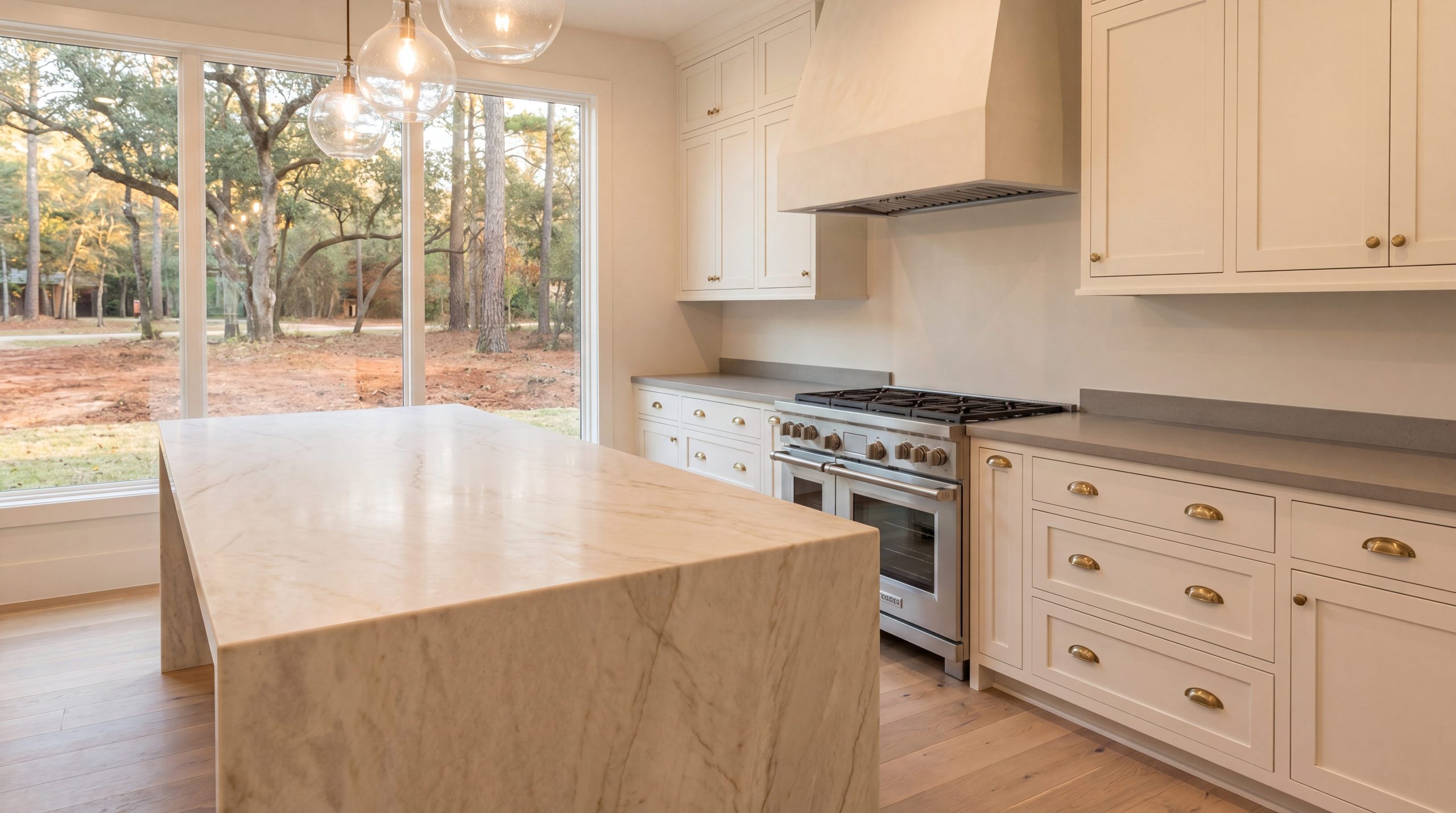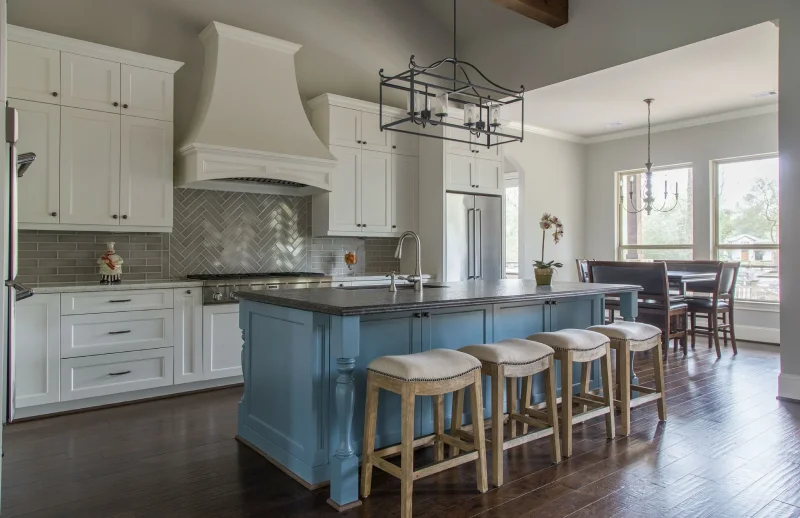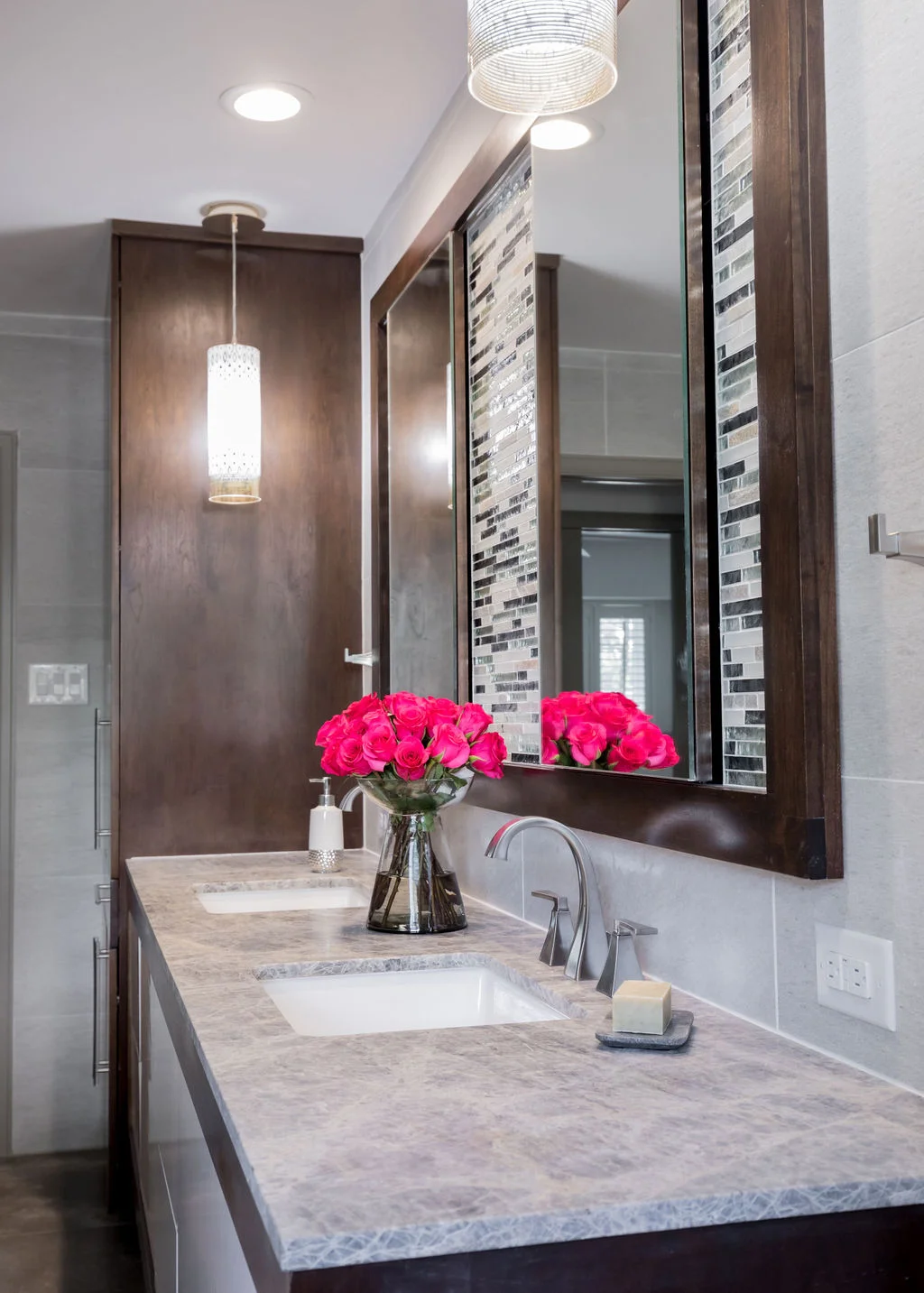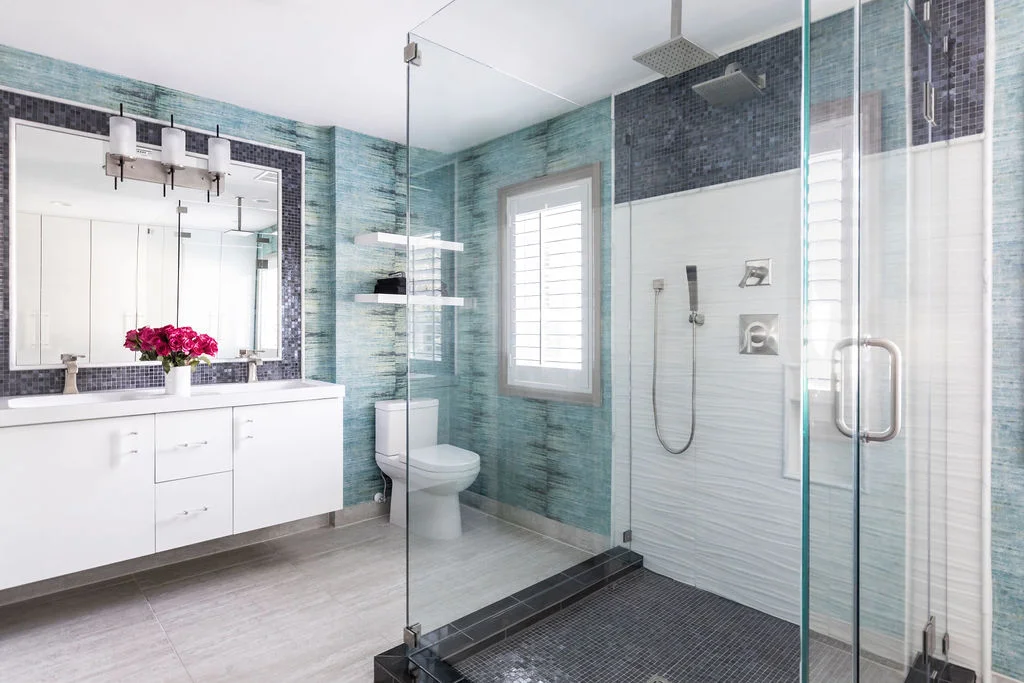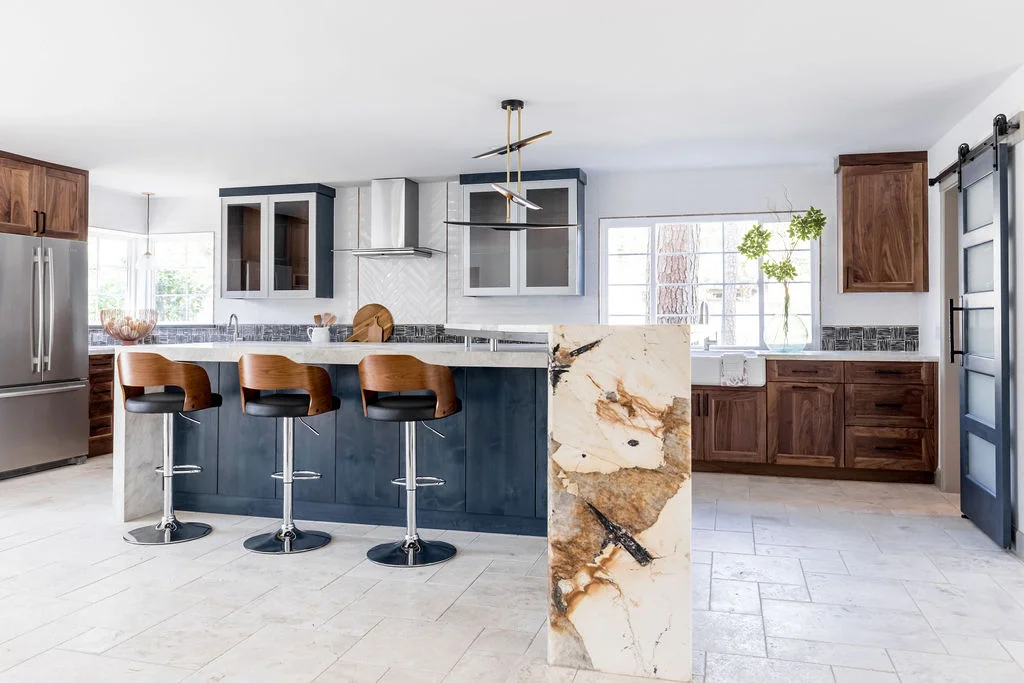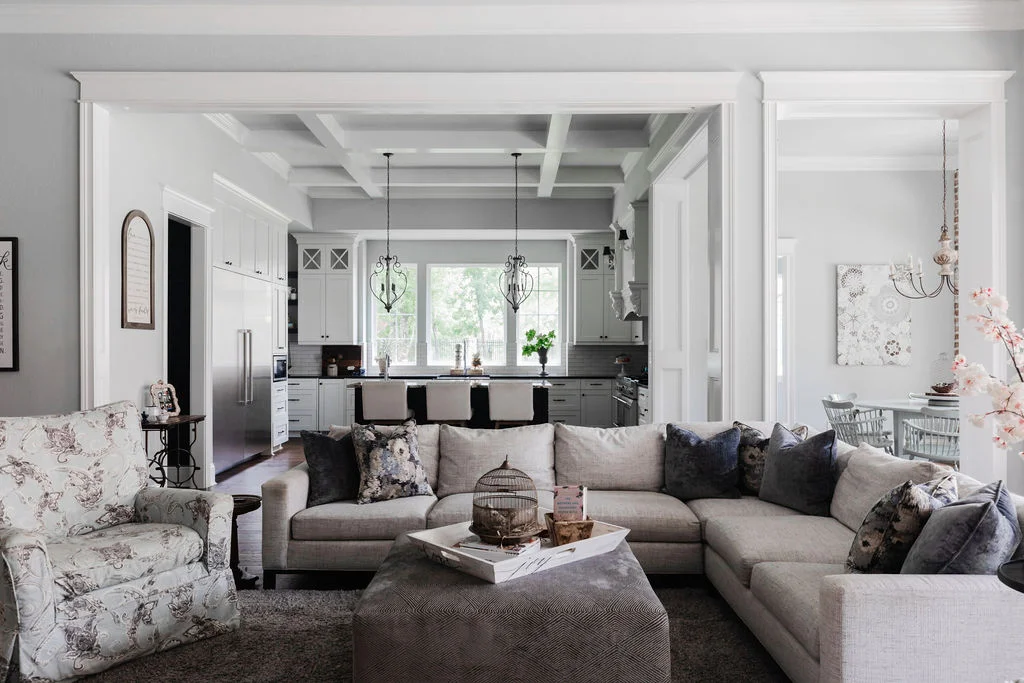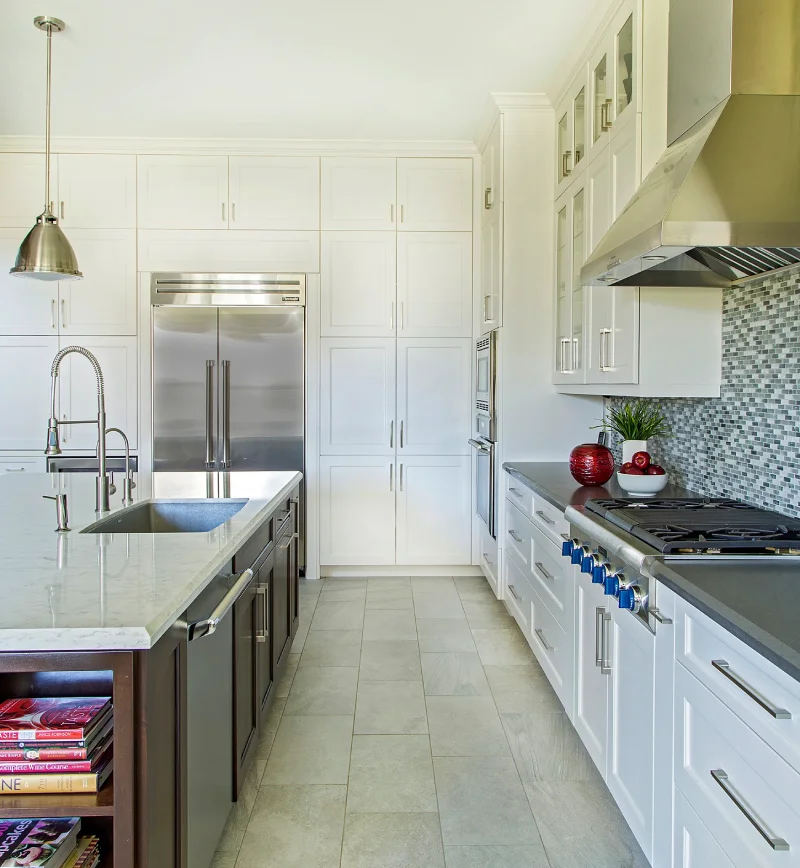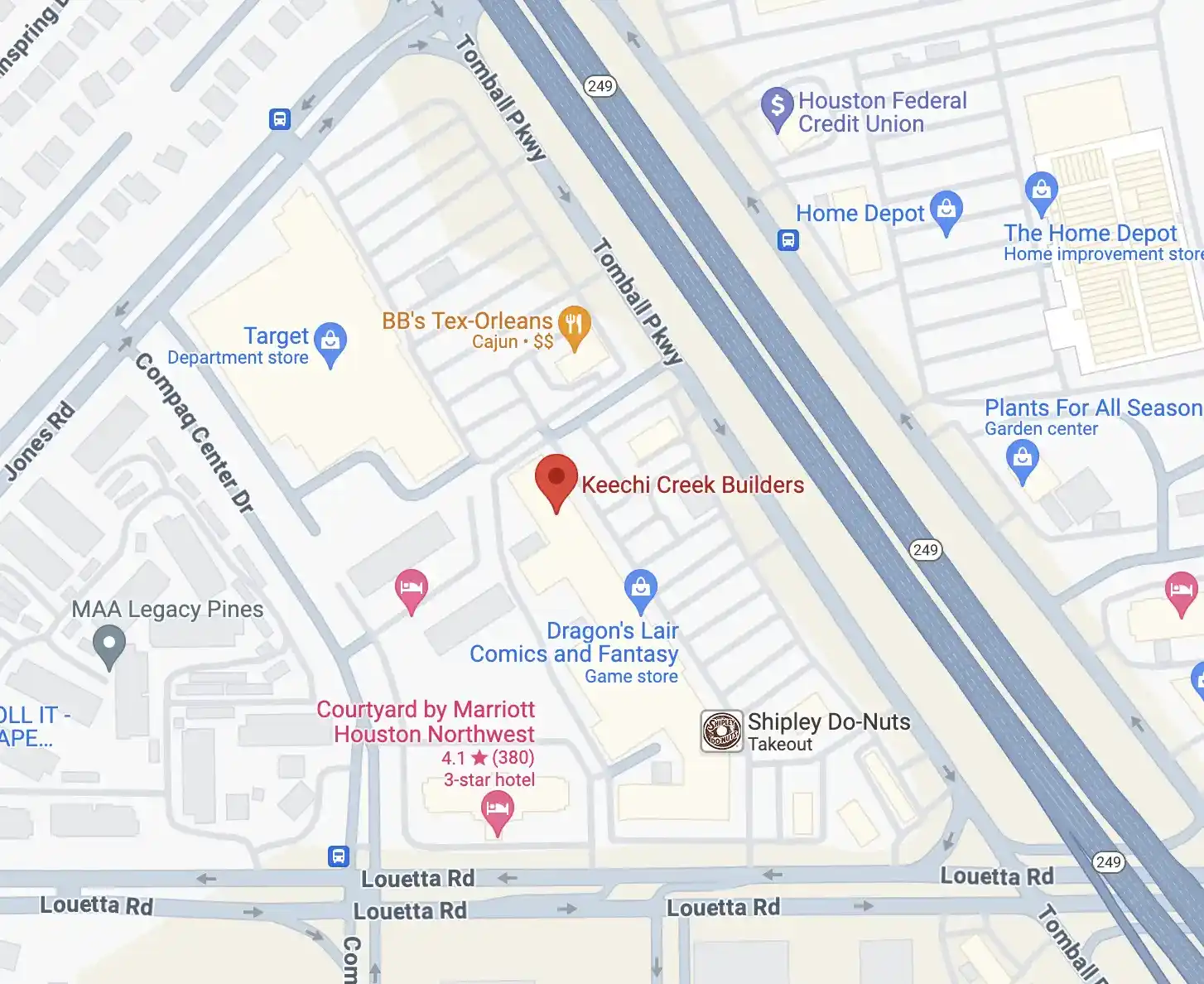
For Cypress homeowners weighing how to deliver a kitchen remodel, the design-build vs. general contractor decision shapes cost certainty, timeline, and accountability before the first cabinet is ordered. A design-build firm carries design and construction under one contract, while a general contractor executes plans drawn by an outside designer — each delivery method changes how change orders, communication, and Bridgeland or Towne Lake ARB review unfold across an 8-to-14-week build.
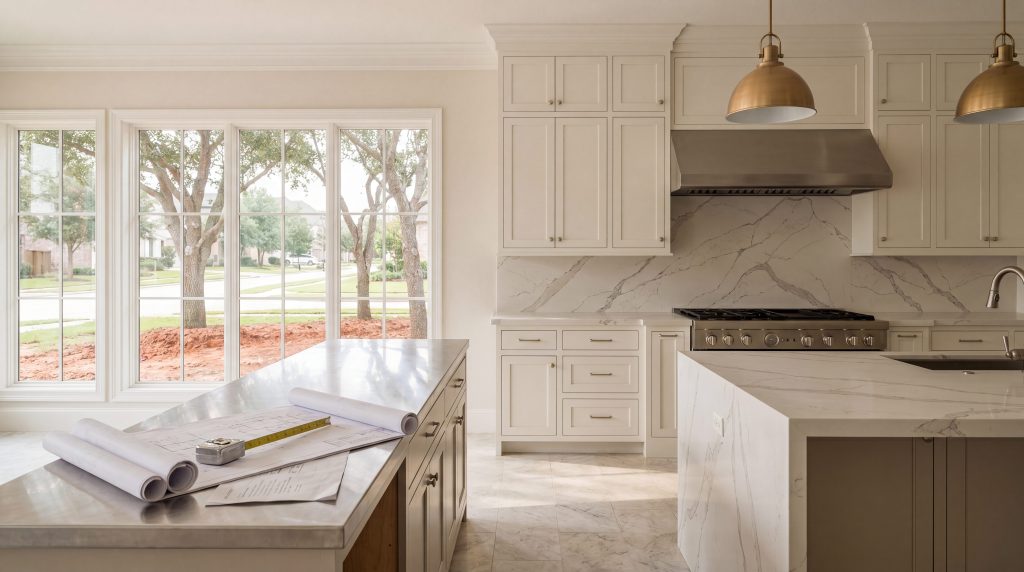
Key Takeaways
- One Contract vs. Two: A design-build firm holds design and construction under a single agreement; a general contractor (GC) executes someone else's drawings.
- Cost Certainty Earlier: Design-build prices the project after design is complete; design-bid-build often discovers cost issues mid-construction.
- Single Point of Accountability: Design-build gives Cypress homeowners one project manager; the GC route distributes accountability across designer, builder, cabinet shop, and trades.
- ARB and Permitting Move Faster: Bridgeland DRC, Towne Lake HOA review, and Harris County permitting are handled by one team under design-build.
- Better Fit for Structural Scope: Kitchen remodels with load-bearing walls, scullery additions, or window relocations favor design-build because engineering decisions happen before bids.
- GCs Still Work for Cosmetic Refreshes: A like-for-like cabinet-and-countertop swap inside an existing footprint can be well-served by a strong GC working from a designer's drawings.
What Is the Difference Between Design-Build and a General Contractor in a Cypress Kitchen Remodel?
A design-build firm holds one contract covering design, permitting, procurement, and construction. A general contractor (GC), by contrast, executes construction documents produced by a separately contracted kitchen designer, architect, or cabinet dealer. Both delivery methods route the same scope — demolition, electrical and plumbing rough-in, cabinet installation, countertop fabrication, flooring, lighting, finishing — but through different contractual and communication structures. The design-build delivery method has become the dominant residential model for projects with structural scope.
In Cypress, where Bridgeland, Towne Lake, and Coles Crossing operate active Architectural Review Boards and Harris County requires permits for electrical, plumbing, and structural work, the difference matters earlier than most homeowners expect. Keechi Creek Builders operates as a design-build firm — Brandon Lynch's Texas A&M engineering background and Graduate Master Builder credential anchor an integrated approach across Bridgeland, Towne Lake, Canyon Lakes West, Dunham Pointe, and Coles Crossing kitchen projects.
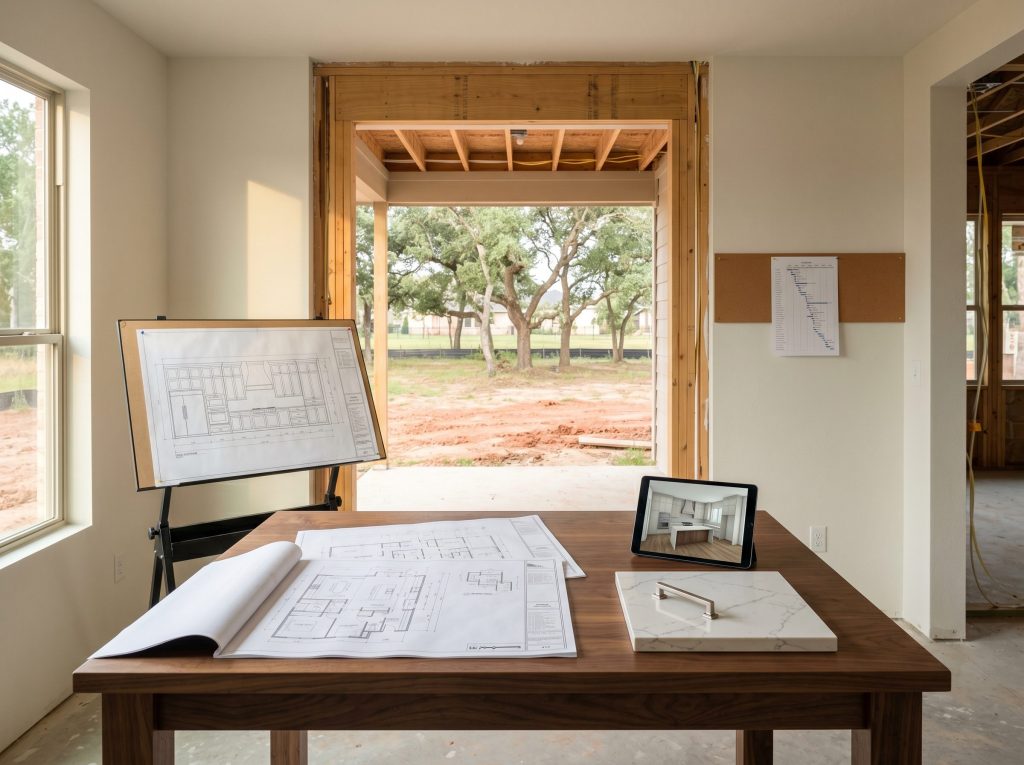
How Does Cost Certainty Differ Between the Two Methods?
Cost certainty is the single largest practical difference between the two delivery methods for a Cypress kitchen remodel. Design-build develops construction-level pricing as part of the design process — by the time the homeowner signs the construction agreement, materials are specified, trades are engaged, and the budget reflects what will actually be built. Change orders during construction become rare because the major design and engineering decisions were resolved before demolition.
Design-bid-build follows a sequential structure: the designer produces plans, the homeowner bids those plans, and GCs return prices. Competitive bidding incentivizes the lowest initial number, which often excludes allowances for items that surface during construction — induction-range electrical loads, plumbing reroutes for relocated islands, structural reinforcement when load-bearing walls come down. KCB's design-build agreements resolve material selections, electrical panel capacity, and gas-line routing during the design phase, locking the construction price before demolition.
When Does a General Contractor Make Sense for a Cypress Kitchen?
A general contractor is well-suited to a Cypress kitchen project that meets three conditions: the layout stays inside the existing footprint, the scope is primarily cosmetic, and the homeowner has either an existing kitchen designer or accepts the coordination role. A like-for-like cabinet replacement with new countertops, backsplash, and appliances in a Coles Crossing or Fairfield home built in the 2000s can be delivered well by a strong GC working from a designer's specifications.
Where the GC model struggles is in projects involving structural changes, mechanical relocations, code-compliance updates from a 2010-2016 builder-grade kitchen, or any work requiring Harris County permits beyond a basic remodel permit. Handoffs between designer, GC, plumber, electrician, and cabinet shop create coordination gaps that surface as field modifications, schedule slippage, and disputes about scope.
How Do ARB and Harris County Permitting Differ Under Each Method?
Bridgeland's Design Review Committee (DRC), Towne Lake's HOA architectural review, and Harris County permitting all touch a Cypress kitchen remodel at different points — and the delivery method changes who carries that work. Under design-build, Keechi Creek Builders manages every submission: DRC plans for exterior changes (relocated windows, repositioned range vents), HOA review for street-visible modifications, and Harris County electrical, plumbing, and mechanical permits for the interior scope. Submission packages are produced as a natural output of design development, not as a separate workstream.
Under design-bid-build, permit responsibility is sometimes ambiguous. The designer may produce drawings sufficient for HOA submission but not for Harris County permitting; the GC may carry construction permits but expect the homeowner to handle HOA approval; the homeowner may discover late that DRC review takes 4-to-6 weeks and was supposed to happen before construction. For Bridgeland homes — where DRC submissions for range vent relocations, new windows, and expanded patio doors are common — the integrated approach typically saves 3-to-5 weeks. Harris County permitting itself is fast (5-to-10 business days for an interior kitchen permit) when documents are complete.
|
Brandon's Builder Insight In 17 years building in Cypress, I've watched more kitchen projects go sideways from coordination gaps than from any single design or construction mistake. The pattern is consistent: a kitchen designer draws beautiful elevations, a GC bids against incomplete plumbing notes, and three months later we're in someone's Bridgeland kitchen trying to figure out why the island plumbing rough-in doesn't align with the cabinet shop drawing. Design-build closes that gap before demolition. As a Texas A&M engineer, I treat the design phase as engineering — everything's resolved before we frame a wall. |
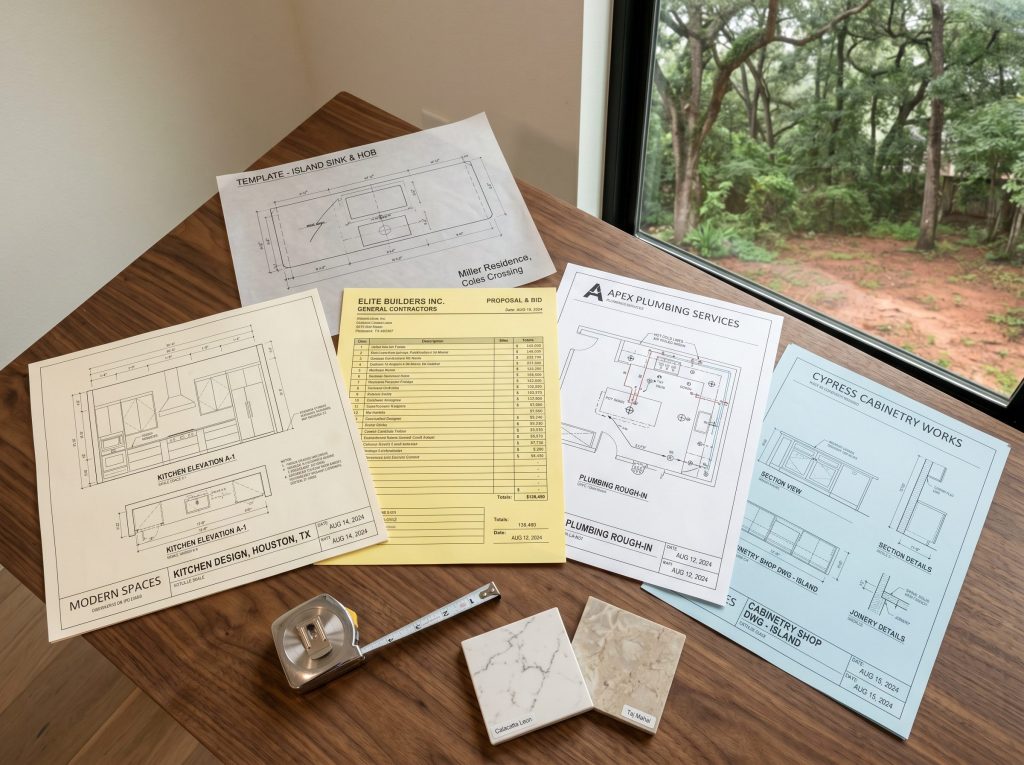
How Do Change Orders Behave Differently?
Change orders are where the design-build vs. general contractor distinction shows up most clearly on the final invoice. Under design-build, change orders during construction are limited to genuinely unforeseen field conditions — previously unknown plumbing behind a wall, a slab substrate issue, a homeowner upgrade after seeing the design come together. Because materials, finishes, and major decisions were locked during design development, the change-order rate on a typical Keechi Creek Builders kitchen project runs in the low single digits as a percentage of contract value.
Under design-bid-build, change orders during construction can run 10% to 20% of the original contract when the bid was structured around the lowest qualified price. A GC competing on price bids the minimum scope inferable from the drawings, assuming anything ambiguous becomes a change. The designer, no longer financially involved, has no incentive to clarify ambiguities. The homeowner arbitrates disputes between designer intent and GC interpretation at change-order pricing. The structural advantage of design-build is that the firm that designs the project is the firm that builds it.
|
Actionable Tip Before signing any contract — design-build or GC — ask for a written list of every long-lead item in the project (custom cabinetry, specialty appliances, imported stone) with quoted lead times. Have the firm explain when each item is ordered relative to the construction start. A serious design-build firm orders cabinets during design development; a GC working from incomplete drawings often orders cabinets two months into construction. That single answer reveals how the calendar will actually unfold. |
What About Timeline Compression?
A common misconception is that design-build adds time because the design phase happens before construction begins. The opposite is true for any project of meaningful scope. Design-build compresses the overall calendar by overlapping procurement with late-stage design, ordering long-lead items (custom cabinetry, specialty appliances, imported quartzite slabs) during design development rather than after construction starts, and resolving permit submissions in parallel with material procurement.
A typical KCB luxury kitchen runs 16-to-20 weeks from design through final walkthrough versus 24-to-32 weeks under design-bid-build because of sequential handoffs: design, bidding, contract negotiation, procurement-after-signing, construction, and split-accountability punch list. For Cypress homeowners targeting a specific date — holiday entertaining, a milestone, a guest visit — the calendar predictability of design-build typically outweighs other considerations.
Comparing the Two Delivery Methods at a Glance
|
Dimension |
Design-Build |
General Contractor (Design-Bid-Build) |
|
Contracts |
One agreement covering design + construction |
Two or more — designer contract, GC contract, sometimes cabinet contract |
|
Cost certainty |
Established during design development |
Established at bid, but exposed to change orders |
|
Single point of accountability |
Yes — one project manager |
No — distributed across designer, GC, trades |
|
ARB / DRC submission |
Handled by firm as part of design |
Often ambiguous; sometimes homeowner's job |
|
Harris County permitting |
Handled by firm |
Usually GC, but documents may be incomplete |
|
Change-order rate (typical) |
Low single digits % |
10-20% common |
|
Timeline (luxury 12-week build) |
16-20 weeks total |
24-32 weeks total |
|
Best fit |
Structural scope, full remodels, MPC homes |
Cosmetic refresh, existing footprint, simple scope |
What Should Cypress Homeowners Ask Before Choosing?
Before committing to either path, Cypress homeowners should ask: How structural is the scope? Does the project involve removing walls, relocating mechanical systems, or expanding the footprint? Do exterior changes trigger Bridgeland DRC or Towne Lake HOA review? How much homeowner time is available to coordinate between vendors? For homeowners exploring full design-build at the whole-home scale, see our Cypress custom home builder page; for kitchen-specific work, the Cypress kitchen remodeling overview. The National Kitchen and Bath Association (NKBA) maintains industry standards KCB applies to every project. Visit the Keechi Creek Builders homepage to review the full scope of services.
Frequently Asked Questions
What is a design-build kitchen remodel and how is it different from hiring a contractor?
A design-build kitchen remodel integrates design services, engineering, material specification, permitting, and construction under one contract with one firm. A general contractor (GC) executes drawings produced by a separately contracted designer. The practical difference is single-point accountability: design-build gives the Cypress homeowner one project manager from concept through final walkthrough, while the GC route requires the homeowner to coordinate between designer, builder, cabinet shop, and trades.
Is design-build more expensive than hiring a general contractor?
Design-build is typically not more expensive on a total-project basis, though the upfront cost can look higher because design fees are included. The advantage shows up in change-order rate — design-build runs in the low single digits as a percentage of contract value, while design-bid-build projects often see 10-20% in change orders during construction. For a $150,000 Cypress kitchen, that difference can equal $15,000-$30,000 in unbudgeted spend.
Will the design-build model handle Bridgeland DRC or Towne Lake HOA approval?
Yes. A Cypress design-build firm like Keechi Creek Builders handles Architectural Review Board, Bridgeland Design Review Committee, and Towne Lake HOA submissions as part of the design-development phase. The submission packages are produced as a natural output of the design process, eliminating the handoffs that often slow design-bid-build projects when responsibility for HOA approval is ambiguous between the designer, the contractor, and the homeowner.
How long does each delivery method take for a Cypress kitchen remodel?
A typical luxury kitchen remodel runs 16-to-20 weeks under design-build (6 weeks design and procurement, 8-12 weeks construction, 1-2 weeks completion) versus 24-to-32 weeks under design-bid-build because of sequential handoffs. The compressed schedule reflects parallel workstreams — long-lead cabinetry and appliances are ordered during design development rather than after a construction contract is signed.
Can I use my own kitchen designer with Keechi Creek Builders?
Yes. While KCB is structured as a design-build firm, the company has executed kitchen projects where homeowners arrived with existing designs from kitchen showrooms or independent designers. In those scenarios KCB operates as a strong general contractor — reviewing drawings, identifying gaps, and managing construction. The cost-certainty advantages are reduced compared to fully integrated design-build, but accountability for construction quality and permit compliance remains with KCB.
Choosing the Delivery Method That Matches Your Cypress Kitchen Project
The design-build vs. general contractor decision is fundamentally about who carries integration risk on a Cypress kitchen remodel — the firm, or the homeowner. For structural scope, master-planned-community ARB submissions, and timeline-sensitive projects, design-build removes the coordination tax. For cosmetic refreshes with existing design work in hand, a strong general contractor can deliver well. Keechi Creek Builders has navigated Harris County permitting and Bridgeland DRC submissions for 17+ years across Bridgeland, Towne Lake, Canyon Lakes West, Dunham Pointe, and Coles Crossing.
Call (281) 914-4951 to talk through your Cypress kitchen project with Brandon directly, or send us a message through our contact page at https://www.keechicreekbuilderstx.com/contact-us/ — we'll get back to you within 24 hours to start the conversation.