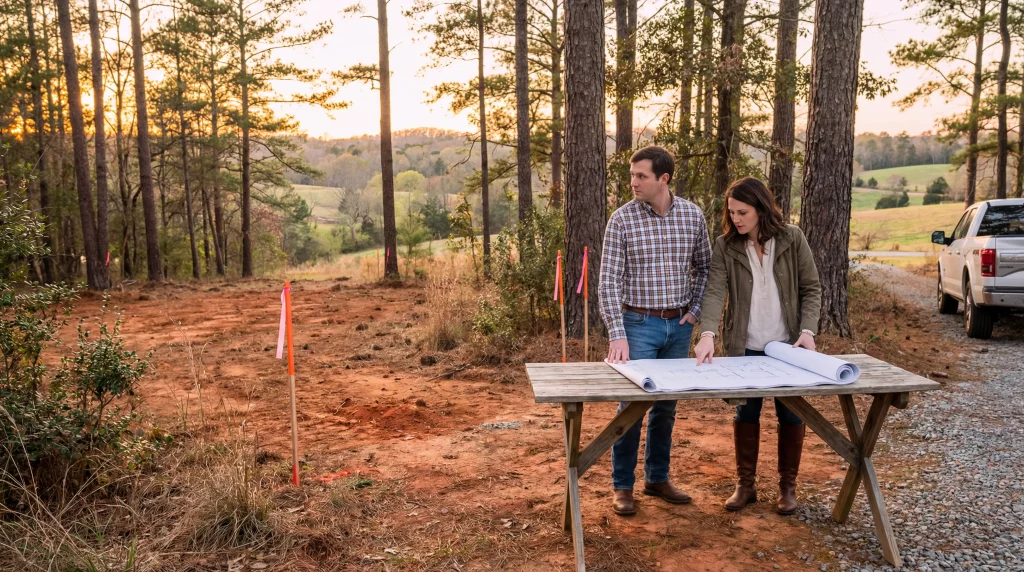
You've found the perfect piece of land in Magnolia. Trees you actually want to keep, enough space for the workshop you've always wanted, and that view of the Texas countryside that made you stop scrolling through listings. Now comes the real question: how do you turn this acreage into the custom home you've been imagining?
Building on your own lot in Magnolia, Texas offers something production homes simply cannot match—complete control over your home's location, design, and relationship to the land. For families drawn to Montgomery County's acreage lifestyle, build on your lot (BOYL) construction transforms raw property into personalized living space while preserving the features that attracted you to the land in the first place.
Build on your lot homes in Magnolia allow homeowners to construct custom residences on land they already own or plan to purchase, working with a custom home builder who manages everything from soil testing and foundation engineering to Montgomery County permitting and final construction. This approach differs fundamentally from buying in a master-planned community, where lot selection is limited and home designs must conform to developer templates.
Build on your lot construction means hiring a custom home builder to design and construct a home on property you own, rather than purchasing a completed home or building within a developer's predetermined community. For Magnolia families, this approach unlocks acreage opportunities unavailable in typical subdivisions.
Here's the thing about Magnolia real estate that drives this demand: the area offers some of Montgomery County's last remaining large lots within reasonable commuting distance of The Woodlands and Houston. Families want that two-acre, five-acre, or ten-acre spread—the space for horses, workshops, or simply privacy from neighbors. Production builders don't serve this market. They need density to make their business model work.
The BOYL model flips the traditional homebuying sequence. Instead of choosing from available inventory, you start with land that matches your lifestyle vision, then build a home designed specifically for that property's characteristics. This means accounting for topography, mature tree preservation, views, and the practical realities of Houston's challenging soil conditions.
According to NewHomeSource, over 137 builders in the Magnolia area offer build on your lot services, though quality and specialization vary dramatically. The critical distinction lies between builders who simply construct homes on client-owned property versus those who understand the technical complexities specific to Montgomery County acreage development.
Building on your lot in Magnolia follows a structured sequence that differs significantly from purchasing new construction in a subdivision. Each step addresses challenges unique to acreage development in Montgomery County's soil and regulatory environment.
Step 1: Land Evaluation and Feasibility Analysis. Before any design work begins, your builder should assess whether the lot can support your intended home. This includes reviewing deed restrictions, verifying utility access routes, and identifying potential obstacles like flood zones or protected wetlands. Why does this matter so much? We've seen families purchase "perfect" lots only to discover easement restrictions that prevent building where they intended.
Step 2: Geotechnical Soil Testing. Houston's expansive clay soils require professional soil analysis before foundation design. A geotechnical engineer collects soil samples at multiple depths, analyzes plasticity index and moisture content, then recommends appropriate foundation specifications. This $1,500-$3,000 investment prevents the $50,000+ foundation repairs common when builders skip this step.
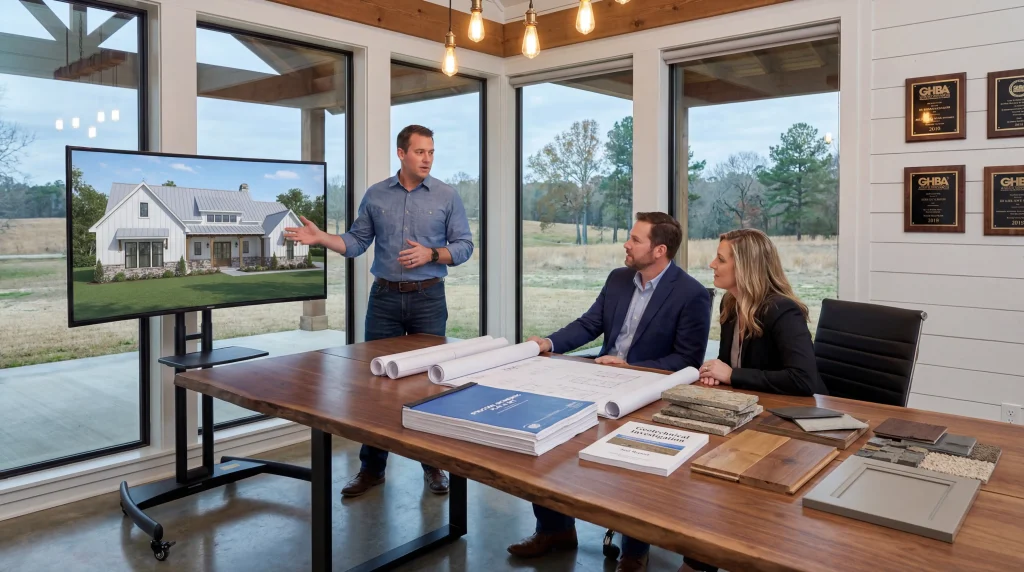
Step 3: Custom Home Design and Engineering. With soil data in hand, your design team creates architectural plans specifically suited to your lot's characteristics and your family's requirements. This phase includes 3D visualization, structural engineering calculations, and energy modeling.
| Build Phase | Typical Duration | Key Deliverables |
|---|---|---|
| Site Evaluation | 1-2 weeks | Feasibility report, restriction review |
| Soil Testing | 2-3 weeks | Geotechnical report, foundation specs |
| Design & Engineering | 6-10 weeks | Architectural plans, 3D renderings |
| Permitting | 2-6 weeks | Building permit, septic permit |
| Site Preparation | 2-4 weeks | Clearing, grading, utility installation |
| Construction | 10-14 months | Completed custom home |
Step 4: Permitting and Regulatory Approval. Montgomery County and City of Magnolia have different permit requirements depending on your lot's jurisdiction. Properties within Magnolia city limits face stricter plan review; unincorporated county lots move faster but require Montgomery County OSSF (septic) permits. HOA approval in communities like High Meadow Ranch adds another 3-6 weeks.
Step 5: Site Preparation and Infrastructure. Acreage lots need more than just clearing. This phase includes septic system installation, water well drilling (typically 250-350 feet in this region), driveway culvert permits, electrical service installation, and grading for proper drainage—all before foundation work begins.
Step 6: Foundation and Construction. Finally, actual homebuilding starts with a foundation engineered for your specific soil conditions. The construction timeline runs 10-14 months for most Magnolia custom homes, with regular client communication and milestone inspections throughout.
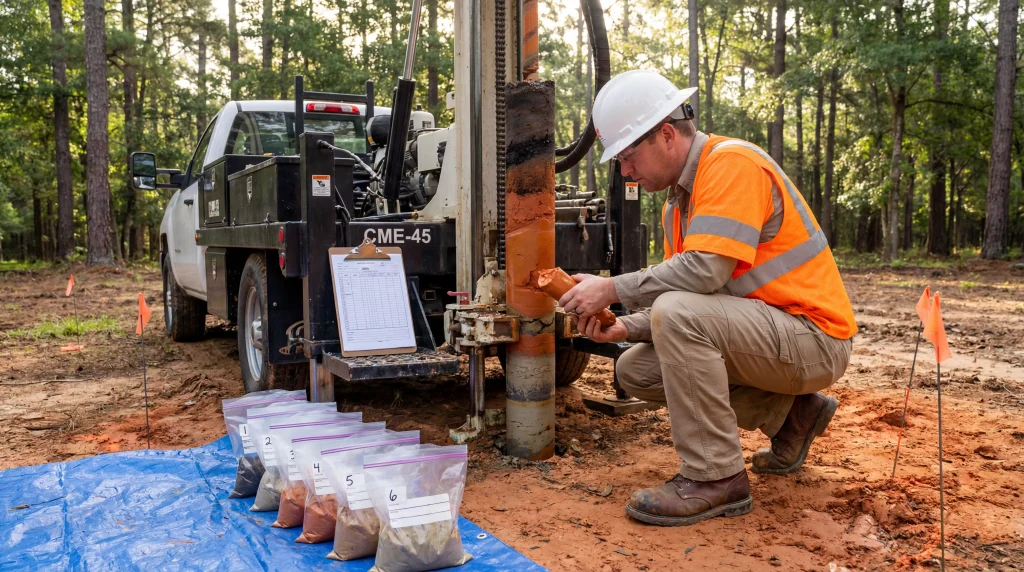
Site preparation represents the most frequently underestimated aspect of build on your lot projects in Magnolia. Families budgeting for a custom home often calculate construction costs without accounting for the infrastructure that subdivision developers typically handle.
Let's be honest about what acreage development actually costs. A $400,000 construction budget can easily become $475,000 once you add septic systems, water wells, and land clearing. Understanding these costs upfront prevents the budget shock that derails projects mid-stream.
Septic System Installation. Most Magnolia acreage properties fall outside municipal sewer service areas, requiring on-site sewage facilities. The Texas Commission on Environmental Quality (TCEQ) regulates septic systems statewide, while Montgomery County OSSF handles local permitting and inspections. Standard aerobic systems run $8,000-$15,000 depending on soil percolation rates and household size.
Water Well Drilling. Without municipal water access, you'll need a private well. Magnolia-area wells typically reach 250-350 feet to tap the Jasper Aquifer, costing $10,000-$20,000 including pump, pressure tank, and water treatment systems. Well permit applications through Montgomery County Groundwater Conservation District add 2-4 weeks to your timeline.
Houston Clay Soil Challenges. This is where most builders fail their clients. Montgomery County sits on expansive clay formations that swell when wet and shrink during drought, creating the foundation movement that cracks walls, sticks doors, and damages structures. The U.S. Geological Survey classifies these soils as "high shrink-swell potential"—a technical designation that demands engineer-designed foundations rather than standard construction approaches.
Proper foundation engineering for Houston clay includes post-tensioned cable reinforcement, appropriate pier depth based on soil reports, drainage planning to manage moisture levels around the foundation, and sometimes structural root barriers to prevent tree-related soil moisture changes. An engineer-founded custom home builder like Keechi Creek Builders brings this technical expertise to every project, designing foundations specifically for each lot's geotechnical conditions rather than applying one-size-fits-all specifications.
The traditional approach to custom home construction separates design from construction: hire an architect, finalize plans, then bid the project to builders. For build on your lot projects in Magnolia, this separation creates friction at every handoff—and those friction points cost money.
Design-build construction integrates architectural design and construction under a single contract, providing single-point accountability that eliminates the coordination failures responsible for 15-20% cost overruns in traditional architect-builder models. When one firm owns both design and construction responsibility, problems get solved rather than blamed.
What does this actually mean for your project? Consider the typical scenario when design and construction are separated. Your architect designs a beautiful home without consulting construction cost data. You love the design. Then bids come in 30% over budget. Now you're choosing between expensive redesigns, value engineering that compromises your vision, or walking away from months of work.
Design-build prevents this by integrating cost awareness into design decisions from day one. When Brandon Lynch's team at Keechi Creek Builders designs a Magnolia custom home, constructability and budget implications inform every architectural choice. The result? Fewer surprises, faster timelines, and designs that actually get built as intended.
| Traditional Model | Design-Build Model |
|---|---|
| Separate contracts with architect and builder | Single contract, single accountability |
| Design completed before construction input | Construction expertise informs design |
| Budget surprises during bidding | Real-time cost feedback during design |
| Coordination conflicts between firms | Integrated team communication |
| 15-20% average change order costs | Minimized mid-construction changes |
| Extended timeline from sequential handoffs | Compressed schedule through parallel work |
For Magnolia acreage projects specifically, design-build firms can conduct site feasibility analysis, soil testing coordination, and preliminary design concurrently—shaving weeks from your overall timeline. When you're paying rent or mortgage on your current home while waiting for your custom home, those weeks translate directly to dollars.
Montgomery County's regulatory environment creates specific requirements that differ from Houston or other Texas jurisdictions. Understanding these expectations before starting your build on your lot project prevents timeline delays and budget surprises.
Permitting Jurisdiction Matters. Your lot's location determines which entity reviews and approves your building permit. Properties within Magnolia city limits go through City of Magnolia Planning & Development, which adopted the 2021 International Residential Code and conducts comprehensive plan review. Unincorporated Montgomery County properties—the majority of acreage lots—file with the County Permit Office under less restrictive review but still require OSSF septic permits, floodplain permits if applicable, and driveway culvert permits from the Precinct Commissioner's office.
Sound complicated? It can be. But here's the advantage of working with an established Magnolia custom home builder: 17+ years of navigating these offices builds relationships that accelerate approvals. Keechi Creek Builders has guided hundreds of families through Montgomery County's permitting process, knowing which inspectors prefer which documentation formats and how to resolve common plan review objections before they become delays.
HOA Navigation in Magnolia Communities. Building in deed-restricted communities like High Meadow Ranch, Audubon, or Thousand Oaks adds Architectural Review Committee (ARC) approval to your timeline. These committees review exterior materials, colors, roof pitches, and setbacks against community design standards. Allow 3-6 weeks for ARC review, and expect revision requests on initial submissions.
Timeline Reality Check. From initial consultation through certificate of occupancy, most Magnolia build on your lot projects take 14-18 months total. The breakdown: 3-4 months for pre-construction (design, engineering, permitting), plus 10-14 months for actual construction. Weather, material availability, and inspection scheduling can extend these timelines—another reason why experienced Montgomery County builders outperform newcomers to the market.
Most Magnolia acreage can support custom home construction, but suitability depends on soil conditions, flood zone status, utility access, and deed restrictions. Professional site evaluation identifies potential obstacles before you commit to a property. Your builder should assess soil testing requirements, septic system feasibility, and any easements affecting buildable area. Lots in high-risk flood zones require elevation certificates and may face insurance complications that affect project economics.
Custom home construction in Magnolia typically runs $200-$350 per square foot depending on finishes and complexity, with acreage site preparation adding $15,000-$75,000. A 2,500 square foot custom home might total $550,000-$950,000 including land development costs. Design-build approaches help control costs by integrating budget awareness into design decisions, preventing the expensive mid-construction changes that plague separated architect-builder projects.
Build on your lot projects in Montgomery County require building permits (from either City of Magnolia or County Permit Office depending on jurisdiction), septic system permits from Montgomery County OSSF, electrical permits, and potentially floodplain development permits and driveway culvert permits. Properties in HOA communities need Architectural Review Committee approval before obtaining building permits. An experienced local builder manages all permitting on your behalf, leveraging established relationships with local officials.
Houston's expansive clay soils create foundation movement that damages homes built without proper engineering. These soils swell up to 10% with moisture changes, causing the settling and cracking visible in older area homes. Engineer-designed foundations using post-tensioned cables, appropriate pier depths, and drainage planning prevent these problems. An engineer-founded builder like Keechi Creek Builders specifies foundations based on actual soil reports for each lot, not generic templates that ignore site-specific conditions.
The complete build on your lot process in Magnolia takes 14-18 months from initial consultation through move-in. Pre-construction phases including design, engineering, and permitting require 3-4 months, followed by 10-14 months of construction. Timeline factors include Montgomery County permit processing (2-6 weeks depending on jurisdiction), HOA approval requirements (3-6 weeks in deed-restricted communities), and weather conditions affecting foundation and framing work.
Building on your lot in Magnolia represents one of the most significant investments you'll make—financially and emotionally. The acreage lifestyle you're pursuing deserves a builder who understands both the technical challenges and the personal vision driving your project.
Keechi Creek Builders brings 18+ years of Montgomery County experience to build on your lot projects, with the engineering expertise that Houston's challenging soil conditions demand. Brandon Lynch's Texas A&M engineering background translates to foundation designs that prevent problems rather than react to them—the kind of foresight that protects your investment for decades.
Schedule your lot evaluation consultation to discuss your Magnolia build on your lot project with our team.