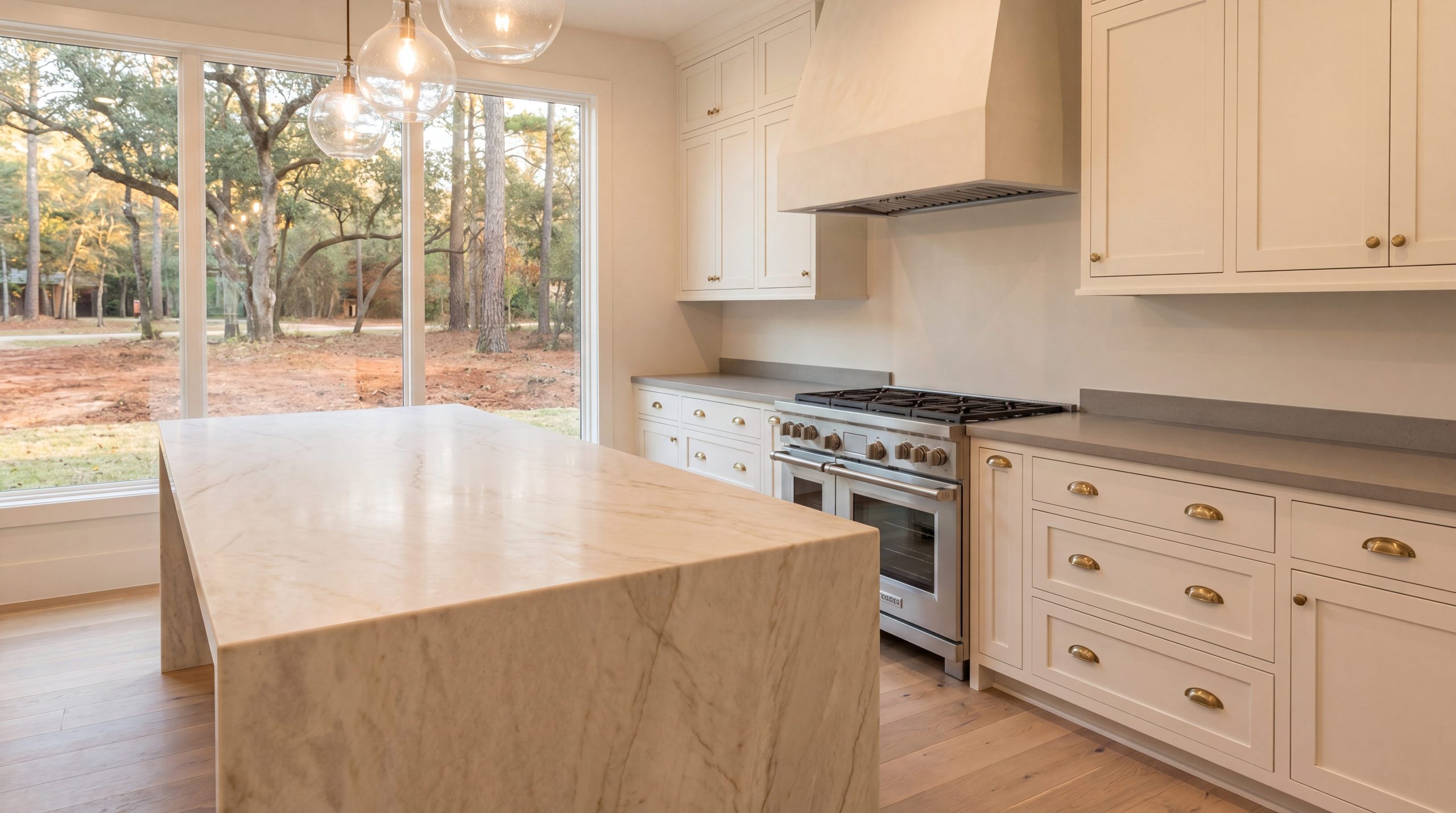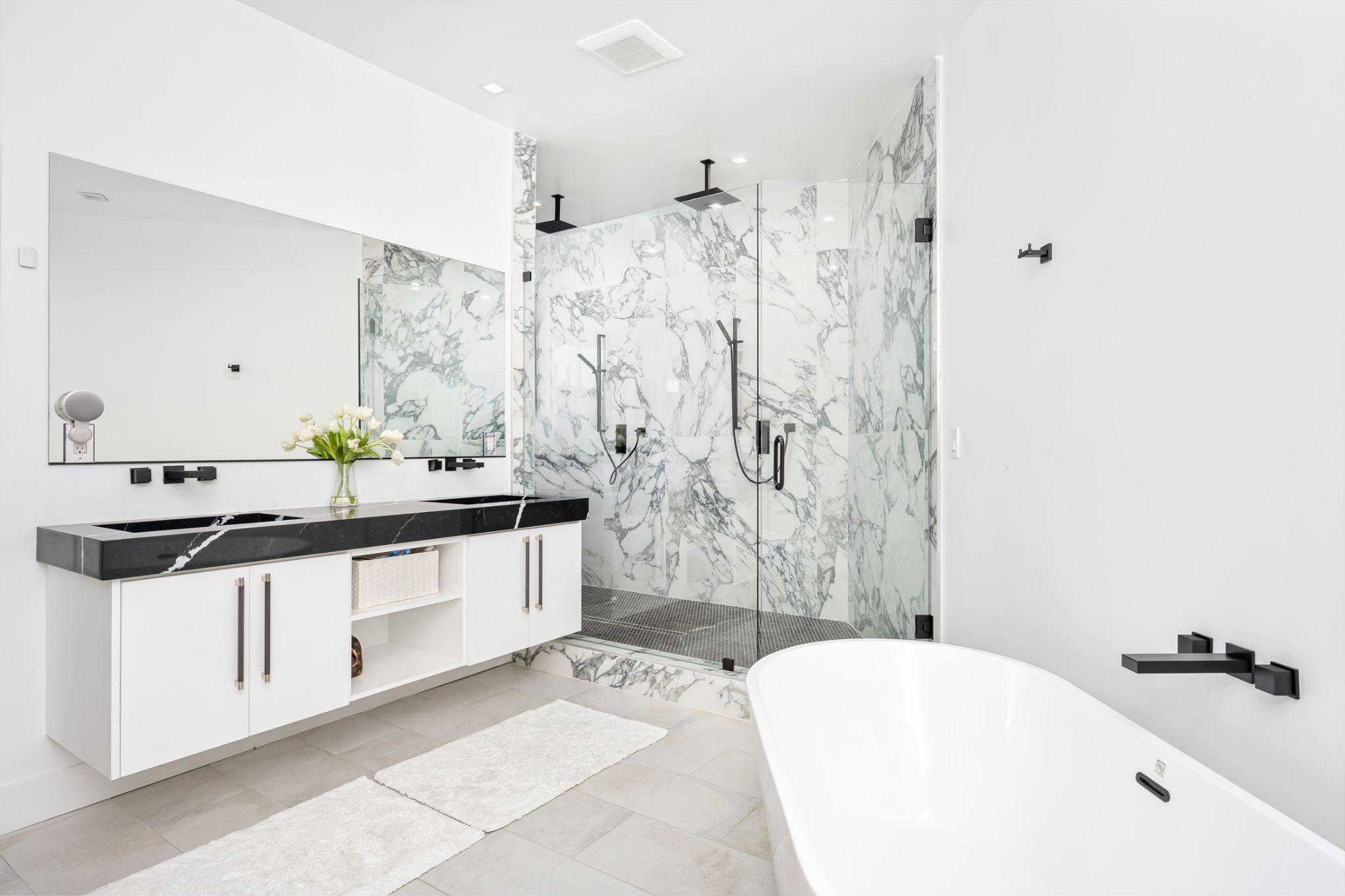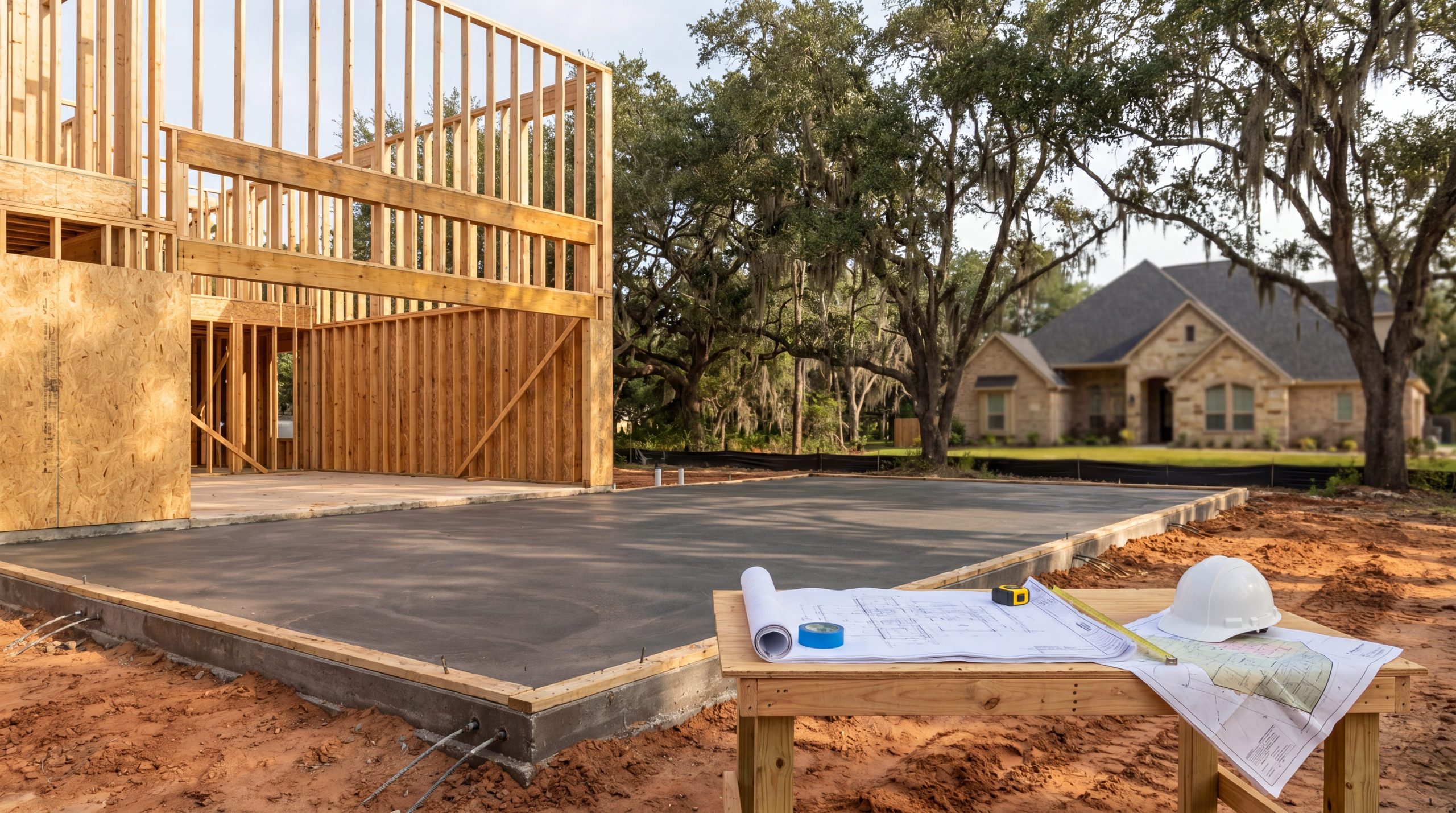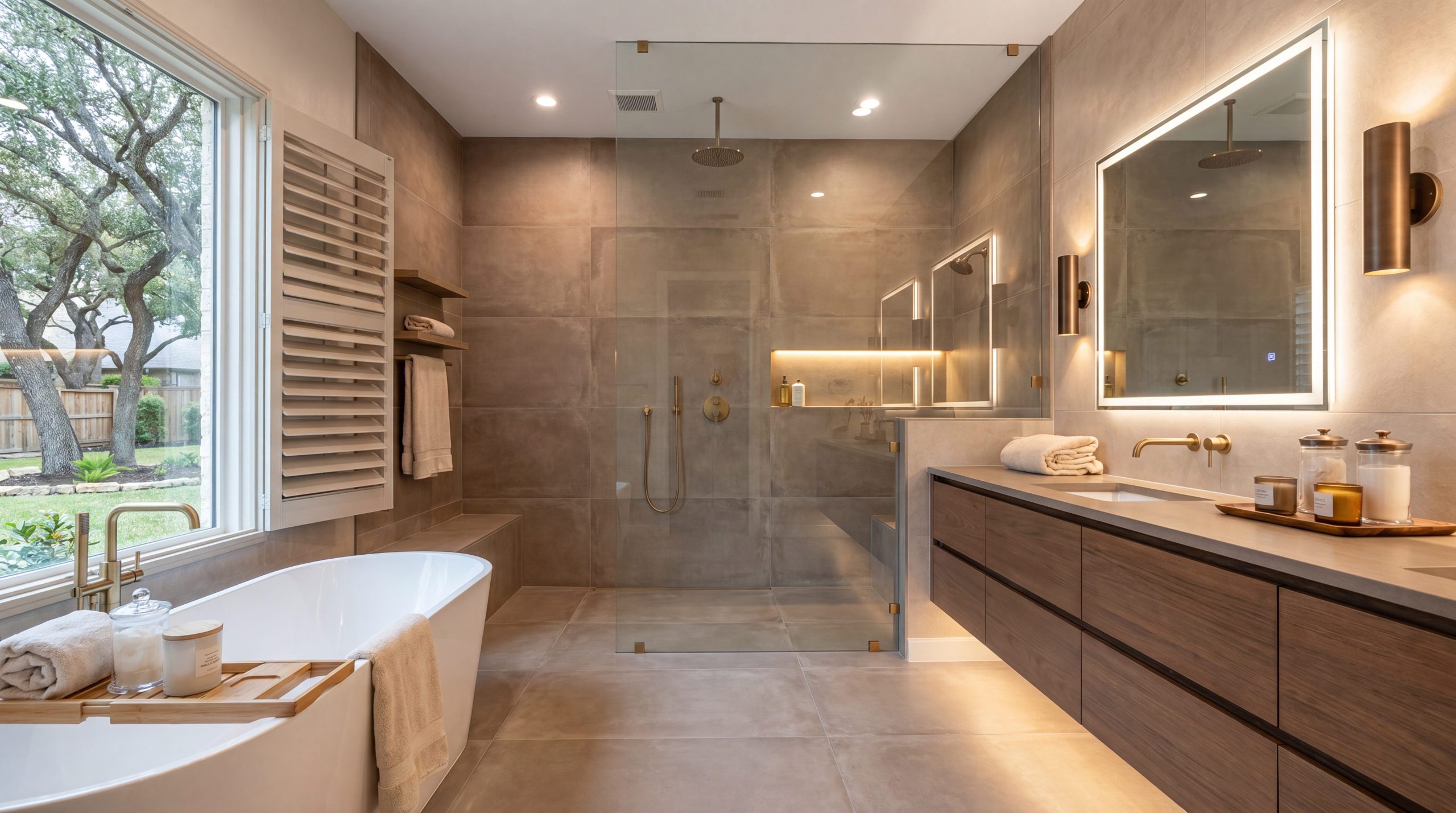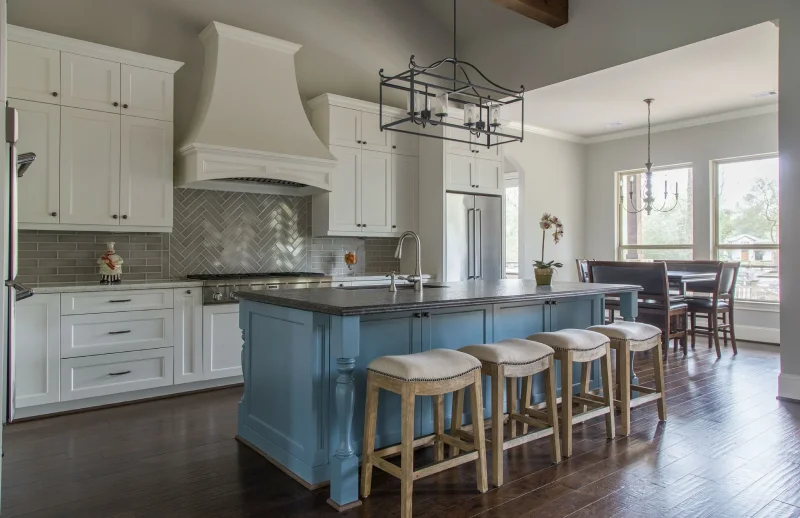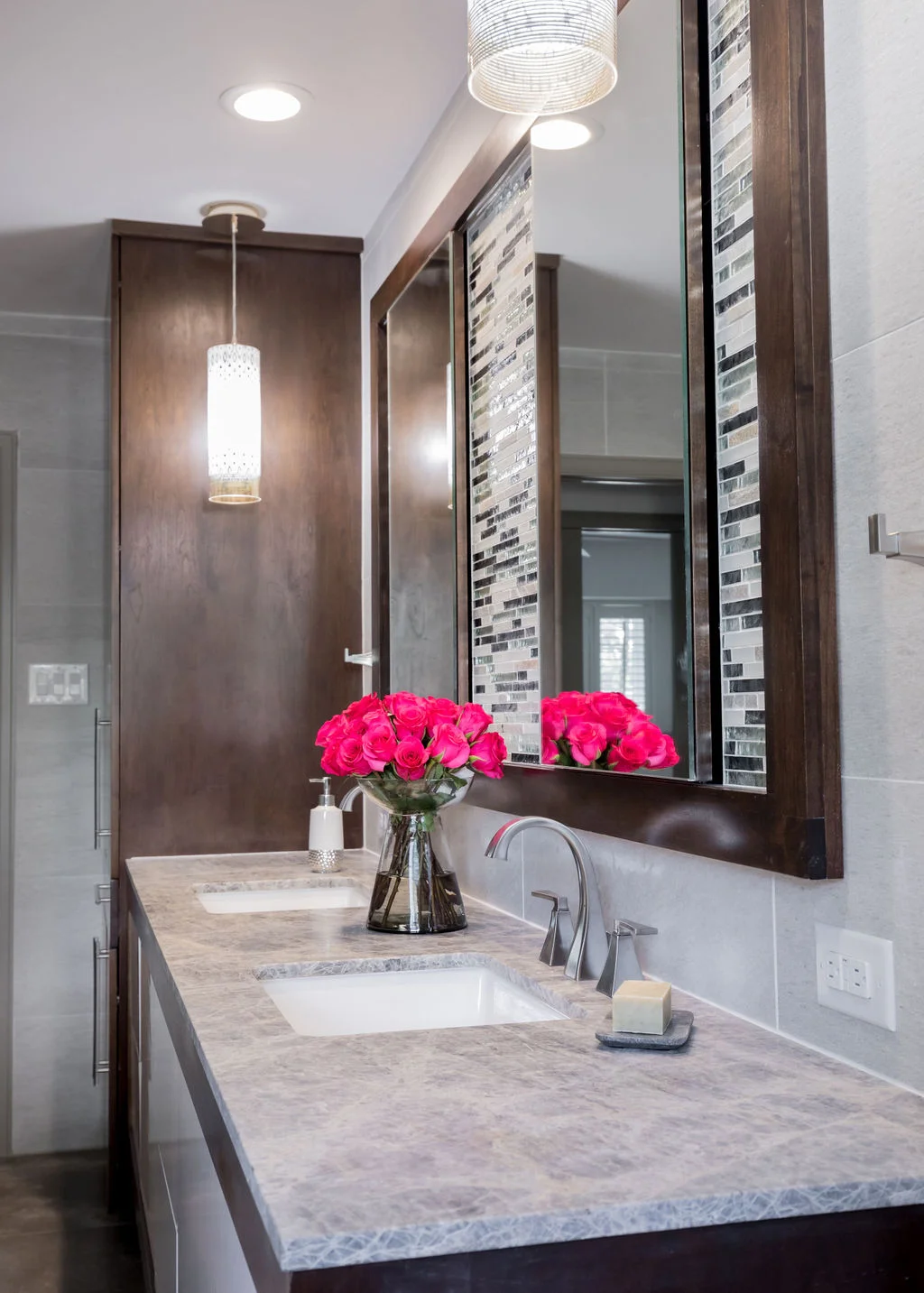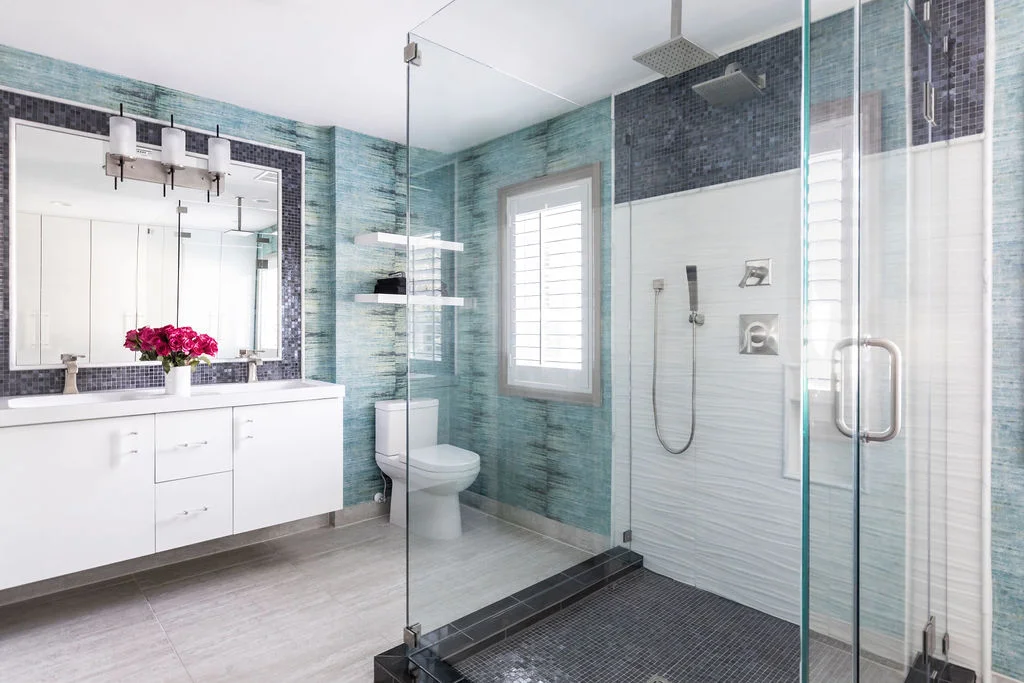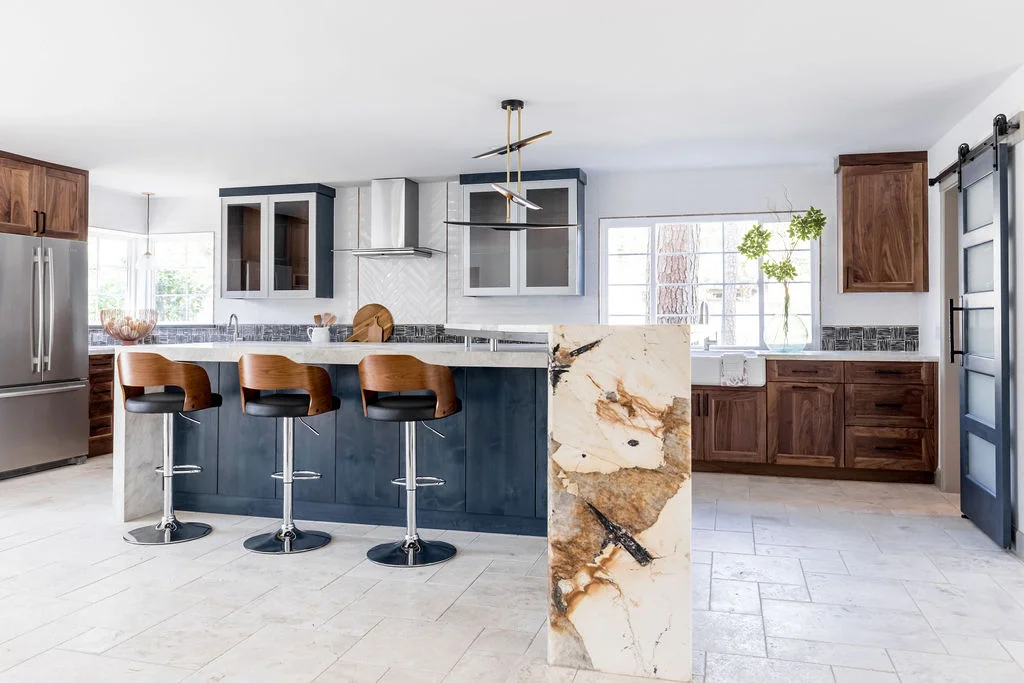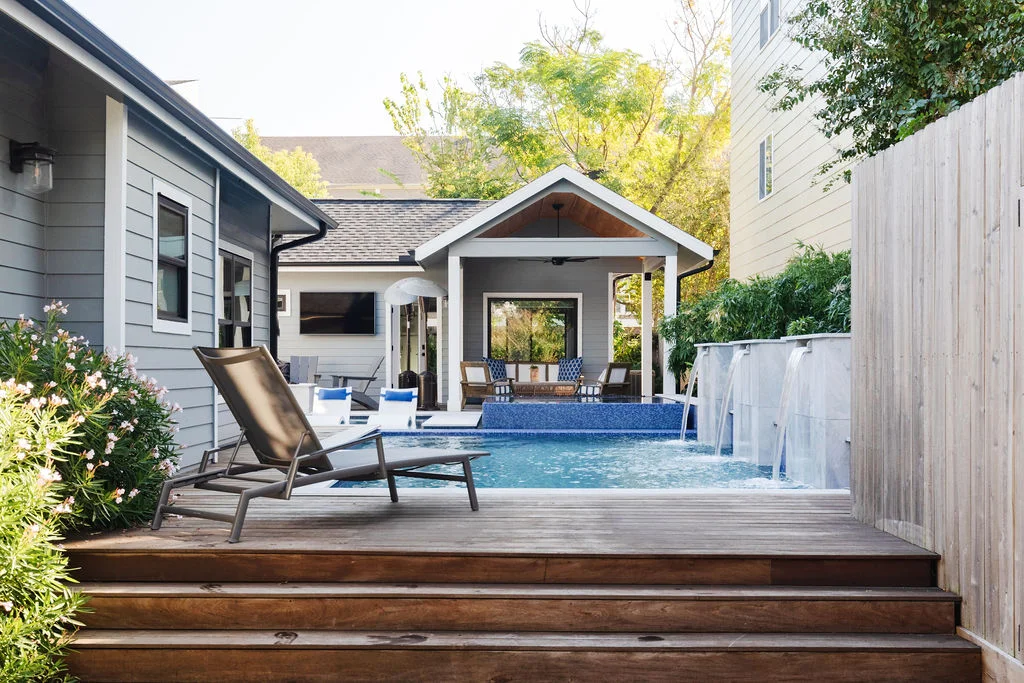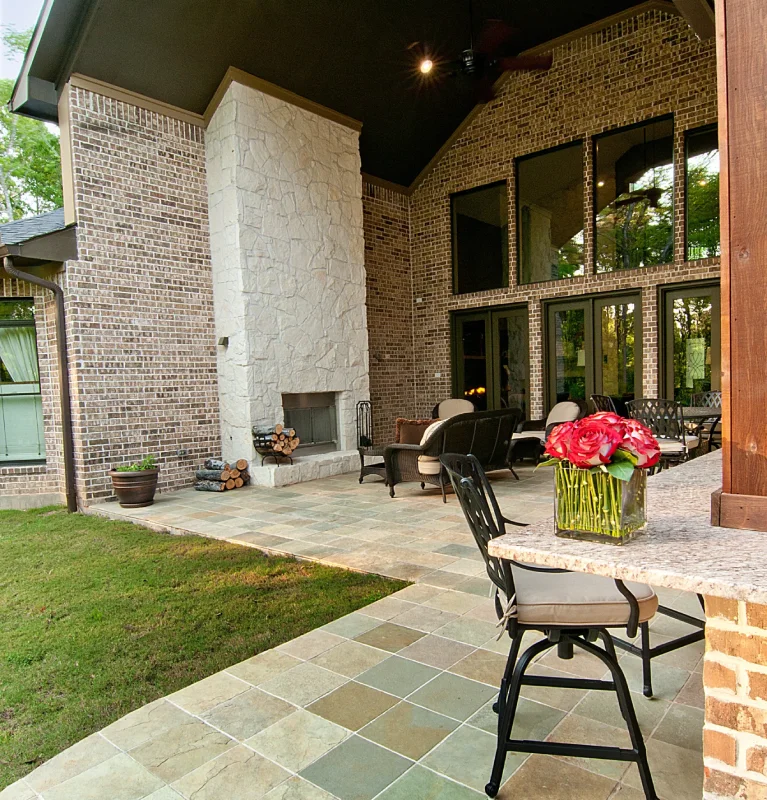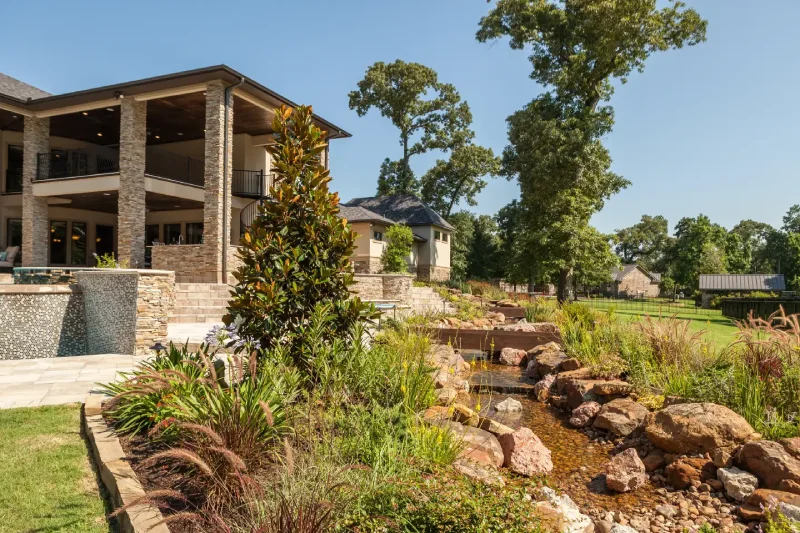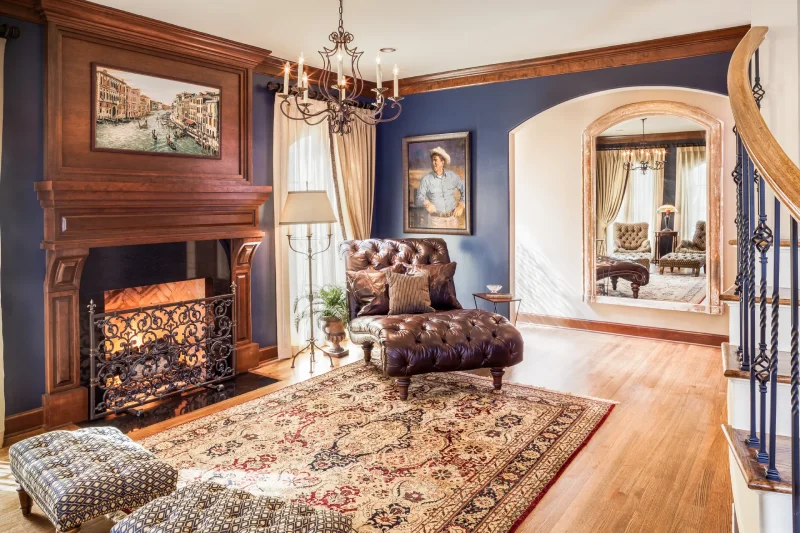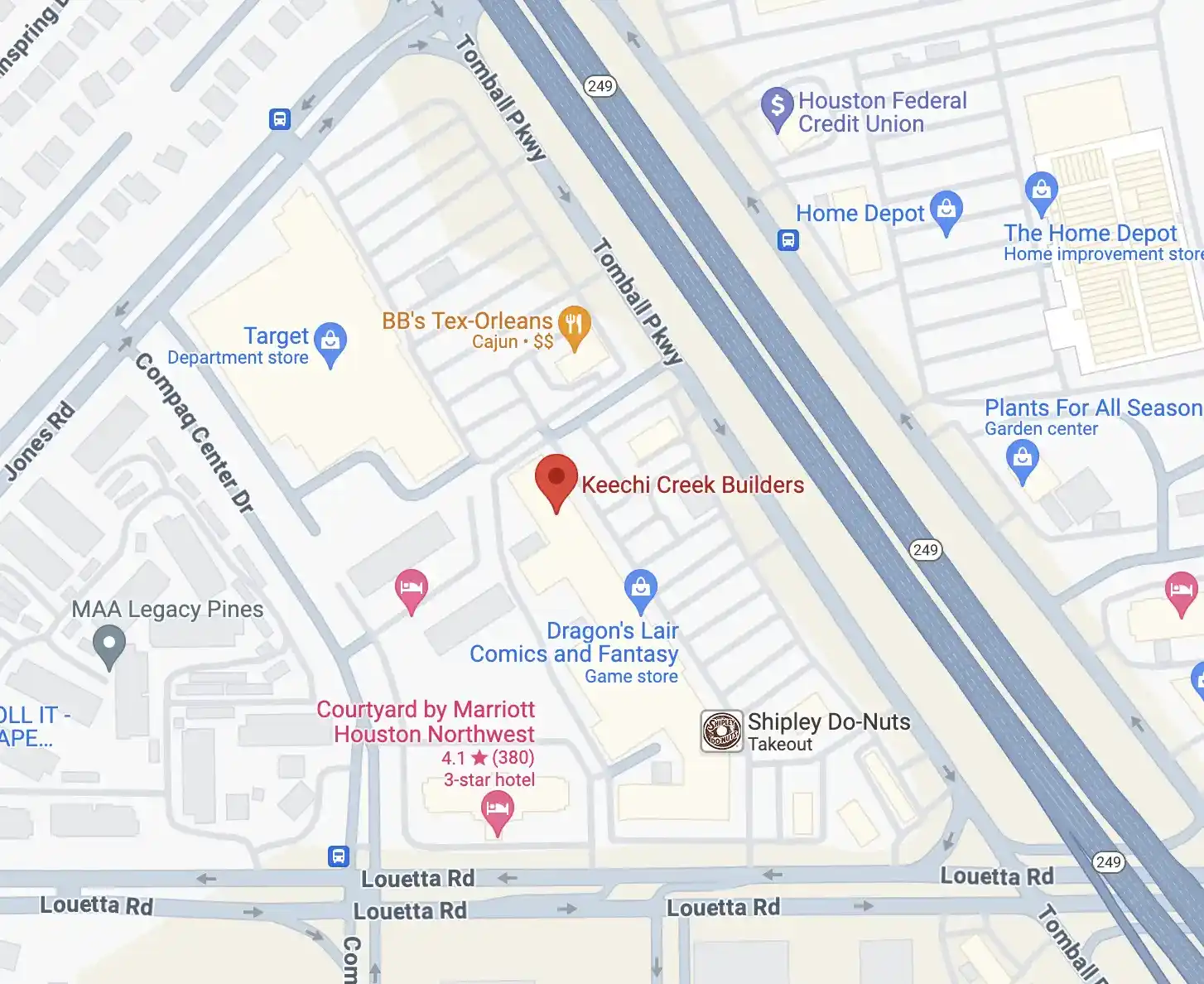
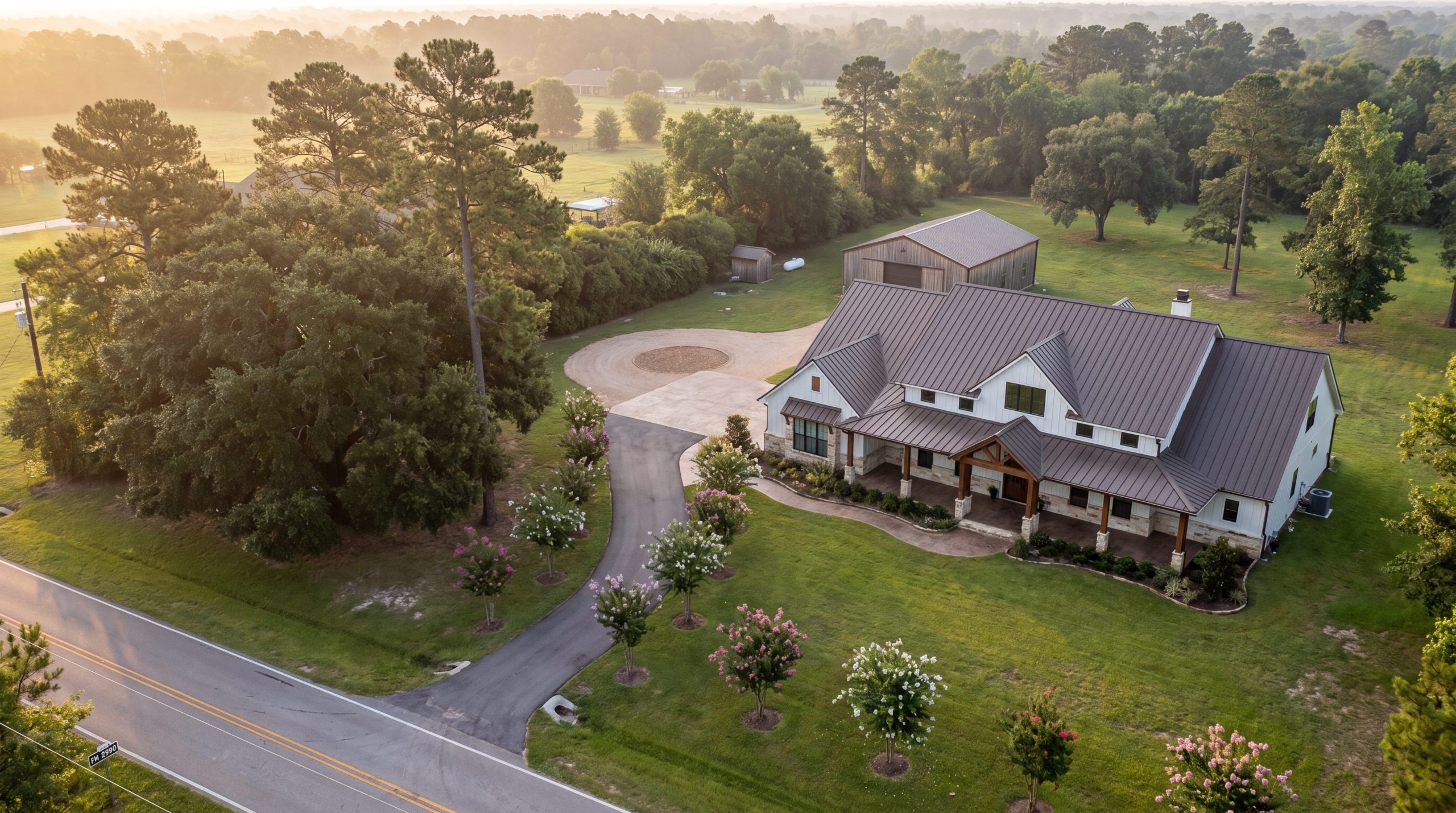
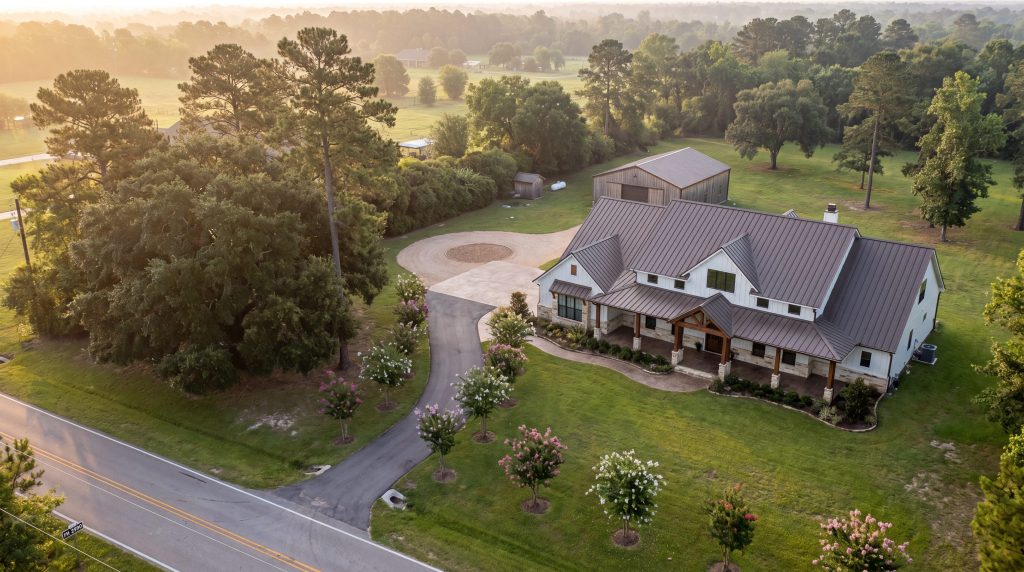
Building on your lot in Tomball, TX means commissioning a custom home on land you already own — typically a 1-to-5-acre acreage tract along the FM 2920 corridor or in unincorporated Harris County. Keechi Creek Builders delivers design-build estate construction with full septic, well, and Tomball ETJ permitting management from soil evaluation through final certificate of occupancy.
Key Takeaways
- Acreage construction in Tomball: Most build-on-your-lot projects sit on 1-to-5-acre tracts in unincorporated Harris County or the Tomball ETJ, with septic systems, well water, and zero HOA architectural review.
- Jurisdictional clarity is the first decision: Whether your land falls inside Tomball city limits, the Tomball ETJ, or unincorporated Harris County determines which permits, inspections, and design standards govern the build.
- Soil and drainage analysis comes before architecture: A geotechnical bore and FEMA flood-zone review on the building pad shape foundation type, septic feasibility, and slab elevation before the first sketch.
- Design-build delivery protects the timeline: Single-contract accountability across surveying, civil engineering, septic and well permitting, vertical construction, and final walkthrough compresses the schedule by months versus the architect-then-bid model.
- Estate construction costs scale with site work: Vertical construction runs $300-$500 per square foot, but driveways, well drilling, septic systems, propane infrastructure, and electrical service drops can add $75,000 to $200,000 in site work alone.
Why Build on Your Lot in Tomball Instead of Buying a Production Home?
Tomball homeowners considering build-on-your-lot construction are typically choosing land first and architecture second. The decision is driven by what production builders cannot offer: meaningful acreage within commuting distance of the Houston energy corridor, the freedom to design around a specific view or tree canopy, and the absence of HOA architectural review that constrains exterior elevations, roof pitch, and material palette.
In nineteen years of building across the Greater Houston area, Keechi Creek Builders has delivered acreage estates in every Tomball context — from quietly upgraded 1.5-acre infill parcels off Hufsmith-Kohrville Road to 5-plus-acre generational compounds in unincorporated Harris County. The reason families choose this path is consistent: they want a home engineered around how they actually live, not the floor plan a production builder optimized for the largest possible buyer pool.
The build-on-your-lot path also unlocks design freedom that gated master-planned communities like Augusta Pines and Northpointe cannot match. There is no architectural review board dictating front elevation symmetry, no roof material restriction, no driveway substrate requirement, no exterior paint palette imposed by a deed restriction. Within the limits of Harris County development standards and any voluntary deed restrictions on the parcel, the design is yours.
How Does Tomball ETJ Permitting Differ From City Limits?
This is the question every build-on-your-lot homeowner needs answered before they finalize a land purchase, because the answer determines which agency reviews the plans and how long the approval cycle runs.
Tomball is an incorporated city in Harris County with municipal limits covering roughly nine square miles. Surrounding the city limits is the Tomball extraterritorial jurisdiction (ETJ), an additional buffer where the city retains certain platting authority but where day-to-day building permits, septic, and well permits are administered through Harris County and the Texas Commission on Environmental Quality. Beyond the ETJ, the land is unincorporated Harris County only.
The practical difference matters. Inside city limits, the City of Tomball Development Services Department issues the building permit and conducts inspections under the 2018 International Residential Code as adopted with local amendments. In the ETJ and unincorporated Harris County, the Harris County Permit Office handles structural inspections, while the on-site sewage facility (OSSF) permit — your septic system — is issued by Harris County Public Health under TCEQ rules. Well permits route through TCEQ directly. Floodplain compliance is reviewed by the Harris County Flood Control District against current FEMA maps.
For a typical Tomball acreage build outside city limits, the permitting timeline runs 8 to 14 weeks from complete-plan submission to permit issuance, with the septic permit usually the longest-lead item because it requires a state-licensed designer to prepare the on-site sewage facility plan and a soil suitability evaluation by a registered professional. Keechi Creek Builders manages this entire packet — the Custom Home Builder Tomball TX team coordinates the surveyor, the geotechnical engineer, the OSSF designer, and the Harris County submission so the homeowner sees a single timeline rather than four parallel processes.
What Do Septic, Well, and MUD Considerations Mean for Acreage Builds?
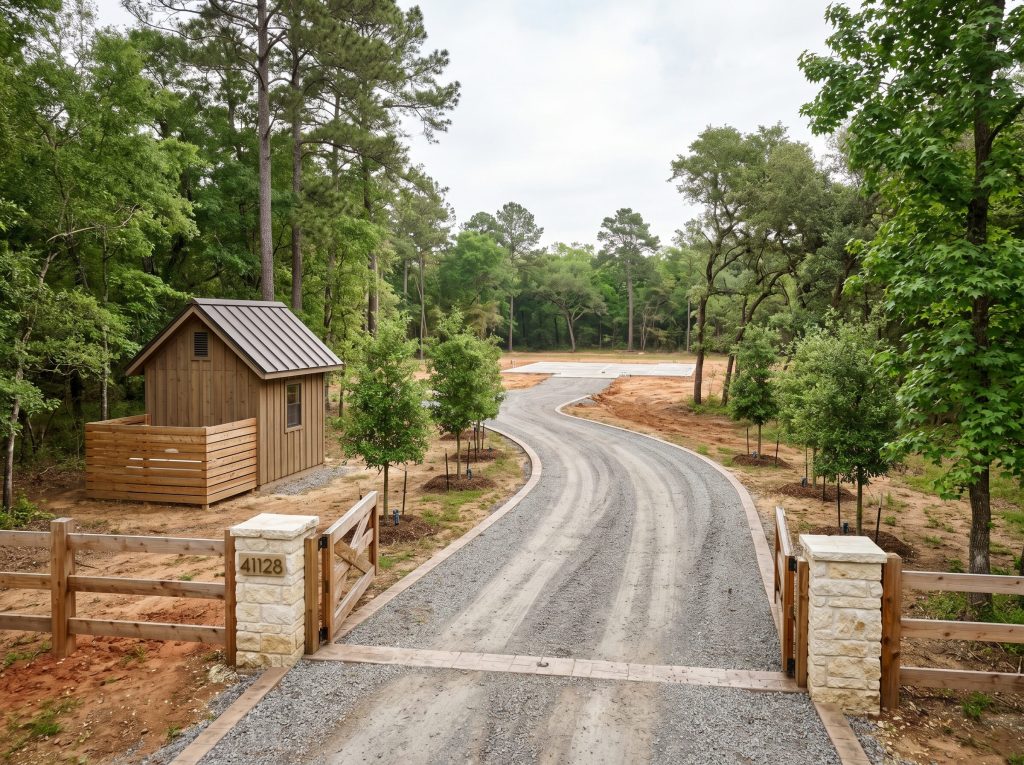
Most build-on-your-lot Tomball parcels sit outside a municipal utility district (MUD) that delivers central water and sewer. That reality changes the engineering — and the budget — in ways production buyers never confront.
Septic system feasibility depends on soil. Harris County Public Health and TCEQ rules require a soil evaluation by a licensed site evaluator before an OSSF permit is approved. The evaluation looks at percolation rates, depth to seasonal high water table, and the presence of restrictive horizons. In the FM 2920 corridor, the prevailing soils are Houston Coastal Prairie clays — heavy, shrink-swell, slow-percolating — which often require an aerobic treatment unit with surface spray distribution rather than a conventional gravity drainfield. Aerobic systems cost $12,000 to $22,000 installed and carry a quarterly maintenance contract; conventional drainfields run $6,500 to $14,000 when soil permits.
Well water systems add another layer of evaluation. TCEQ rules govern minimum setbacks — at least 50 feet from any septic component, 100 feet from any concentrated animal area, 150 feet from a wastewater spray field. A typical Tomball-area residential well drills to 280-400 feet, runs $14,000 to $26,000 with pump, pressure tank, and chlorination equipment, and delivers 8-15 gallons per minute. Water quality testing for arsenic, iron, and total dissolved solids is mandatory and often drives the choice of treatment equipment.
MUD service, when available at the parcel line, simplifies the calculus. Pockets of Tomball acreage lie inside MUD boundaries that deliver central water and sewer to the property edge, eliminating both the well and septic budgets. Confirming MUD status during land due-diligence is a critical step Keechi Creek Builders runs before contract because the difference between MUD-served and self-served acreage swings the infrastructure budget by $40,000 to $80,000.
|
Site Infrastructure |
Self-Served (Typical) |
MUD-Served |
Notes |
|
Septic / sewer |
$12,000-$22,000 aerobic |
Central sewer tap $4,000-$8,000 |
Soil drives self-served system type |
|
Water supply |
$14,000-$26,000 private well |
Central water tap $3,500-$6,500 |
Well includes pump, pressure tank, treatment |
|
Driveway (500 ft) |
$18,000-$45,000 |
$18,000-$45,000 |
Stamped concrete vs. gravel surface |
|
Electric service drop |
$4,500-$15,000 |
$4,500-$15,000 |
Distance from pole to meter base |
|
Propane tank |
$3,800-$6,500 |
Often not needed |
Underground vs. surface installation |
What Does the Build-on-Your-Lot Process Look Like From Lot Purchase to Certificate of Occupancy?
The path from a recently closed land contract to a final certificate of occupancy runs 14 to 22 months in Tomball when the project is delivered design-build with experienced infrastructure management. The sequence below mirrors how Keechi Creek Builders structures every acreage build.
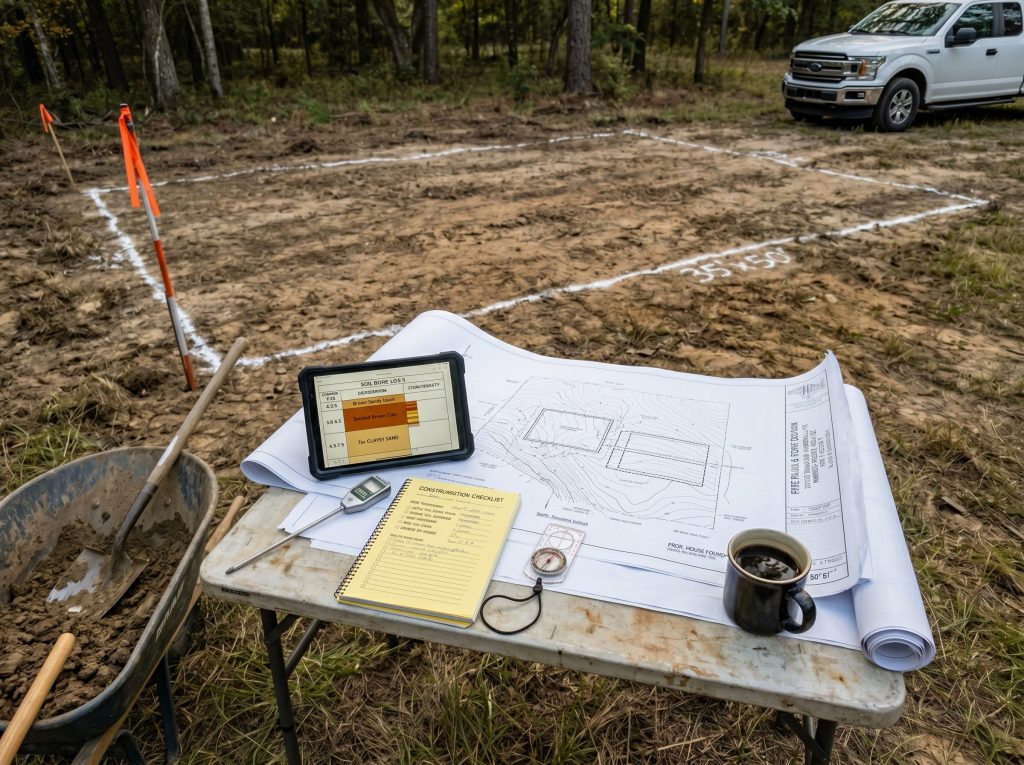
Phase 1, Land Due-Diligence and Soil Evaluation (Weeks 1-6): A boundary survey confirms the metes-and-bounds, identifies easements, and locates any utility encroachments. A geotechnical bore — typically three to five test holes to 15-foot depth — characterizes the bearing soil and confirms foundation type. A FEMA flood-zone determination establishes minimum finished-floor elevation. The soil suitability evaluation for septic feasibility runs in parallel.
Phase 2, Design Development (Weeks 6-18): Schematic floor plans, exterior elevations, and 3D renderings develop in coordination with the homeowner. Material selection, kitchen layout, primary suite configuration, and outdoor living integration all advance together. Civil engineering produces the site plan with driveway, well, septic, and propane locations resolved against TCEQ setbacks. Structural engineering specifies the foundation — typically a post-tension slab on engineered fill for Tomball clay soils.
Phase 3, Permitting and Pre-Construction (Weeks 18-26): The OSSF design goes to Harris County Public Health. The building permit packet — structural plans, energy compliance documentation, septic approval — goes to the Harris County Permit Office. The well permit application files with TCEQ. Pre-construction includes final material confirmations and weekly homeowner meetings to lock the construction documents.
Phase 4, Site Work and Vertical Construction (Weeks 26-66): Driveway base, well drilling, septic installation, electric service drop, and propane tank set happen first. Foundation forming and pour follows once the building pad is stabilized. Framing, mechanical-electrical-plumbing rough, exterior dry-in, interior finishes, and landscaping unfold on a critical-path schedule with weekly progress reviews.
Phase 5, Final Inspections and Certificate of Occupancy (Weeks 66-72): Harris County structural final, TCEQ well clearance, OSSF activation inspection, and the city or county certificate of occupancy clear in sequence. A 60-minute owner orientation transfers operating knowledge — well pump maintenance, aerobic septic system schedule, propane management.
|
Brandon's Builder Insight In nineteen years of building across Harris County, the single most expensive mistake I see acreage buyers make is closing on land before the soil-suitability evaluation is in hand. I have walked away from beautiful FM 2920 parcels where the septic just would not work without a $40,000 mounded surface system the homeowner had no idea was coming. Spend the $2,500 on a soils report before earnest money goes hard — every time, no exceptions, even when the listing agent insists everyone else skips it. |
Where Are the Best Tomball Acreage Communities to Build On?
Several Tomball-area communities and corridors consistently surface in build-on-your-lot conversations. Each carries a distinct character that shapes both the architectural register and the infrastructure budget.
FM 2920 corridor (unincorporated Harris County) is the spine of the Tomball acreage market. Parcels of 1-to-10 acres are scattered between Tomball city limits and the Waller County line, most outside any MUD and most without HOA deed restrictions. This is the freest path — true estate land with full design discretion.
Willowcreek Ranch (gated, deed-restricted) delivers a premium tier with 1-to-3-acre lots inside a private gated community that retains architectural review while preserving acreage character. KCB's recent Willowcreek Ranch custom home guide covers the ARC process in detail; the trade-off is review oversight in exchange for protected long-term resale and curated streetscape consistency.
Lakes of Rosehill and Saddle Creek Forest offer 1-to-2-acre parcels with light deed restrictions, mature trees, and proximity to Tomball ISD schools. These communities suit families who want acreage character with a defined neighborhood structure.
Hufsmith-Kohrville Road and Mueschke Road tributaries carry pockets of 2-to-5-acre acreage with rural character but reasonable proximity to Tomball retail, medical services, and the SH 249 commute. These corridors host most of Keechi Creek Builders' generational estate work.
How Do Tomball Acreage Estates Compare to Master-Planned Custom Builds?
The decision between build-on-your-lot acreage and a custom home inside a master-planned community like Gleannloch Farms or Augusta Pines reduces to four trade-offs.
Design freedom favors acreage. No ARC submittal, no material restriction, no setback compromise beyond Harris County standards.
Infrastructure burden favors master-planned. Central water, central sewer, paved access, and underground electric eliminate $60,000-$120,000 of self-served infrastructure cost.
Long-term resale liquidity favors master-planned. A custom home inside a known community has a deeper buyer pool than a one-of-one estate on FM 2920 acreage.
Lifestyle character favors acreage. Equestrian capability, workshop barns, private orchards, and meaningful privacy are functionally impossible inside a 60-foot lot in a master-planned community.
Many Keechi Creek Builders clients arrive having already decided which trade-off matters most. The build-on-your-lot path is correct when design freedom and lifestyle character outweigh the infrastructure premium — which is increasingly common for families relocating from suburban tract homes into permanent generational residences. Homeowners weighing a renovation path instead can review the Tomball kitchen remodeling approach that preserves an existing community connection while transforming the daily-living spaces.
|
Actionable Tip Before you submit an offer on Tomball acreage, request the seller's most recent FEMA flood-zone determination, any prior soil-suitability evaluation, and written confirmation of MUD status from the parcel address. Three documents, zero cost, and they will tell you within a single afternoon whether the lot is buildable as you imagine it — or whether the infrastructure budget will rewrite your entire pro forma. |
What Architectural Styles Work Best for Tomball Acreage Estates?
The architectural register that performs best on Tomball acreage reads as transitional — a vocabulary that respects the East Texas Pineywoods context while incorporating modern proportions and material clarity. The design-build delivery method integrates this register from the first sketch onward, since the team specifying limestone wainscoting is the same team installing it.
The dominant successful styles are modern farmhouse with standing-seam metal roofs, Texas Hill Country transitional with limestone wainscoting and cedar accents, and low-country traditional with deep wrap-around porches and elevated foundations. Each handles the Houston-area climate honestly: deep eaves for solar control, generous porch depths for outdoor living through the humid spring and fall, and roof pitches that shed the tropical rainfall the Greater Houston area receives each year.
Material palettes that age gracefully in this corridor include reclaimed Texas limestone, board-and-batten Hardie siding, cedar accents at gable returns and porch columns, dark bronze or matte black window frames, and standing-seam metal roofing in dark bronze or weathered zinc. Stucco and vinyl perform poorly in this corridor because of humidity, hail exposure, and the rural-aesthetic mismatch — Keechi Creek Builders steers acreage clients firmly toward limestone, fiber-cement, and metal as the durable, low-maintenance palette. Industry guidance from the National Association of Home Builders supports this palette as the long-term-durable specification for the Gulf Coast region.
Frequently Asked Questions
How much does it cost to build a custom home on your lot in Tomball, TX?
A turnkey custom build on Tomball acreage typically runs $300 to $500 per square foot for vertical construction, plus $75,000 to $200,000 in site work depending on driveway length, septic complexity, well depth, propane installation, and electrical service distance. For a 3,800-square-foot estate on a 2-acre lot, expect a complete budget of $1.4 million to $2.3 million when self-served infrastructure is required.
Do I need to own the land before contacting Keechi Creek Builders?
No. Many Keechi Creek Builders clients engage during land due-diligence — before earnest money goes hard — specifically to evaluate the parcel against the home they want to build. Pre-contract soils evaluations, FEMA flood-zone determinations, MUD confirmations, and septic feasibility studies are exactly the work that protects the land purchase from costly surprises.
What is the Tomball ETJ and why does it matter for permitting?
The Tomball extraterritorial jurisdiction is the buffer zone outside city limits where the city retains platting authority but where day-to-day building, septic, and well permits route through Harris County, Harris County Public Health, and TCEQ rather than the City of Tomball. The jurisdictional difference affects permit timing, inspection sequencing, and which codes govern construction.
How long does it take to build a custom home on Tomball acreage?
Plan for 14 to 22 months from land closing to certificate of occupancy when the project is delivered design-build with experienced infrastructure management. Surveying and soils evaluation run 4-6 weeks, design development 10-14 weeks, permitting and pre-construction 6-8 weeks, site work and vertical construction 32-40 weeks, and final inspections 4-6 weeks.
Can Keechi Creek Builders handle the septic and well permits?
Yes. Keechi Creek Builders coordinates the licensed OSSF designer for the septic permit through Harris County Public Health, the TCEQ well permit application, and the geotechnical evaluation that supports both. The design-build delivery model means the homeowner signs one contract and receives one critical-path schedule covering surveying, civil engineering, OSSF, well, building permit, and vertical construction together.
Do you need a soil test before building on Tomball acreage?
Yes — twice. A geotechnical bore evaluates bearing soil to specify the foundation system, and a separate soil-suitability evaluation by a licensed site evaluator determines whether a conventional gravity drainfield, an aerobic spray system, or a mounded surface system fits the parcel. Both are required before permits issue, and both protect the homeowner from rewriting the budget mid-build.
Your Tomball Acreage Estate Deserves a Builder Who Engineers the Entire Site
Building on your lot in Tomball is the apex of custom home freedom — and the path with the most moving parts. Surveying, soils evaluation, septic design, well drilling, civil engineering, structural engineering, and Tomball ETJ permitting all have to align before vertical construction begins, and the homeowner deserves a builder who manages every one of those workstreams as part of a single design-build contract.
Keechi Creek Builders has spent nineteen years building across the Greater Houston area, with a concentration of acreage estate work along the FM 2920 corridor and the unincorporated Harris County parcels that surround Tomball. Brandon Lynch's Texas A&M engineering background, the firm's 32 industry awards, and the BBB A+ rating since 2011 reflect the rigor that acreage construction demands.
Call (281) 914-4951 to start the conversation about your Tomball acreage estate, or send us a message through the contact page at https://www.keechicreekbuilderstx.com/contact-us/ and Keechi Creek Builders will reply within 24 hours to schedule your land-evaluation consultation.