Before remodeling a bathroom in Magnolia, Texas, prioritize hiring specialized contractors, securing local Montgomery County permits for plumbing/structural changes, and budgeting for a 20–30% contingency for surprises. Key lessons include waterproofing meticulously, selecting easy-to-clean materials, maximizing lighting, and ordering materials early to avoid project delays.
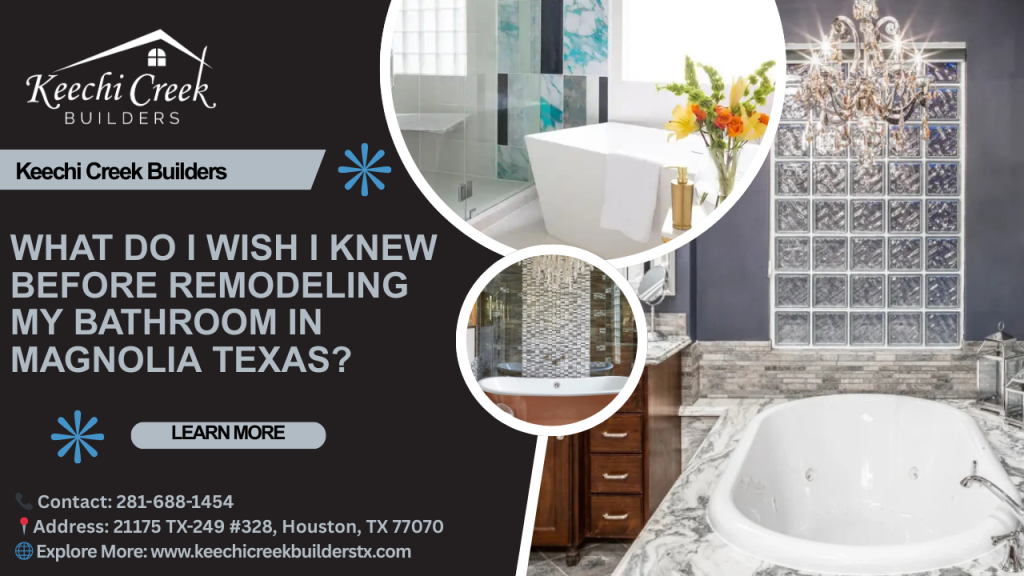
A Magnolia Homeowner's Honest Guide to Bathroom Remodeling
Planning a bathroom remodel in Magnolia, Texas is one of the most exciting—and most stressful—investments you'll make in your home. The difference between a project that delights and one that disappoints often comes down to decisions made before a single tile is set. This guide collects the hard-won lessons that experienced local homeowners wish they'd had in hand before starting their bathroom remodeling in Magnolia, TX — from securing Montgomery County permits to choosing grout colors that actually hold up in Houston's humidity.
Key Takeaways
- Budget a firm 20–30% contingency on top of your base estimate — unexpected costs like hidden water damage, outdated wiring behind walls, or backordered fixtures derail even well-planned Magnolia bathroom projects every month. It's a lesson homeowners who build a custom home in Magnolia, TX learn early too: no matter how detailed the plan, the walls always hold surprises.
- Schedule your permit applications at least 2–3 weeks before your planned start date — Montgomery County requires permits for all plumbing, electrical, and structural work, and waiting until the last minute stalls projects and can invalidate your contractor's timeline.
- Order vanities, tile, and specialty fixtures a minimum of 6–8 weeks in advance — custom and imported materials routinely carry 4–10 week lead times, and a single backordered item can freeze an entire job mid-construction.
- Hire a contractor who specializes specifically in bathroom remodeling, not a general handyman — just as you'd vet kitchen remodeling experts in Magnolia, TX for a kitchen project, bathroom work demands the same trade-specific standard. Proper waterproofing behind shower walls, code-compliant exhaust fan installation, and moisture barrier work require specialized expertise that protects your investment for decades.
- Maximize your lighting with at least 3 distinct sources — a ceiling fixture, vanity-level task lighting on both sides of the mirror, and shower or accent lighting — because single-fixture bathrooms consistently rank as Magnolia homeowners' number-one design regret.
- Verify every measurement twice before purchase, including clearance from vanity corners to door swings, rough-in distances for toilets, and shower pan dimensions — a 36-inch minimum shower stall is the lowest you should accept for daily comfort.
Understanding Permits and Planning in Montgomery County
If there is one area where Magnolia homeowners consistently get caught off guard, it is the permitting process. Montgomery County requires a development permit for all work within its unincorporated areas that involves plumbing changes, electrical modifications, or structural alterations — and most meaningful bathroom remodels touch at least one of those categories. According to the Montgomery County, Texas Environmental Health department, every structure and addition requires its own individual permit, and all fees are non-refundable regardless of project outcome. Always consult your contractor to confirm the specific permits required for your scope of work, as requirements can vary between the City of Montgomery, unincorporated county land, and any applicable HOA jurisdiction.
The permit process exists to protect you, not inconvenience you. A licensed contractor will pull permits on your behalf, schedule required inspections, and ensure all work meets the International Residential Code as locally adopted. Skipping this step to save time is one of the costliest mistakes a Magnolia homeowner can make — unpermitted work can complicate your homeowner's insurance claims, trigger mandatory demolition during a home sale inspection, and leave you personally liable for code violations.
What Typically Triggers a Permit in Magnolia-Area Bathroom Projects
| Work Type | Permit Required? | Why It Matters |
| Moving or adding plumbing lines | Yes | Code compliance, leak prevention |
| Upgrading electrical panel or circuits | Yes | Fire safety, insurance validity |
| Removing or relocating a load-bearing wall | Yes | Structural integrity |
| Like-for-like fixture replacement | Typically No | Cosmetic swap, no system impact |
| Installing a new exhaust fan on existing wiring | Verify with contractor | Depends on amperage and routing |
Plan for a 2–3 week buffer between submitting permit applications and your contractor's mobilization date. During peak construction seasons — spring and early fall in the Houston area — processing times can stretch further. Building this runway into your timeline is free; rebuilding a bathroom ceiling because an uninspected plumbing connection failed is not.
Budgeting Your Magnolia Bathroom Renovation Realistically
Cost is the topic every homeowner researches first and underestimates most. A full master bath upgrade near Magnolia TX can range from a focused cosmetic refresh to a complete gut-and-rebuild, and those two scopes do not live in the same budget universe. The most common financial mistake is treating the contractor's base quote as the final number. It never is.
Your base quote reflects what your contractor can see and plan for at the time of estimate. Behind old walls and under dated tile, Magnolia homes — especially those built in the 1990s and early 2000s — frequently conceal moisture damage, inadequate subfloor support, and plumbing that predates modern codes. This is precisely why every remodeling professional recommends a contingency of 20–30% above your contract price. On a $25,000 bathroom renovation, that means holding $5,000–$7,500 in reserve before you begin.
Typical Budget Allocation for a Full Bathroom Renovation
| Cost Category | Approximate % of Budget | Notes |
| Labor (plumbing, tile, carpentry) | 40–50% | Largest single expense in most projects |
| Tile, flooring, and surfaces | 15–20% | Quality here directly impacts longevity |
| Vanity, fixtures, and hardware | 15–20% | Lead times vary widely; order early |
| Shower enclosure and glass | 10–15% | Custom glass adds 3–5 week lead time |
| Permits and inspections | 2–5% | Non-negotiable; never skip |
| Contingency reserve | 20–30% of base | For hidden damage and surprises |
Per-square-foot costs for a custom bathroom renovation in Texas vary significantly by finish level and scope. [INSERT $/sqft RANGE] represents the current market range for mid-grade renovations in the Magnolia area, while a full luxury custom build-out runs closer to [INSERT MID-RANGE AVG $]. Your contractor should provide a line-item estimate — any quote delivered as a single lump sum without breakdown is a red flag worth pursuing before you sign.
Layout, Plumbing, and Design Decisions That Define Your Daily Experience
One of the most important — and expensive — decisions in any Montgomery County bathroom project is whether to move plumbing. Relocating drains, supply lines, or waste stacks requires opening floors, potentially cutting into concrete slabs (common in Texas slab-on-grade construction), and coordinating licensed plumbers, framers, and tile setters in sequence. The labor and material costs compound quickly. If your current layout is functional, work with it. Reserve your budget for materials, lighting, and storage upgrades that deliver daily value.
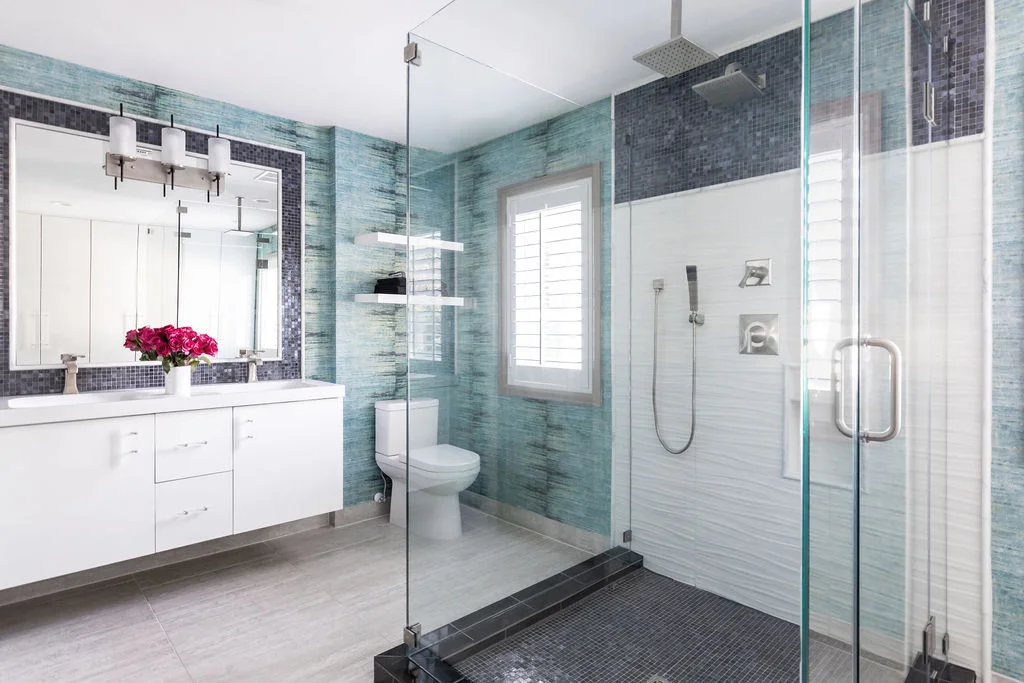
That said, some layout changes are worth every dollar. The most impactful is expanding a cramped shower. Industry professionals and experienced homeowners consistently agree: do not build a shower stall smaller than 36 × 36 inches, and 36 × 48 inches is the practical minimum for comfortable daily use. Showers built at 3 × 3 feet feel claustrophobic within weeks of move-in and are nearly impossible to resell without a price concession. If your project budget allows only one structural splurge, use it here.
Dimensions and Measurements Every Magnolia Homeowner Should Confirm Before Finalizing Plans
- Toilet rough-in distance: Standard is 12 inches from the finished wall to the center of the drain — confirm before ordering any toilet.
- Vanity clearance: Allow a minimum of 15 inches from the vanity centerline to any side wall or obstruction, and measure the full door swing arc before selecting vanity width.
- Counter height: Standard vanity height is 32–34 inches; comfort height (36 inches) mirrors kitchen counters and suits taller adults. Match to the primary users.
- Shower niche depth: Recessed niches should be a minimum of 3.5 inches deep (standard stud cavity) and tiled with a slight forward pitch so water drains outward.
- Door swing clearance: Bathroom doors should never conflict with an open toilet lid, vanity drawer, or shower door — map all three before your framing is finalized.
Materials, Tile, and Maintenance Choices Built for Texas Living
The Houston area's subtropical humidity is a design factor, not a footnote. Every material decision you make in a Magnolia bathroom remodel should be evaluated through the lens of how it will perform in a high-moisture, high-heat environment where air conditioning runs eight months of the year and humidity routinely tops 80%. This is the section where most competitor guides fall short — they offer generic tile advice without addressing the specific demands of life in Southeast Texas.
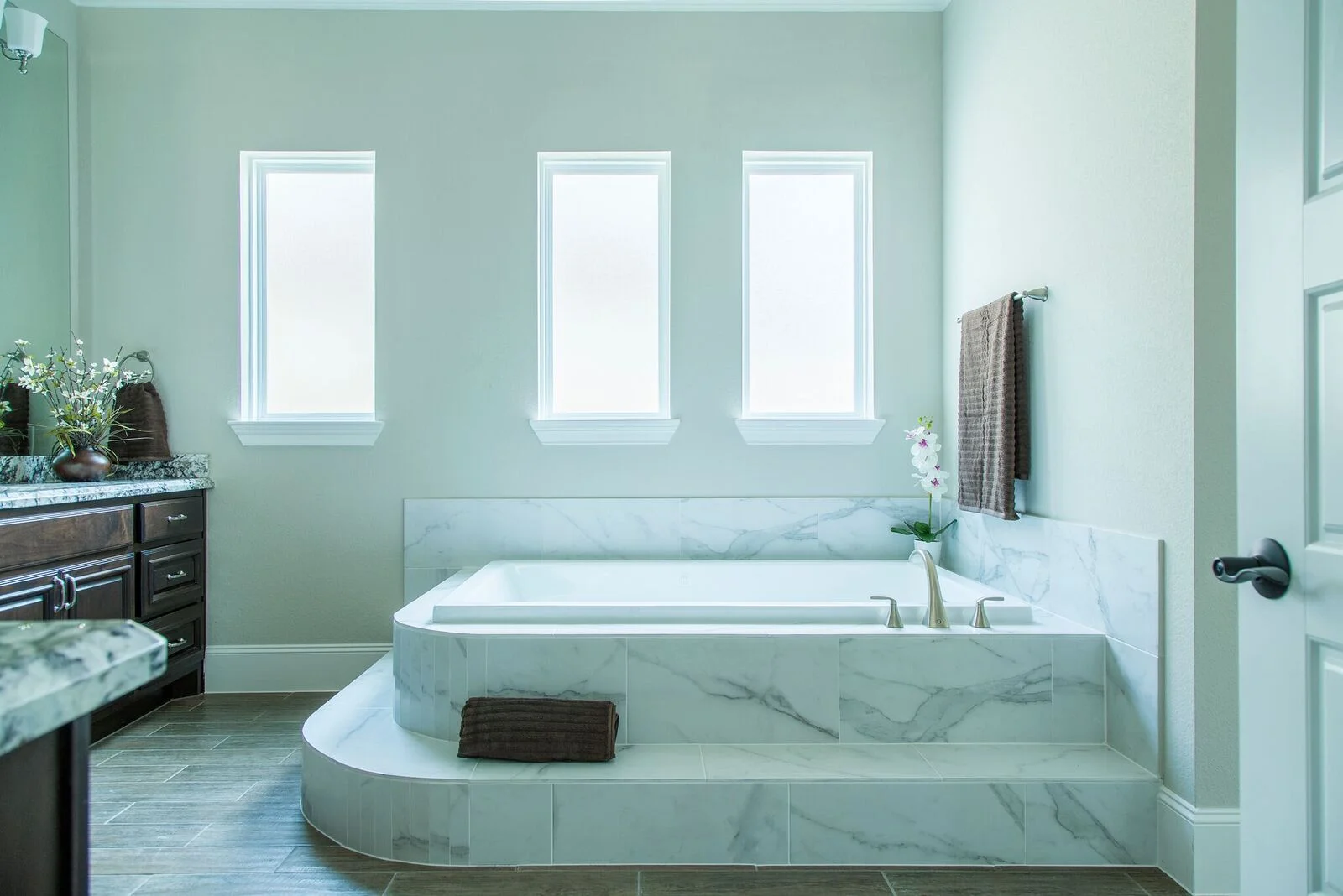
Porcelain and ceramic tile remain the gold-standard flooring and wall surface for Texas bathrooms. Both resist moisture absorption, handle temperature swings without warping, and clean easily. Avoid carpet in any form — even small bath mats left permanently in place trap moisture against the floor and accelerate mold growth beneath. For shower surrounds, large-format porcelain tiles (12 × 24 inches or larger) minimize grout lines, which means fewer places for mildew to establish itself.
Grout color is a decision most homeowners treat as aesthetic and should treat as maintenance. Light grout on bathroom floors and shower floors shows every stain, soap residue, and mineral deposit. Choose a dark or medium-toned grout — charcoal, warm gray, or mocha — to maintain a clean appearance between deep cleans. Epoxy grout is worth the upcharge in shower applications because it resists staining and does not require sealing.
Material Selection Quick-Reference for Magnolia Bathrooms
| Surface | Recommended Choice | Avoid |
| Floor tile | Porcelain (textured for slip resistance) | Carpet, polished marble (slippery when wet) |
| Shower wall | Large-format porcelain or ceramic | Natural stone without consistent sealing |
| Grout | Dark/medium tone, epoxy in showers | White or pale grout on floors |
| Countertop | Quartz (non-porous, low maintenance) | Unsealed granite near sinks |
| Vanity finish | Moisture-resistant paint or thermofoil | Raw wood without sealing |
Lighting, Ventilation, and Storage — The Details That Make or Break Daily Use
Walk into most bathrooms and you'll find a single overhead light controlled by one switch. Walk into a beautifully designed custom bathroom renovation and you'll find a layered system of light that makes the space feel both functional and welcoming at any hour. Lighting in bathrooms serves three distinct purposes: task lighting for grooming, ambient lighting for general use, and accent or shower lighting that creates atmosphere. All three should be planned during the design phase — retrofitting lights after tile is set requires opening walls and adds significant cost.
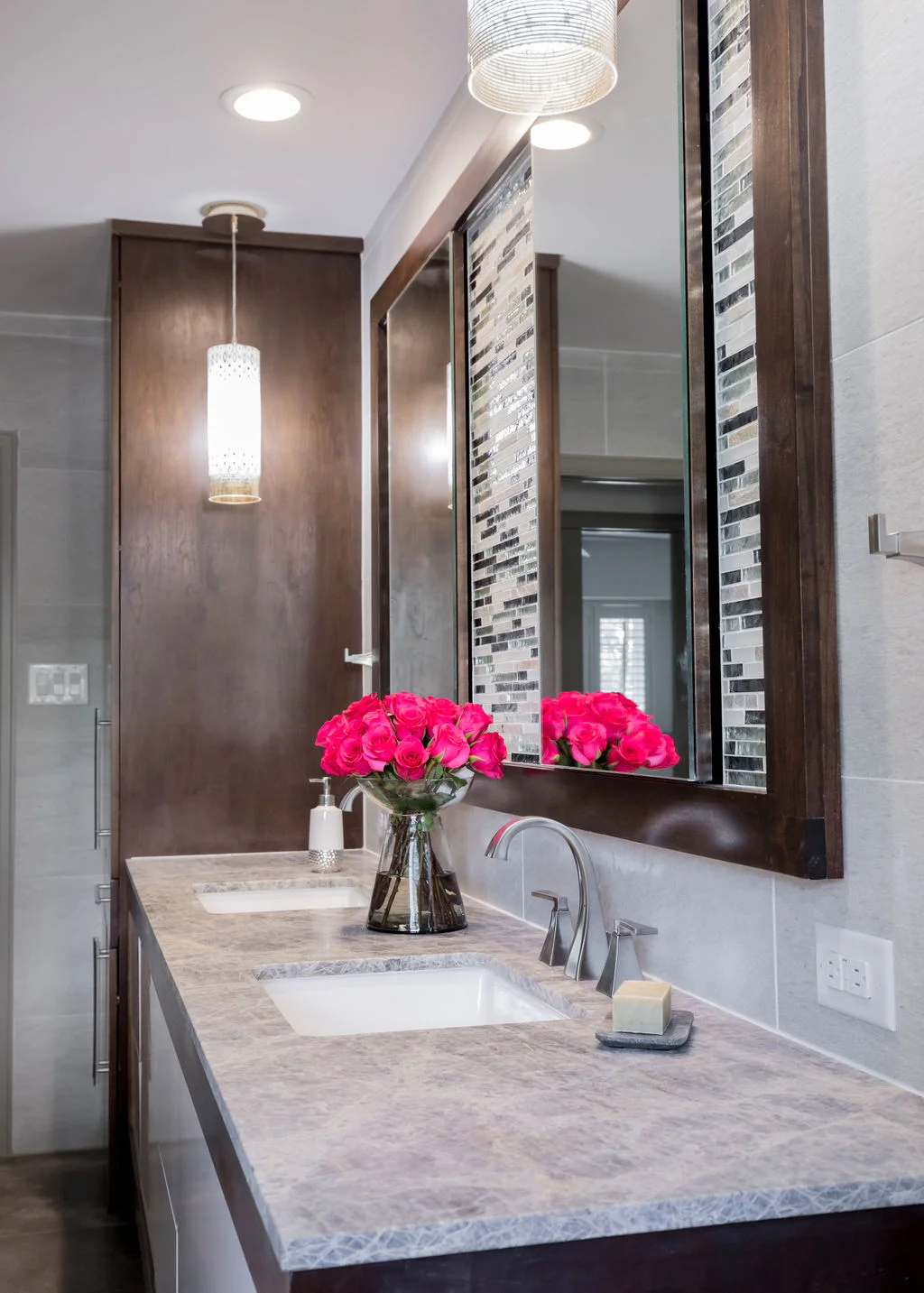
For vanity task lighting, the most common mistake Magnolia homeowners report is mounting a single bar fixture above the mirror. Side-mounted sconces at approximately 60 inches from the floor — one on each side of the mirror — eliminate the shadows that overhead-only lighting creates on faces. If wall-mounted sconces aren't feasible, choose a wide bar fixture that extends at least 24 inches across and sits directly above the mirror's top edge, centered precisely. Misalignment between the mirror centerline and light fixture centerline is the kind of detail that looks fine in a showroom and wrong every morning in your own bathroom.
Ventilation is equally non-negotiable in a Southeast Texas home. The Texas Residential Code requires exhaust fans to vent directly to the exterior — not into an attic, not into a soffit, not through a passive vent. Moisture vented into an attic creates exactly the conditions for mold to develop in your roof structure, which is a remediation project that can cost more than your entire bathroom remodel. Select a fan sized to the room: the standard guideline is 1 CFM (cubic foot per minute) per square foot of bathroom floor area, with a minimum of 50 CFM for any bathroom. Humidity-sensing fans that run automatically until moisture clears are worth the modest upgrade cost in a climate like Magnolia's.
Storage planning is where many homeowners make their final regret-worthy decision: they underestimate how much they need and overestimate how much open shelving will look magazine-worthy three years into daily use. Recessed medicine cabinets mounted flush with the wall surface save counter space and create a built-in, custom appearance. In the shower, recessed niches tiled to match the surround provide storage without the mold-harboring rubber suction cups of adhesive shelving units. Plan at minimum one niche per primary shower user, positioned at shoulder height on a non-plumbing wall.
Common Regrets and How Magnolia Homeowners Can Avoid Them
After a remodel is complete, homeowners are remarkably honest about what they wish they'd done differently. The regrets that come up most consistently in a bathroom renovation in Magnolia aren't about choosing the wrong tile color — they're about decisions made (or skipped) during the planning phase that are expensive or impossible to fix once the walls are closed.
Living in your home during a single-bathroom major remodel is the most underestimated hardship. If your home has only one full bathroom and you plan a 4–6 week renovation, map out your alternative plan before demolition begins. Options include scheduling the project during a planned vacation, arranging temporary use of a neighbor's facilities, or negotiating a portable restroom rental. Discovering this problem on Day 2 of demo is far too late.
Failing to measure before purchasing creates cascading problems. A vanity that's two inches wider than the rough opening requires a framing change. A toilet with a 10-inch rough-in installed into a 12-inch rough-in space leaves a visible gap that requires a trim plate. A mirrored medicine cabinet ordered without accounting for the light fixture above it lands on the wall off-center. Every one of these errors costs money and time that the planning phase was supposed to prevent.
Choosing a contractor based on price alone in the Magnolia market is a particularly costly shortcut. The lowest bid rarely includes the waterproofing membrane, the backer board upgrade, the properly vented exhaust fan, or the permit applications that protect your investment. When comparing bids, ask each contractor for an itemized list of what is — and is not — included. The difference between bids often lives in those exclusions.
Top Regrets vs. Preventive Actions
| Common Regret | Preventive Action | When to Act |
| Lighting placed wrong | Plan 3-layer lighting in design phase | Before permit submission |
| Vanity hits door on swing | Measure door arc, map all clearances | Before ordering vanity |
| Shower too small | Build minimum 36×48 in.; budget for it | Before finalizing floor plan |
| Mold appeared within 2 years | Specify exterior-vented exhaust fan | During contractor bid review |
| Materials arrived late | Order 6–8 weeks ahead of install date | At contract signing |
| No permit pulled | Confirm permit scope with contractor | Before any work begins |
Frequently Asked Questions
Do I need a permit for a bathroom remodel in Magnolia, Texas?
Yes — in almost every meaningful remodel. Montgomery County requires permits for plumbing changes, electrical work, and structural modifications. Even within city limits, the City of Montgomery maintains its own permit requirements. Cosmetic updates like swapping a mirror or replacing a toilet with an identical model typically don't require a permit, but always confirm with your contractor before assuming any work is exempt.
How long does a full bathroom remodel take in the Magnolia area?
Most full bathroom renovations in the Magnolia, TX area take between 3 and 6 weeks from demolition to final walkthrough, assuming materials are on-site before demo begins. Delays most commonly stem from backordered fixtures, permit processing time, or hidden damage discovered after walls are opened. Planning a 6–8 week material lead time and a 2–3 week permit buffer before your start date keeps projects on schedule.
What is the biggest mistake people make when remodeling a bathroom in Texas?
Skipping or underspecifying ventilation is the costliest long-term mistake Texas homeowners make. In a state where outdoor humidity regularly exceeds 80%, a bathroom exhaust fan that vents into the attic — or that moves too little air for the room's square footage — creates the conditions for mold growth inside your walls and ceiling structure within 12–24 months. Specify a minimum 1 CFM-per-square-foot fan that exhausts directly to the exterior.
Should I move my plumbing during a bathroom remodel?
Only if the layout genuinely doesn't work for your daily needs. Relocating plumbing in Magnolia-area homes, which are commonly built on concrete slabs, requires cutting into the slab, rerouting drain lines, and significant additional labor — often adding $2,000–$5,000 or more to a project budget. If your current fixture placement is functional, redirect that budget toward surfaces, storage, and lighting that you'll enjoy every day.
What type of tile works best for Magnolia bathrooms?
Porcelain tile is the top recommendation for both floors and shower walls in the Magnolia, Texas climate. It's dense, nearly impervious to moisture absorption, and holds up to the humidity swings that come with Southeast Texas weather. Choose textured or matte-finish porcelain for floor applications to reduce slip risk when wet, and pair it with medium- to dark-toned epoxy grout to minimize visible staining between cleanings.
How do I choose the right contractor for a bathroom remodel near Houston?
Look for a contractor who specializes specifically in bathroom and kitchen remodeling — not a generalist handyman — and who routinely pulls permits and passes inspections. Request an itemized bid (not a single-number quote), verify their license with the Texas Department of Licensing and Regulation, and ask for local references from completed projects in Magnolia, Tomball, or The Woodlands area. Awards from industry organizations such as GHBA or recognition from the BBB are meaningful trust indicators.
Your Next Step Starts Here
Remodeling a bathroom is one of the highest-return investments a Magnolia homeowner can make — but only when it's planned thoroughly, permitted correctly, and executed by a contractor who understands both the craftsmanship and the local conditions required for lasting results. The details that protect your investment long-term — proper waterproofing, exterior-vented exhaust fans, correctly sized showers, and dark grout that holds up to Texas humidity — are exactly the details where underprepared projects fall short.
When you're ready to move from research to results, Keechi Creek Builders brings award-winning design-build expertise to homeowners throughout the Magnolia and greater Houston area. Their team handles every phase — design, permits, material sourcing, and construction — with the white-glove attention your home deserves. Call 281-688-1454 or visit keechicreekbuilderstx.com to schedule your consultation and take the first step toward a bathroom that's built right, built to last, and built exactly for you.